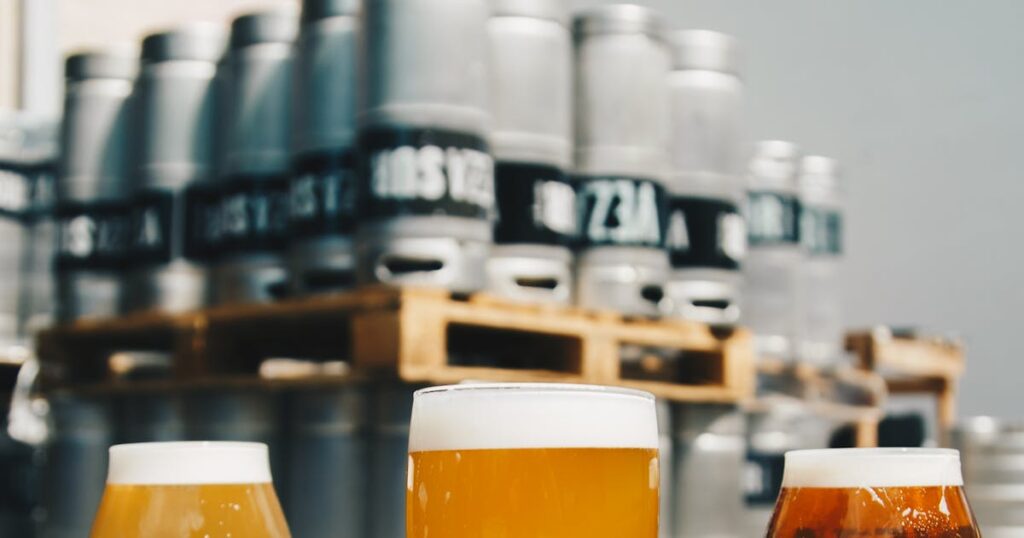
Framboise — Belgium’s ruby-red jewel — is having its moment in the British home-brewing sun. This light, fruity wheat beer fermented with fresh raspberries has been quietly gaining cult status, and for good reason. If you’re looking to step beyond the IPA and pale ale circuit, Framboise offers something genuinely refreshing: a technique-driven style that rewards precision, a story in every sip, and a pint that looks as good as it tastes.
I brewed my first Framboise last summer out of sheer curiosity. A monk friend had mentioned it in passing — something about Belgian monks using what grows nearby — and I became obsessed with understanding how to marry wheat beer’s delicate spice with fresh fruit without tipping into fruit-juice territory. This post documents that journey, plus three brewing seasons’ worth of tweaks, disasters, and triumphs.
Why Framboise? The 2026 Raspberry Revival
Framboise isn’t new — it’s been brewed in Belgium for centuries — but it’s having a genuine resurgence in 2026. The UK craft market is shifting away from heavy pastry stouts and 8% adjunct beers toward what I call “flavour-forward drinkability”: beers that taste exciting but don’t leave you face-down at 9pm.
Framboise fits perfectly. At 4.5–6.5% ABV and 10–20 IBUs, it’s refreshing without being watery. The raspberry hits on the nose and palate, but not as a candy assault — more as a tart counterpoint to the beer’s subtle spice notes. It’s the kind of beer you reach for on a warm July afternoon, the kind that makes non-beer drinkers suddenly interested, and the kind that rewards experimentation.
I’ve found that UK home-brewers are particularly drawn to Framboise for summer brewing. After months of stouts and barley wines, there’s something deeply satisfying about turning on the tap and pouring something that glows ruby-red in the glass.
Ingredients and Equipment: What You’ll Need
Framboise is deceptively simple on paper, but the devil — as always — lives in the details.
The Grain Bill
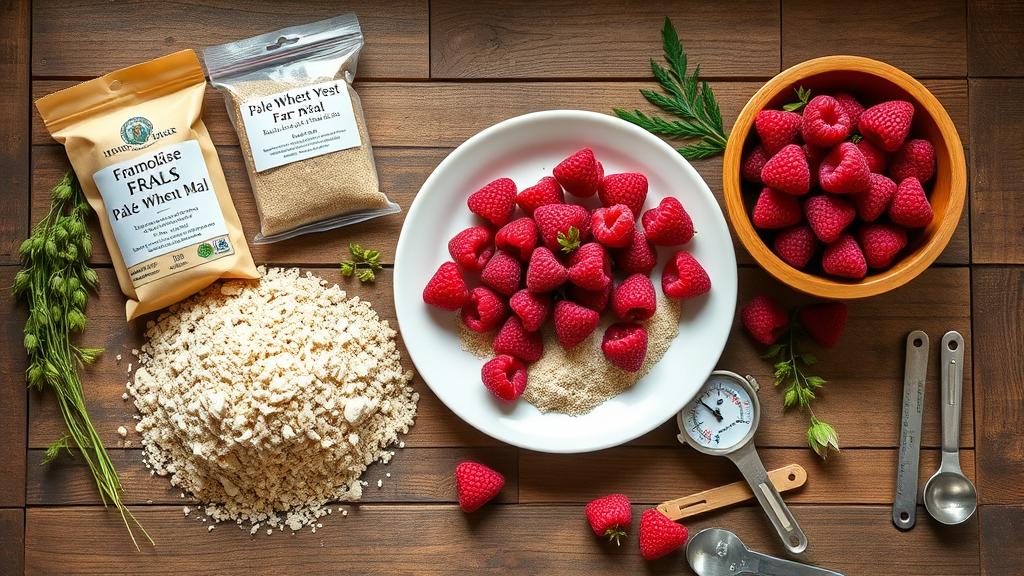
Pale Malt (50%): The backbone. Use a quality British pale like Maris Otter (available from The Malt Miller) for a slightly biscuity base that won’t overpower the fruit.
Wheat Malt (40%): This is essential. Wheat adds a silky mouthfeel, subtle clove and banana notes (from the esters), and a hazy appearance — all hallmarks of Belgian witbier-influenced Framboise. I use around 2.5 kg (5.5 lbs) of wheat malt per 20-litre (5.3 US gallon) batch.
Acidulated Malt (10%): A small amount of acidulated malt lowers your mash pH, which aids extraction and helps preserve the delicate fruit flavours during fermentation. Skip this if you have a water profile already suited to wheat beers.
Hops and Bitterness
Keep it minimal. A 60-minute boil addition of Hallertau or Saaz (around 15–20 IBUs) is traditional. These noble hops are floral and understated — they won’t compete with the raspberry. Some brewers add a small 5-minute charge for aroma, but I prefer to rely entirely on the fruit.
Yeast
This is where Framboise diverges from regular wheat beer. Use a Belgian Witbier yeast strain like WLP400 (White Labs) or Safale US-05 (if you prefer something more neutral). The traditional Belgian yeast imparts subtle spice and esters that complement raspberry beautifully. Pitch at around 15–18°C (59–64°F) and let it free-rise to 22°C (72°F) during fermentation.
Fresh Raspberries
Use fresh, frozen, or fresh-frozen fruit — not canned or concentrate. I’ve had the best results with frozen British raspberries (about 1.5–2 kg / 3.3–4.4 lbs per 20-litre batch). Thaw them completely, crush them gently, and add them during secondary fermentation after the primary yeast has done its work.
Equipment Notes
You’ll want a secondary fermenter (glass carboy or food-grade bucket) specifically for the raspberry addition. Use a mesh bag or cheesecloth to contain the fruit solids, which makes racking and bottling much cleaner. A temperature controller is highly recommended — wheat beers are sensitive to temperature swings during fermentation.
Step-by-Step Brew Day
Here’s how I approach a 20-litre Framboise brew from grain to bottle.
- Mash (60 minutes at 66°C / 150°F): Combine your grains with 55 litres (14.5 gallons) of water. The wheat malt’s protein structure benefits from a longer mash time. Stir gently every 15 minutes to avoid compaction.
- Sparge: Run off slowly into your kettle, collecting about 28–30 litres (7.4–7.9 gallons) of wort. If you’re using BIAB (Brew In A Bag), lift and let drain for 10 minutes.
- Boil (60 minutes): Bring to a rolling boil. Add your Hallertau or Saaz at the 60-minute mark (around 15–20 IBUs). No late additions — we want clean bitterness, nothing grassy. Boil hard; wheat beer demands a vigorous boil to coagulate proteins and clarify the wort.
- Cool: Chill quickly to 18°C (64°F) using an immersion chiller or ice bath. Wheat beers are prone to contamination if cooled slowly. Aim for 20 minutes or less from boil-off to pitching temperature.
- Pitch: Aerate well (shake the carboy, use an aquarium pump, or splash racking), then pitch a healthy dose of Belgian yeast — about 100 billion cells if you’re brewing 20 litres. Use a starter if your yeast culture is more than a month old.
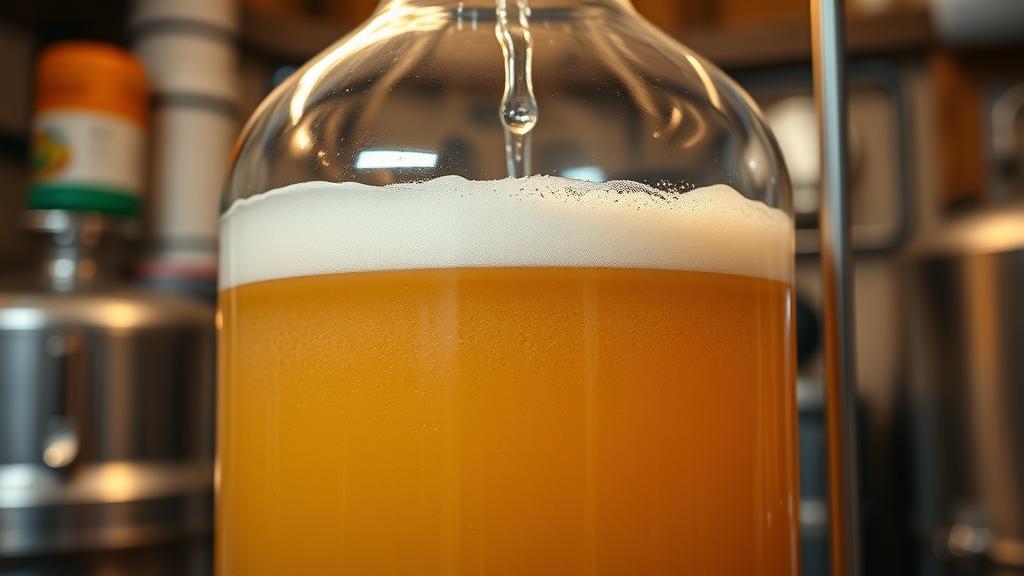
- Primary Fermentation (7–10 days): Maintain 18–22°C (64–72°F). Wheat beers ferment cleanly at cooler temps, so don’t rush this. You should see vigorous activity by hour 24, and krausen (foam layer) by hour 36. When gravity stops dropping and the yeast settles (usually day 8–10), you’re ready to proceed to secondary.
Secondary Fermentation and the Raspberry Addition
This is where Framboise becomes special — and where most home-brewers get it wrong.
The Critical Step: Once primary fermentation is complete and the gravity has stabilised (take a reading on days 8, 9, and 10 to be sure), rack the beer to a secondary fermenter. Leave the yeast cake behind; we want the fruit to ferment cleanly on fresh yeast activity, not buried under a metre of sediment.
Fruit Addition: Gently add your prepared raspberries (fresh, thawed, and lightly crushed) into a mesh bag, then submerge in the secondary. Don’t dump them loose — they’ll clog your siphon and make bottling miserable. The fruit should constitute about 5–8% of your total liquid volume by weight.
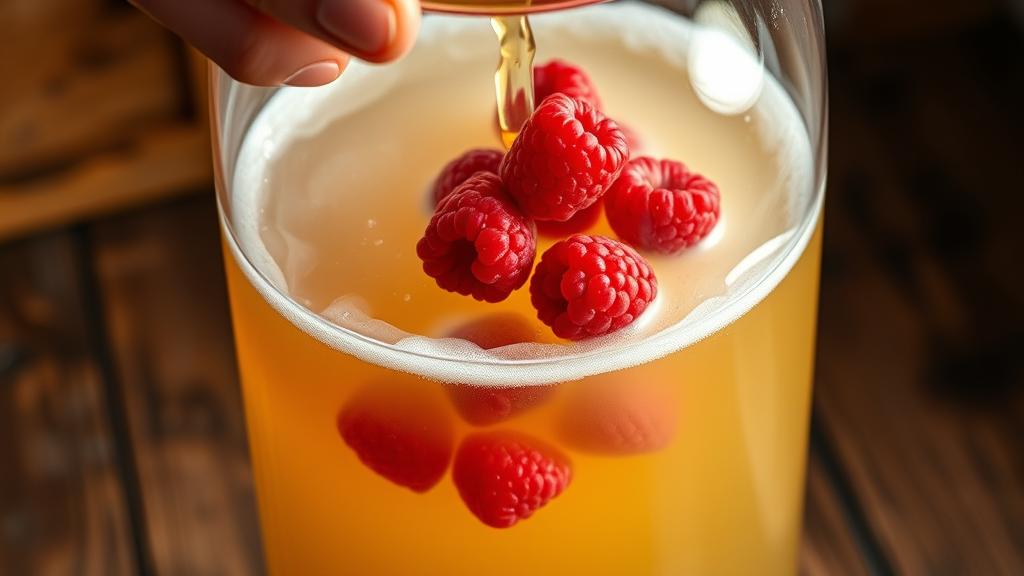
Timing: Let the fruit sit for 2–3 weeks. You’ll see renewed activity as residual yeast ferments sugars in the raspberry flesh. The aroma will evolve: first bright and fruity, then deeper and more wine-like as wild yeasts from the fruit skin introduce subtle funky notes. This is normal and delicious.
Temperature Stability: Keep the secondary at a steady 18–20°C (64–68°F). Temperature swings will cause the fruit to oxidise and your beer to turn brownish. If you can’t maintain stable temps, cover the carboy in an old blanket or use a temperature-controlled fridge.
Racking Out: After 3 weeks, siphon carefully into your bottling bucket, leaving as much fruit pulp and sediment behind as possible. The fruit mesh should contain most of the solids, but some will settle at the bottom. Be patient — siphon slowly and stop if you pull up sludge.
Carbonation, Bottling, and Conditioning
Framboise bottles beautifully and develops character over time.
Priming Sugar: Aim for 2.2 volumes of CO2 (a light, Belgian-style carbonation). This means dissolving about 90–100 grams (3.2–3.5 oz) of dextrose in a small amount of boiled water, then gently stirring into your bottling bucket. Mix well but don’t splash — we’ve worked too hard to oxidise the beer now.
Bottle Choice: 500ml Belgian-style bottles look stunning and let you share smaller pours with friends. Use proper bottle caps and a capper, not swing-top bottles (the seals degrade over months). Sanitise everything with a no-rinse sanitiser like Star San.
Conditioning: After bottling, keep the bottles upright at 18–20°C (64–68°F) for 2–3 weeks. You’ll see carbonation develop and the flavour settle. After 3 weeks, move to a cool, dark place — a basement, cellar, or wine fridge is ideal. This beer improves over 6 months and remains excellent for up to 18 months if stored properly.
Tasting Notes and My Honest Review
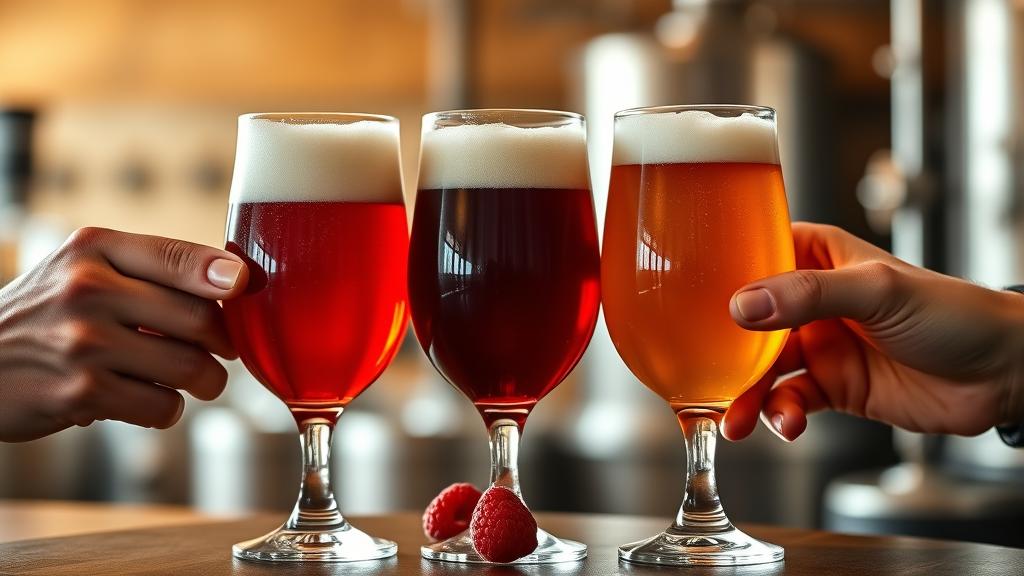
Appearance: A well-made Framboise should glow ruby-red to deep garnet in the glass, with a creamy off-white head that persists for several minutes. The clarity should be excellent — any cloudiness suggests infection or poor fruit handling.
Aroma: Fresh raspberry dominates, with subtle backgrounds of bubblegum (from the Belgian yeast) and a whisper of vanilla or white pepper. As the beer ages, the aroma deepens and picks up wine-like complexity — almost Burgundy-adjacent.
Flavour: Here’s where it’s tricky. The raspberry should be present and assertive, but not candy-like. You should taste the beer underneath — the wheat’s softness, the subtle hop bitterness, the yeast’s clean fermentation. If it tastes like raspberry cordial, you’ve added too much fruit or used concentrate. A proper Framboise balances fruit, grain, and fermentation in a three-part harmony.
Mouthfeel: Silky, slightly dry from the acidulated malt and residual tannins from the fruit skin. The carbonation should be gentle, almost champagne-like. It’s a sipping beer, not a gulper.
My 2026 Batch: My last batch, brewed in February, is drinking beautifully now in July. The initial bright raspberry has mellowed into something more sophisticated — tart cherry, dried cranberry, subtle herbal notes. At 5.2% ABV, it’s perfect for a warm afternoon without knocking you sideways. I’ve served it to non-beer drinkers and watched their faces light up. That moment — when someone who “doesn’t really drink beer” discovers they love Framboise — is why I brew.
Pro Tips and Common Mistakes
Mistake 1: Using Concentrate. Fresh or frozen raspberries only. Concentrate will give you artificial, cloying fruit character. Your beer deserves better.
Mistake 2: Over-Hopping. I see home-brewers add 30+ IBUs to Framboise “for balance.” Wrong. The raspberry provides bitterness and complexity. Keep hops minimal (10–20 IBUs) from noble varieties.
Mistake 3: Rushing Secondary. Patience. The longer the fruit sits, the more the yeast integrates it. Two weeks feels like abandonment — three weeks feels like wisdom.
Pro Tip 1: Taste Evolution. Bottle a separate 500ml reference bottle and taste it monthly. You’ll map the flavour development and learn when this beer reaches its peak in your cellar conditions.
Pro Tip 2: Blending. Once you’ve brewed Framboise a few times, try blending your base beer with a secondary made from a different fruit — blackberry, cherry, or even rhubarb. Framboise blends beautifully with other stone fruits and berries.
Pro Tip 3: Starter Culture. Keep a portion of your primary yeast cake in a sterile jar after bottling. You can use it to inoculate future fruit beers, building a house yeast strain tuned to your water and technique.
Variations and Next-Level Experiments
Once you’ve mastered the baseline Framboise, the style opens into endless variation:
- Framboise Lambic: Brew the same beer but pitch a wild yeast blend (like The Yeast Bay’s Wyeast 3731 Belgian Lambic Blend). You’ll get a tart, funky Framboise with built-in complexity. Expect 12+ months conditioning and results that taste like Belgian breweries.
- Framboise Saison: Use a Saison yeast (higher fermentation temps, peppery esters) instead of witbier yeast. The result is drier, spicier, and ages brilliantly.
- Mixed-Berry Framboise: Add 30% raspberry, 35% blackberry, and 35% blueberry. Each fruit ferments at a slightly different rate, creating a layered, complex flavour that evolves over months.
- Barrel-Aged Framboise: If you have access to a small oak barrel or even oak chips, add them during secondary with the fruit. The tannins from the oak and the fruit marry beautifully, and the beer ages like a fine wine.
- Spiced Framboise: Try adding a pinch of coriander, black pepper, or even lavender during the last week of secondary. These additions should be subtle — think of them as perfume, not flavour.
Each variation teaches you something new about how yeast, grain, and fruit interact. And that’s the real gift of Framboise: it’s a style that rewards curiosity and precision in equal measure. You can follow the recipe exactly and make excellent beer. Or you can explore, experiment, and build something uniquely yours.
Conclusion: Why Framboise Deserves Your Next Brew
Framboise is trending in 2026 because it represents a shift in what home-brewers actually want: flavour without fatigue, sophistication without pretension, and a beer that looks as good as it tastes. It’s a style that welcomes newcomers (the technique is straightforward) and invites mastery (the variables are infinite).
Brewing Framboise also reconnects you with an ancient tradition. Monks in Belgium have been adding fruit to wheat beers for centuries — not out of whimsy, but because what grows nearby becomes part of your beer. That sense of place, of rootedness, feels important in 2026. Even if your raspberries come from a freezer, even if your brewing setup is in a garage in Surrey, you’re participating in something that stretches back centuries.
I encourage you to brew a batch this summer. Get your grain from GetErbrewed or The Malt Miller (both UK-based, both brilliant), source your fruit from a farmers’ market or frozen section, and set up a carboy in a cool corner. In three weeks, you’ll be pouring something ruby-red and extraordinary.
And if you do, I’d love to hear about it. Tell me your fruit additions, your fermentation temperatures, your tasting notes. That’s how we learn, how we build community, and how a single-origin style becomes our own.
🍺 Join the Brotherhood — Monthly brews, stories & monk wisdom
Subscribe for exclusive recipes, early brew logs, and behind-the-scenes updates straight to your inbox.