Why Cream Ale is the Summer Homebrewer’s Secret Weapon
There’s a moment in late July when the thermometer creeps past 25°C (77°F), the garden becomes unbearably sticky, and you realise that your carefully hoarded Imperial Stout collection is absolutely the wrong beer for the season. This is when cream ale makes perfect sense.
Cream ale—that underrated American classic—has been quietly gaining ground in UK homebrewing circles for the past couple of years, and 2026 has finally seen it break into the mainstream conversation. It’s not flashy. It doesn’t hit you with aggressive hop bitterness or wild fermentation weirdness. Instead, it does something far more valuable: it delivers a genuinely excellent, crushable beer that tastes clean, crisp, and refreshing whilst remaining interesting enough that you’re not bored by the third pint.
After a decade of brewing increasingly complicated styles—wild fermentations, adjunct experiments, barrel-aging marathons—I’ve discovered something the monks knew centuries ago: sometimes simplicity is the highest achievement. Cream ale embodies that principle perfectly.

What Makes Cream Ale Different?
If you’ve never brewed one, cream ale is essentially the bridge between ale and lager fermentation. The style emerged in 19th-century America as breweries attempted to win over lager drinkers with an ale-friendly alternative that could be fermented without expensive lagering equipment. Instead of creating an inferior hybrid, they stumbled onto something genuinely brilliant: a light, clean, smooth beer that sits somewhere between the fruitiness of a standard ale and the crisp finality of a pilsner.
The name “cream” doesn’t refer to dairy—there’s no cream in the recipe—but rather to the silky, velvety mouthfeel that a well-executed cream ale provides. It typically clocks in at 4.5–5.5% ABV, making it perfectly sessionable. The colour ranges from pale straw to light golden, and the finish should be dry with minimal residual sweetness.
What I love about cream ale is that it requires genuine skill to execute, even though the ingredient list looks absurdly simple. Low-ABV brewing has become fashionable in recent years, but cream ale nails the balance between flavour and restraint in a way that newer styles sometimes miss. There’s no hiding behind adjuncts, wild yeasts, or hoppy fireworks—everything must be in proportion.

The Ingredient List (Deceptively Simple)
A classic cream ale recipe uses remarkably few components:
- Pale Malt: 60–70% of the grain bill. I use a mix of 2-row pale (the American standard) and pilsner malt. Some UK brewers prefer Golden Promise for a slightly spicier character.
- Flaked Maize or Corn: 20–30%. This is the secret. Adjuncts get a bad reputation—unfairly, in my view—because cheap macro lagers abuse them. In cream ale, corn adds smoothness, lightness, and a subtle sweetness that balances perfectly with malt. Use food-grade flaked maize, not the brewing powder.
- Crystal Malt (10L–20L): 5–10%. Just enough residual sweetness to round out the beer and support that creamy mouthfeel.
- Hops: 20–30 IBUs (International Bittering Units) from a neutral variety. Noble hops (Hallertau, Saaz) or American classics (Magnum, Liberty). No citrus bombs—you want background presence, not character.
- Yeast: Here’s where it gets interesting. You can use ale yeast fermented cool (60–65°F / 15–18°C) for a clean, crisp profile, or lager yeast if you have temperature control. Either works beautifully.
For a 5-gallon (19-litre) batch, I’d recommend:
- 6 lb (2.7 kg) 2-row pale malt
- 2 lb (900 g) pilsner malt
- 2 lb (900 g) flaked maize
- 0.75 lb (340 g) 20L crystal malt
- 15 g Hallertau (60-min bittering)
- 10 g Liberty (15-min flavour)
- SafAle US-05 or Wyeast 1272 (North German Lager)

Brew Day Essentials
The mash is where I focus my attention. A rest at 65°C (150°F) for 60 minutes builds fermentability and dryness—essential for avoiding that flat, one-dimensional sweetness that ruins lesser cream ales. Follow with a mashout at 75°C (167°F) to clear the grain bed.
Sparge carefully. Cream ale’s delicate balance demands clean wort—any tannin extraction from over-sparging will produce harsh, unpleasant astringency.
Boil for 90 minutes. This extended boil with the corn adjunct creates a subtle, slightly sweet character that’s remarkably hard to achieve without it. I add the bittering charge at the start, then the flavour hops with 15 minutes remaining.
Chill quickly to 65°F (18°C) and pitch healthy yeast. Fermentation should begin within 12 hours. Keep the temperature stable—fluctuations will introduce fruity esters or sulphury notes that muffle the beer’s clean character.
For ale fermentation, let it run cool (around 62°F / 17°C). For lager yeast, follow standard lager protocols: ferment at 50°F (10°C) for 2 weeks, rest at 60°F (15°C) for a diacetyl rest, then cold-condition for another 3 weeks. The patience pays dividends.
Fermentation, Conditioning & Packaging
Once fermentation is complete (gravity stable for 3 days), I package almost immediately. Unlike many styles, cream ale doesn’t benefit from extended conditioning—in fact, extended ageing can dull its fresh, crisp character. Bottle within a week of reaching final gravity.
For bottle conditioning, use 120 g of table sugar per 19 litres and allow 3 weeks at room temperature before cold-conditioning. Carbonation target: 2.5–2.7 volumes of CO₂. Over-carbonation produces excessive head and loses the velvety mouthfeel; under-carbonation makes it feel flat.
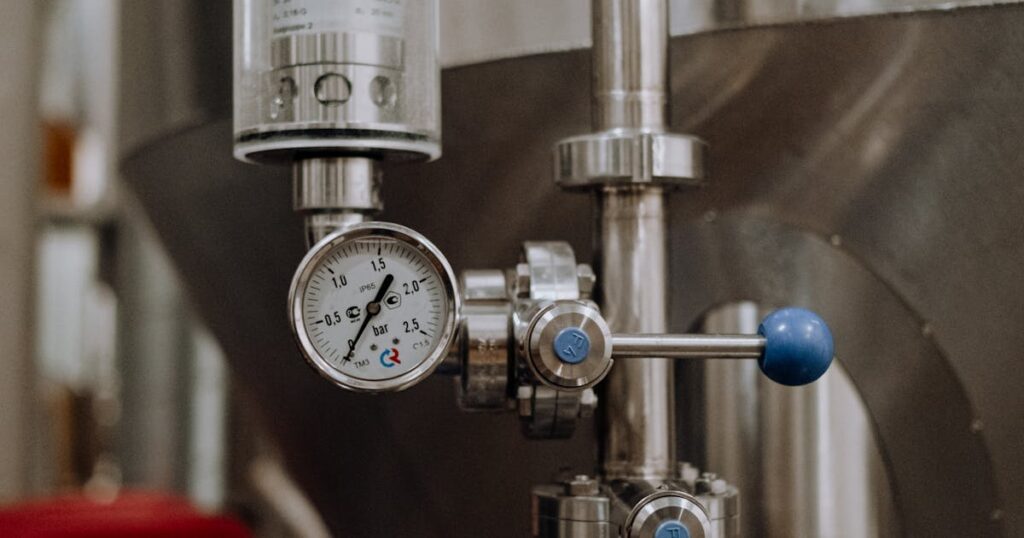
If you keg, set your pressure to 11–12 PSI (0.75–0.8 bar) at serving temperature. Chill to 45°F (7°C) before serving—cream ale’s full spectrum emerges only when properly cold.
My Honest Tasting Notes
The cream ale I brewed last autumn has become my go-to beer for garden sessions. It pours clear golden with a dense, persistent foam head. The aroma is subtle: clean malt with a whisper of corn sweetness, virtually no hop character. On the palate, it’s immediately refreshing—the kind of beer where you take a sip and suddenly think, “Ah, that’s exactly what I needed.” There’s a soft creaminess in the body (from the malt-corn combination), dry finish, and just enough subtle sweetness to keep it from feeling thin or watery.
The carbonation is crisp without being aggressive. It doesn’t explode on your tongue like an over-carbed pale ale; instead, it’s a gentle effervescence that enhances the overall sensation.
Is it exciting? No. Is it perfect for what it’s designed to do—deliver genuine pleasure in a light, sessionable package? Absolutely.

Common Mistakes (And How to Avoid Them)
Residual Sweetness: The most common fault. It happens when mash temperatures creep too high, producing unfermentable sugars. Solution: hit your mash temperature accurately (invest in a good thermometer if you haven’t already) and ferment all the way down.
Rough Tannins: Over-sparging or allowing grain bed contact with water above 75°C (167°F) introduces harsh, puckering notes. Sparge gently, monitor your water temperature, and use a fly sparge if you have one.
Fruity Esters: Temperature fluctuations during fermentation produce unwanted apple or banana notes. Keep your fermentation stable within ±2°C.
Dull Finish: Sometimes cream ale can taste one-dimensional if the recipe skews too sweet or too dry. The secret is balance—just enough residual sweetness to support the creamy mouthfeel, but not so much that it becomes cloying. Aim for an OG of 1.050–1.055 and FG of 1.010–1.012.
Next-Level Experiments
Once you’ve nailed the basic recipe, there’s room to play:
- Spiced Cream Ale: Add a touch of coriander seed, cinnamon, or cardamom in the final 5 minutes of the boil. Keep it subtle—just enough to add intrigue without overwhelming the delicate character.
- Cream Ale + Fruit: A light touch of peach or apricot complements the style beautifully, but fruit must be carefully integrated (post-fermentation addition is safest). This approach pairs exceptionally well with summer garden parties.
- Cream Ale + Rye: Replace 10–15% of the malt with rye. This adds a peppery spice and drier finish whilst maintaining the core character. I find it works particularly well when moving into autumn.
The advantage of cream ale as a “home recipe” is that its clean foundation allows subtle modifications without falling into one of the traditional style categories. Experiment, take notes, and iterate. This is how you develop as a brewer.

Why Cream Ale Matters Now
After a decade of homebrewing’s “bigger, hoppier, weirder” arms race, there’s growing recognition that restraint and balance are underrated virtues. Cream ale represents a return to fundamentals—not out of nostalgia, but because fundamentals work. It’s sessionable without compromising character. It’s accessible for beginners without being simple. It respects tradition whilst allowing genuine creativity.
The BJCP (Beer Judge Certification Program) categorises cream ale in the “Standard American Beer” category, which I think undersells it. There’s nothing standard about a truly excellent cream ale—it’s an achievement.
When you look at the current UK brewing landscape—with sustainability and locality becoming mainstream concerns—cream ale shines. It’s efficient to brew, requires minimal exotic ingredients, and delivers maximum enjoyment with minimal waste. It’s a beer that the monk in me deeply approves of: humble, purposeful, and perfectly suited to its moment.
The Takeaway
If you’ve been intimidated by cream ale’s apparent simplicity, or dismissed it as a boring macro-beer style, I’d urge you to reconsider. Spend a Saturday brewing one properly—nail your mash temperature, respect your fermentation schedule, and dial in your carbonation. Bottle it with care, wait three weeks, and crack one open on the next hot evening.
I suspect you’ll understand, then, why cream ale is quietly becoming one of the most rewarding styles in modern homebrewing.
🍺 Join the Brotherhood — Monthly brews, stories & monk wisdom
Subscribe for exclusive recipes, early brew logs, and behind-the-scenes updates straight to your inbox.