This summer, brewers across the UK are discovering an unexpected renaissance. Not German pilsners. Not Belgian Trappists. But Korean-style lagers—a crisp, malt-forward style that’s been quietly perfected in Seoul’s homebrewing communities for years, and now it’s having a moment. After months of experimenting with this fascinating style, I’m convinced it’s the future of sessionable, food-friendly brewing for British homebrewers.
Why Korean-Style Lagers Are Making Their Move in 2026
Korean brewing culture draws from a fascinating heritage: German lager traditions brought to Korea in the early 20th century, adapted over generations with a distinctly Korean philosophy—balance, precision, and an obsession with food pairing. The beers are deliberately light, clean, and designed to complement bold flavours without overwhelming them. In a climate where British drinkers are increasingly tired of hoppy IPAs and sticky stouts, this matters.
Unlike West Coast IPAs that demand attention, German lagers with their traditional noble hop profiles, or low-ABV session beers that sometimes sacrifice flavour for drinkability, Korean-style lagers strike a remarkable balance. They’re sessionable (typically 4.2–4.8% ABV / 16–18 IBU), yet they have genuine malt character. They’re fermented cold, sometimes with a touch of rice or corn (a nod to Korean brewing heritage), and conditioned aggressively to achieve crystal clarity and a silky mouthfeel.

The Ingredients: A Korean Brewing Philosophy
If you’re accustomed to traditional all-grain brewing, a Korean-style lager will feel refreshingly simple. The grain bill typically consists of:
- Pale malt (2-row or Pilsner): 85–90% of the bill. This is non-negotiable. Look for character malts like Weyermann Pale Ale or Crisp Maris Otter to add subtle sweetness.
- Corn or rice adjuncts: 8–12% (optional but traditional). These lighten the body without adding cloying sweetness—a hallmark of Korean brewing.
- A touch of cara-pils or melanoidin: 1–2% for body and a whisper of toasted grain character.
Hops are where subtlety reigns. Korean brewers favour noble varieties—Saaz, Hallertau, and Tettnang (per BJCP guidelines)—at minimal levels. A traditional target is 15–20 IBU, with bittering additions accounting for most, and perhaps a light noble hop addition in the last 15 minutes of the boil for a faint floral note rather than citrus punch.
For yeast, use a proper lager strain: Wyeast 2308 (Munich Lager) or White Labs WLP835 (Saaz) per HomeBrewTalk recommendations are classics. Many Korean home brewers also experiment with hybrid lager-ale strains like Kveik, but I’d recommend starting with a true lager for authenticity.

Brewing Day: The Korean Approach
Korean-style lager brewing is where patience becomes a virtue. Here’s the process I’ve developed over six batches:
- Mash: Aim for a mash temperature of 66–67°C (150–152°F) for 60 minutes. This creates a fermentable wort with just enough residual sweetness. Lower temperatures produce a drier finish; higher creates body.
- Boil: Use a 60-minute boil. Add bittering hops at 60 minutes, then aroma additions at 15 and 5 minutes if using them. Many Korean brewers skip aroma entirely for absolute clarity.
- Water profile: This matters more than you’d think. Aim for balanced water chemistry reminiscent of Seoul’s mineral composition—soft to moderately hard, with slight carbonate content. Think Czech Pilsner water, but slightly less chalk.
- Cooling: Chill to 10°C (50°F) before pitching. Oxygenate well—shake the carboy, aerate the wort. Korean brewers are meticulous about this because clean fermentation is everything.
- Pitch rate: Use 1.5 million cells per millilitre of wort. Korean brewers favour slightly higher pitch rates to ensure a clean fermentation and suppress any esters or off-flavours.
Fermentation & Conditioning: The Heart of the Style
Here’s where Korean-style lagers diverge from many British homebrewing traditions. Korean brewers condition their lagers aggressively:
- Primary fermentation: 10–12 days at 10–12°C (50–54°F). Watch gravity daily. Once fermentation slows, allow a slow rise to 13°C (55°F) over the final 48 hours.
- Diacetyl rest: Hold at 13–14°C (55–57°F) for 4–5 days after gravity stabilizes. This allows yeast to clean up the buttery diacetyl notes.
- Cold conditioning: This is the secret. Drop to 2–4°C (35–39°F) for 6–8 weeks. Yes, weeks. This drives clarity and softness that warmer conditioning can’t achieve. Pressure fermentation can accelerate this, but for true Korean character, patience pays.
The result? A beer so clean it’s almost ethereal. No hot alcohols, no esters, no yeast bite. Just pure malt, faint noble hop grace, and silky body.
Tasting Notes & Food Pairing—Why This Matters
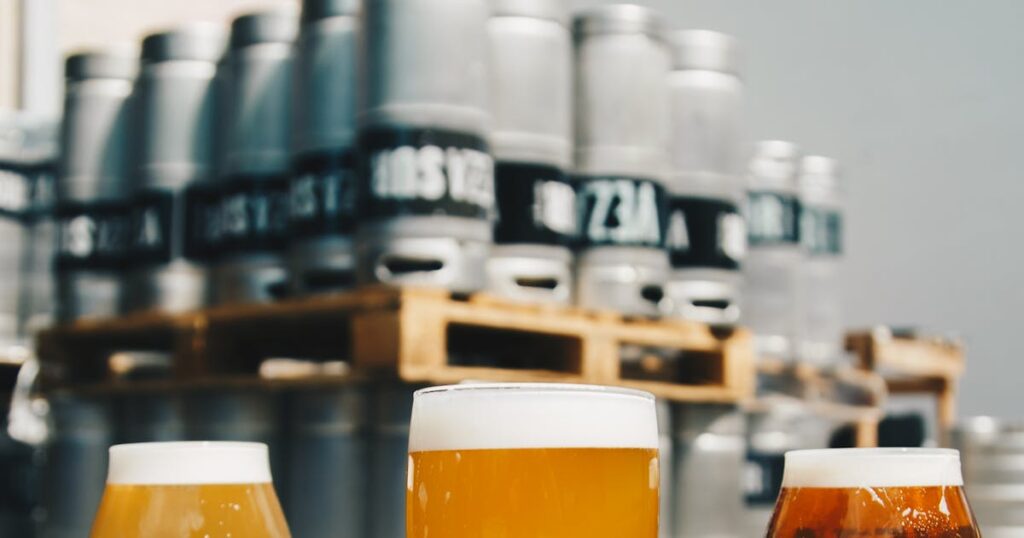
My first successful batch was revelatory. Poured into a crisp glass, the beer was golden and brilliant under light, with a fine white head that lingered. The aroma was restrained—a whisper of fresh bread, a faint hint of floral hop. On the palate, it opened with malt sweetness (bread, honey), refined mid-palate, and finished remarkably dry with a clean, peppery note from the noble hops. ABV was imperceptible.
But here’s what makes Korean-style lagers special: food pairing. I tasted this alongside kimchi (fermented cabbage), grilled mackerel with salt and sesame, and a Korean rice cake. The beer disappeared into these dishes, enhancing rather than competing. It’s the exact opposite of a hoppy IPA’s aggressiveness—it’s respectful, collaborative. This is why Korean culture has built a drinking tradition around beer paired with bold, complex foods.
Pro Tips & Common Mistakes
After brewing six batches, I’ve learned what separates mediocre Korean-style lagers from exceptional ones:
- Don’t rush the conditioning. I made this mistake on batch three. I cold-conditioned for only three weeks and bottled. The beer was clean enough, but it lacked that silky refinement. Weeks five through seven make all the difference.
- Ensure perfect pitch rate and aeration. Under-pitching or under-oxygenating will invite esters and off-flavours. Korean brewers treat this like gospel.
- Use proper water chemistry. Don’t ignore it. Soft, slightly mineralized water is essential. Your tap water might work, but mashing with it first will reveal gaps.
- Avoid adjuncts initially. If you’re new to lager brewing, skip the corn or rice and nail the all-malt version first. The adjuncts are a refinement, not a shortcut.
- Bottle condition carefully. Korean brewers often use forced carbonation for precision, but bottle conditioning works. Target 2.3–2.5 volumes of CO₂ for a gentle, persistent carbonation that mirrors the subtlety of the beer.
Taking It Further: Variations & Experimentation
Once you’ve mastered the classic version, there’s room to explore:
- Rice adjunct versions: Substituting 10% of the grain bill with flaked rice produces an even lighter, crisper finish. Traditionally used in Korean brewing; worth experimenting with.
- Dry-hopping subtly: A 5-day dry hop with 5g of Saaz or Hallertau per batch adds a ghostly floral quality without aroma intensity.
- Hybrid approaches: Some Korean brewers now experiment with Kveik yeast strains for faster turnaround, creating a hybrid warm-fermented lager. Unconventional, but compelling if you’re curious.

Conclusion: Why Korean-Style Lagers Deserve Your Next Brew
We’re living through a fascinating moment in homebrewing. After years of chasing extreme hop profiles and exotic adjuncts, there’s a growing recognition that restraint and precision—the virtues of Korean brewing philosophy—create something more meaningful. A Korean-style lager isn’t flashy. It won’t blow your mind on first sip. But over an evening, paired with good food and good company, it reveals a quiet mastery that earns respect.
If you’re ready to challenge yourself with a demanding but rewarding style, here’s my recommendation: brew a Korean-style lager this autumn. Invest in proper fermentation temperature control. Condition patiently. Taste it with food. And let the simplicity of the style teach you something about the craft.
🍺 Join the Brotherhood — Monthly brews, stories & monk wisdom
Subscribe for exclusive recipes, early brew logs, and behind-the-scenes updates straight to your inbox.