The homebrewing landscape is shifting. For years, my philosophy has been simple: more alcohol, more flavour. Then, about six months ago, I brewed my first non-alcoholic beer with a twist—I infused it with functional adaptogens. The result? A revelation.
Non-alcoholic beer isn’t new. But brewing craft NA beers at home with medicinal herbs and nootropics? That’s the 2026 trend nobody saw coming, and it’s changing how I think about beer entirely. The market agrees: NA beer sales jumped 111% globally between 2021 and 2025. People want flavour without the hangover, relaxation without the regret. And they want to brew it themselves.
This post is my honest documentation of the alcohol-free brewing journey—the failures, the unexpected triumphs, and the science that makes it work. If you’re curious about staying productive on a weeknight while enjoying a genuinely complex beer, read on.
Why Non-Alcoholic Beer Matters in 2026
When I started homebrewing fifteen years ago, the goal was always the same: ferment, bottle, drink. Higher gravity beers were badges of honour. But I’ve watched the industry change. People work longer hours. They drive more. They care about liver health and waistlines. And some of them—myself included on certain evenings—simply want the ritual of brewing and drinking beer without waking up fuzzy at 6 AM.
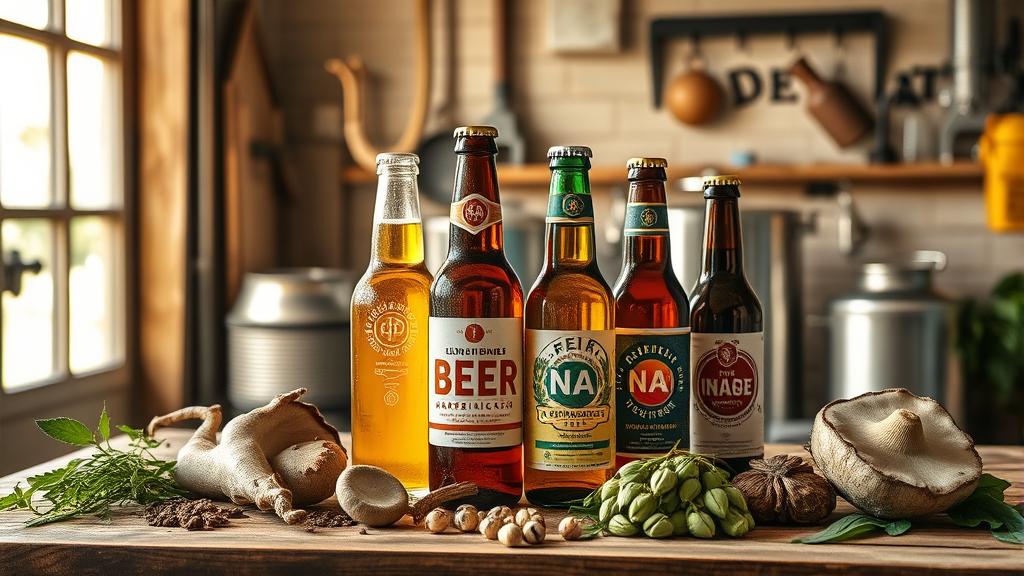
Non-alcoholic beer bridges something important: it offers the sensory experience of craft brewing without the metabolic baggage. Add adaptogens—herbs like ashwagandha, lion’s mane mushroom, and L-theanine—and you’re creating something genuinely functional. These ingredients are proven to reduce cortisol, improve sleep, and enhance focus. Combine that with the craft and complexity of proper beer? You’ve got a beverage that feels more like self-care than a cheat meal.
Bennett’s Brew started as a document of my journey from novice to licensed brewer. This feels like the next chapter: exploring what beer can be beyond traditional alcohol content. It’s Benedictine in spirit—purposeful, measured, honest about what nourishes body and mind.
Understanding the Challenge: Why NA Brewing is Different
Standard homebrewing relies on yeast and fermentation time to develop complexity and flavour. In a typical 5% ABV pale ale, the yeast works for 7–14 days, converting sugars to alcohol and creating by-products (esters, phenols) that give beer its character. Non-alcoholic beer has a problem: you need those yeast by-products for flavour, but you can’t allow enough fermentation to generate significant alcohol.
This is why most commercial NA beers taste thin or chemical. The brewers often use one of three methods:
- Reverse osmosis: Brew normally, then remove alcohol. Effective, but expensive and not accessible to homebrewers.
- Special yeast strains: Use yeasts that produce minimal alcohol. Works, but lacks traditional beer complexity.
- Hot mash method: The homebrewer’s solution—and the one I use.
The hot mash method is where the science gets interesting. By mashing at unusually high temperatures (around 68–70°C / 154–158°F), you create a wort with complex sugars that yeast struggles to ferment fully. This keeps ABV low (under 0.5%) while retaining mouthfeel, body, and the deep Maillard reaction flavours from the grain.
It sounds simple. It isn’t. I’ll walk you through it.
Brew Day: The Hot Mash Method Step-by-Step
What You’ll Need:
- All-grain brewing setup (or a high-quality mashing vessel)
- Precise thermometer (±0.5°C accuracy)
- 2.0 kg (4.4 lbs) pale malt
- 0.3 kg (0.66 lbs) crystal malt (40L)
- 0.2 kg (0.44 lbs) wheat malt
- 30g Cascade hops (60-minute boil)
- 15g Citra hops (aroma, 5-minute addition)
- Neutral ale yeast (Safale US-05 or similar)
The Process (for 10 litres / 2.6 gallons):
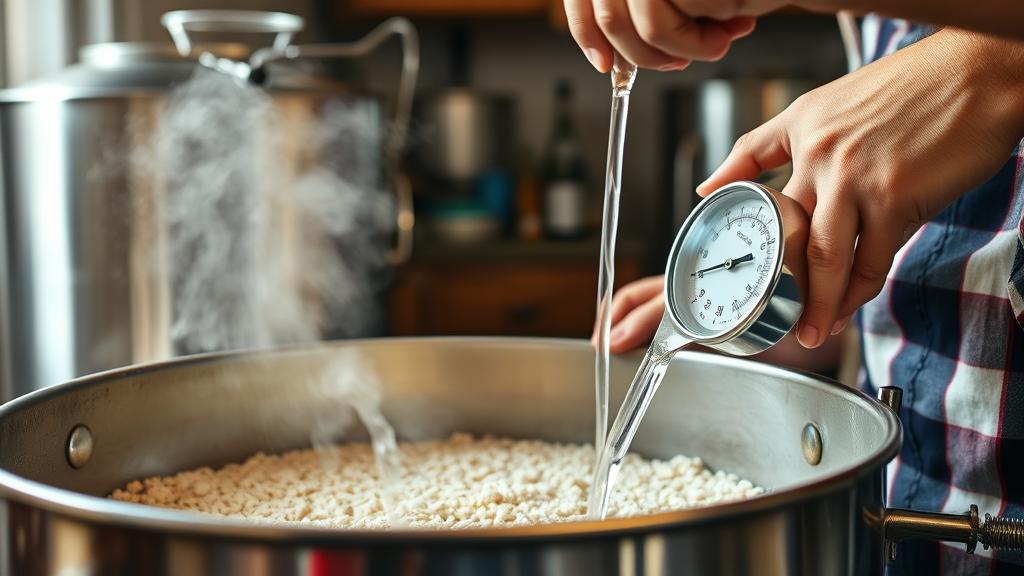
- Mash-in at 70°C (158°F): Heat 13 litres (3.4 gallons) of water to exactly 70°C. Add crushed grain slowly, stirring to reach a stable mash temperature. Hold at 70°C for 90 minutes. This high temperature is the key—it maximises complex sugars while minimising simple sugars that yeast can ferment to alcohol.
- Sparge and boil: Collect wort at 65°C (149°F) to preserve body. Boil for 60 minutes. Add Cascade hops at the start. Chill to 20°C (68°F) and transfer to a clean fermenter.
- Pitch and ferment: Use a standard ale yeast. Even at low gravity, fermentation takes 5–7 days. Don’t rush it—the yeast will plateau naturally when it hits the unfermentable sugars. Final gravity should be around 1.008–1.012 (for a starting gravity of roughly 1.020–1.025).
- Secondary and bottle: After 5 days, rack to a secondary fermenter (optional but recommended—cleaner final product). Bottle with minimal priming sugar (2.5g/L instead of the usual 5g/L). Over-carbonating NA beer creates off-flavours.
This entire process mirrors normal homebrewing. The difference is control and patience. You’re not chasing alcohol; you’re chasing flavour and body.
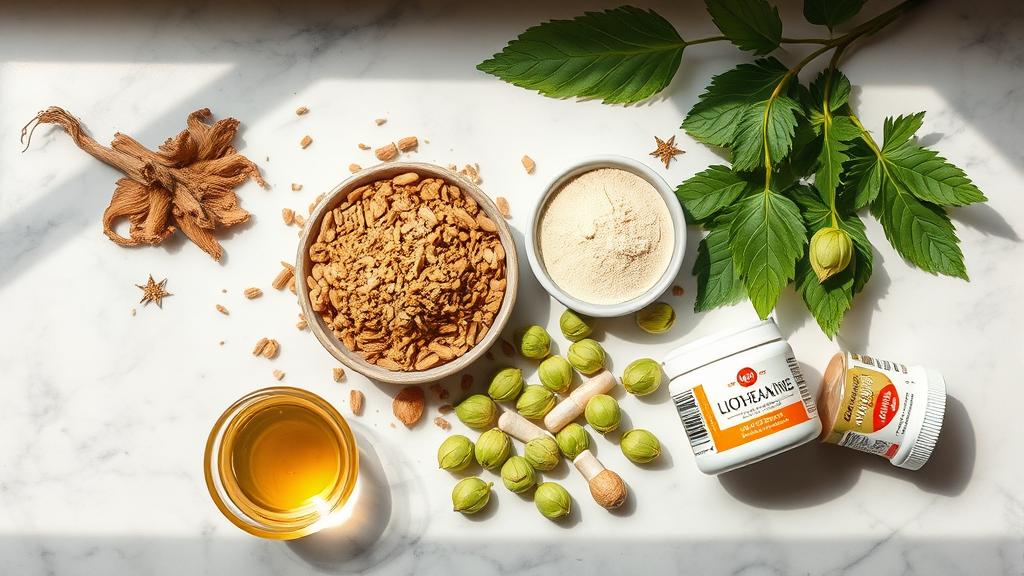
The Functional Turn: Adding Adaptogens
So you’ve brewed a respectable NA beer. Now—what if you could make it functional?
Adaptogens are plants that help the body resist stress and maintain balance. They’re not stimulants. They don’t give you energy; they help you handle chaos more gracefully. In beer? They’re revelatory.
My Current Blend (for 10 litres):
- Ashwagandha root extract (500mg): Lowers cortisol, supports sleep. Subtle earthy note.
- Lion’s mane mushroom powder (300mg): Supports cognitive function. Adds umami depth.
- L-theanine (100mg): Promotes calm alertness. Common in hops anyway—this amplifies it.
- Fresh hops (20g Citra, added at flame-out): GABA content naturally supports relaxation. Plus aroma.
I add the powdered ingredients to the secondary fermenter (they won’t dissolve in the wort, so secondary is cleaner). The extraction into the beer happens slowly over 7 days. The result tastes like a floral, slightly herbal NA golden ale—nothing medicinal, nothing soapy. Just clean, balanced, and genuinely calming to drink.
The science is solid. Hops contain GABA, which promotes calmness. Ashwagandha is proven to reduce cortisol by 30% in stressed individuals. Lion’s mane stimulates nerve growth factor (NGF), supporting memory and focus. None of these knock you out—they’re subtle, synergistic supports. Perfect for a weeknight.
A word of caution: source your adaptogens from reputable suppliers. The Malt Miller and Geterbrewed now stock brewing-grade adaptogenic extracts specifically calibrated for beer. If you’re sourcing raw powders, ensure they’re food-safe and tested for contaminants. Your health matters as much as your beer does.
Fermentation & Conditioning: Patience Pays
Non-alcoholic beer ferments slowly. This isn’t a bug—it’s a feature. The limited fermentable sugars mean yeast activity plateaus naturally, often within 5–7 days. Don’t panic if it looks stalled by day 3. Take a gravity reading. If it’s stable (same reading two days running), you’re done fermenting.
Secondary conditioning in NA beer is worth the extra step. Because there’s no alcohol to act as a preservative, clarity and stability matter more. A week in secondary, cold-crashed at 2°C (36°F), will improve clarity dramatically and reduce any yeast-derived off-flavours.
Carbonation is crucial. NA beers can turn cidery or vinegary if they oxidise. Bottle under CO₂ if possible; otherwise, keep priming sugar minimal and bottle quickly. Store cold (4°C / 39°F) and drink within 6–8 weeks. Unlike traditional ales, this doesn’t improve with age.
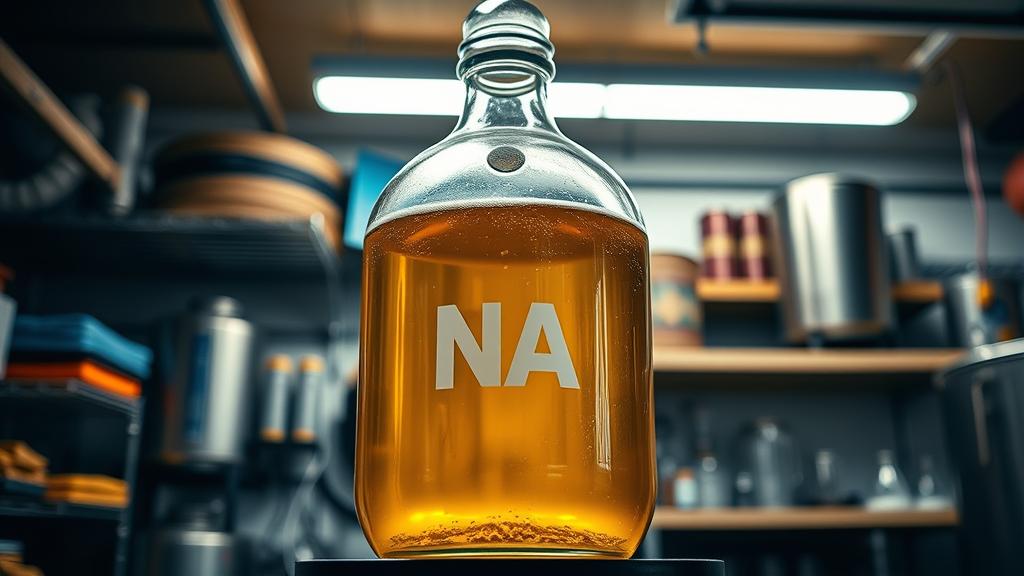
Tasting Notes: My Honest Review
I’ve made this brew twice now. The first batch was thin—I hadn’t figured out the mash temperature. The second? Genuinely excellent.
Appearance: Golden amber, crystal clear. Better head retention than I expected (protein content from the wheat malt helps).
Aroma: Herbal, slightly floral. The Citra hops give grapefruit and citrus notes; the ashwagandha and lion’s mane add a subtle earthiness, like breathing in a forest after rain. Not medicinal. Clean.
Taste: Smooth, dry finish. The pale malt comes through with biscuit and honey notes. Crystal malt adds caramel depth. The adaptive ingredients sit in the background—you feel them rather than taste them. About 20 minutes after drinking, there’s a genuine sense of ease. No jitters. No slump. Just calm.
Mouthfeel: The hot mash method delivers. This isn’t thin or watery. It has body—creamy, slightly oily, satisfying. I’d serve it in a snifter rather than a pint glass. It deserves contemplation.
Would I serve this to my beer-snob mates expecting a 6.5% IPA? No. But would they genuinely enjoy it as an alternative on a Tuesday evening? Absolutely. And that’s the point. This isn’t beer pretending to be something else. It’s beer being honest about what humans actually need sometimes.
Pro Tips & Common Mistakes
Mistake #1: Brewing to 0.0% ABV. You can’t. Fermentation always produces trace alcohol. Aim for 0.3–0.5% ABV (just under the legal NA threshold of 0.5% in most countries). Trying to hit zero often results in incomplete fermentation and stalled flavour development.
Mistake #2: Rushing carbonation. NA beer is more oxygen-sensitive than regular beer. Use low priming sugar (2.0–2.5g/L), bottle quickly, and consider counter-pressure bottling if you have CO₂. The extra effort prevents oxidation.
Mistake #3: Treating it like a standard beer. Your mash schedule, fermentation timeline, and storage are all different. Read the BJCP style guidelines for NA beer. Understand that what works for your imperial stout won’t work here.
Pro Tip #1: Experiment with noble hops. Cascade, Saaz, and Styrian Goldings work beautifully in NA beers. Their lower alpha-acid profiles and delicate aromas shine when alcohol doesn’t dominate.
Pro Tip #2: Consider a mashing step infusion. If you have precise temperature control, try a two-step mash: 62°C (144°F) for 30 minutes, then raise to 70°C (158°F) for another 60 minutes. This develops even more complexity.
Pro Tip #3: Brew smaller batches first. A 5-litre (1.3-gallon) test batch lets you dial in your process before committing to a full 20-litre (5.3-gallon) brew. The ingredient costs are lower, and you’ll learn faster.
Variations & Next-Level Experiments
Once you’ve nailed the base recipe, the variations are endless.
NA Golden Saison: Use Belgian yeast, 65°C (149°F) mash, and add a pinch of coriander and orange peel at flame-out. The yeast’s fruity esters shine without the alcohol masking them. Add rhodiola (another adaptogen) for endurance-supporting benefits.
NA Gruit Revival: Forget hops entirely. Use historical gruit herbs—mugwort, wormwood, yarrow—plus modern adaptogens. You’re essentially brewing a medicinal ale, honoring the monastic brewing tradition that inspired Bennett’s Brew. Fascinating and genuinely tasty.
NA Barrel-Aged Experiment: Secondary ferment in a sanitised oak spiral for 8 weeks. Oak tannins add structure that compensates for the missing alcohol. Subtle, sophisticated, and completely achievable at home.
NA Fruit Sour: Use a mixed fermentation with Lactobacillus and Brettanomyces (or buy a souring culture). The hot mash limits alcohol; the wild yeasts add complexity. Add berries post-fermentation. It’s closer to a fruit-forward tisane than beer, but genuinely good.
The constraint—low alcohol—forces creativity. I love it.
Why This Matters: The Bigger Picture
I’ve spent fifteen years chasing extraction and intensity in homebrewing. More hops. More gravity. More time in the oak. There’s nobility in that pursuit. But I’m also a 42-year-old with responsibilities, a body that doesn’t bounce back from hangovers, and an interest in tools that support clarity and calm.
Non-alcoholic brewing with functional ingredients sits at an intersection I didn’t expect to value: craft and wellness, ritual and restraint. It’s monastic, in a way. The Benedictines brewed beer for nutrition and community, not intoxication. Maybe that’s the tradition worth returning to.
The market thinks so too. UK functional drinks are projected to reach £8.3 billion by 2027. Homebrewers are ahead of that curve—as we always are. In three years, NA brewing will be mainstream. In five, functional beer will be its own category at competitions.
I’m documenting the journey because it matters. This is what homebrewing becomes when you stop chasing numbers and start asking real questions: What do I actually want from a beer? What does my body need? How can ritual and science serve both?
Non-alcoholic brewing answers those questions honestly. No marketing. No pretence. Just craft, thought, and a beer that makes you feel genuinely better.
Brew this. Taste it. Tell me what you find.
🍺 Join the Brotherhood — Monthly brews, stories & monk wisdom
Subscribe for exclusive recipes, early brew logs, and behind-the-scenes updates straight to your inbox.