When I first started home brewing, I was obsessed with single approaches: pick a style, nail the recipe, repeat. Pale ales went one way, stouts another. The world felt binary.
Then I stumbled upon something that changed everything: blending. Not in the chaotic, “I’ve brewed too many experiments” sense, but deliberate, thoughtful blending—combining malt-forward ales with hop-driven creations to unlock complexity that neither could achieve alone. It sounds simple, but it’s where craft beer is heading in 2026, and frankly, it’s where home brewing gets genuinely interesting.
This isn’t about covering mistakes. It’s about purpose. It’s about understanding that sometimes the real magic happens not in the kettle, but in the glass.
Understanding the Blending Philosophy: Why Two Beers Are Better Than One
Blended ales aren’t new—Belgian brewers have been coupage (blending aged ales) for centuries. But what’s trending now is different. Home brewers are intentionally brewing two complementary ales specifically to blend, not as an afterthought but as the focal point.
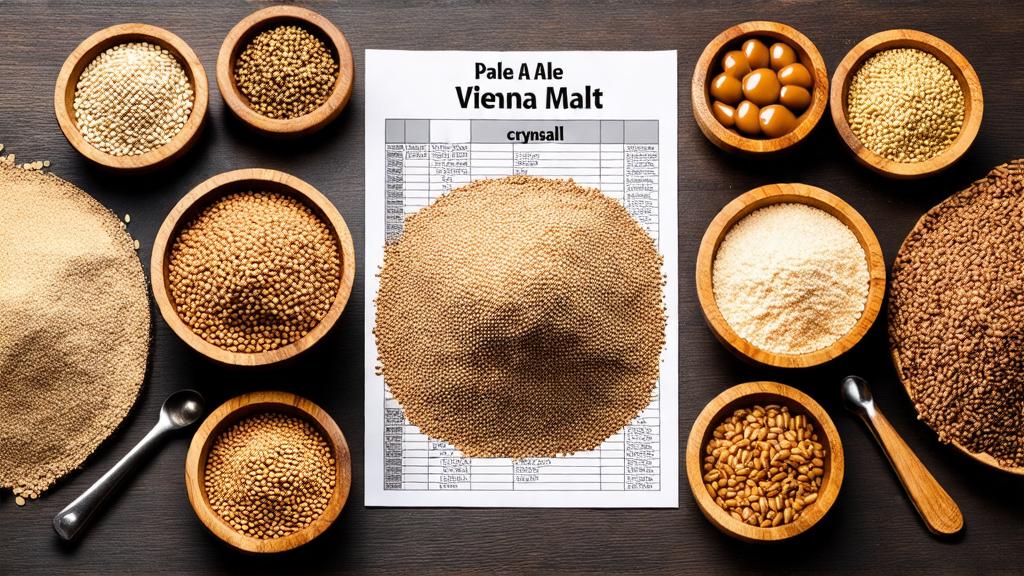
The philosophy is elegant: one beer provides structure and complexity (your malt backbone), the other provides brightness, character, or dynamism (your hop profile or fruit accent). When married together, they create something neither could alone.
I think of it like the Benedictine approach to craftsmanship—nothing is wasted, everything is purposeful. A malt-forward British Bitter might be deep and round, 5% ABV, smooth as evening prayer. A dry-hopped Pale Ale might be crisp and resinous, 6.5% ABV, alive with pine and citrus. Alone, they’re excellent. Together at a 60/40 ratio, they’re transcendent: the malt provides foundation, the hops lift it skyward.
Brewing for the Blend: Choosing Your Two Base Beers
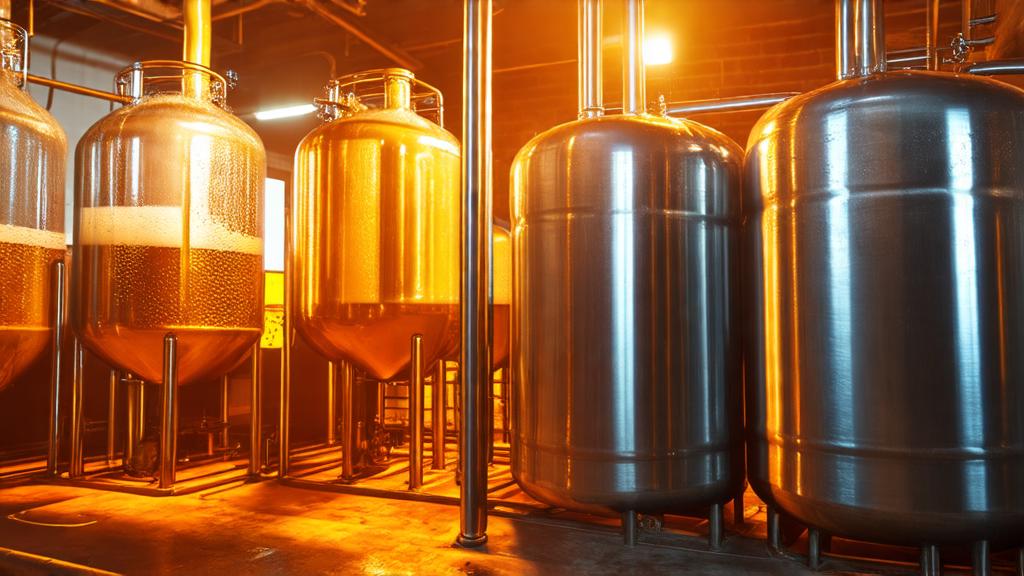
The first step is intention. Don’t brew two random ales and hope they play nice. Design them as a pair.
I typically go for one of these combinations:
- Malt + Hop: A Vienna or Munich lager base (full, warm, slightly sweet, 5–5.5% ABV) with a crisp, dry-hopped Pale Ale (clean, bitter finish, 6–6.5% ABV). At a 70/30 blend, the malt richness softens the hop bite while the hops prevent cloying sweetness. Beautiful balance.
- Base + Acid: A full-bodied brown ale (toffee, nuts, round mouthfeel) blended with a kettle-soured pale ale (bright acidity, clean finish). The sourness cuts through richness. I do this 65/35, and it’s genuinely complex.
- Body + Brightness: A low-attenuating ale that sits at 1.018 FG (final gravity) with residual sweetness, blended with a high-attenuating IPA at 1.008 FG. The IPA’s dryness balances the body’s residual sugars. Often 50/50 works best here.
Here’s what matters: each beer should be technically excellent on its own. If either beer isn’t good solo, blending won’t save it. This connects to broader philosophy—like brewing with terroir in mind, you’re working with natural character, not masking flaws. Treat both beers as finished products. Then blend.
For volume, I usually brew two 20-litre (5.3 US gallon) batches in parallel. This gives me flexibility: I can blend 60/40, 70/30, or even 50/50 without running out of either base beer. I keep detailed notes on each.
The Brewing Process: Technical Tweaks for Blending
Once you’ve chosen your pair, the brewing is mostly standard. But there are tweaks:
- Fermentation timing: I stagger the start so both beers finish within 3–5 days of each other. This keeps them fresh and vibrant at the same carbonation age. If one finishes 2 weeks before the other, you risk staleness in the early finisher.
- Temperature control: Dial in clean fermentations. Off-flavours in either base will amplify when blended. I use pressure fermentation for cleaner profiles, though standard ale yeast at 18–20°C (64–68°F) is fine.
- Hopping strategy: For the hop-forward beer, consider late additions (steep your hops at 70°C / 158°F for 20 minutes post-boil rather than traditional 60-minute bittering). This avoids hard bitterness that might dominate in a blend. You want aroma and character, not just IBUs.
- Carbonation consistency: Both beers should hit the same final carbonation level—usually 2.4–2.6 volumes of CO₂ for ales—before blending. Mismatched carbonation is jarring.
The Blending Process: Precision and Proportion
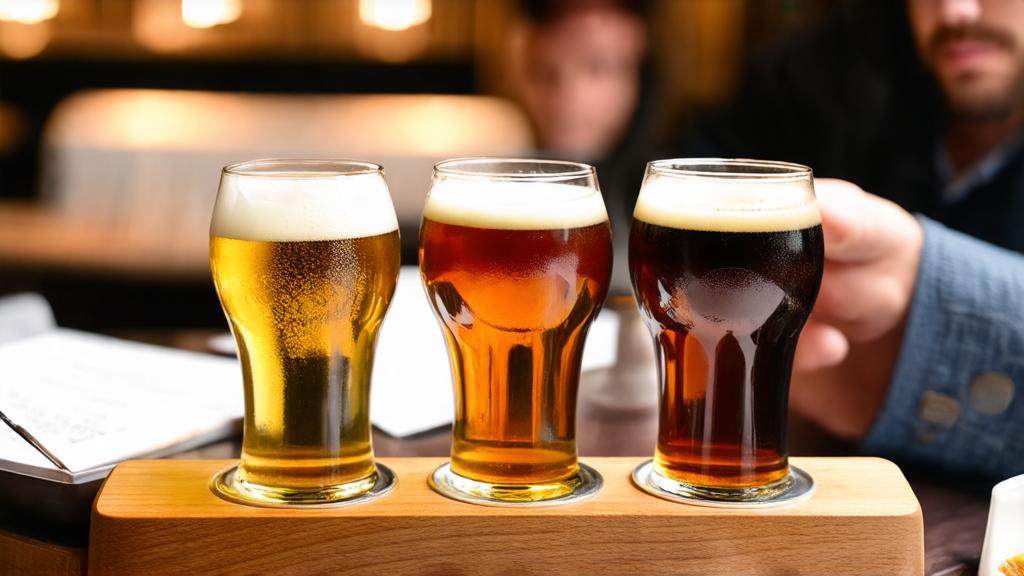
Here’s where most home brewers go wrong: they wing it. Pour some of this, some of that, taste, done.
I treat blending like sensory analysis. I use a calibrated hydrometer or scale to measure precise volumes. For a 500ml (16.9 fl oz) test blend, I’ll measure 300ml (10.1 fl oz) of base beer A and 200ml (6.7 fl oz) of base beer B, mix, taste, note. Then I’ll try 350/150. Then 280/220. I create a small spreadsheet: ratio, impressions, score out of 10. After 4–5 trials, a pattern emerges.
The winning ratio usually isn’t what I expected. I’ve had blends I thought would be 60/40 reveal themselves as best at 73/27. Precision matters. Your palate will tell you where equilibrium lies.
Once you’ve found the golden ratio, you can blend in bulk. I use kegs: tap off the chosen volumes into a third keg, chill, and let it marry for 48 hours before serving. This settles any micro-bubbles and lets the blend “get to know itself,” as I think of it.
Tasting and Documentation: Building Your Blending Intuition
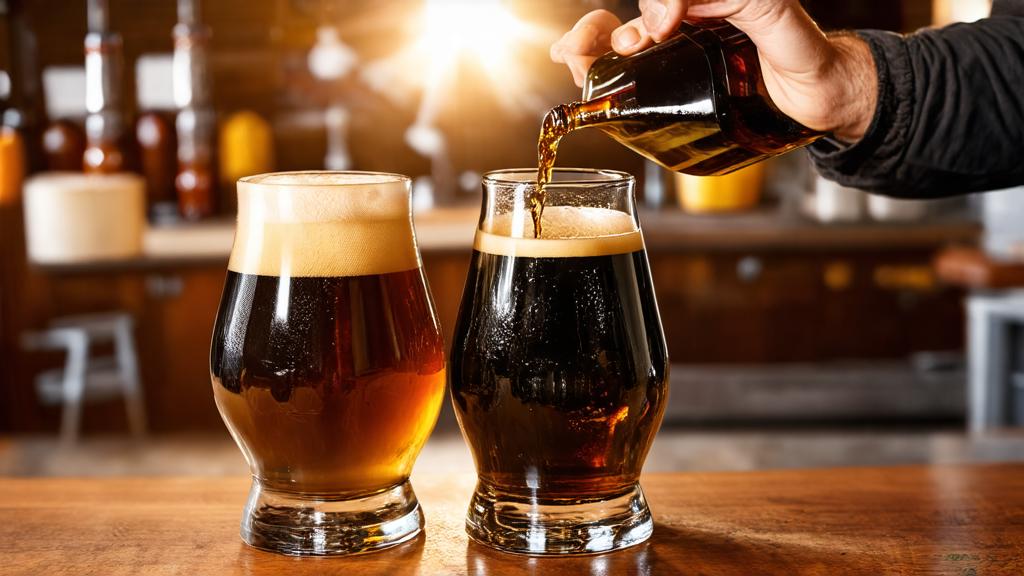
This is where the real learning lives. When I taste my base beers and then the blend, I’m not just checking if it’s good. I’m asking: What changed? What emerged? What surprised me?
I take notes on:
- Nose: Did the hop aroma soften or sharpen? Did the malt become more or less prominent?
- Palate: What’s the first flavour? The middle? The finish? Did the blend create something new, or is it just two beers sitting side by side?
- Mouthfeel: Is there a velvety texture that wasn’t there before? A crisp snap? Blending can shift mouthfeel dramatically.
- Finish: Does the blend end cleanly, or is there a disconnect?
Over time, this teaches you proportion intuition. You start to see which styles blend brilliantly (low-ABV malty beer + crisp dry-hopped pale ale = always wins). Which combinations are risky (two hop-forward beers can clash). When to push experimentation.
This connects to external research too. I read the BJCP style guidelines and explore how established brewers like Orval and Guinness blend reserve stock with fresh beer to hit consistency targets. Understanding their approach informs my own philosophy.
Common Mistakes and How to Avoid Them
I’ve learned the hard way:
- Blending to hide flaws: If either base beer tastes off, the blend will taste really off. Don’t do this. Dump the flawed batch and start over. Respect your time.
- Over-carbonating before blending: High carbonation in both base beers creates an overly sharp blend. Drop to 2.2 volumes CO₂ for at least one of the beers to dial in control.
- Blending too early: Both beers need 2–3 weeks conditioning post-fermentation. They’re still cleaning up after themselves. Blend premature ales and you get astringency.
- Inconsistent proportions across batches: If you hit a winner, write down the ratio and the ABV/gravity readings of each base. Future you will thank present you. Gravities shift with seasons, ingredients, efficiency. Ratios need to flex accordingly.
- Forgetting that blending changes over time: A blend is vibrant on day 1, but by day 21 on tap, the flavour can drift. Keep blended beer refrigerated and on gas. It should age gracefully, not collapse.
Ideas for Your Next Blend
- The “Summer Session”: Blend a crisp Munich Helles with a citrus-forward single-hop Pale Ale (using new British varieties like Olicana or Harlequin). Brilliant for August.
- The “Autumn Complexity”: Blend a malt-forward English Brown Ale (crystal malts, toffee) with a dry-hopped amber using earthy UK hops. Rich but dry.
- The “Off-Trial Experiment”: Brew a base bitter and spike one batch with a small fruit addition (cherry, apple) just before packaging. Blend the fruit variant at 25–30% with the base. Creates nuance without overwhelming.
- The “Monk’s Choice”: Blend a low-ABV contemplative ale (3.5%, malty, round) with an aged barrel-aged dark ale (if you have access). The barrel character adds depth without dominating. Even 10–15% barrel blend can transform a simple ale into something special.
Why This Matters Now
Blended ales represent something important: a move away from “style purity” into intentional complexity. Brewers (and home brewers especially) are realizing that the most interesting drinks aren’t always the ones that nail a narrow brief. They’re the ones that dare to combine.
In 2026, the craft beer world is tired of extremes. Mega-hop-bombs. Saccharine dessert stouts. Over-soured wild ales. What’s emerging is a sophistication: beers that balance multiple ideas at once. Beers that make you think. Beers that have character rather than just gimmick.
Blending is where that future lives for home brewers. It’s accessible. It’s purposeful. And if you approach it with intention—like the monks who brewed for clarity, not spectacle—you’ll brew beer that tastes like expertise.
Keep Exploring
Blending is a professional brewer’s secret weapon. Beer and Brewing regularly cover barrel and beer blending techniques worth borrowing for your homebrewery.
🍺 Join the Brotherhood — Monthly brews, stories & monk wisdom
Subscribe for exclusive recipes, early brew logs, and behind-the-scenes updates straight to your inbox.