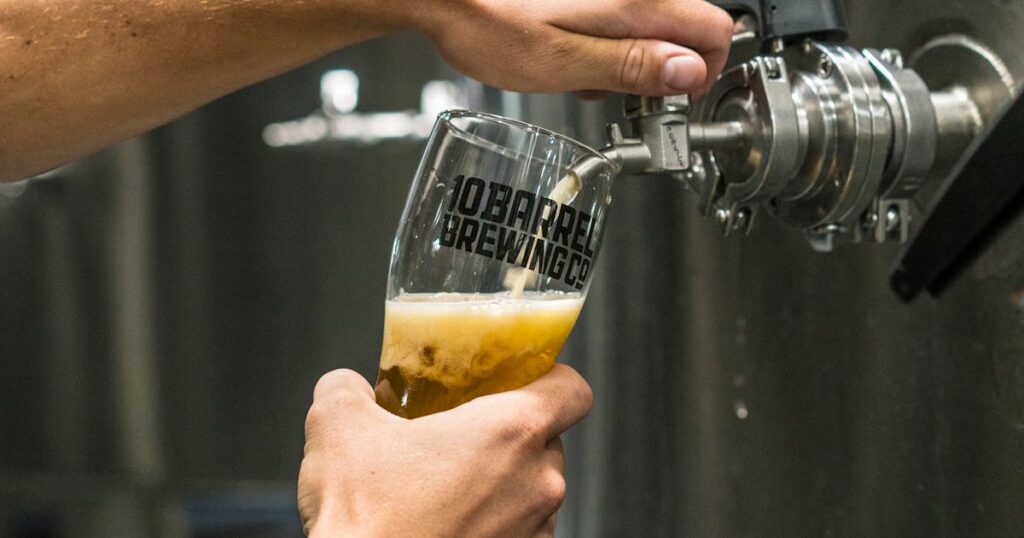
Braggot sits at the fascinating intersection of beer and mead, combining the best of both worlds into something entirely its own. And for homebrewers looking to try something different this spring, it’s a style that rewards creativity without demanding a degree in fermentation science. — for style guidelines, check the BJCP.
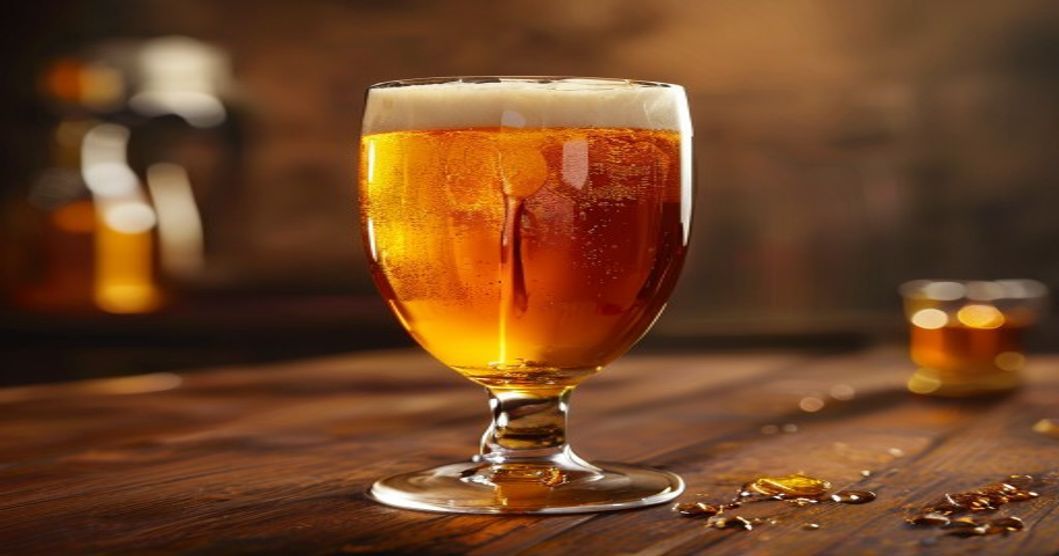 The Malt Miller or mead beer hybrid poured into a tulip glass” width=”1059″ height=”556″ />
If you’ve been exploring mead making or honing your all-grain brewing technique, braggot is where those two paths converge. Historically rooted in ancient Northern European traditions, this hybrid fermentable uses both malted grain and honey, producing a beverage that can lean sweet, dry, hoppy, or spicy depending on how you build it.
What makes braggot so appealing right now is its flexibility. With spring temperatures rising and summer session beers on the mind, a well-made braggot can land anywhere from 4% to 12% ABV, meaning you can craft something light and crushable or rich and sippable. The trick is balancing malt character with honey without letting either dominate — a skill that translates directly into better all-round brewing through improved ingredient understanding.
What Exactly Is Braggot?
By definition, braggot must contain at least 50% of its fermentable sugars from honey, with the remainder coming from malted grains. That’s the line that separates it from a honey beer (which uses honey as an adjunct in smaller quantities) and from traditional mead (which uses only honey). The malt backbone provides structure, body, and fermentable depth, while the honey brings distinctive floral or varietal aromatics that no crystal malt can replicate.
This isn’t a new invention. Historical records show braggot was brewed across medieval Wales and Northern Europe, often spiced with herbs like heather, meadowsweet, or bog myrtle — essentially making it an ancient gruit-style beverage with a honey twist. Modern interpretations have stripped back the botanicals in favour of cleaner malt profiles and restrained hopping, letting the honey take centre stage.
Choosing Your Honey Matters
The single biggest variable in braggot is your honey selection. Unlike standard beer where base malt sets the tone, braggot’s character is fundamentally shaped by the floral source of your honey:
- Orange blossom — Light, citrusy, works beautifully with pale ale malts and noble hops
- Wildflower — Versatile and complex, a solid all-rounder for first-time braggot brewers
- Buckwheat — Dark, molasses-like, pairs well with darker malts and a smokey rauchbier-inspired grain bill
- Heather honey — A traditional choice that brings floral depth and pairs with the style’s historical roots
- Manuka — Intensely aromatic but expensive; best reserved for braggots where it’s the star
Whatever you choose, avoid supermarket honey labelled as “blended EU/Non-EU” — these are often heat-treated and filtered, stripping the volatile aromatics you want. Look for raw, unfiltered honey from a local apiary. Your braggot will thank you.

Building the Grain Bill
Since honey is highly fermentable — typically 95–100% apparent attenuation — your braggot can finish very dry unless you build in some body from the malt side. That’s where your grain selection becomes critical:
- Base malt: Maris Otter or Vienna malt provide enough malt backbone without overwhelming the honey
- Caramel/Crystal malts: A small percentage (5–10%) adds residual sweetness to balance honey’s dry finish
- Flaked oats or wheat: Boost body and head retention without adding fermentable sugar
- Honey malt: Yes, it’s a real thing — this malted barley imparts a gentle honey-like sweetness that reinforces the theme
Aim for a starting gravity of around 1.050–1.080 depending on your target ABV, with roughly 50–60% of your fermentables coming from honey and 40–50% from malt.
Hops and Yeast: Keep It Subtle
Braggot is not a hop showcase. The honey is the aromatics driver, so choose hops that complement rather than compete. Low-alpha noble varieties like Hallertau Mittelfrüh, Tettnang, or Saaz work beautifully, providing mild bitterness and a clean finish without pushing citrus or tropical notes into honey territory.
For yeast, consider:
- English ale yeast (Wyeast 1098 or equivalent) — Attenuates well, leaves some ester character that plays nicely with honey
- White Labs WLP001 / Wyeast 1056 — Clean American ale character, lets honey speak clearly
- Kveik yeast — If you’re brewing in warmer weather, a kveik strain at 30–35°C will ferment clean and fast, perfect for that Norwegian farmhouse approach
- Lager yeast — A crisp lager fermentation can produce a braggot with mead-like clarity and a clean finish
A Simple Braggot Recipe to Try
Here’s a 5-gallon all-grain recipe designed for intermediate homebrewers who understand recipe scaling and batch management:
Fermentables:
- 2 kg (4.4 lbs) Maris Otter pale malt
- 0.5 kg (1.1 lbs) Vienna malt
- 0.25 kg (0.55 lbs) Honey malt
- 0.15 kg (0.33 lbs) Caramunich I
- 1.8 kg (4 lbs) Orange blossom honey (added at flameout)
Hops:
- 20g Hallertau Mittelfrüh (3.5% AA) — 60 minutes
- 10g Hallertau Mittelfrüh — 10 minutes
Yeast: Wyeast 1056 American Ale or Kveik Voss
Process: Mash at 66°C for 60 minutes. Boil for 60 minutes, adding hops per schedule. At flameout, stir in the honey until fully dissolved (do not boil honey — it drives off delicate aromatics). Cool, aerate, and pitch yeast. Ferment at 18°C (ale yeast) or 30°C (kveik) for 10–14 days, then cold crash and package.
Expect an OG around 1.062 and a FG of approximately 1.010, giving you a 6.8% ABV braggot with a beautiful golden-amber colour and a gentle honey sweetness on the nose.

Carbonation and Serving Suggestions
Braggot responds well to moderate carbonation — think 2.3–2.6 volumes of CO₂, similar to an English ale. It can be bottle-conditioned or kegged. If bottle conditioning, allow extra time (3–4 weeks) as honey-based fermentations can be slower to carbonate than all-malt beers.
Serve braggot in a tulip or stemmed glass at around 10–12°C. It pairs remarkably well with:
- Soft, semi-aged cheeses (Brie, Camembert, Gouda)
- Roasted pork or honey-glazed ham
- Fruit-based desserts (apple tart, pear crumble)
- Spiced nuts and charcuterie boards
For a comparative tasting session, try a flight that moves from a dry hopped braggot through a traditional English braggot to a sweet spiced version — it’s a fascinating study in how honey variety and hopping levels reshape the same base style.
Final Thoughts
Braggot is one of those styles that surprises everyone who tries it. Beer drinkers appreciate the malt structure. Mead drinkers love the honey character. And as a brewer, you get to step outside the usual style guidelines and just create something that tastes brilliant.
If you’ve never brewed with honey before, braggot is a far better introduction than a traditional mead — the malt provides enough familiar structure to keep fermentation predictable while the honey opens up a new world of aromatic ingredients. Give it a go this spring and see what hybrid magic you can make.
Got questions about your first braggot brew? The community at HomeBrewTalk is a brilliant place to share your results and swap recipes.
🍺 Join the Brotherhood — Monthly brews, stories & monk wisdom
Subscribe for exclusive recipes, early brew logs, and behind-the-scenes updates straight to your inbox.