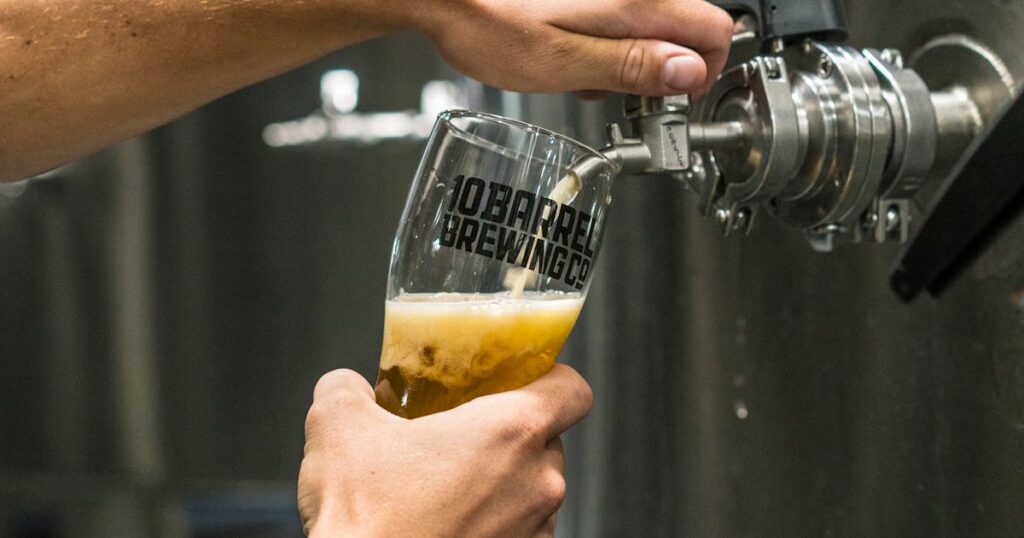
Water is ninety percent of beer. Yet most homebrewers obsess over hops, malt, and yeast — while ignoring the one ingredient that shapes everything. Your brewing water isn’t just H₂O. It’s a complex mineral profile that historically determined what beer styles thrived in each region, and it fundamentally changes how your mash behaves and what your finished beer tastes like.
The mineral content of your water — calcium, magnesium, sulfates, chlorides, and bicarbonates — directly affects mash pH, hop flavour expression, and yeast performance. If you want to brew world-class barrel-aged beer instead of merely decent beer, you need to understand water chemistry.

The Historic Regional Connection
Before modern chemistry, brewers didn’t understand water composition — but they learned by trial and error. Dublin’s hard water, rich in calcium and bicarbonates, proved perfect for stouts and porters. The alkalinity emphasises dark malts’ natural acidity, creating balanced mashes and intensely flavourful beers. This is exactly why dark milds and British ales rely so heavily on hard water regions.
Pilsen’s soft water — low in minerals and alkalinity — is ideal for pale lagers, which is why the craft lager renaissance demands precision water chemistry. With minimal bicarbonate, soft water produces lower mash pH naturally, which suits the subtle, delicate flavours of pilsner malts. Burton-on-Trent’s water contains gypsum (calcium sulphate), which lowers pH while adding sulphates that emphasise hop bitterness and crispness. That’s why CAMRA traditions feature Burton pale ales with such pronounced, clean hop profiles.
As advanced brewing chemistry guides explain, this wasn’t coincidence — it was chemistry. Regional beer styles evolved to match local water, not the other way round.
Understanding Your Water Profile
Your tap water has a water report — usually available from your local water company. Key parameters for brewers include:
- Calcium (Ca²⁺): Essential for mash chemistry. Lowers pH, aids enzyme function, strengthens hop bitterness. Aim for 50-150 ppm depending on style.
- Magnesium (Mg²⁺): Supports yeast health and metabolism. Small amounts (10-30 ppm) help fermentation.
- Sulphates (SO₄²⁻): Amplifies hop bitterness and dryness. Burton ales use this heavily; pilsners avoid it.
- Chlorides (Cl⁻): Enhance sweetness and body. Balanced with sulphates for rounded flavour.
- Bicarbonates (HCO₃⁻): Raise mash pH. Critical for dark beers, problematic for pale styles.
Adjusting Your Brewing Water
If your tap water doesn’t match your target style, you have options. Understanding water chemistry becomes especially critical when attempting sustainable homebrewing with local water sources, or pursuing specialty styles like fruit-based or botanical beers. HomeBrewTalk forums are full of brewers sharing water adjustment recipes, but the fundamentals are straightforward.
For soft water areas brewing pale beers, simply use tap water or dilute with distilled water. For brewing darker beers in soft regions, add gypsum or calcium carbonate to raise pH slightly. If you’re in a hard water area making pale lagers, dilute with distilled water or use reverse osmosis water as your base, then add back minerals for mash chemistry.
The precise mineral additions depend on your target style and local water. BJCP guidelines provide water profiles for every major beer style — study them, match your water to your recipe, and adjust.
Practical Steps for Better Brewing
Start by getting your water tested. Most municipal water companies provide free reports online. Map your calcium, magnesium, sulphates, and bicarbonates. Then:
- Choose a beer style you want to brew.
- Look up its ideal water profile (or research historic examples like Burton pale ale or Dublin stout).
- Compare your water to the target.
- Adjust minerals or dilute as needed.
- Brew and taste the difference.
Most home brewers find that simple adjustments — adding gypsum for IPAs, diluting for lagers, or using mineral-free water as a base — dramatically improve beer quality. You’re not inventing anything; you’re copying what successful breweries have done for centuries, just with modern chemistry.
The Payoff
Water chemistry is unglamorous. It doesn’t sound as exciting as exploring wild fermentation or barrel-aging your beer. But it’s foundational. Get your water right, and every other decision — your malt choice, your hop selection, your fermentation — works better.
Brew like Burton. Brew like Pilsen. Brew like Dublin. Understand your water, match it to your style, and watch your beer transform.