Why Czech Dark Lagers Matter Now
When you think of Czech beer, you probably picture a crisp, golden pilsner—and fair enough. But something’s shifting in the homebrewing world, and it’s worth paying attention to. Dark lagers are having a moment. Not the aggressive German Schwarzbier, but something altogether different: the tmavý ležák, the Czech dark lager. This is a beer that’s been perfected over centuries in the cellars of Prague, and it’s finally getting its due in 2026.
I’ve watched the trend rising for months now. Across HomeBrewTalk, Brewer’s Friend, and Reddit’s homebrewing communities, Czech dark lagers keep appearing on “what should I brew next?” lists. The reason? They’re fuller-bodied and less roasty than German dark lagers, with a malt-forward sweetness that sits at the intersection of approachability and complexity. BJCP data confirms they’re gaining traction, and craft breweries are bringing authentic versions back to UK shelves.
For us at Bennett’s Brew, this feels like the natural next step. After lagers, after pilsners, after exploring the lager renaissance, Czech dark lager offers something fresh. It’s an invitation to think about beer differently—not as either light or dark, simple or complex, but as something that can be all of those things at once.

Ingredients & Water Chemistry
This is where Czech dark lager begins to distinguish itself. The grain bill is the soul of this beer, and authenticity matters here more than anywhere else.
The Grain Bill: Start with floor-malted Bohemian pilsner malt as your base. If you can source the dark version (Bohemian dark pilsner), even better—it gives you the subtle colour without harsh roastiness. You’ll want around 60–70% of your grist from this. Then layer in CaraMunich III (10–15%), a splash of Carafa II or III (5–8%), and a touch of Victory malt (2–3%) for depth. Some brewers add a small amount of pale chocolate malt (1–2%) for nuance.
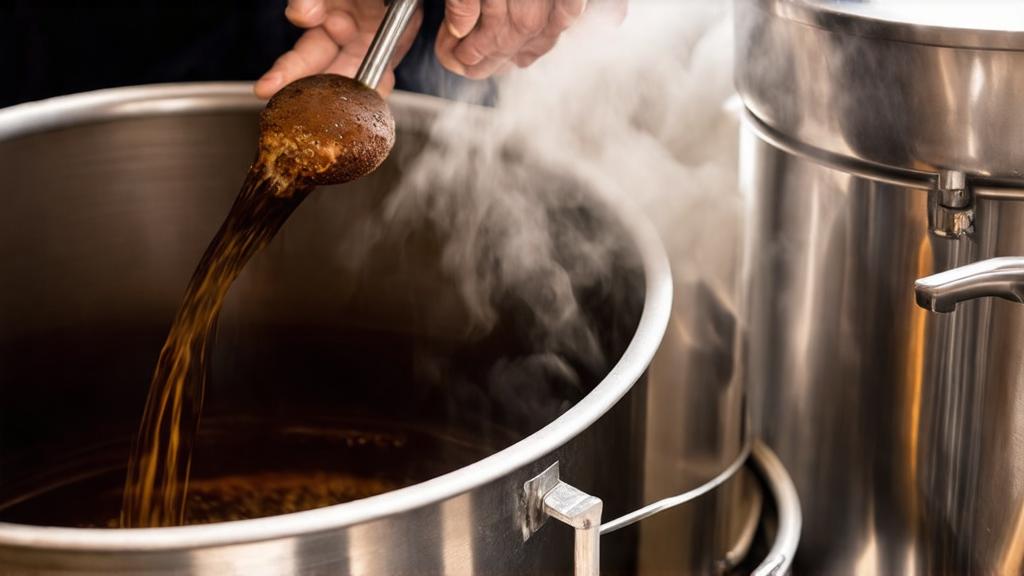
The magic here is decoction mashing. Yes, it’s more labour-intensive than a standard single infusion, but it’s how traditional Czech breweries built their character. A double decoction—pulling a portion of the mash, boiling it, and returning it—creates complexity that you simply can’t achieve otherwise. The Maillard reactions during boiling deepen the malt character without adding roast harshness.
Hops: Saaz, always. Czech dark lager uses noble Saaz hops, typically 20–30 IBU depending on whether you’re brewing a 10° or 12° beer (those Plato degrees you’ll see on Czech labels). Saaz brings herbal, slightly spicy notes that cut through the malt sweetness beautifully. Learn more about specialist brewing suppliers for authentic Czech ingredients.
Water Chemistry: This caught me off guard at first. Czech breweries often brew with softer water than German breweries, but you’ll still want moderate bicarbonate levels—around 80–120 ppm. If you’re in a UK area with harder water (London, parts of the South East), consider a partial dilution with distilled water. Aim for a mash pH of 5.2–5.4. Use gypsum to increase sulphate slightly (80–100 ppm) to help the Saaz shine. CAMRA publishes resources on UK water chemistry for brewing.
Yeast: This is non-negotiable. Use a proper Czech lager strain—Wyeast 2278 or White Labs WLP830 are reliable. Czech yeast ferments cleaner than Bavarian strains and lets the malt character come through. No shortcuts here.
The Brewing Process & Decoction Mashing
Alright, let’s get into the details. Here’s how I approach a 12° Czech dark lager (around 1.048 OG, 4.8% ABV).
Step One: Mash Setup — Crush your grains and do a step mash. Start at 38°C (100°F) for 30 minutes to allow enzymes to do their work. This protease rest breaks down proteins and creates a cleaner, smoother beer. Then raise to 52°C (125°F) for 15 minutes. This is your beta-glucan rest if needed.
Step Two: The First Decoction — Pull roughly one-third of the mash (grain and liquid combined) into a separate vessel. Over 15–20 minutes, slowly raise this portion to 65°C (150°F), hold for 10 minutes, then raise to 78°C (172°F) and hold for 5 minutes. This is the mashing out phase. Then boil this portion for 15 minutes. During the boil, you’ll see the colour deepen and the aroma shift—this is where the Czech character begins to build.
Step Three: Combine — Pour the boiled decoction back into your main mash. You should hit around 68°C (154°F) in the main vessel. This is your saccharification rest, where you hold for 45–60 minutes. I prefer 50 minutes.
Step Four: The Second Decoction (Optional but Recommended) — For extra depth, pull another third of the mash and repeat the process: slow heat to 78°C, boil for 10 minutes, combine back. This puts you at around 75°C (167°F)—your mash out temperature. Hold for 10 minutes.
Step Five: Lautering — Run off slowly. This mash is thick and can be stubborn. Take your time. You’re looking for a gravity around 1.052 at the kettle before the boil.
The Boil: 90 minutes. Add your Saaz hops early—20–25 IBU at 60 minutes. A small bittering charge at 15 minutes (5 IBU) is optional. Skip late additions; you want those noble hop characteristics to shine through, not get lost.

Fermentation & Lagering
This is where patience separates Czech dark lager from everything else. You need temperature control, and you need to respect the timeline.
Pitch your yeast at 48–50°F (9–10°C). Yes, cold. This is a lager. The yeast will be sluggish at first, and that’s fine. Let it sit for 24 hours without any activity visible—trust the process. By day two, you’ll see airlock activity.
Fermentation Temperature: Keep it at 50°F (10°C) for the entire fermentation. Some brewers go to 52°F (11°C) near the end to speed things up slightly, but I prefer consistency. At this temperature, fermentation takes 10–14 days. You’ll know it’s done when gravity stabilises (check it for three days running and see no change).
Diacetyl Rest (Optional): When fermentation is nearly complete (gravity around 1.015–1.012), some brewers raise the temperature to 55–57°F (13–14°C) for 2–3 days to allow the yeast to clean up diacetyl (butter) compounds. I do this about 70% of the time, especially if I’m worried about a sluggish fermentation.
Lagering: This is the commitment that makes Czech dark lager worth it. After fermentation is complete, cold-crash to 35–40°F (2–4°C) and let it sit for at least four weeks. Yes, four weeks minimum. I prefer six to eight weeks for a proper lager character to develop. During this time, the yeast settles, off-flavours drop out, and the beer clarifies beautifully. There’s no substitute for time here.

Tasting Notes & My Honest Take
After your first Czech dark lager comes out of the lagering phase, you’ll understand why this style is surging. There’s a clarity here that’s remarkable.
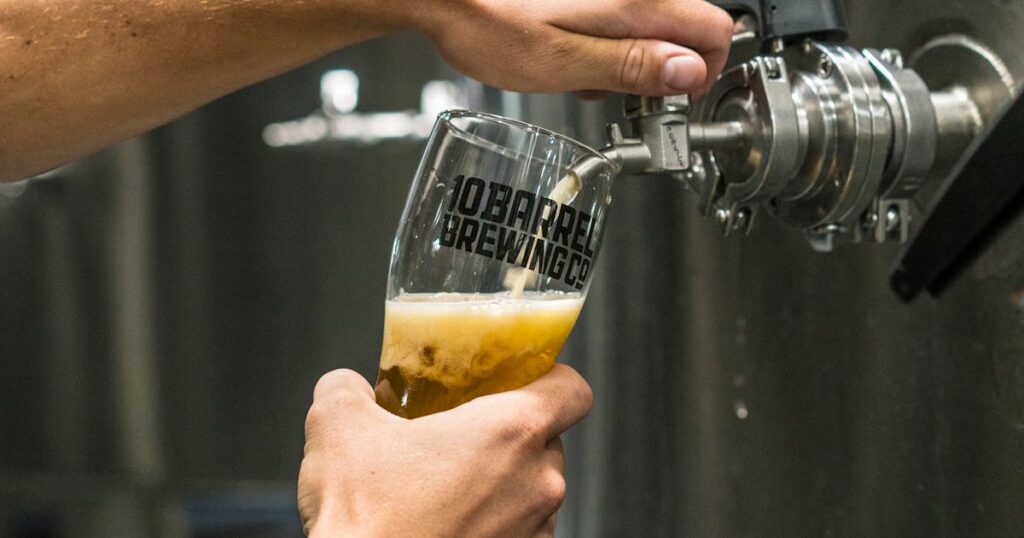
On the nose, you get subtle bread and caramel notes, with a hint of those herbal Saaz hops in the background. It’s not aggressive; it’s balanced. The colour is deep mahogany, almost black in a pint glass, but hold it to the light and you see garnet edges—not opaque.
The flavour is where it wins me over every time. Soft malt sweetness (caramel, bread crust, dark fruit notes), but not roasty or bitter. There’s a subtle earthiness from the Saaz and a finishing dryness that keeps it from being cloying. The mouthfeel is fuller than a pilsner but cleaner than a Munich Helles. ABV around 4.8–5.2% sits in that sweet spot where you can enjoy two or three without fatigue.
The decoction work pays dividends here. You’ll taste the difference between a properly decocted Czech dark and one brewed with a simple infusion mash. The former has layers; the latter tastes flat by comparison. It’s the kind of beer that rewards technique, not just ingredients.

Pro Tips & Common Mistakes
Mistake One: Skipping Decoction — Some brewers see the extra work and try a single-infusion mash with a slightly longer saccharification rest. Don’t. You’ll lose the character that makes this beer special. The time investment is small compared to the waiting anyway.
Mistake Two: Wrong Yeast — Using Bavarian lager yeast instead of Czech will give you a beer that’s too clean, missing the subtle earthiness. Conversely, using an ale yeast will just confuse you. Stick to Czech strains.
Mistake Three: Rushing the Lager — I see brewers bottle after three weeks at lagering temperature. Three weeks is the minimum to carbonate properly, but four weeks of cold conditioning before carbonation gives you a fundamentally different beer. Patience is the hidden ingredient.
Pro Tip One: Water Adjustment — Test your water before brewing. If you have very hard water (over 150 ppm bicarbonate), dilute 20–30% with distilled water. Czech breweries historically used softer water, and replicating that environment matters.
Pro Tip Two: Attenuation — Czech lager yeasts can be over-attenuative. Plan for 80–85% attenuation. If you’re aiming for 1.048 OG, expect a final gravity around 1.010–1.012, giving you a beer that’s dry but not thin.
Pro Tip Three: Carbonation — Czech dark lagers traditionally carry 2.2–2.4 volumes of CO2. Don’t over-carbonate. A slight softness on the palate is intentional, not a flaw.

Variations & Next-Level Experiments
Once you’ve nailed the base recipe, here are some directions to explore.
The 10° Version: Reduce your grain bill slightly and drop the ABV to 3.8–4.2%. This is lighter, more delicate, and even more approachable. Gordon Strong’s Modern Homebrew Recipes includes excellent versions at both 10° and 12° strengths.
Imperial Czech Dark: Push the OG to 1.060 (around 14° Plato) for a richer, more complex version. You’ll add a touch more dark malt, and the lagering time should extend to 8–10 weeks. These age beautifully.
Smoked Dark Lager: Add 10–15% smoked malt (Rauchbier-style) to the grain bill. It’s unconventional but not unprecedented if you understand smoked beers. The result sits somewhere between Czech dark and German Rauchbier—mysterious and rewarding.
Conclusion
Czech dark lager is trending in 2026 because it represents something the homebrewing community is beginning to crave: technique-forward beer that rewards patience and precision. It’s not the easiest style—you’ll need temperature control, you’ll need time, and you’ll need to understand decoction mashing. But the payoff is a beer that’s genuinely different from what you’ll make next to it on your shelf.
I’ve found it pairs beautifully with British bitters and hop-forward ales, creating a tasting experience that celebrates contrast. It’s also perfect for quiet evenings—the kind of beer you sit with, not just drink.
If you’ve been thinking about lagers but felt like you’d already explored that world, Czech dark lager is your permission to dig deeper. Start your first batch now; by winter, you’ll be ready to pour something genuinely special.
🍺 Join the Brotherhood — Monthly brews, stories & monk wisdom
Subscribe for exclusive recipes, early brew logs, and behind-the-scenes updates straight to your inbox.