Summer is the season of abundance—gardens overflow with fresh herbs, the sun lingers long into the evening, and something inside us yearns to experiment. For homebrewers, this is the perfect moment to explore what makes craft beer truly personal: the botanicals we grow with our own hands.
Herbal and botanical ales represent a living heritage. Monks have been brewing with herbs for over a thousand years; long before hops dominated the landscape, brewers threw everything from wormwood to yarrow into their kettles. Today, we have the chance to reconnect with that spirit—not as nostalgia, but as innovation. A well-crafted herbal ale doesn’t just taste different; it tells the story of your garden, your climate, your intention.
This is herbalism meets homebrewing. Let me show you how.
Why Herbal Ales Are Having a Moment in 2026
The craft beer world has shifted. After years of chasing bigger IPAs and stronger stouts, brewers and drinkers are asking: What if beer could be medicine? What if it could be subtle?
The wellness trend is real. Functional beverages—drinks that do something for you—are dominating search trends in 2026. Consumers want botanicals: chamomile for calm, ginger for digestion, lavender for elegance. But here’s the catch: they don’t want artificial flavourings or synthetic supplements. They want real herbs.
As a homebrewer, you have an advantage that no commercial brewery can match: your garden. Sustainable, local brewing is about more than ethics—it’s about creating something genuinely unique. A herbal ale brewed with the mint and chamomile you grew yourself is not a product. It’s a statement.
The Botanicals: Which Herbs Work in Beer?
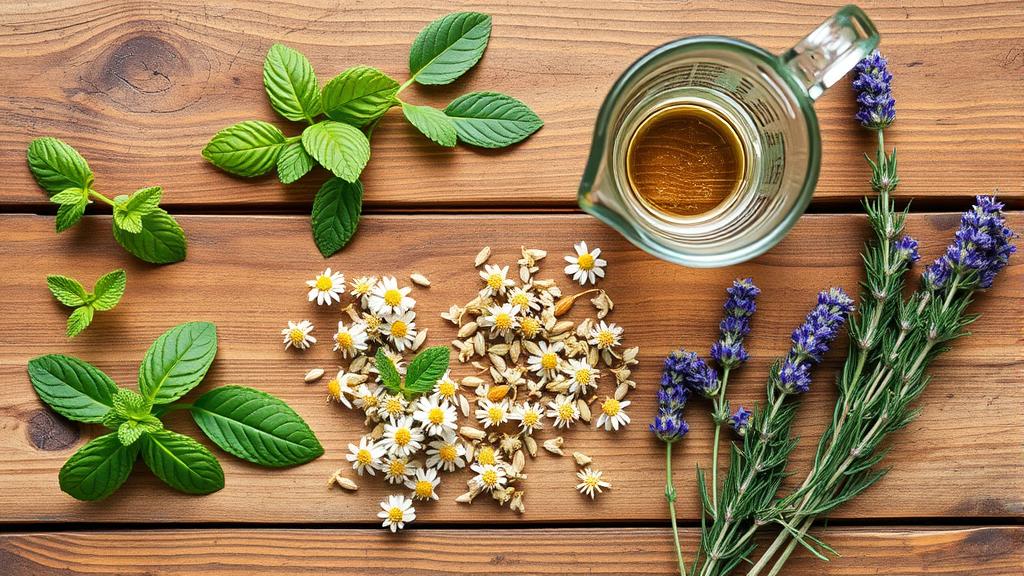
Not all herbs belong in beer. Some are too volatile (they’ll boil away). Others are too bitter (in a bad way). For more on beer styles and flavour profiles, check out the BJCP Style Guidelines. Here’s what actually works:
The Classics That Work
- Chamomile – Apple-like sweetness, herbal grassiness. Adds 10-15g per 20L (5 gallons) batch late in the boil. Brilliant in pale ales and session brews.
- Mint – Cooling, fresh, slightly sweet. Use sparingly (5-8g); it dominates quickly. Works beautifully in wheat beers and summer ales.
- Lavender – Floral, delicate, almost perfumed. 5-10g for a 20L batch. Adds sophistication without heaviness. Pairs perfectly with low-alcohol golden ales.
- Sage – Earthy, slightly peppery. Historically used before hops. 8-12g per 20L. Creates depth in amber and brown ales.
- Rosemary – Pine-like, medicinal. Use very carefully (3-5g); overdoing it makes beer taste like a Christmas tree. For adventurous palates.
The Adventurous Choices
- Lemon balm – Citrus, bright. 5-10g late in boil.
- Thyme – Subtle, herbal. 4-6g for understated complexity.
- Basil – Bold, peppery. Not for everyone. Start with 3g.
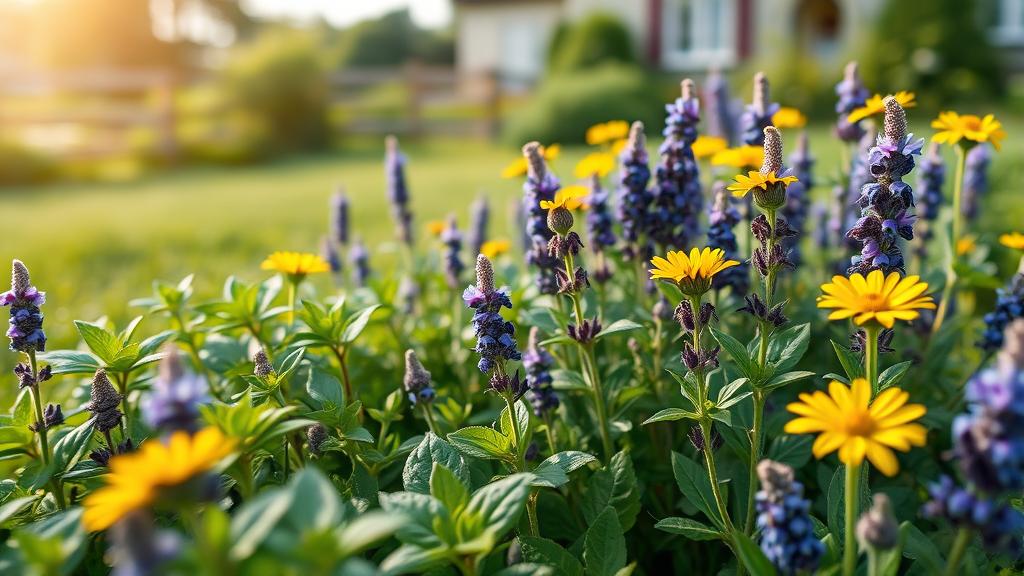
The rule: Always dry-test your herbs first. Steep a small amount in hot water, let it cool, and taste. Beer is 90% water; the herb flavour matters. Growing your own cottage garden of brewing botanicals gives you control over harvest timing and freshness.
Harvest herbs mid-morning, after the dew dries but before the sun’s heat burns off volatile oils. Dry them quickly in a cool, dark place (3-5 days) before using in the brew kettle. Fresh herbs can work too—just expect more herbaceous grassiness; dried herbs offer more concentrated flavour.
Ingredient Shopping & Preparation
If you’re not growing your own (yet), source dried culinary herbs from supermarkets or specialist suppliers like The Malt Miller or Geterbrewed, who stock brewing-grade botanicals. Avoid heavily scented craft store herbs; they’re often sprayed with preservatives.
Quantities matter. As a rule, use 1-2g of dried herb per litre of beer (or 5-10g per 20L/5-gallon batch). Start low; you can always add more in future brews. Over-botanicalising is the most common mistake.
Storage: Keep dried herbs in airtight containers away from light and heat. They lose potency after 6-12 months, so brew fresh.
Brewing Day: When & How to Add Botanicals
The Three-Phase Approach
Phase 1: The Boil (60 minutes)
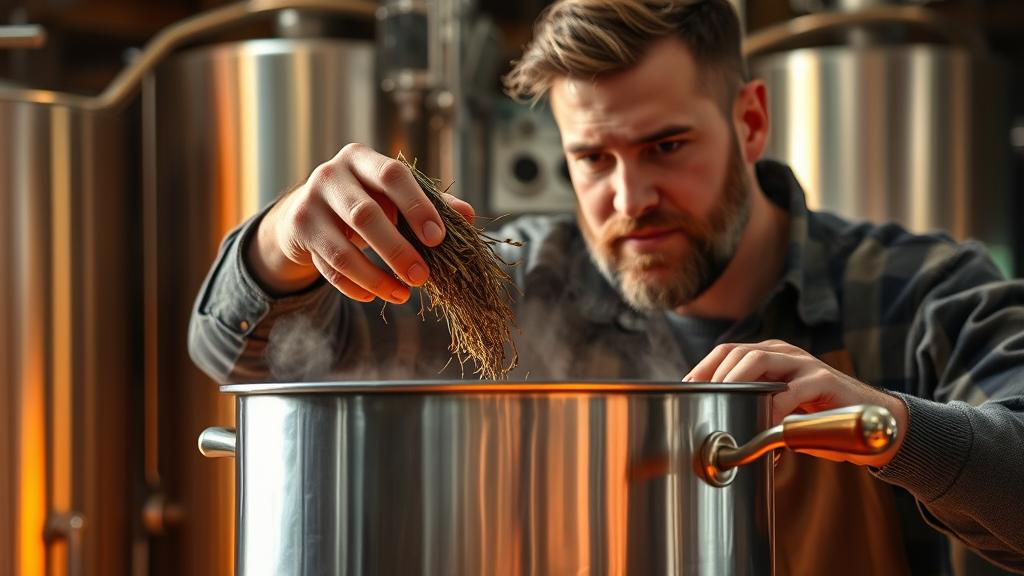
Add hardy, bitter herbs here. Sage, rosemary, and half your chamomile go in at 60 minutes. This extracts their essential oils and integrates them into the beer. You’ll lose some volatile compounds, but what remains is structured and stable.
Phase 2: Late Boil (15 minutes)
Mint, lavender, and the rest of your chamomile go in with 15 minutes left. This preserves more delicate flavours whilst still allowing a brief contact time with heat.
Phase 3: Whirlpool or Dry-Herbal (optional)
Some brewers add a small amount of fresh herbs in the whirlpool (post-boil, whilst the wort is still hot) or even in secondary fermentation. This is advanced territory—it’s about capturing the maximum fresh aroma. Use only fresh, clean herbs, never dried.
A Summer Session Herbal Ale Example
- 2kg Pale Malt
- 500g Wheat Malt
- 100g Crystal 10 (light caramel notes)
- 15g Cascade hops (30 mins)
- 5g Chamomile (60 mins)
- 5g Mint (15 mins)
- 8g Lavender (15 mins)
- Safale US-05 yeast (or similar, clean fermentation)
- Water adjusted for light, balanced profile
Expected result: ~4.8% ABV, light straw colour, delicate floral-herbal notes with a cooling mint finish. Refreshing, session-friendly, and genuinely unique.
Fermentation & Conditioning

Herbal ales are sensitive. Use a clean, neutral yeast (US-05, WLP001) that won’t overpower the botanical subtlety. Avoid wild or Belgian yeasts unless you specifically want phenolic character.
Ferment at a cool temperature (18-20°C / 64-68°F) for 10-14 days. Don’t rush. Once dry, bottle or keg and condition for 2-3 weeks before drinking. Herbal ales improve with age—the flavours round out and integrate more naturally.
Optional: For extra elegance, add a small amount of fresh herb (one sprig of lavender, a mint leaf) inside each bottle before capping. It looks beautiful and adds a whisper of extra aroma as people drink.
Tasting Notes & My Honest Take
I brewed my first herbal ale last summer out of curiosity, not conviction. I’m a purist—hops and grain are enough, I thought. I was wrong.
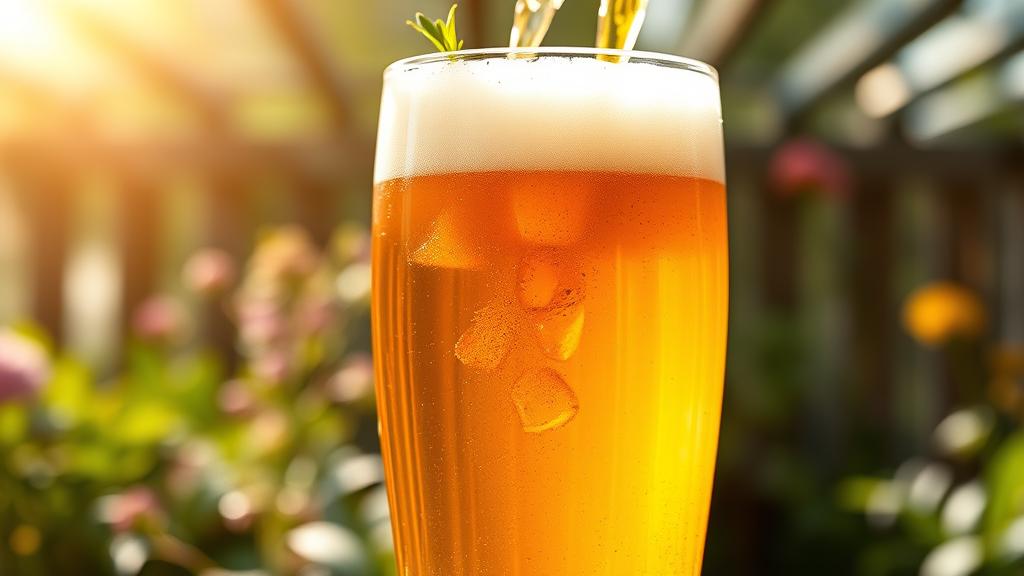
A carefully balanced chamomile and mint pale ale, drunk chilled on an afternoon after harvest, tasted like nothing I’d brewed before. Not because it was outlandish or experimental, but because it tasted honest. It tasted like the garden. There was subtlety—the mint didn’t scream; it whispered. The chamomile added a gentle apple-skin sweetness that the pale malt alone could never achieve.
More importantly, people who usually turn their nose up at craft beer—my mum, my non-brewing mates—actually enjoyed it. It wasn’t “too bitter” or “too weird.” It was just nice beer with something a bit special about it.
Common Mistakes & How to Avoid Them
- Using too much. More herb doesn’t equal more flavour. It equals soapy, harsh bitterness. Dial it back.
- Stale herbs. Old, pale, dusty dried herbs = disappointing beer. Keep stock fresh.
- Mixing too many. Chamomile + lavender + mint + rose + basil = confusion. Pick 2-3 herbs max per batch.
- Weak or contaminated base beer. Your herbal additions are only as good as the base wort. Focus on clean brewing fundamentals.
- Skipping the taste test. Always sample dried herbs in hot water before brewing. A earthy, stale, or off-tasting herb will ruin a batch.
Next-Level Experiments
The homebrewing community is incredibly generous with knowledge. Platforms like HomeBrewTalk have forums where thousands of brewers share their herbal ale recipes and tasting notes. Once you’ve nailed the basics, explore variations:
- Honey + botanicals: A light honey mead base with herbal infusions (honey + chamomile is stunning).
- Fruit + herb combinations: Berries + mint, stone fruit + lavender, citrus + sage. Fruit beer techniques pair beautifully with botanicals.
- Cold-infusion secondary: Ferment base ale, then add fresh herbs in secondary for 1-2 weeks for maximum aroma (careful—infection risk). Hybrid fermentation methods open new possibilities.
- Herbal water blending: Brew a strong herbal tea separately, then blend percentages into bottled beer for precision control.
Closing Thoughts: The Monastery Was Right
Medieval monks didn’t brew herbal ales because they were trendy. They brewed them because monasteries were healing spaces. Beer was medicine, nourishment, and spiritual practice combined. Herbs grew in the physic garden. Knowledge passed from generation to generation.
When you grow lavender and brew it into beer, when you taste chamomile you harvested yourself in a glass you poured with your own hands, you’re not being nostalgic. You’re being connected. To place, to seasons, to the honest work of craft.
This summer, grow something. Brew something. Taste something you’ve never tasted before. That’s the real trend.
🍺 Join the Brotherhood — Monthly brews, stories & monk wisdom
Subscribe for exclusive recipes, early brew logs, and behind-the-scenes updates straight to your inbox.