Why Quince Matters for Homebrewers in 2026
Quince is having a moment. The stone fruit that’s been quietly underappreciated for decades is suddenly everywhere—in cordials, aperitifs, and artisan beverages across the UK. But here’s the thing: homebrewers have been sleeping on it. While everyone’s chasing mushroom beers and botanical infusions, there’s a genuine, flavour-forward opportunity sitting in English orchards waiting to be brewed.
I first tried a quince ale at a small craft brewery in the Cotswolds last autumn. It wasn’t sweet. It wasn’t gimmicky. It was elegant—sharp enough to balance the malt, dry enough to remind you why people loved ale in the first place. It tasted like autumn in a glass. That’s when I decided I had to brew my own.
Quince brings something that apples and pears can’t quite match: a subtle astringency paired with floral undertones and a bittersweet honey character. When fermented properly, it transforms into something genuinely special. And unlike trendy additions that come and go, quince has been used in traditional European brewing for centuries. We’re not inventing anything here—we’re just remembering.
Understanding Quince: The Ingredient
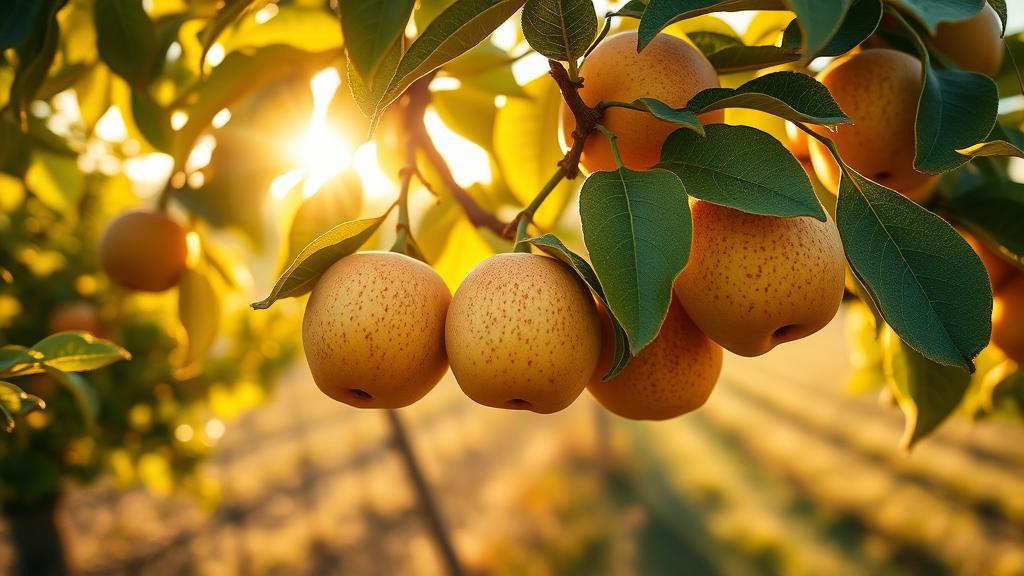
Let’s talk honestly about what you’re working with. Raw quince is nearly inedible—hard as a stone, astringent enough to make your mouth feel like a sandbox. This is actually brilliant for brewing, because it means the fruit’s complexity survives the fermentation process.
A single quince fruit weighs between 200–300 grammes (7–10 oz) and sits somewhere between an apple and a pear in flavour profile. The flesh is pale yellow, dense, and when cooked (or fermented), releases a distinctive honey-like aroma with subtle floral notes—think rose water and almond. The tannin content is higher than apples, which means quince adds structure and a natural drying quality to your finished ale.
Quince season runs from September through November in the UK. You’ll find them at farmers’ markets, farm shops, and if you’re lucky, in a neighbour’s garden who’s desperate to give them away. Unlike apples, quinces don’t keep as well, so plan your brew within a week or two of purchase.
For a typical 23-litre (5 UK gallon) batch, I recommend 4–6 kilograms (9–13 lbs) of quince. Too little and you’ll just get a faint whisper of flavour; too much and the astringency overwhelms the malt. Start conservative—you can always brew a second batch.
Ingredients & Equipment for Your Quince Ale
Base Recipe (23 Litres / 5 UK Gallons)
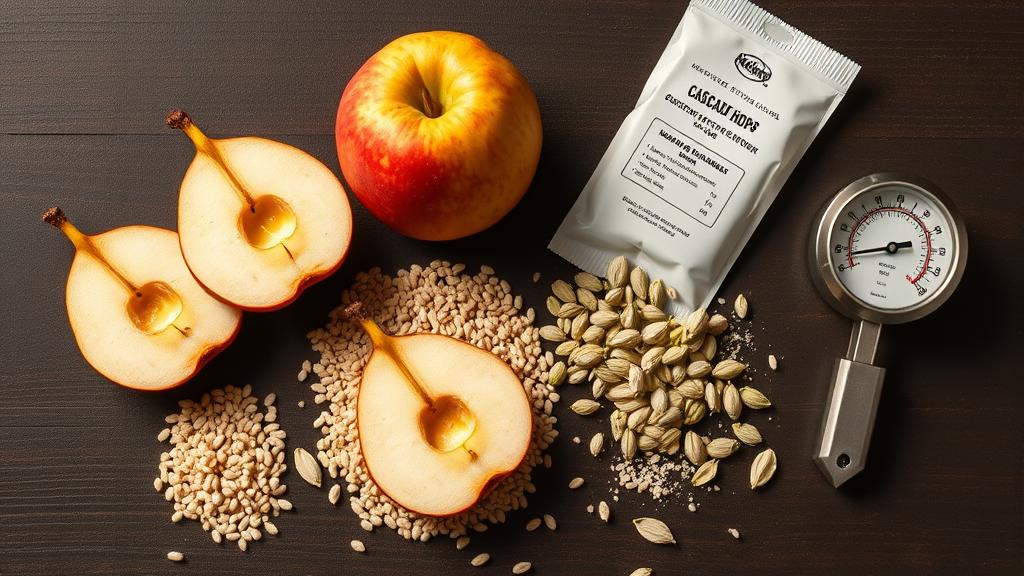
- Pale Ale Malt: 3.5 kg (7.7 lbs) — provides a clean, slightly biscuity base
- Crystal Malt (40 EBC): 300 g (10.6 oz) — adds subtle caramel sweetness to balance quince’s bite
- Fresh Quince: 5 kg (11 lbs) — cleaned, cored, and cut into chunks
- Cascade Hops: 20 g at 60 mins, 10 g at 15 mins — herbal, citrus notes complement quince beautifully
- Ale Yeast: 1 × 11.5g sachet SafAle S-04 or Wyeast 1084 Irish Ale (your choice)
- Water: 26 litres (5.75 UK gallons) — adjusted for your mash water loss
- Irish Moss: 5 g at 15 mins — aids clarity
Equipment You’ll Need
Standard homebrewing kit: mash tun or large pot, thermometer, hydrometer, siphon, straining bag, and a 23-litre carboy or fermentation bucket. The only addition: a large colander or straining basket for the quince chunks. Trust me, you’ll want an easy way to fish them out during secondary fermentation.
If you’re new to fruit beer brewing, quince sits at an interesting intersection of complexity and reward. You’re not dealing with the fermentation wild cards of wild fermentation, but you are capturing the nuance of stone fruit in a controlled way. It’s a brilliant next step after your first few brews.
Step-by-Step Brew Day: From Kettle to Carboy
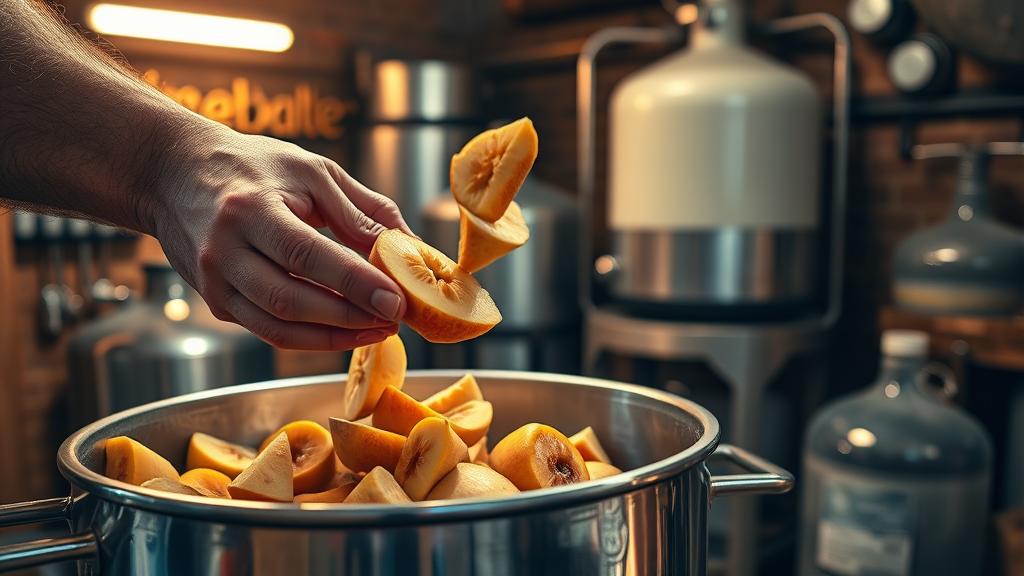
- Prepare the quince (30 mins before brew day): Rinse each fruit thoroughly. Cut them in half, scoop out the core and seeds with a sharp spoon. You’re aiming for chunks roughly 3cm (1.25 inches) across. Don’t peel them—the skin contains tannins you want. Place prepared quince in a bowl of cold water with a pinch of salt to prevent browning.
- Mash (90 mins): Heat 13.5 litres (3 UK gallons) of water to 67°C (152°F). Add your crushed pale ale malt and crystal malt. Stir well to avoid dough balls. Rest at 65–67°C for 90 minutes, stirring every 15 minutes. You’re aiming for a thick, porridge-like consistency.
- Sparge (45 mins): Raise temperature to 75°C (167°F) over 30 minutes. Slowly run off the wort into your kettle. Rinse the grains by pouring hot water (75°C / 167°F) over them until you’ve collected about 26 litres total. This gives you a good gravity while avoiding astringent tannin extraction from over-sparging.
- Boil (60 mins total): Bring wort to a rolling boil. Add 20 g Cascade hops at the start of the 60-minute boil window. At 15 minutes remaining, add Irish Moss and the final 10 g of Cascade hops. At 5 minutes remaining, turn off the heat and let it cool slightly. Do not add quince during the boil—you’ll lose the delicate floral character.
- Cool & Transfer (30–45 mins): Let the wort cool in the kettle to about 25°C (77°F) using an ice bath or immersion chiller. Pour into your carboy or fermentation bucket through a funnel with a straining bag. Try to pour off the hot break and trub into a separate container.
- Pitch yeast & add quince: Once wort reaches 18–20°C (64–68°F), pitch your yeast according to packet instructions. Then, working carefully, add your prepared quince chunks directly into the fermenter. They’ll float initially, then sink as fermentation begins. Fit an airlock.
- Primary Fermentation (7–10 days): Ferment at cellar temperature (16–20°C / 60–68°F). You should see vigorous activity within 12 hours. Watch for the quince to gradually break down and sink. When fermentation visibly slows (gravity should drop 1–1.5 points per day), proceed to secondary.
Fermentation & Conditioning: Patience Wins
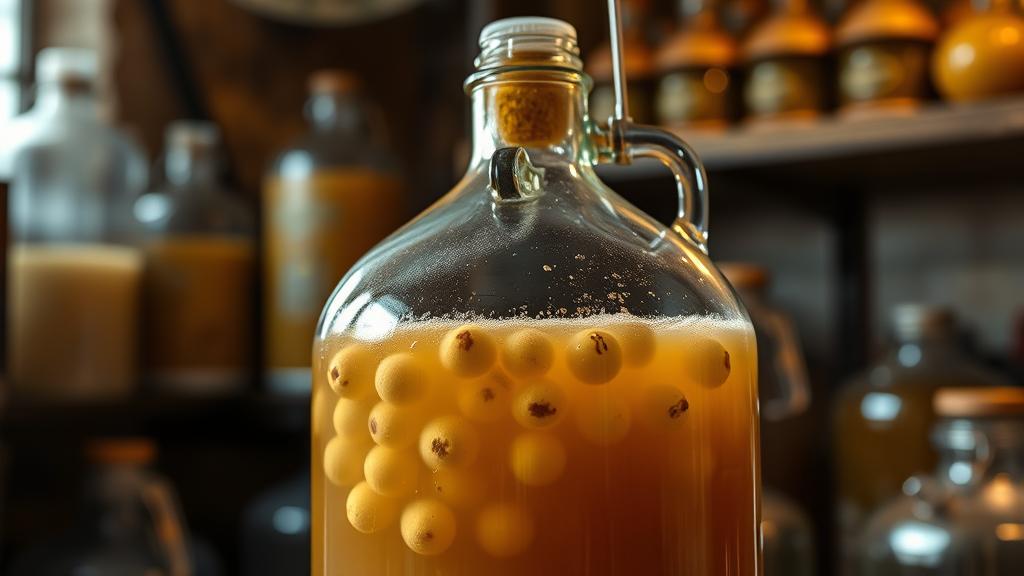
Once primary fermentation slows, siphon into a secondary carboy, leaving the sediment (and quince solids) behind. I won’t lie—your quince ale will look murky at this stage. The fruit particles create a hazy suspension that takes weeks to fully clear. This is normal and not a sign of infection.
Leave it for 2–3 weeks in secondary at room temperature. During this time, the yeast continues to work slowly, cleaning up fermentation byproducts (esters and aldehydes) that give young beer a harsh edge. The quince flavour also begins to integrate properly into the base beer—harsh astringency softens, and that honey-like character emerges.
Take a gravity reading around day 14 of secondary. Once it stabilizes (same reading two days apart), you’re ready to bottle or keg.
Carbonation & Conditioning in the Bottle
Bottle in standard 500ml bottles with crown caps. Use 5 grammes of glucose per 500ml bottle to achieve 2.5 volumes of CO₂—perfect for a traditional British ale. Understanding carbonation levels is key to getting the mouthfeel right; the Homebrewers Association provides detailed carbonation charts for different styles.
After capping, leave bottles at room temperature (18–20°C / 64–68°F) for 2 weeks to carbonate, then move to cool storage. A quince ale is genuinely best drunk after 4–8 weeks in the bottle, when the flavours have knit together and carbonation is fully integrated.
Tasting Notes & My Honest Review
I’m now four months into my first quince ale brew, and I’m genuinely impressed. Here’s what I’m tasting:
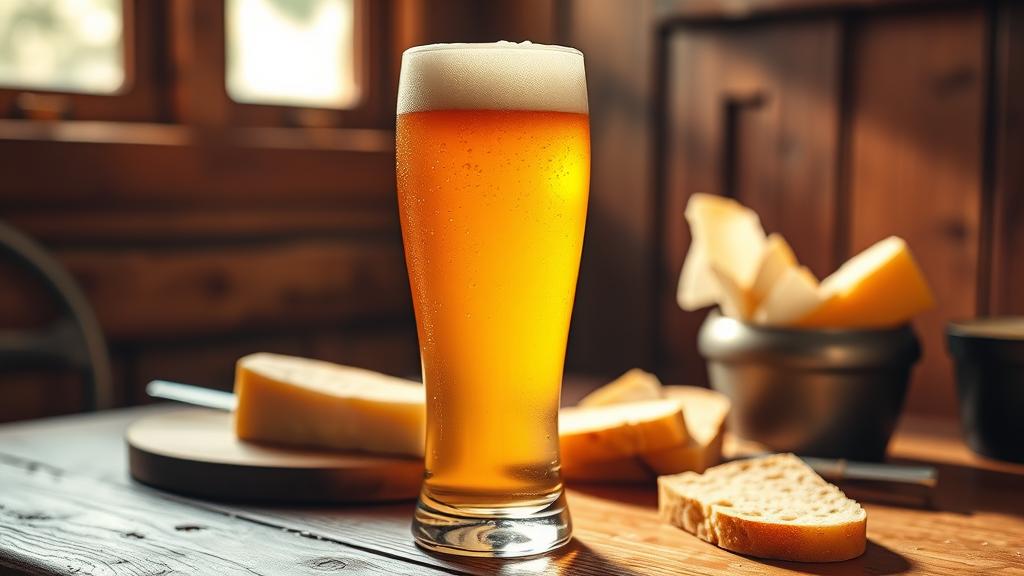
Appearance: Golden-amber, slightly hazy if you pour from the bottle (bright and clear if you pour carefully). Good head retention—the crystal malt and hop character support a tight foam.
Aroma: This is where quince shines. You get honeyed stone fruit, a whisper of rose water, and underneath it all a subtle earthy herbalism from the Cascade hops. It doesn’t smell “fruity” in a forced way. It smells like autumn and woodsmoke and an orchard at dusk.
Flavour: Smooth malt sweetness up front, quickly balanced by quince’s natural astringency and a dry finish. The bitterness is gentle—about 22 IBUs from the cascade—so the fruit is never overpowered. There’s a subtle almond or marzipan note in the middle that’s lovely against the honey character. No cloying sweetness. No cidery twang. Just ale, honestly flavoured with quince. If you want to dive deeper into stone fruit brewing, HomeBrewTalk’s forum has decades of conversations about fruit additions and fermentation strategies.
Mouthfeel: Medium-bodied, dry, with a gentle tannin grip that reminds you this fruit is working alongside the malt.
Pairing & Occasions: This ale drinks beautifully with autumn cheeses (cheddar, blue, washed-rind), roasted root vegetables, pork pies, and—if you’re feeling adventurous—dark chocolate with sea salt. I’ve also had it with roasted game and it was exceptional.
Pro Tips & Common Mistakes to Avoid
Avoid Over-Tannin Extraction
The biggest mistake I see is adding quince too early in the process or boiling it directly into the wort. Quince loses volatile flavour compounds above 75°C. Add quince after the boil, during primary fermentation. This preserves the delicate floral and honey notes. It’s similar to how green hop additions require careful timing to avoid boiling off the character you’re chasing.
Don’t Skip the Secondary
Leaving quince ale on fruit solids in primary for weeks turns bitter and vegetal. Move it to secondary, even if it takes an extra week. Your palate will thank you. Quince ales can age for years if you keep them cool and dark, but they’re loveliest between 4 and 12 months. This approach mirrors barrel-aging best practices—patience transforms rough edges into character.
Starter Culture Matters
If you have the space and budget, make a yeast starter 24 hours before brew day. A 500ml starter of ale yeast pitched into 23 litres of wort ensures vigorous fermentation that outcompetes wild microbes and produces cleaner flavours. The Homebrewers Association’s guide to yeast starters is worth reading if you want the maths behind it.
Temperature Control is Everything
Ale yeast ferments best at 16–20°C. If your cellar is warmer, you’ll get more esters (fruity, sometimes solvent-like notes) that muddy the quince character. If it’s colder, fermentation stalls. Use a thermostat-controlled belt heater or fermentation fridge if you can. It’s the single biggest quality upgrade you can make.
Variations & Next-Level Experiments
Spiced Quince Ale
Add 1 gramme of dried ginger, 0.5 grammes of cardamom, and a pinch of clove at flameout (end of boil). These spices echo the stone fruit without overwhelming it. It’s closer to the botanical trend dominating craft drinks right now.
Quince & Oak Hybrid
After 2 weeks in secondary, add a 30-gram oak cube (medium toast) and age for another 3–4 weeks. The oak adds vanilla and dryness that deepens the quince’s honey notes. It becomes something approaching a barrel-aged ale without needing an actual barrel. For deeper dives into aging, check out how farmhouse brewing traditions have used wood aging for centuries.
Dry-Hopped Quince
At day 10 of secondary fermentation, add 15 grammes of Styrian Goldings (a herbal, spicy hop) in a mesh bag. Let it steep for 5 days, then remove. This adds a subtle hop aroma that complements quince’s floral character—almost like a cask ale with dry hops.
Conclusion: Why Quince Matters Now
Quince ale sits at the intersection of trends that matter to thoughtful homebrewers in 2026. It’s rooted in history—English orchards and European brewing traditions—yet it’s trending again because people are hungry for authentic flavour and craftsmanship. It’s not a gimmick. It’s not trying to be a cider or a fruit punch. It’s ale, honestly.
The recipe I’ve shared produces a beer that drinks like something a committed amateur brewery in the Cotswolds might make—balanced, nuanced, and genuinely delicious. It rewards patience, respects the fruit, and reminds you why homebrewing remains one of the best hobbies you can pursue.
If you brew a batch this autumn, I’d genuinely love to know how it goes. The variables of your water, your yeast choice, and your cellar temperature will all shape the result in ways that make your batch uniquely yours. That’s the magic of homebrewing—the science is knowable, but the art is personal.
Your quince ale awaits. Brew wisely.
🍺 Join the Brotherhood — Monthly brews, stories & monk wisdom
Subscribe for exclusive recipes, early brew logs, and behind-the-scenes updates straight to your inbox.