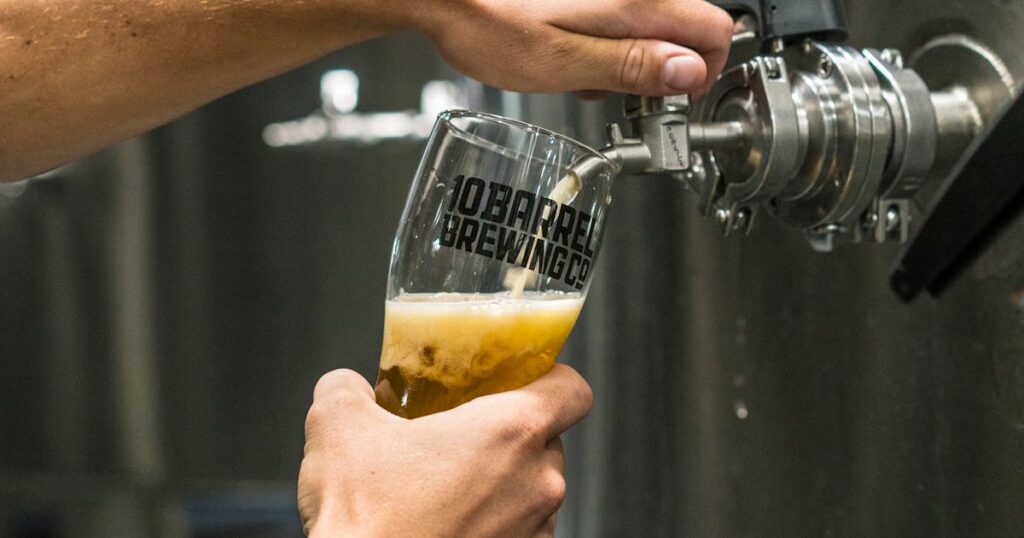
Hojicha Ale Mastery: Why Japan’s Roasted Tea is the Brewing Trend of 2026
When I first stumbled upon hojicha—that distinctly roasted, deeply nutty green tea from Japan—I wasn’t thinking about beer. I was standing in a café, inhaling the scent of a freshly brewed cup, when it hit me: this is exactly what modern craft beer needs. Toasty, complex, subtly sweet, and miles away from the vegetal notes of standard green tea.
Hojicha is having a moment in 2026. From high-street coffee shops to Michelin-starred restaurants, this roasted green tea is becoming the season’s obsession. And that’s created a brilliant opportunity for homebrewers: hojicha ale. It’s a style that hasn’t been done to death, sits perfectly between experimental and accessible, and produces something genuinely delicious.
I’ve spent the last month developing and testing recipes, tasting notes, and techniques. Here’s everything you need to know to brew your own hojicha ale at home—whether you’re chasing the trend or simply want to create something truly original.
What Exactly Is Hojicha? The Tea Behind the Trend

Hojicha isn’t just another green tea. It’s green tea that’s been roasted at high temperature—a process that completely transforms the flavour profile.
Where typical green tea is grassy, vegetal, and delicate, hojicha becomes something else entirely: toasty, warm, nutty, with caramel undertones and hints of wood and roasted nuts. The roasting process also dramatically reduces bitterness and caffeine, making it far more forgiving to brew than traditional teas. As someone who’s experimented with tea infusions in beer before, that forgiving nature is crucial—you won’t accidentally over-extract and ruin a batch.
The word “hojicha” literally means “roasted tea” in Japanese, and it’s been a staple of Japanese culture for centuries. In Japanese homes, the aroma of brewing hojicha conjures up comfort and calm, much like the smell of fresh bread or brewing coffee does for us in the West.
For beer, this matters enormously. We’re not adding a bright, grassy note—we’re adding depth, warmth, and a kind of savoury complexity that plays beautifully with malt-forward styles.
Why Hojicha Ale Works: The Flavour Science
Hojicha’s success in beer comes down to flavour compatibility. Think about what makes great beer: balance. A hojicha ale bridges two worlds: the toasty, caramel notes of a well-made base beer and the roasted, slightly smoky complexity of the tea infusion.
The roasting process that creates hojicha develops what chemists call “Maillard reaction compounds”—the same reactions that give bread its crust colour, coffee its depth, and malt its complexity. When you pair hojicha with a full-bodied ale (think English amber or a hybrid lager), those Maillard compounds speak to each other. The result is layered, sophisticated, and completely different from what you’d get by simply steeping regular green tea in beer.
It’s also a clever way to achieve what brewers have been chasing all year: complex flavour in lower-alcohol formats. A 4.5% ABV hojicha ale feels fuller and more interesting than a thin session beer because the tea adds so much character.
Ingredients & Equipment: What You’ll Need
The beauty of hojicha ale is that you likely already own everything required. Here’s what I use:
For a 20-litre (5.3 US gallon) batch:
- Malt: 3.5 kg (7.7 lbs) pale malt (2-row or Maris Otter for depth), 500g (1.1 lbs) Munich malt (adds body and caramel), 250g (0.55 lbs) crystal malt (20L)
- Hojicha tea: 30–50g (1–1.8 oz) loose-leaf premium hojicha. Don’t skimp here—quality matters. I source mine from specialist Japanese tea suppliers
- Hops: 18g (0.64 oz) Styrian Goldings at 60 mins (10 IBUs), 8g (0.28 oz) Cascade at 5 mins for gentle floral lift
- Yeast: SafAle S-04 (English ale) or Kveik (if you prefer cleaner fermentation)
- Water: ~30 litres (7.9 US gallons) mash water + sparge water, treated for Burton-on-Trent profile
- Optional extras: 5g (0.18 oz) coriander seed (very optional, very subtle)
Equipment:
- Standard homebrew kit: kettle (30L / 8 gallons minimum), mash tun, chiller, fermenter, airlock
- Temperature controller (highly recommended—this matters for lager-adjacent styles)
- A separate vessel for steeping the hojicha (I use a stainless steel jug)
- Tea infuser or fine-mesh strainer (essential for clean separation)
You’ll also want to source good hojicha. I’ve had excellent results from Senbird Tea and Japanese specialty tea shops in the UK. Generic supermarket hojicha tends to be dusty and over-roasted—spend a bit more and you’ll taste the difference immediately.
Brew Day: Step-by-Step Process
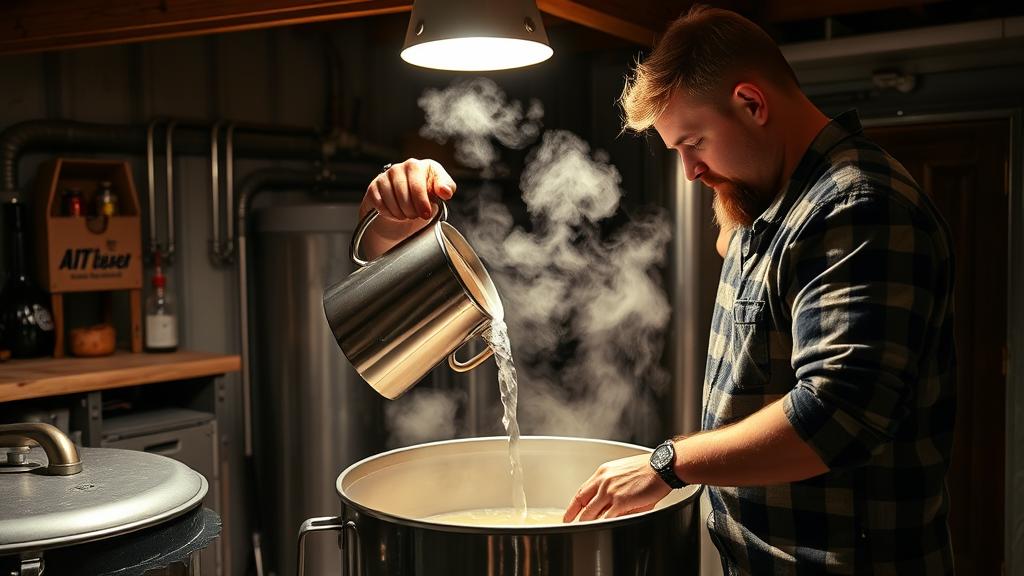
This is where things get specific to hojicha. Standard brewing gets you 90% of the way there, but timing the tea infusion is crucial.
- Water treatment & mash: Treat your water for Burton profile (or your local profile), heat to 67°C (153°F), and mash your grains for 60 minutes. This is standard ale technique—nothing special yet.
- Sparge & boil start: Sparge to 30 litres (7.9 gallons), bring to a rolling boil, and add Styrian Goldings at the 60-minute mark. Standard bittering, nothing fancy.
- Tea preparation (key step): While your wort boils, prepare your hojicha. At the 20-minute mark of your boil, steep 30–40g (1–1.4 oz) of loose hojicha in 500ml (17 oz) of 80°C (176°F) water for exactly 5 minutes. No more, no less. You’re going for that toasty depth without astringency. Strain carefully through a fine mesh into a clean vessel.
- Boil end: At 5 minutes remaining, add Cascade hops and the prepared hojicha infusion to your kettle. This timing prevents harsh tea flavours from boiling away and lets the hojicha marry gently with the hot wort.
- Chill & pitch: Cool to 18°C (64°F), pitch SafAle S-04 at high end of range (2 million cells/ml) or your chosen yeast. This is hybrid fermentation territory—you can ferment warm (18–21°C / 64–70°F) for fuller body or cool (16–18°C / 61–64°F) for cleaner character. I prefer the slightly warmer route for this style.
A note on precision: Unlike hop additions, where a few minutes either way is forgivable, tea infusions are unforgiving. A 7-minute steep instead of 5 can flip the profile from elegant to bitter. Invest in a good tea timer if you don’t have one. It’s 99p well spent.
Fermentation & Conditioning: Patience Pays
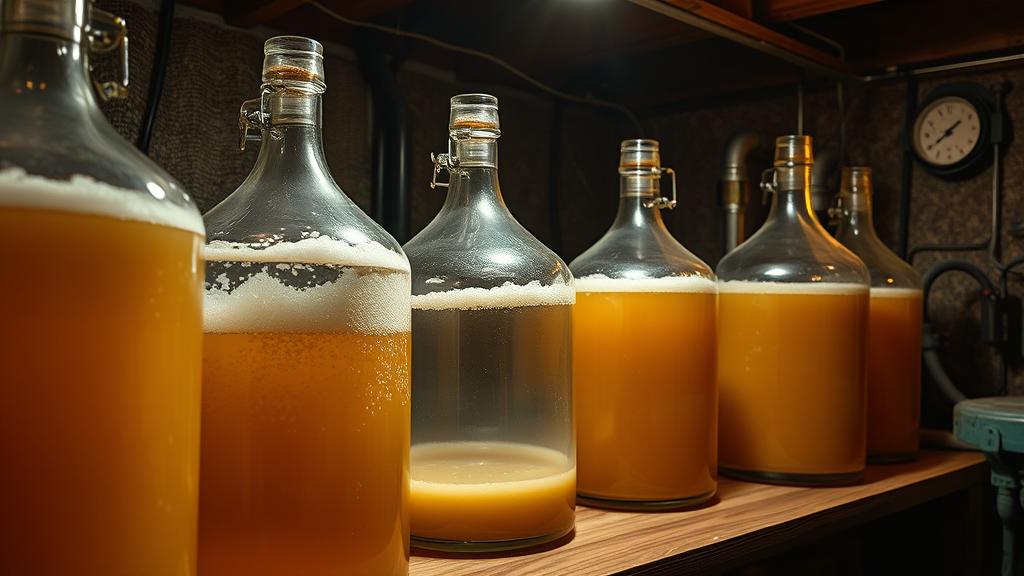
Fermentation is straightforward, but conditioning is where this beer truly develops.
Primary fermentation: Ferment for 8–10 days at your chosen temperature (16–21°C / 61–70°F). Take gravity readings daily from day 3 onwards. You’re looking for a stable reading for three consecutive days before moving to conditioning.
Conditioning: Transfer to a secondary vessel (or cold-condition in primary if you prefer) for at least 3 weeks at 10°C (50°F). I cannot stress this enough: hojicha ale needs time to integrate. The malt, the tea, and the yeast by-products need to settle and marry. At week 3, taste it. If it’s still sharp or one-dimensional, give it another week. At week 4–5, it’ll be singing.
This is similar to what you’d do with saison or farmhouse ales, which also benefit from extended conditioning to allow their herbal/spicy characters to soften and integrate.
Carbonation: Bottle at 2.3–2.5 volumes of CO₂ for a gentle, refined carbonation. Avoid force-carbonation if possible—bottle conditioning lets the hojicha flavours continue to evolve subtly over 6–8 weeks in the bottle.
Tasting Notes & My Honest Assessment
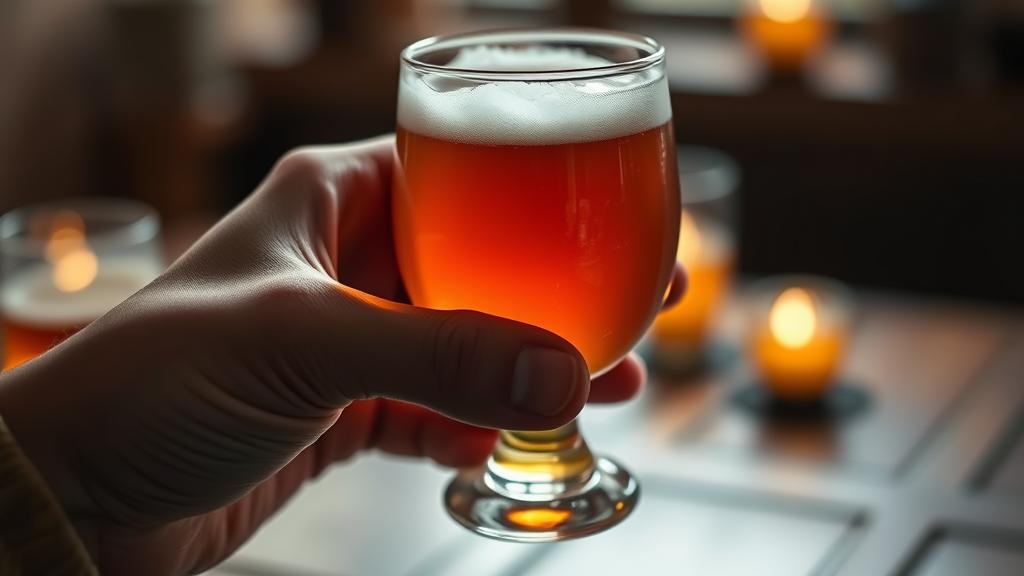
After three months of testing batches, here’s what a well-made hojicha ale tastes and smells like:
Appearance: Golden to amber, slightly hazier than a pilsner but clearer than a hazy IPA. The tea adds a subtle brown tint that looks intentional and inviting.
Aroma: This is the magic moment. You’ll get woody, toasty notes, a whisper of caramel malt, and underneath it all, that distinctive roasted-nut hojicha character. It smells more like a malty ale than a “tea beer”—the hojicha enhances rather than dominates.
Flavour: Clean malt base (Maris Otter shines here), with that gorgeous roasted-tea complexity on the mid-palate. There’s a subtle dryness from the tea tannins, but not astringency—think more like what you’d get from a well-made brown ale. Finish is dry-ish, slightly nutty, with a faint woodiness that lingers in the best possible way. ABV sits at 4.7%, which means you get sipping satisfaction without heaviness.
Mouthfeel: Full for the ABV. The Munich malt and slight tea tannins create a creamy, slightly coating sensation that feels sophisticated rather than thick.
Honest take: This is not a gimmick beer. It’s genuinely interesting, genuinely tasty, and the kind of thing that makes non-brewers ask “what is this?” in a good way. It’s also forgiving enough that a slightly imperfect brew day won’t kill it—the hojicha character will mask small missteps.
Pro Tips & Common Mistakes
Do:
- Use premium hojicha. The difference between £15/kg and £5/kg loose leaf is night and day.
- Keep your tea steep time ruthlessly consistent across batches. This is where repeatability lives.
- Condition longer than you think necessary. A 3-week minimum is actually a minimum.
- Cold-condition (lager-style) rather than room-temperature age. Hojicha flavours stay fresher at cooler temps.
- Bottle condition rather than force-carbonating. The beer will continue to mellow beautifully.
- Sample your batch at 4, 8, and 12 weeks. You’ll taste the evolution.
Don’t:
- Over-steep the tea. Five minutes isn’t arbitrary—it’s the sweet spot between extraction and bitterness.
- Use low-quality pale malt. This beer lives or dies on malt quality. Spend the extra 50p per kilo.
- Ferment warm. You’ll get fruity esters that fight with the tea character. 18°C tops.
- Skip water treatment. Burton profile (or equivalent) matters here because the minerality complements the tea.
- Rush it. Seriously. Four weeks minimum, and it’s worth the wait.
I made a batch at 22°C with mediocre tea and 2-week conditioning. It was thin, thin, thin. The variables matter.
Variations & Next-Level Experiments
Once you’ve nailed the base recipe, the fun really begins.
Hojicha + hybrid fermentation: Use hybrid fermentation techniques (warm fermentation in a sealed vessel under mild pressure) to increase clarity and stability. The tea flavours come through even cleaner.
Hojicha + cask conditioning: If you have access to a small cask, this is your moment. Hojicha ale in a wooden cask becomes something genuinely special—the wood and roasted tea marry in ways that bottle conditioning simply can’t replicate.
Hojicha + roasted malt experiments: Add 100g (3.5 oz) of roasted barley or chocolate malt to the grist. You’re leaning into the roasted theme, and it works surprisingly well—think of it as an hojicha-chocolate brown ale.
Double-steeped hojicha: For a bolder version, prepare two separate 5-minute infusions and add both at the 5-minute mark. This creates intensity without astringency because you’re avoiding over-extraction from a single long steep.
I’m currently experimenting with a hojicha blonde ale (lowering the malt bill to 2.5 kg, brewing at 3.5% ABV) and a hojicha-hazelnut fusion using toasted hazelnut pieces in secondary. Watch this space.
Why This Trend Matters Beyond the Hype
Hojicha ale isn’t just riding a wave—it represents something important happening in craft brewing: the recognition that complexity doesn’t require high ABV, and that flavour innovation can come from unexpected places. Japanese tea culture, meet British homebrewing tradition. It works.
This is also a reminder that trends are opportunities. The hojicha moment is real right now, but it won’t last forever. If you want to be that person at your local CAMRA club who served an hojicha ale before it became commonplace, the time is now.
Conclusion: Brew Your Own Moment
Hojicha ale sits at the intersection of trend and craft. It’s accessible enough that a first-time brewer can pull it off, interesting enough that experienced brewers will enjoy the challenge, and genuinely delicious enough that it’s not a one-off gimmick. It’s the kind of beer that makes people think differently about what homebrewing can be.
Brew a batch. Get the conditioning time right. Taste it at peak condition. Share it with someone who’s never heard of hojicha, and watch their face when they realise how good it is. That’s the real trend: creating something that didn’t exist before, sharing it, and starting conversations.
The hojicha moment is here. Your batch can be part of it.
🍺 Join the Brotherhood — Monthly brews, stories & monk wisdom
Subscribe for exclusive recipes, early brew logs, and behind-the-scenes updates straight to your inbox.