Introduction: The Koji Enzyme Fermentation Revolution in 2026
If you’ve been following the homebrewing rabbit hole lately, you’ve probably stumbled across koji. It’s not a new concept—Japanese brewers have been using it for centuries in sake and shochu production—but in 2026, koji rice is having a moment in the modern homebrewing world, and for good reason. This ancient enzyme culture is quietly transforming how we think about fermentation and grain utilisation in the home brewery.
Koji (specifically Aspergillus luchuensis or white koji) is a fungus that grows on steamed rice and produces powerful enzymes: amylase and glucosidase. These enzymes break down complex starches into fermentable sugars with remarkable efficiency, and they acidify the mash naturally. For homebrewers, this means you can create beers with lower final gravities, improved head retention, and unique flavour profiles that traditional all-grain brewing can’t quite achieve.
The trend is picking up momentum. Breweries and home experimenters are publishing results showing koji rice lagers with crisp, clean finishes and a dryness that feels almost champagne-like—but with the body and malt complexity of a proper lager. It’s this intersection of craft lager mastery and alternative fermentation that’s capturing attention across the UK homebrew community.
What Is Koji, and Why Should You Care?
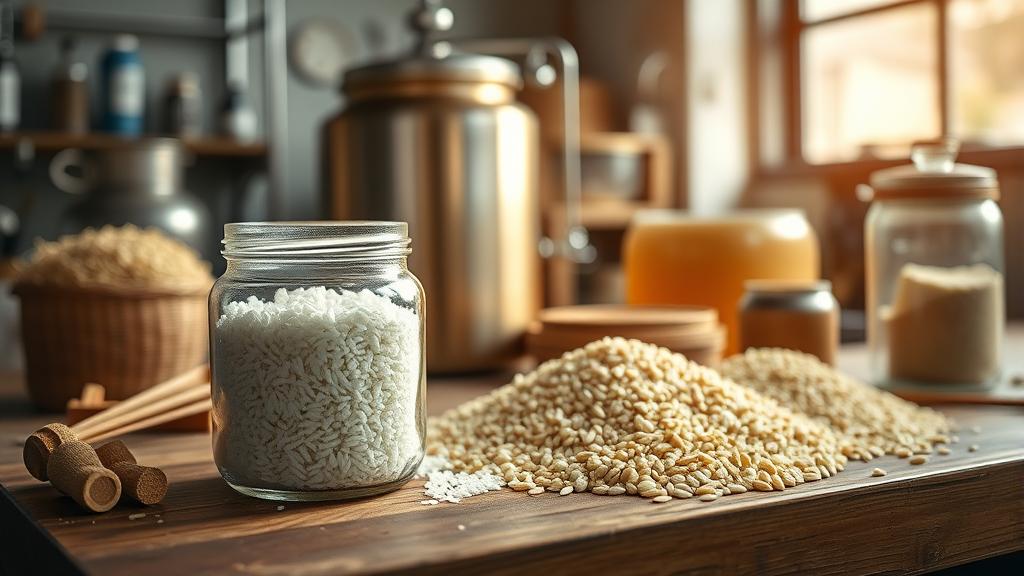
Koji is the secret weapon behind sake, miso, and shochu. It’s a controlled fungal colonisation—nothing scary, just biology at work. When koji spores land on steamed rice in a warm, humid environment (around 25–27°C / 77–81°F), the mycelium spreads across the grain and produces enzymes that break down starch into glucose and maltose, the sugars that yeast loves.
For traditional barley-based brewing, koji is a hack. You’re essentially introducing an extra enzyme source without spending on expensive equipment or complex multi-step mashing profiles. The koji does the heavy lifting. Your mash becomes more efficient, your extraction rate improves, and you end up with a drier, cleaner beer—especially prized in lagers.
Some UK homebrewers have reported using koji with pale malt and light adjuncts (like rice or corn) to create ultra-clean low-ABV beers (3–4% ABV) without any cidery undertones. Others are blending koji with experimental grains and seeing complex fruity notes emerge—entirely new territory for home fermentation.
The beauty is simplicity. You don’t need a koji chamber or laboratory conditions. A glass jar, steamed rice, koji spores (now available from homebrew suppliers like Quirky Homebrew and Geterbrewed), and patience are enough.
Sourcing Koji Spores: Where to Start
You have two options: grow your own koji from scratch (a whole project in itself) or buy prepared koji spores or koji powder. For homebrewing, I recommend starting with koji powder or white koji culture from specialist suppliers.
In the UK, you can source white koji (Aspergillus luchuensis) from:
- Quirky Homebrew Supply — Japanese White Koji, ~£9.95 for 20oz. They stock it specifically for brewing.
- Geterbrewed.com — Check their adjuncts and experimental ingredients section.
- The Malt Miller — Occasionally stock koji spores and rice adjuncts.
- BrewUK — Sporadic availability, but worth checking.
A single batch of koji—grown on 500g of steamed white rice—will give you enough enzyme power for 20–30 litres of wort. It’s genuinely cost-effective. Storage is simple: once dried, koji keeps in the fridge in an airtight container for months.
Growing Koji at Home: The Prep Work
Growing your own koji is a 5–7 day project. It’s not difficult, but it requires a warm, humid environment and attention to detail.
What you need:
- 500–1000g of white short-grain rice (sushi rice works perfectly)
- Koji spore culture (a small vial or sachet, like those from Quirky Homebrew)
- Cheesecloth or a clean cotton cloth
- A glass container or wide bowl with a lid
- A heat source (airing cupboard, seedling heat mat, or a warm corner of the kitchen)
- Distilled water
The process (step by step):
- Rinse the rice under distilled water until the water runs mostly clear. This removes surface starch.
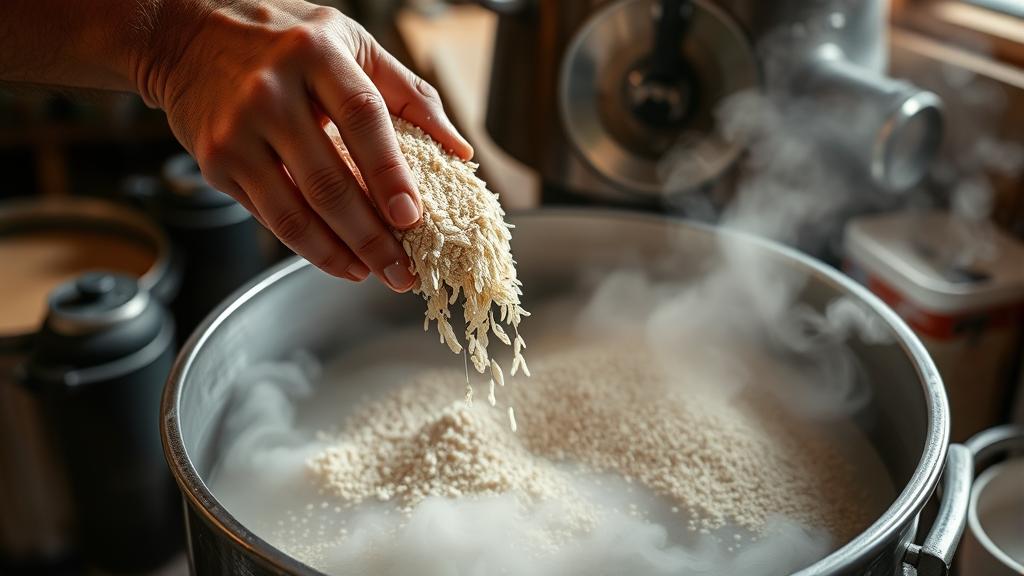
- Steam the rice for 30 minutes (don’t boil—you want individual, fluffy grains, not porridge). Lay it out on cheesecloth to cool.
- Inoculate with koji spore culture once the rice is cool (below 30°C). Toss gently to distribute spores evenly.
- Transfer to your container and cover loosely with cheesecloth (you want humidity, not mould contamination). Layer the rice about 5cm deep.
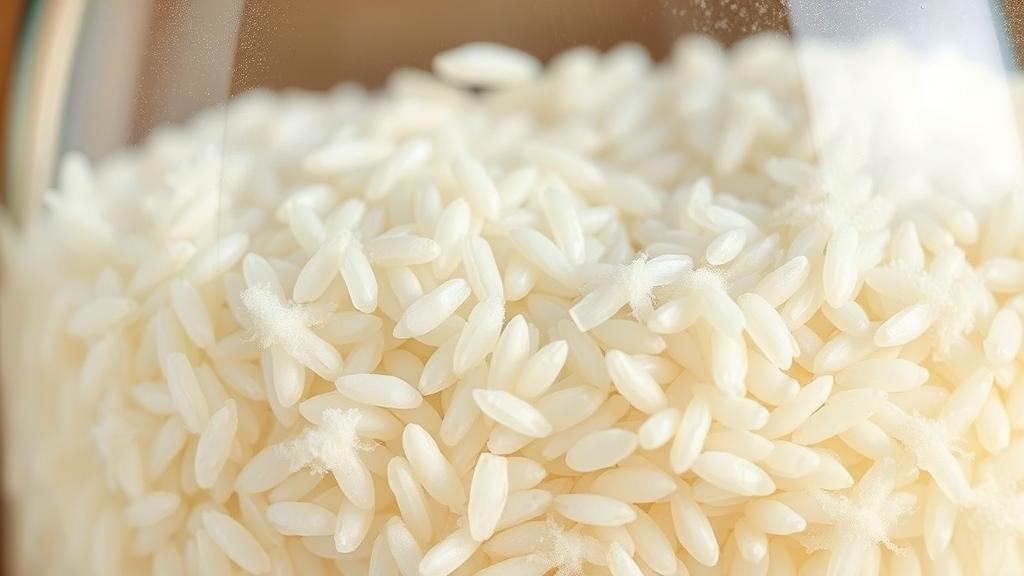
- Maintain temperature at 25–27°C (77–81°F) for 5–7 days. Check daily. The koji will colonise visibly—you’ll see white fuzzy growth spreading across the rice.
- Harvest when the rice is completely blanketed in white mycelium and smells sweet, almost fruity.
- Dry it out in a low oven (40–50°C / 104–122°F) for 24–48 hours, stirring occasionally. Store in an airtight container in the fridge.
First-time koji growers often worry about contamination. The truth: if conditions are right and your equipment is clean, koji dominates. It’s a resilient organism. You’re far more likely to succeed than fail.
Brew Day: Using Koji in Your Mash
Once you have koji—whether homegrown or shop-bought—using it in the mash is straightforward. Here’s my approach for a typical koji rice lager recipe:
Recipe framework (for a 20-litre batch):
- 4 kg pale malt (2-row or British Pale Ale malt)
- 500g white rice or flaked corn
- 30–50g koji (homegrown, dried, or koji powder)
- 15–20g Hallertau hops (65 IBU)
- Bavarian lager yeast (Wyeast 2308 or SafLager W-34/70)
Mashing schedule:
- Mash-in: Strike your water to hit a target temperature of 35°C (95°F). Add your koji powder or crushed dried koji directly into the strike water. Rest for 10 minutes. This activates the enzymes and allows koji to acidify the mash naturally.
- Protein rest (if you’re pedantic): Raise to 50°C (122°F) for 15 minutes. Some brewers skip this; I include it for clarity.
- Main mash: Raise to 64°C (147°F) and hold for 60 minutes. A pH reading here will show you the mash has acidified—koji does this without adding acid.
- Mash-out: Raise to 75°C (167°F) for 5 minutes, then sparge as normal.
The koji does the starch breakdown work alongside your barley enzymes. You’re not replacing traditional mashing—you’re amplifying it.
Fermentation and Conditioning
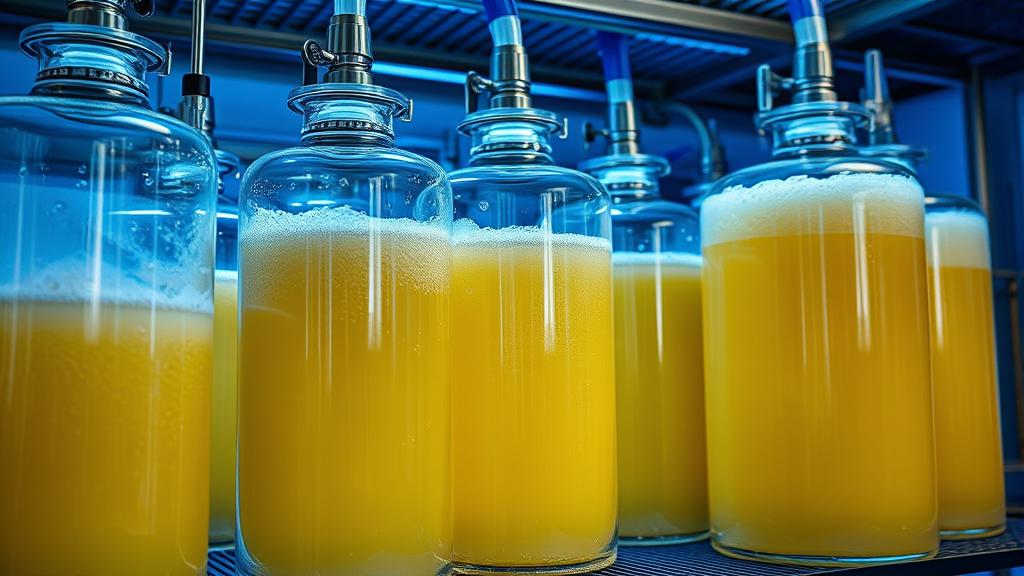
Fermentation is where koji-based beers really shine. Because the koji has already broken down more complex sugars into highly fermentable ones, your yeast races through the wort faster and cleaner than usual.
What to expect:
- OG drop: Koji beers often drop faster than equivalent all-grain brews. You might see a 1.5–2 point gravity drop per day instead of 1 point.
- Attenuation: Final gravities tend to be lower. A typical all-grain lager might finish at 1.010; a koji brew might finish at 1.005 or lower. This is intentional—it contributes to that dry, crisp character.
- Yeast activity: Bavarian and other clean lager yeasts are perfect. Because the koji has done pre-work, yeast stress is minimal.
- Temperature control: Ferment cool—50–54°F (10–12°C) for a lager. Cold conditioning for 2–3 weeks will reward you with exceptional clarity.
Carbonation is where koji beers truly open up. They benefit from slightly higher carbonation than traditional lagers (2.8–3.0 volumes CO₂). This promotes the head retention and crispness the style is known for.
Bottle conditioning works well too. Koji beers age gracefully—they don’t get cidery or thin. After 3–6 weeks in the bottle, even early batches taste polished.
Tasting Notes: What Does Koji Beer Actually Taste Like?
I brewed my first koji rice lager in early May 2026, and I’ll be honest: I was sceptical. The first pour was revelatory. Here’s what I got:
Appearance: Crystal clear, pale golden (SRM 3–4). The head is tight and clingy—better than any all-grain lager I’ve made.
Nose: Clean. Subtle fruity esters (stone fruit, a hint of green apple) that you don’t often get from clean lager yeasts. The koji somehow unlocks delicate aromatics.
Taste: Dry, crisp, with a subtle sweetness underneath. Malt character is there—pale malt comes through with a gentle grain sweetness—but the koji dryness prevents it from being cloying. The finish is super clean. Honestly, it drinks like a Pilsner meets a champagne. No harsh edges, no off-flavours. Just balance.
Mouthfeel: Lighter than a traditional lager, but not thin. The koji beers I’ve tasted have exceptional body despite low FG. This is koji magic—it’s retaining what makes beer feel substantial whilst being dry.
Pairing: This style is phenomenal with food. The dryness and crispness pair beautifully with shellfish, light fish dishes, and even spicy food. I had mine with Vietnamese pho—the crispness cut through the broth perfectly.
Common Mistakes and Pro Tips
Mistake 1: Too much koji. Some brewers go aggressive with koji ratios (100g+ for 20L). You’ll end up with an overly dry, almost astringent beer. Start with 30–50g and work up. Less is more.
Mistake 2: Ignoring temperature control during koji growth. If your koji environment drops below 20°C or goes above 30°C for extended periods, growth stalls or contaminants creep in. Consistent warmth is critical.
Mistake 3: Skipping the initial rest. That 10-minute soak at 35°C lets koji activate properly. Rushing to the main mash means you’re leaving enzyme potential on the table.
Pro tip: Blend koji with other adjuncts. Koji works brilliantly with flaked rice, corn, or wheat. The koji breaks down what these adjuncts contribute, creating unique flavour profiles. Try 50% koji, 25% flaked rice, 25% malt.
Pro tip: Track pH. Koji is a natural acid producer. If your mash pH drops below 5.0, it can lead to harsh tannin extraction. Aim for 5.2–5.4. A simple pH meter (£15–30) is worth it here.
Pro tip: Experiment with fermentation temperature and duration. Koji beers fermented slightly warmer (58–60°F / 14–15°C) develop more fruity esters. Cooler fermentation (50–52°F / 10–11°C) gives you a cleaner, crisper result. Both are valid.
Variations and Next-Level Experiments
Once you’ve nailed a basic koji rice lager, the variations are endless. Here are ideas worth exploring:
Koji amber ale: Combine koji with darker malts (crystal, chocolate). The koji dryness against deep malt character is stunning. Lower the koji ratio slightly (20–30g) to preserve malt complexity.
Koji with foraged botanicals: Since koji unlocks subtle esters, try adding foraged herbs (yarrow, mugwort, nettle) alongside your koji base. This ties into the botanical brewing revolution sweeping craft beer in 2026.
Hybrid koji fermentation: Use koji with your mash, then pitch two yeast strains—a clean lager strain and a Belgian saison strain. The koji’s dryness paired with saison’s fruity complexity creates a beer unlike anything traditional.
Koji with wild fermentation: Koji plus spontaneous fermentation (or controlled bugs like Lactobacillus) creates intentionally sour koji beers. Think koji + gose with a twist.
Low-ABV koji session beer: 3% ABV, koji-driven, packed with flavour. Perfect for warm UK summer drinking. The koji ensures it doesn’t taste thin or cidery at that gravity.

Conclusion: Why Koji Matters in 2026
Koji rice lager brewing isn’t a gimmick. It’s a legitimate technique that’s being embraced by serious homebrewers because it works. It produces cleaner beers, more efficient brewdays, and new flavour profiles that traditional methods can’t quite match. The infrastructure exists now—suppliers stock koji spores, the UK homebrewing community is experimenting openly, and the results are published and discussed across forums and homebrew communities.
If you’ve been curious about enzyme fermentation, alternative grains, or just want to try something genuinely new this brewing season, koji is where it’s at. Start small—grow a batch of koji, use 30g in a single 20-litre brew, taste the result, and iterate. The equipment cost is minimal, the learning curve is manageable, and the potential for discovery is enormous.
The craft lager renaissance is real, and koji is its secret weapon. This is the year to try it.
🍺 Join the Brotherhood — Monthly brews, stories & monk wisdom
Subscribe for exclusive recipes, early brew logs, and behind-the-scenes updates straight to your inbox.