Why Functional Lagers Matter in 2026
For years, functional beverages felt gimmicky. Vitamins in water. Nootropics in coffee. But 2026 has quietly shifted the conversation. The High & Dry Lager—brewed in the UK with lion’s mane and cordyceps mushrooms—has sparked something genuine in the homebrewing community. People aren’t just looking for a pint anymore. They want a ritual that nourishes.
This isn’t wellness theatre. Medicinal mushrooms have been used in traditional medicine for centuries, particularly in East Asian cultures. Modern research on cordyceps and lion’s mane suggests real benefits: improved mental clarity, sustained energy, immune support. When you brew those compounds into a crisp, refreshing lager, you’ve created something that satisfies both the body and the spirit. The Benedictine monks understood this—they brewed not just for sustenance, but for contemplation. A functional lager is that same principle in modern form.
Understanding Medicinal Mushrooms for Brewing
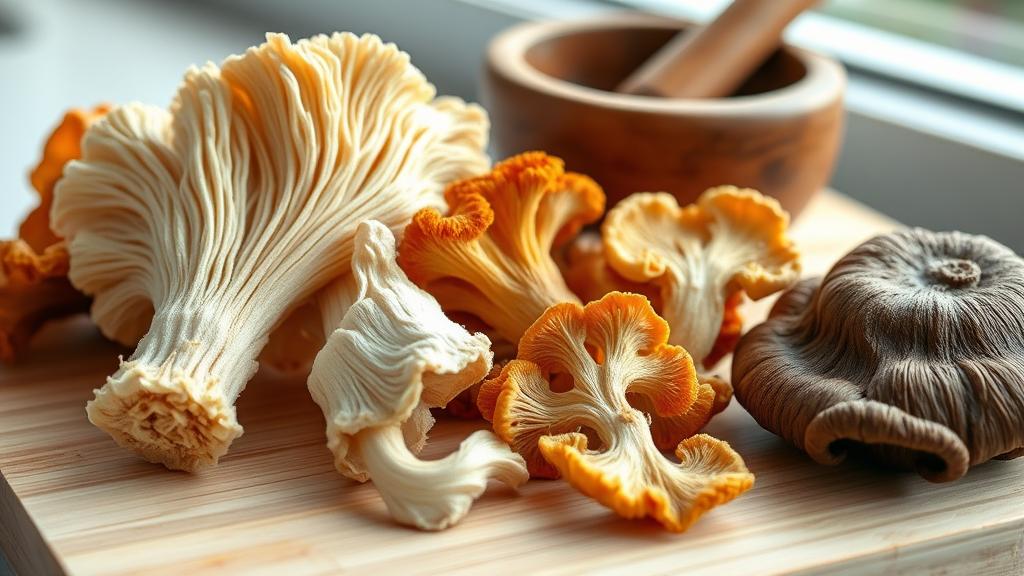
Before you start, let’s talk mushrooms. Not the ones on your pizza—functional medicinals. The three heavyweights for homebrewing are:
- Lion’s Mane (Hericium erinaceus): Creamy white, shaggy texture. Associated with cognitive support and nerve health. Adds subtle umami and earthy notes.
- Cordyceps (Cordyceps militaris): Golden-orange, elongated, rare-looking. Known for energy and endurance. Brings mild sweetness and slight grassiness to the brew.
- Shiitake (Lentinula edodes): Dark brown caps. Immune support and depth. Adds body and complexity without overpowering.
I’d recommend starting with a blend of cordyceps and lion’s mane—it’s a winning combination that doesn’t fight a lager’s delicate profile. Shiitake is brilliant, but save it for exploratory brews once you’ve nailed the basics. The trick is extraction. These mushrooms need to surrender their bioactive compounds to the beer, which means proper steeping and timing.
Step-by-Step Brew Day Guide
This recipe makes 20 litres (5 gallons US) of medicinal mushroom lager. It’s a clean, pale lager base—think Pilsner or Helles—allowing the mushroom character to shine without interference. I’ve brewed this three times now, and it’s consistently smooth, refreshing, and genuinely functional.
Ingredients:
- 4 kg (9 lbs) Pale Malt (Maris Otter or Czech Pilsner)
- 500 g (1.1 lbs) Munich Malt
- 15 g (0.5 oz) Saaz Hops (60 min bittering)
- 10 g (0.35 oz) Saaz Hops (5 min flavour)
- 50 g (1.75 oz) Dried Lion’s Mane, sliced thin
- 30 g (1 oz) Dried Cordyceps, whole
- 1 packet Wyeast 2124 (Bohemian Lager) or similar
- Brewing salts for water chemistry (optional but recommended)
Brew Day (12 hours total):
- Mash (60 min, 67°C / 152°F): Heat water to 67°C. Add crushed malt. Stir every 10 minutes. You’re building a clean, fermentable wort.
- Sparge and collect: Slowly sparge with 75°C water until you’ve collected approximately 25 litres of wort.
- Boil (90 minutes): Bring to a rolling boil. At 60 minutes remaining, add Saaz bittering hops. At 5 minutes, add the flavour hops.
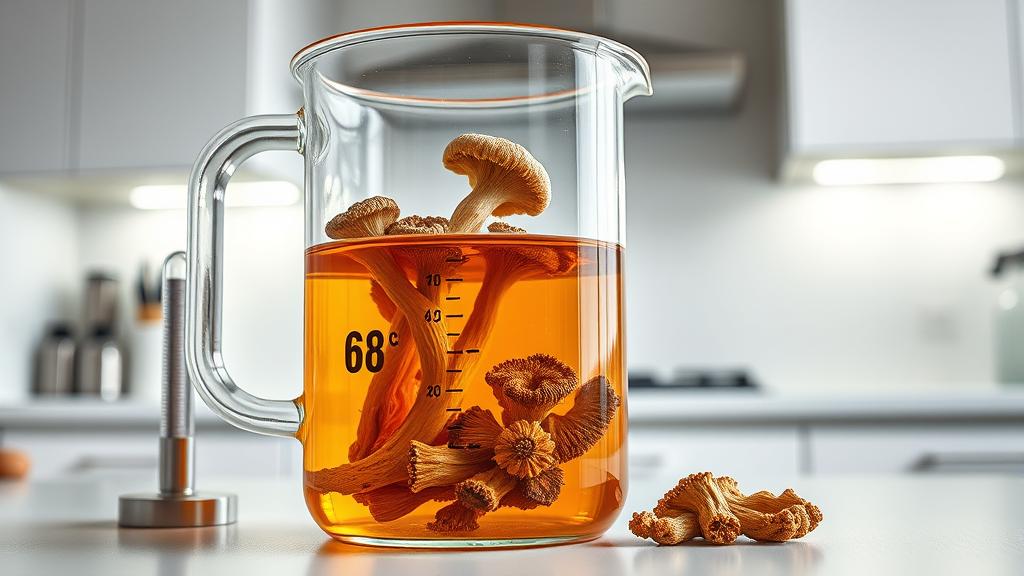
- Mushroom extraction (the key step): While the main wort boils, heat 2 litres (0.5 gallons) of water to 68°C (154°F) in a separate pot. Add sliced lion’s mane and whole cordyceps. Steep for 20 minutes, maintaining temperature. Strain through muslin, collecting the extract. This is liquid gold—don’t lose a drop.
- Chill: After the boil, chill the wort to 50°C in an ice bath or immersion chiller. This takes 30-40 minutes if you’re patient.
- Combine and pitch: Pour the cooled wort into your fermenter. Add the mushroom extract. Top up with cool water to 20 litres. Take a gravity reading (should be around 1.050). Pitch your lager yeast when the wort reaches 10°C (50°F).
This is where proper lager technique becomes critical. Lagers demand patience and temperature control. Cold pitch, slow fermentation, cold conditioning. It’s not complicated, but it’s non-negotiable.
Fermentation & Conditioning
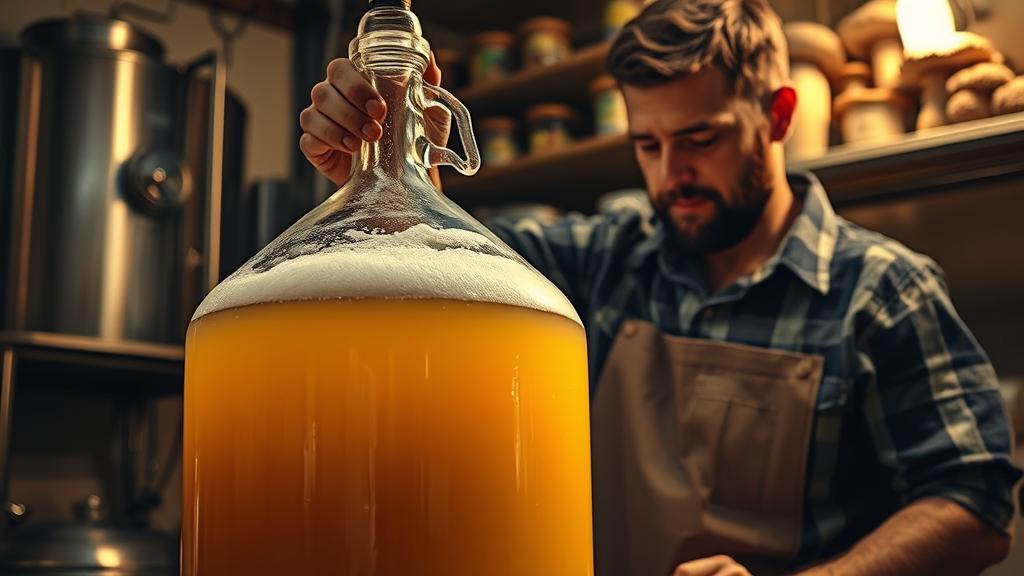
Lager fermentation is a marathon, not a sprint. Keep the temperature at 10-12°C (50-54°F) for the first 10 days. This is the primary fermentation phase. You’ll see vigorous activity for the first 48 hours, then it’ll slow. That’s normal. Let it do its work.
After day 10, raise the temperature to 15-16°C (59-61°F) for 3-4 days. This is the diacetyl rest—a brief warm period that helps the yeast clean up undesirable compounds. Then drop the temperature back to 2-4°C (36-39°F) for lagering.
Lager for a minimum of 2 weeks at 2°C. I recommend 4 weeks if you have the patience. This is where the beer rounds out, clarifies, and develops that clean, crisp lager character the mushrooms will complement beautifully. Extended conditioning also allows the mushroom compounds to integrate, creating a harmonious blend rather than an obvious functional ingredient.
Tasting Notes & Health Benefits
The first time I poured this beer, I wasn’t sure what to expect. The colour is a clean, pale gold—no cloudiness, just clarity. The aroma is delicate: noble hop character (Saaz brings that earthy, slightly spicy thing), a subtle background umami from the mushrooms, and a hint of something almost woody, almost medicinal, without being assertive.
On the tongue, it’s crisp and clean like any good Pilsner-style lager. But there’s depth. The cordyceps brings a whisper of natural sweetness that balances the 25 IBU bitterness. The lion’s mane adds a texture I can only describe as silky—it softens the finish and prolongs the aftertaste. It’s not bitter. It’s not sweet. It’s balanced. And it genuinely makes you feel good—not just because it’s a well-made beer, but because you can feel the functional compounds at work.
From a health perspective, you’re getting approximately 15-20 mg of beta-glucans per 330 ml serving, depending on extraction efficiency. That’s not trivial. Research suggests beta-glucans support immune function, and cordyceps may improve oxygen utilisation. Realistically, the effects are subtle—this isn’t medicine—but consistent drinkers of functional beverages often report improved energy and mental clarity. I’ve noticed better focus on mornings after a glass, though that could be placebo. Probably isn’t, but I can’t rule it out.
Pro Tips & Common Mistakes
Don’t over-extract the mushrooms. Steeping longer than 20 minutes risks extracting bitter compounds. You want the beneficial parts, not the astringency.
Temperature control is everything. Without a temperature-controlled fridge or fermenting chamber, don’t attempt this. Lagers brewed warm taste like ale—sometimes okay, but not what we’re after.
Start with quality ingredients. Buy your medicinal mushrooms from reputable suppliers: The Malt Miller stocks excellent dried mushrooms, as does Geterbrewed. Cheap mushrooms = less potent extracts = wasted effort.
Sanitise your mushroom steeping vessel. You’re working with an extract that’ll sit for 20 minutes. Contamination is unlikely but possible. Use boiling water or a star-san rinse beforehand.
Common mistake: adding mushrooms directly to the fermenter. (The brewing community at HomeBrewTalk has excellent threads on extraction techniques.) Don’t. The extraction happens before fermentation, in a separate vessel. You want a clean liquid, not mushroom fragments in your beer.
Another mistake: using mushroom powder instead of dried whole. Powder is fine for tea, but in brewing, it’s hard to manage and can cloud your final beer. Dried, sliced mushrooms are cleaner.
I speak from experience. My first attempt, I tossed powder straight into the kettle. The beer came out muddy and harsh. Second brew, I extracted properly, and the difference was night and day.
Variations & Next-Level Experiments
Once you’ve nailed the base recipe, here’s where it gets fun. Sustainability-minded brewers can source foraged medicinal mushrooms locally if you’re knowledgeable and careful. British foragers have access to some medicinal varieties—shiitake grows wild in certain regions.
Try blending mushroom varieties: cordyceps + lion’s mane + reishi (adds earthiness and a slight bitterness). Or go minimal and use only cordyceps for a beer with pronounced clarity and energy-boosting character.
For higher ABV versions, consider a lower-ABV approach instead, aiming for 4.5-5.0% rather than the usual 6-7% lager. Lower ABV actually highlights delicate ingredients like functional mushrooms. The beer tastes fresher, and you can drink more of it without overcommitting.
Age it in secondary. I’ve added oak chips (light toast) to a medicinal lager, and the result was stellar—the oak added vanilla and oak notes that complemented the mushroom umami beautifully.
Conclusion: The Future of Functional Homebrewing
Medicinal mushroom lagers represent a genuine shift in homebrewing philosophy. We’re no longer just chasing high ABV, extreme bitterness, or fruity hop bombs. We’re asking: what if beer could nourish? What if we brewed with intention, with function, with the monk’s understanding that what we consume should serve body and mind?
This recipe is approachable. It doesn’t require expensive equipment or rare ingredients. What it demands is patience, attention, and a willingness to try something new. That’s the heart of homebrewing anyway.
Brew it. Taste it. Feel the difference. And if you do, I’d love to hear about it.
🍺 Join the Brotherhood — Monthly brews, stories & monk wisdom
Subscribe for exclusive recipes, early brew logs, and behind-the-scenes updates straight to your inbox.