I’ve spent the better part of 2026 watching the beer world reset itself. Last year, it felt like every homebrewer and their mate was chasing the haze—milky IPAs with names like “Tropical Explosion” and “The Void Stares Back,” each one sweeter than the last. Don’t get me wrong, I made a few dozen of them. But somewhere around October 2025, something shifted. People started getting tired. Not of beer, mind you, but of that particular flavour fatigue. In 2026, the West Coast IPA is back. Properly back. And it’s brilliant.
Why Bitter Is Making a Comeback Right Now
This isn’t nostalgia talking. According to industry analysts tracking 2026 beer trends, bitterness and balance are genuinely resurgent. After years of New England hazes and juicy, candy-sweet fruited sours, brewers—both commercial and homebrew—are tired of the extremes. The West Coast IPA, that pinnacle of balance between resinous bitterness, dry floral notes, and crisp citrus, is experiencing a renaissance.
The irony isn’t lost on me. The West Coast IPA was born in the 1990s as a rebellion against thin, characterless beers. Brewers like those at Stone Brewing and Sierra Nevada proved that hoppy, bitter ale could be *clean*, *elegant*, and absolutely delicious. Then we spent two decades overshadowing them with juice bombs and murk. Now we’re coming full circle—not because we’ve rejected innovation, but because clarity and restraint feel radical again.
The shift is most visible in the numbers. Session IPAs and balanced West Coast styles are the fastest-growing category in craft beer right now. At 5–6.5% ABV rather than the typical 7–8.5% of modern IPAs, you get all the flavour with less of the fatigue. It’s practical homebrewing wisdom winning out.

Ingredients & Equipment for Authentic West Coast Balance
The beauty of a West Coast IPA is simplicity. You don’t need exotic additions or laboratory-grade precision. You need restraint and quality.
Base Malt: Start with 2-row or pale malt as 90–95% of your grain bill. I use Pale Ale malt (sometimes called British Pale) for a touch more character, though American 2-Row works just as well. Around 2 kg (4.4 lbs) for a 20-litre (5.3 gallon) batch gives you a clean, dry finish.
Crystal/Caramel: 5–8% crystal malt (15–30 Lovibond) adds a whisper of sweetness and body to balance the hops. A single 250 g (8.8 oz) addition is enough. Too much and you undermine the whole concept.
Hops—The Star of the Show: This is where West Coast charm lives. Cascade (4–5% AA) and Centennial (9–12% AA) are the classic combo. Cascade is your signature—floral, slightly spicy, with subtle grapefruit notes. Centennial brings the citrus bite and clean bitterness. A typical 5-gallon recipe:
- 60 minutes: 25 g (0.9 oz) Centennial for bittering (target 40–50 IBU)
- 15 minutes: 15 g (0.5 oz) Cascade for flavour
- Whirlpool: 20 g (0.7 oz) Centennial + 15 g (0.5 oz) Cascade
- Dry hop (5–7 days): 30 g (1.1 oz) Cascade
This keeps your aroma fresh without turning it into a smoothie. Precise hop timing is what separates a West Coast IPA from lazy hoppy ales.
Water: West Coast IPAs historically come from regions with moderate to hard water—slightly alkaline, with sulphate. If you’re on soft water (which many UK brewers are), add 1 tsp gypsum per 20 litres (5 gallons) to enhance hop bitterness perception. If your local water is already hard, skip it.
Yeast: US-05 (Safale US-05) is my go-to. Clean, neutral, ferments reliably at 17–21°C (63–70°F), and gives you that crisp, dry finish. California Ale (WLP001) or Wyeast 1056 work identically—they’re all the same culture. Avoid English yeasts here; you want American characteristics.
Equipment Note: A decent temperature controller is crucial. West Coast IPAs ferment best at the cool end—18–19°C (64–66°F) during main fermentation, ramped to 20°C (68°F) in the final few days. This keeps ester production low and highlights the hops.

Step-by-Step Brew Day for Crystal-Clear Results
West Coast clarity isn’t luck—it’s discipline. Here’s my method:
- Mash In: Hit 67°C (152°F) with your water/grist mix. This is the sweet spot for West Coast—dry enough to finish crisp, rich enough to have body. Hold 60 minutes.
- Sparge: Slowly sparge (hand ladle or fly sparge) until you’ve collected about 24 litres (6.3 gallons). Don’t rush it. This avoids tannin extraction and keeps the wort clean.
- Boil: Full 60-minute rolling boil. At 60 minutes remaining, add your bittering hops. Do not cut corners here. A full boil drives off DMS and gives you that bright, clean character West Coast demands.
- 15-Minute Mark: Add flavour hops. These contribute subtle herbal and citrus notes without overwhelming.
- Whirlpool: After flame-out, add your whirlpool hops and let sit 10 minutes. This infuses delicate aroma without harsh alpha-acid bitterness.
- Cool & Transfer: Chill to 18°C (64°F) using a chiller or ice bath. Transfer to your fermenter, aerating well (shake or blow air for 5 minutes). Pitch your yeast.
- Fermentation: Pitch at 18°C, let it sit for 2–3 days before temperature ramp. On day 3–4, gradually raise to 20°C (68°F) to finish clean.
The key to clarity: minimize suspended particles. This isn’t an accident—use a fine mesh strainer during transfer, let your kettle settle for 20 minutes post-boil before running off, and don’t shake the fermenter unnecessarily.
Fermentation & Conditioning: Patience Beats Rushing
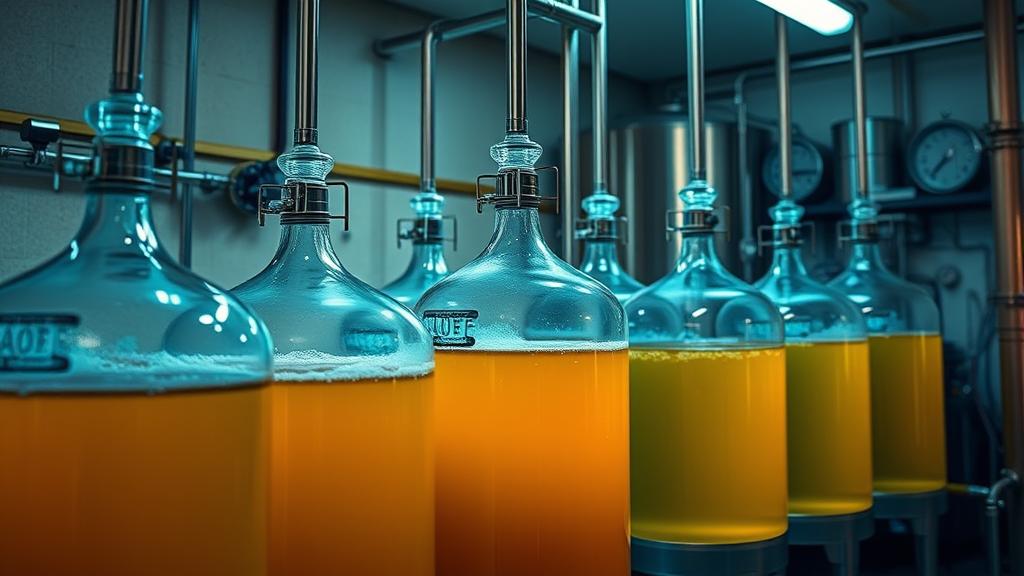
US-05 is reliable—expect fermentation to finish in 10–14 days at 18–20°C (64–68°F). When gravity stabilizes for 3 consecutive days (check with a hydrometer), dry-hop directly into the fermenter.
Dry hop for 5–7 days. No more. After a week, hop aroma starts oxidizing and degrading. I use a 40-micron mesh bag dropped right into the carboy to make cleanup easier.
Once dry hopping is done, cold-condition (if you can drop to 2–4°C/35–39°F for 2–3 days, it accelerates settling). At a minimum, let the beer sit undisturbed for 48 hours before bottling or kegging to let the hops drop.
Bottle conditioning: Prime with 100 g dextrose per 20 litres (5 gallons) for gentle carbonation (2.2–2.5 volumes CO2). Overcarbonation masks the subtle hop profile. For kegs, aim for 2.0–2.3 volumes, served at 10–12°C (50–54°F)—colder than you might expect, but it keeps clarity sharp.
Temperature management is genuinely the invisible ingredient in great homebrew. A West Coast IPA that’s been kept at consistent, cool temperatures will age better and taste cleaner than one exposed to temperature swings.
Tasting Notes & Honest First Impressions
My first batch of West Coast renaissance this year came out in March. I was nervous. Would it feel dated? Would it actually taste good, or would I just be chasing throwback vibes?
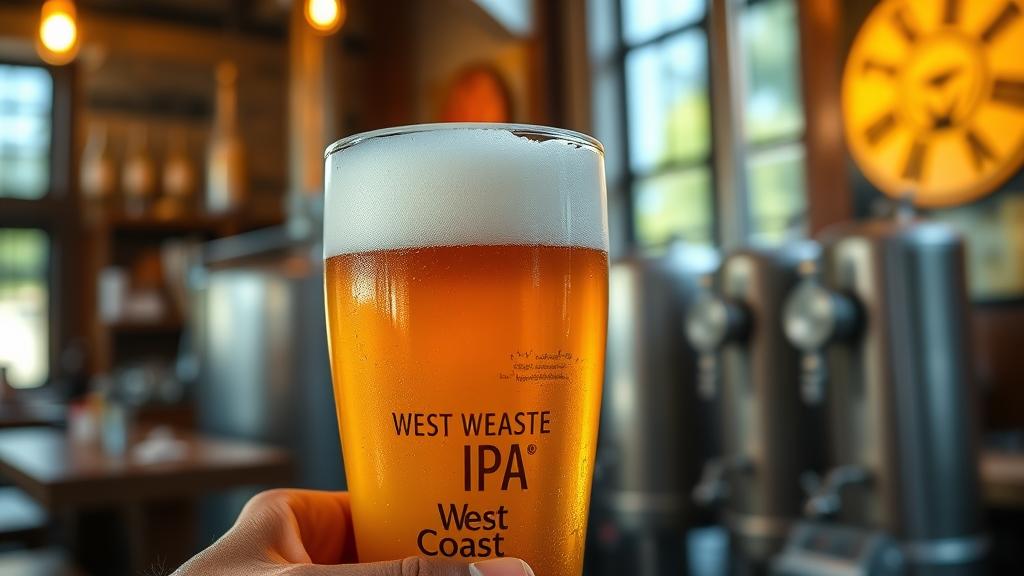
I was wrong to worry. The moment I poured it, the aroma hit: clean, dry, floral. Not a hint of murkiness. The head was dense and white, and it *stayed*. On the palate: dry, crisp, medium body. The Cascade came through as spicy-floral, almost like a Sauvignon Blanc, with subtle grapefruit pith. Centennial added a dry, piney bitterness that didn’t assault your mouth—it lingered clean and elegant. The finish? Bone dry. Like someone cleaned your palate with a grapefruit zest.
The second glass was even better. Because it *rewards* a second glass. That’s the genius of West Coast balance—it’s crushable without being forgettable.
I’ve made three batches now, tweaking the dry hop ratio each time. My current favourite is a 60/40 Cascade-to-Centennial split, which pushes the floral character front-and-centre while keeping the dryness intact.
Pro Tips & Common Mistakes I’ve Made
Mistake 1: Too Much Crystal Malt. I see homebrewers add 10–15% crystal malt thinking it adds “character.” It adds cloy. West Coast needs restraint. Stay at 5–8%.
Mistake 2: Overdrying the Beer. The style is dry, yes, but not *bone* dry. If your final gravity drops below 1.008, you’ve pushed it. Aim for 1.010–1.012 for softness.
Mistake 3: Skipping the Cold Crash. If you can cold-crash, do. It clarifies faster and improves flavour stability. If you can’t, patience is your friend—wait 72 hours before bottling.
Mistake 4: Late Additions Overkill. Some brewers add hops at 30, 20, 15, 10, 5, and flame-out minutes. Resist. West Coast is about three hop additions: bittering, flavour, and whirlpool. That’s it.
Pro Tip 1: Soft Water Adjustment. If you’re on soft water (like most of southern England), add 1 tsp gypsum and 0.5 tsp chalk per 20 litres to build a more hoppy water profile. It genuinely changes the bitterness perception.
Pro Tip 2: Cascade Freshness Matters. Cascade hops degrade quickly. Buy from a reputable supplier (I use The Hop Shop or Geterbrewed), store in a freezer, and use within a year. Stale Cascade tastes like hay.
Pro Tip 3: Clarity Through Whirlpooling. After your boil ends, let the kettle sit still for 10–15 minutes. The hops and hot break settle into a cone at the bottom. Run off from the side valve, not from underneath. This single step removes so much sediment.
Variations & Next-Level Experiments
Once you’ve nailed the classic formula, the fun begins:
- Session West Coast: Drop to 5.0% ABV by reducing grain bill by 15%. Same hop profile, half the alcohol. Honestly? This is the direction 2026 is headed.
- Golden Promise West Coast: Swap pale malt for 100% Golden Promise (Scottish pale malt). It’s slightly darker, a touch sweeter. Creates a richer body while keeping the dry finish.
- Double-Dry-Hop: Do a second dry-hop addition after 4 days, swapping out the first bag. This pushes aroma to maximum without harsh oxidation.
- Noble Hop Blend: Replace Centennial with 50% Tettnanger (German noble hops). You lose some citrus but gain spicy complexity and a softer bitterness.
The beauty is that West Coast is a foundation, not a straightjacket. Once you understand the principles of clean brewing and balanced composition, you can adapt to your local water, your hop access, even your fermentation space.
Why This Matters in 2026
Here’s the honest bit: we’ve spent a decade chasing novelty. Every new beer had to be a story—weird fruit, exotic adjuncts, extreme ABV, or all three at once. There’s value in that exploration, and I stand by the strange ales I’ve made.
But 2026 is teaching me something different. Sometimes the best beer is the one you want to drink on a Thursday evening without thinking about it. The one that *rewards* repeated tasting because it reveals new layers each time you pay attention. The one that’s technically excellent, not because it flexes complexity, but because it executes clarity and balance so perfectly that it feels simple.
The West Coast IPA is back because we collectively remembered: the best innovation isn’t always about adding something new. Sometimes it’s about doing the fundamentals with absolute precision. And honestly? That’s a lesson worth carrying forward.
🍺 Join the Brotherhood — Monthly brews, stories & monk wisdom
Subscribe for exclusive recipes, early brew logs, and behind-the-scenes updates straight to your inbox.