Yarrow Ale: Brewing with Foraged Herbs at Home
Why Yarrow Is Your Next Great Brew
Yarrow is having a moment. After centuries of quiet service in monastery gardens and English hedgerows, this ancient herb is finding its way back into homebrewing—and honestly, once you taste a well-crafted yarrow ale, you’ll understand why medieval brewers loved it.
The plant (Achillea millefolium, if you’re feeling botanical) brings something modern craft beer has lost: subtlety. It’s not a gimmick. Yarrow adds a gentle bitterness—sometimes floral, sometimes herbal—that complements malt without overshadowing it. Think of it as a bridge between the clean, approachable ales of the 1700s and the precision-brewed beers we make today.
I first encountered yarrow properly while researching botanical brewing traditions earlier this year. What struck me wasn’t the flash—it was the elegance. Yarrow works because it respects the malt. It doesn’t demand attention; it earns it.

Understanding Yarrow: The Plant, The History, The Chemistry
Before you brew, understand what you’re working with. Yarrow grows wild across the UK, especially in fields, hedgerows, and disturbed ground. It’s hardy, recognisable, and (once you know what to look for) abundant from spring through autumn.
Historically, yarrow was a pillar of pre-hop brewing. Brewers called it “gruit”—along with wormwood, mugwort, and other herbs—and used it for both flavour and preservation. The medieval gruit ale tradition relied entirely on herbs like these. Hops eventually replaced gruit across Europe, but that doesn’t mean yarrow’s lost its magic.
The science is interesting too. Yarrow contains volatile oils—primarily azulene and chrysanthemin—that provide its distinctive flavour profile. These oils are released when the plant is dried or heated, which is why fresh yarrow and dried yarrow can taste quite different in your beer.
For homebrewing purposes, use the dried flowers and leaves. Fresh yarrow works, but dried gives you more control over intensity and consistency.

Sourcing & Harvesting Your Yarrow
You’ve got three options: forage it yourself, grow it, or buy it dried.
Foraging: If you know what you’re looking for, yarrow’s everywhere. Look for feathery, finely divided leaves and clusters of small flowers (yellow, pink, or white). Harvest in late spring or early summer for the strongest oils. Cut the flower heads and upper leaves, leaving the plant to regrow. Always positively identify yarrow before harvesting—it has no truly dangerous lookalikes in the UK, but some similar plants (hemlock, wild fennel) exist.
Growing: Even simpler. Plant yarrow seeds or small plants in a sunny spot with well-draining soil. It’s tough, drought-tolerant, and actually prefers poor soil. You’ll have harvestable material within a season.
Buying: Several UK specialty suppliers stock dried culinary and medicinal yarrow. Get ER Brewed and The Malt Miller occasionally stock foraged botanicals. Alternatively, buy food-grade dried yarrow from herbal suppliers—just verify it’s clean and pesticide-free.
For a 20-litre batch (5.3 gallons), I recommend 10–20 grams of dried yarrow, depending on whether you want a subtle hint or a more pronounced herbal character.
Brewing Your First Yarrow Ale: Step-by-Step
Here’s my baseline recipe—a simple English pale ale with yarrow as the star. It works for extract brewers and all-grain, though I’ll give all-grain specifics.
For 20 litres (5.3 gallons):
- 3 kg pale malt (or 1.5 kg pale malt extract + 1 kg light DME)
- 250g English crystal malt (40L)
- 250g caramel malts (mix for complexity)
- 10g Goldings hops (60 min boil)
- 15g dried yarrow (10 min boil)
- 5g Goldings hops (5 min boil, optional—for a subtle hop note)
- 1 packet English ale yeast (Safale S-04 or Wyeast 1968)
- 5g salt (for water balancing, optional)
The Brew Day:
- Mash in (65°C / 149°F for 60 minutes). This lower temperature promotes a drier finish, letting yarrow’s complexity shine.
- Mash out at 76°C (169°F). Run off slowly.
- Boil for 90 minutes. Add Goldings at the start.
- At 10 minutes remaining: Add your dried yarrow flowers. This timing allows the volatile oils to infuse without boiling away completely.
- At 5 minutes remaining: Add your optional finishing hops (Goldings).
- Cool to 20°C (68°F) and pitch your yeast.
- Ferment for 7–10 days at 18–20°C (64–68°F). English ale yeasts work beautifully at this range.
That’s it. The alchemy happens in the fermenter.
Fermentation & Conditioning
This is where patience pays dividends. Yarrow ales improve dramatically with time. The herbal notes mellow, and the beer develops complexity it didn’t have on day seven.
Primary fermentation: 7–10 days at 18–20°C (64–68°F). Don’t rush this. Let the yeast do its work.
Secondary fermentation (optional but recommended): Transfer to a carboy or bottling bucket after 7 days. Age for another 2–3 weeks. This allows the yarrow to integrate fully with the malt character.
Bottling: Once fermentation is complete (gravity stable for 3 days), bottle with 2.5–3 volumes of CO₂ priming sugar. The style works better slightly under-carbonated—don’t over-carb. Yarrow ales deserve a soft, creamy head.
Bottle aging: Minimum 2 weeks before tasting, ideally 4–6 weeks. I’ve found yarrow ales hit their stride around week 6–8. Some batches improve for up to 6 months.

Tasting Notes & My Honest Review
My last batch was ready at week 6. I poured a 330ml bottle (about 11 oz) into a clean pint glass—slightly chilled, not ice-cold—and paid attention.
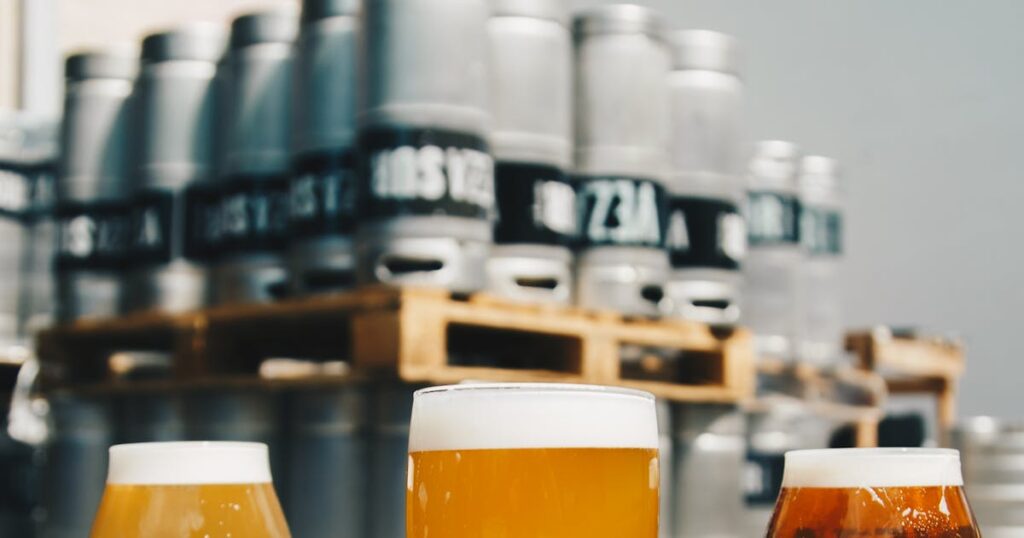
Appearance: Golden-amber, slightly hazy from suspended yeast. A tight, creamy head persisted for a solid 3 minutes.
Aroma: First whiff brought floral notes—subtle, reminiscent of chamomile or hay. No harsh phenolics. The malt underneath was warm, biscuity, almost sweet.
Taste: Smooth entry. The body was medium, dry without being astringent. The yarrow came through as a gentle bitterness—not aggressive, but present. It sat nicely alongside the pale malt sweetness. No harshness. The finish was slightly herbal, clean, with a whisper of florality that lingered pleasantly.
Mouthfeel: Silky, slightly drying towards the finish. Carbonation was light, which worked perfectly.
My take: This is a sessionable ale. At around 4.8% ABV, it’s approachable but respectable. It pairs beautifully with cheese, mild curries, and roasted vegetables. It’s the kind of beer you’d want on a summer afternoon or after a long day in the brewery. No flash, no gimmick—just honest, well-balanced, thoughtful beer.

Pro Tips, Common Mistakes & Variations
Tip 1: Balance is everything. Yarrow is subtle. If you add too much (more than 25g per 20 litres), it’ll overpower your beer. Start conservative. You can always experiment more next time.
Tip 2: Pair yarrow with clean, English-focused grain bills. It works best alongside pale malt, crystal, and traditional British grains. It clashes with aggressive roasted malts or intense hop profiles.
Tip 3: Timing matters. Add yarrow late in the boil (10 minutes) to preserve the volatile oils. Early additions lose the delicate floral notes.
Common mistake 1: Using fresh yarrow without drying it first. Fresh leaves can introduce unwanted moisture and inconsistency. Dry yours for at least 48 hours before use.
Common mistake 2: Rushing the conditioning phase. These beers need time. Drink one at week 2 if you must, but save a bottle for week 8. The difference is dramatic.
Variation: Yarrow + Ginger Ale — Add 10g dried ginger root at the 10-minute mark alongside the yarrow. Creates a warming, slightly spiced character. Drops ABV slightly but adds complexity.
Variation: Yarrow + Wildflower Honey — Dissolve 500g honey (UK-foraged if possible) into your wort post-boil. Yarrow and honey are a classical pairing. ABV rises to ~5.5%. The honey adds subtle sweetness without cloy.
Variation: Dry-Yarrow Cold Infusion — For a more delicate approach, skip the boil addition and instead infuse 5–8g dried yarrow in a cold infusion in your secondary (place it in a muslin bag, leave 3–4 weeks). The result is incredibly subtle but elegant.
Why This Matters: The Monastery Connection
Here’s what gets me about yarrow: it connects you to centuries of brewing wisdom. Benedictine and Trappist brewers refined these recipes over 1,500 years. They didn’t have fancy hydrometers or temperature controllers. They had malt, herbs, and time. They understood balance in a way that feels almost spiritual.
When you brew yarrow ale, you’re not just making a beer. You’re participating in that conversation. You’re asking the same questions medieval brewers asked: What works? What’s elegant? What improves with patience?
That’s the real trend. Not novelty for novelty’s sake, but rediscovering farmhouse brewing traditions and asking them to speak to our world. Yarrow does exactly that.
Next Steps: Variations Worth Exploring
Once you’ve nailed the base recipe, the possibilities open up. Try hybrid fermentation techniques with a gentle lager character. Pair yarrow with other foraged botanicals—dandelion greens add earthiness, wild mint adds freshness. Build a whole category of beers rooted in your local hedgerows and meadows.
For reference, the BJCP Style Guidelines now recognise historical ales and herb-brewed beers as legitimate categories. Your yarrow ale has heritage on its side.
🍺 Join the Brotherhood — Monthly brews, stories & monk wisdom
Subscribe for exclusive recipes, early brew logs, and behind-the-scenes updates straight to your inbox.