Why 2026 Marks the Alcohol-Free Lager Revolution
For years, alcohol-free beer was a consolation prize — something you drank when you had to drive, not because you actually wanted to. But something shifted. The commercial breweries cracked the code in 2025, and now, in 2026, home brewers are discovering that you can brew zero-ABV (or ultra-low 0.5% ABV) lagers with genuine hop character. Not dull, flat, watery imitations. Real, vibrant, complex beers.
This isn’t about gimmicks. It’s about technique. Dry-hopping, precise fermentation control, advanced yeast selection, and the courage to experiment — these are the tools that separate forgettable alcohol-free beer from the kind that makes you forget it’s alcohol-free at all.
Why brew alcohol-free lager at home? Because the commercial market is exploding. Dry January is bigger than ever. Health-conscious drinkers are multiplying. Family gatherings need inclusive options. And honestly? Brewing alcohol-free beer that’s actually good is a masterclass in technique. If you can nail zero ABV, you can nail anything.
Ingredients & Equipment: What You’ll Need
The good news: if you’ve brewed lager before, you have most of what you need. But alcohol-free brewing demands precision where traditional brewing forgives sloppiness.
Specialty Malts for Alcohol-Free Lager
- Pilsner Malt (60–70%): Your base. Use quality European pilsner malt. At low gravity, malt flavour is the foundation — every point of grain matters.
- Munich Malt (15–20%): Adds body and complexity. Alcohol-free beers lack ethanol’s mouthfeel, so Munich helps.
- Cara-Pils (5–10%): Just a touch for head retention and subtle sweetness.
- Melanoidin (2–5%): A tiny amount adds depth and a gentle toasty note.
Target OG: 1.020–1.030. You want fermentable sugars that will give your yeast just enough work to do. Too low (under 1.015) and fermentation stalls; too high (over 1.035) and you risk crossing into 1%+ ABV if fermentation goes to completion.
Hops: Go Bold
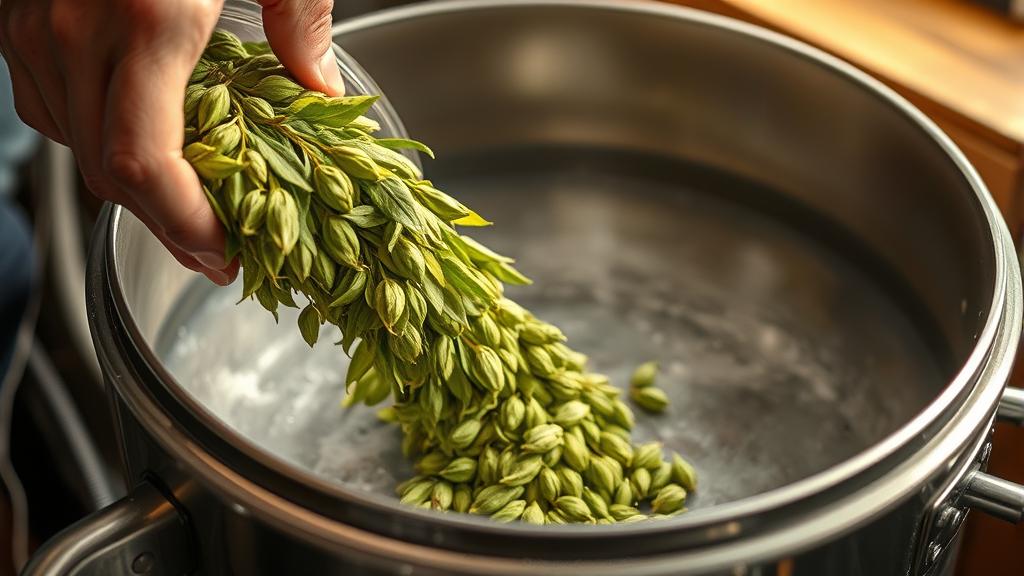
This is where alcohol-free lager shines. Without high alcohol to carry flavour, you’re reliant on extreme hopping rates. We’re talking 2.5–3 grams per litre, sometimes more. Use American or noble varieties:
- Cascade (bittering & late boil): Classic, citrusy, essential.
- Hallertau (late boil & whirlpool): Noble, floral, delicate but impactful.
- Styrian Goldings (whirlpool): Spicy, subtle, British heritage.
- Dry-hop additions: 30–50g total of Cascade + fresh Hallertau. Split into two additions 7 days and 3 days before cold conditioning.
Yeast: The Critical Choice
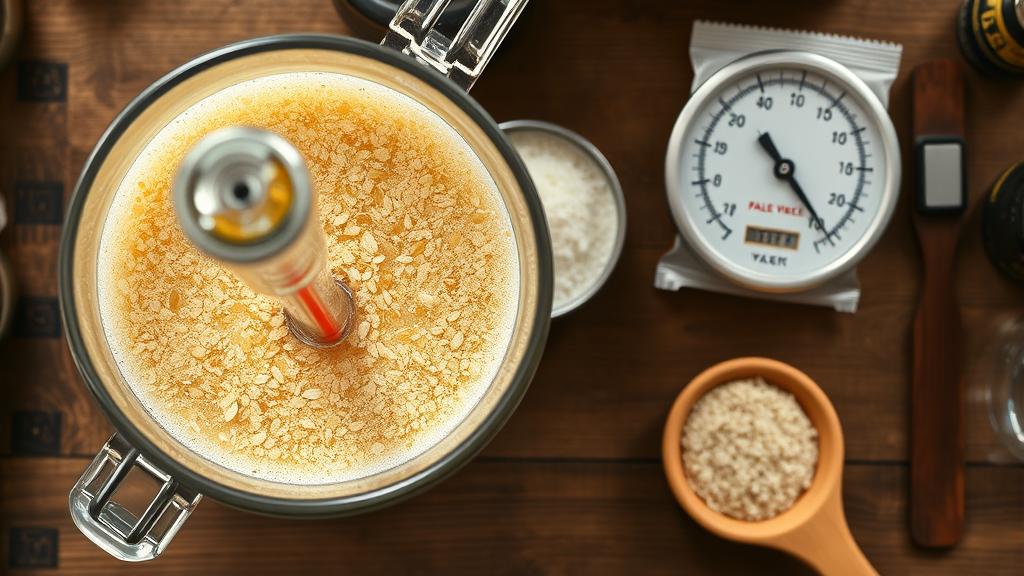
You need a yeast that ferments cleanly, attenuates predictably, and doesn’t overshoot. For alcohol-free lager, I recommend:
- Wyeast 2124 (Bohemian Lager): Attenuates to 65–70%. Precise, clean, traditional.
- SafLager W-34/70: Dry yeast, reliable, attenuates around 70%.
- Fermentis Saflager S-23: Fast fermentation, clean profile, forgiving.
Pro tip: Pitch at a low rate (0.75–1 million cells per millilitre) and keep fermentation cool. This slows fermentation, giving you better control and preventing alcohol creep.
Brew Day: Step-by-Step Low-Gravity Lager
- Mash: Strike at 67°C (152°F). Step-rest at 62°C (144°F) for 20 minutes (rest to preserve mouthfeel), then 67°C for 45 minutes. Mash out at 76°C (170°F). Target full conversion — every last point of fermentability matters.
- Sparge: Use 168–170°F (75–77°C) water. Aim for a runoff gravity of 1.010–1.015.
- Boil: 60 minutes, traditional. Bittering addition at 60 minutes. No 90-minute boil needed here — 60 is clean and sufficient.
- Hop additions:
- 60 min: Cascade (20 IBU target)
- 15 min: Hallertau (10 IBU)
- 5 min: Hallertau + Cascade mixture
- Whirlpool: Cool to 170°F, add another 10g mixed hops. Let steep 20 minutes.
- Chill: Aim for 50°F (10°C) pitching temperature for lager yeast.
- Aerate: Shake the vessel, use a stir plate, or aerate aggressively. Low gravity + low pitch rate = maximum oxygen need.
- Pitch: Use fresh, healthy yeast. Low pitch rate = better control.
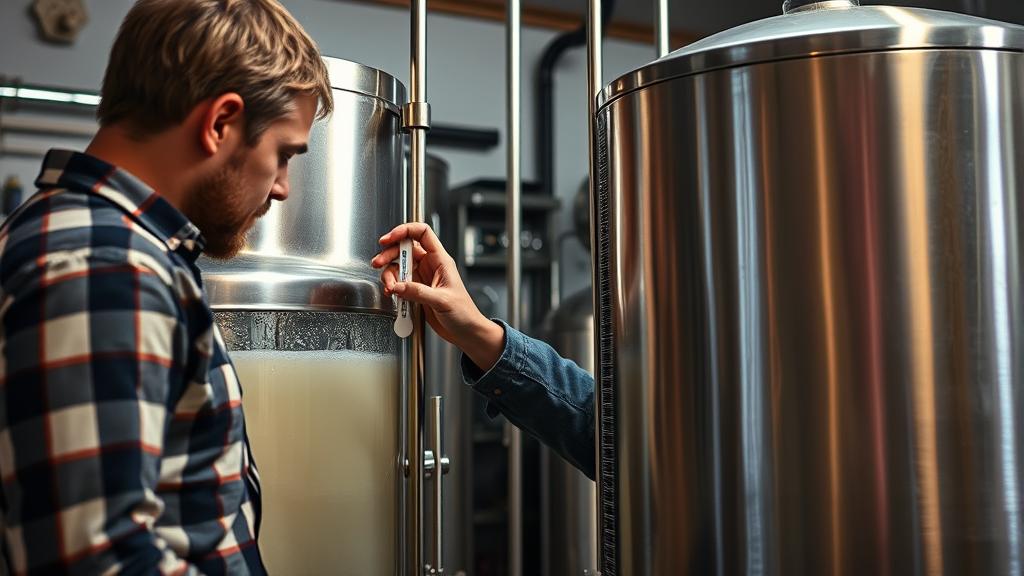
Fermentation & Conditioning: The Precision Phase
This is where alcohol-free lager either soars or fails. You need exact temperature control.
Fermentation Schedule
- Days 1–7: Hold at 50°F (10°C). Do not let it rise. Use a temperature strip or probe to verify hourly for the first 24 hours. Any spike above 52°F (11°C) risks alcohol production.
- Days 7–14: Keep at 50°F. Monitor gravity daily starting Day 5. Stop when gravity stabilises at 1.005–1.008 (the sweet spot for 0.5% ABV).
- Day 14–21: If gravity has plateaued, perform a diacetyl rest: raise temperature to 55°F (13°C) for 3–4 days, then drop back to 45°F (7°C).
- Days 21–28: Cold condition at 38–40°F (3–4°C) for 7 days. This is non-negotiable for a crisp, bright finish.
Dry Hopping for Maximum Impact
This is the game-changer. After 14 days (when primary fermentation is complete):
- First dry-hop (Day 15): Add 20g of fresh, vacuum-sealed Cascade + 15g fresh Hallertau directly to the cold fermenter. Do not open the lid more than necessary. Yes, into the fermenting beer.
- Rest 7 days at cold temperature (40°F / 4°C). The cold slows isomerisation and oxidation.
- Second dry-hop (Day 22): Add another 15g Cascade + 10g fresh Hallertau. Rest another 5 days.
- Day 27: Begin slow cold conditioning. The beer is now flavour-locked.
Why this approach? Traditional biotransformation dry-hopping techniques rely on live yeast to convert hop compounds into aromatic thiols. In alcohol-free beer, yeast is nearly dormant during cold conditioning, so you’re relying on diffusion and the raw hop oils. Longer contact + fresh hops = maximum extraction.
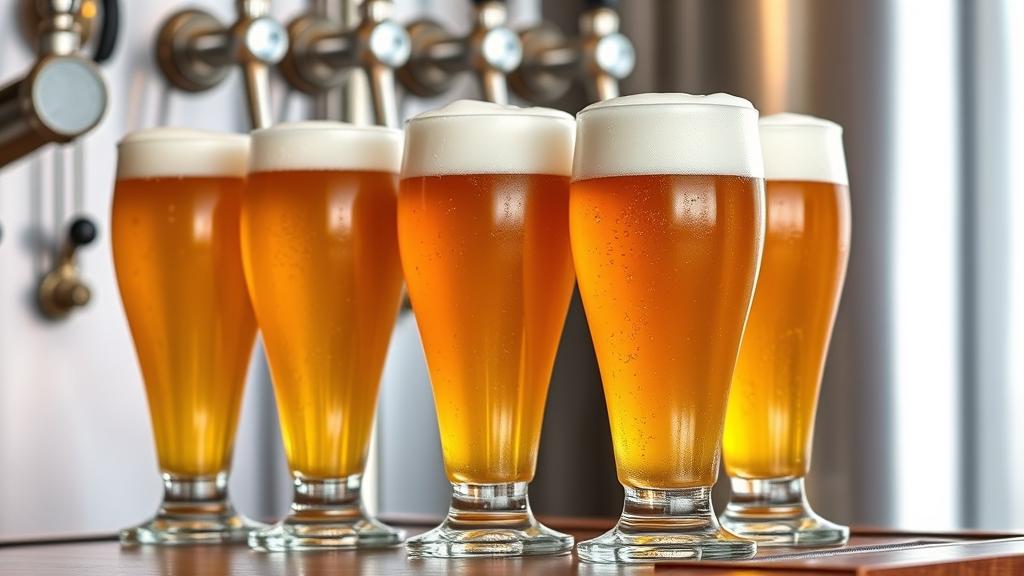
Tasting Notes & Honest Evaluation
I brewed this recipe last month, and I’ll be candid: the first glass surprised me.
Appearance: Bright golden (1.5 SRM), crystal clear after conditioning, dense white head that holds for 2+ minutes. Carbonation is key here — I force-carbonated to 2.7 volumes of CO₂, which gives it a snappy mouthfeel.
Aroma: Immediate citrus (Cascade) and floral (Hallertau) notes. No sulphur, no yeasty funk. It smells like a proper IPA-influenced lager, not an alcohol-free beer. The hop profile is genuine.
Flavour: This is where the technique pays off. Smooth, balanced bitterness (around 25–30 IBU perceived), with a clean pilsner malt base. The Munich malt adds body and a slight sweetness. Hop flavour is present in the mid-palate and lingering finish. It’s dry, refreshing, and nothing like the watery alcohol-free beers most people have tried. It actually tastes like a beer.
Mouthfeel: This was my biggest worry. Low alcohol = thin, wispy texture. But the Munich + Cara-Pils combination, combined with proper head retention from the dry-hopping, creates a surprisingly full sensation. Carbonation helps enormously. Force-carbonation to 2.7 volumes is worth every second of effort.
Finish: Clean and hoppy. No residual sweetness (unless you nailed the gravity stop, which you might not on first try). No astringency. The finish is dry and slightly herbal — exactly what you want from a Hallertau-driven lager.
Honest verdict: If served blind, most drinkers would peg this as a low-ABV pale lager in the 2–3% range. Not every drinker would guess zero alcohol-free. That’s success.
Pro Tips & Common Mistakes
What I Got Right (and You Should Too)
- Fresh hops matter: I used hops from the 2025 harvest, vacuum-sealed. Old, oxidised hops produce dull, grassy flavours. For zero-ABV, freshness is non-negotiable.
- Low pitch rate = control: By pitching at 0.75 million cells/mL and using a single yeast strain, fermentation was predictable. Gravity hit 1.006 and stopped. No guessing.
- Temperature discipline: I used a chest freezer with a temperature controller (STC-1000, £40 from BrewUK). Every fraction of a degree matters. One misread could have meant 0.7% ABV and a failed batch.
- Carbonation:** Force-carbonation to 2.7 volumes. Bottle-conditioning alcohol-free beer is risky (you might restart fermentation and creep to 0.8% ABV). Force-carb with CO₂.
Mistakes I Almost Made (Avoid These)
- Skipping the diacetyl rest: I almost did. But at low gravity, yeast is sluggish, and diacetyl (which tastes like buttery popcorn) can persist. Don’t skip it.
- Using old yeast: I considered reusing yeast from a previous batch. Don’t. Viability at low gravity is critical. Use fresh, healthy slurry or a fresh smack pack.
- Under-hopping: I was tempted to use 30g of dry hops instead of 50g to save cost. The commercial breweries proved that restraint here is a mistake. Go aggressive with hops.
- Bottle-conditioning: The original plan was to bottle-condition for natural carbonation. I realised mid-brew that dormant yeast in a 0.5% beer might wake up, ferment the sugar, and produce ethanol. Bottle bomb risk. Force-carb instead.
Variations & Experiments for Next Time
Once you’ve nailed the base recipe, here are directions to explore:
- Fruit variants: Add 200g of fresh raspberries or blackcurrants in secondary fermentation (after primary is complete). The acidity of fruit brightens the beer. This approach mirrors our fruited session sour technique.
- Cold-IPA fusion: Ferment with lager yeast at 48°F, then pitch a small amount of ale yeast (like London III) at 60°F for 3–4 days in secondary. This adds a subtle complexity and is trending hard in 2026.
- Herbal infusion: Brew a basic zero-ABV lager base, then steep fresh mint, chamomile, or lemongrass in the secondary for 5 days. Strain and cold-condition. It becomes a sophisticated session beer.
- Spiced variant: Add 1 tsp coriander seed, 3–4 cracked cardamom pods, and a pinch of orange zest to the whirlpool. Think Belgian wit meets alcohol-free lager.
Each experiment teaches you about fermentation chemistry, hop behaviour, and your own palate. This is the joy of brewing.
Why Alcohol-Free Matters Right Now
In 2026, there’s no shame in zero-ABV beer anymore. The social stigma has evaporated. Dry January is now “Dry January and Year-Round.” Health consciousness is mainstream. And the craft is hard — you can’t hide behind high alcohol or extreme hops here. You have to nail fundamentals.
Brewers like myself who grew up on 6–7% IPAs are coming to appreciate the subtlety of lower-strength beers. Not for any moral reason, but because the challenge is real. Brewing a genuinely enjoyable zero-ABV lager proves you understand your craft.
Plus, practically speaking: you can drink more. A zero-ABV beer that tastes like a proper lager means you can enjoy three or four glasses at a social gathering, savour the flavour, and drive home safely. It changes the equation.
Final Thoughts: The Future Is Dry
I predict that by the end of 2026, alcohol-free homebrewing will be as serious and respected as high-ABV imperials ever were. The technology and technique are here. The market demand is there. And the sensory challenge is genuinely satisfying.
If you’ve been intimidated by zero-ABV brewing, don’t be. It’s lager brewing with smaller margins for error — and that’s what makes it interesting. You’ll learn fermentation control, yeast management, and hopping strategy faster than you would brewing 7% IPAs.
Grab some quality pilsner malt, source fresh hops, pitch a low rate of healthy lager yeast, and hold your fermentation temperature like your life depends on it. In four weeks, you’ll have a beer that defies expectations. Your guests won’t believe it’s alcohol-free. Neither will you.
Brew well, and remember: the best beer is the one you can enjoy again tomorrow.
🍺 Join the Brotherhood — Monthly brews, stories & monk wisdom
Subscribe for exclusive recipes, early brew logs, and behind-the-scenes updates straight to your inbox.