Apple & Stone Fruit Radlers: Master the Crisp Summer Brew of 2026
Why Fruit Radlers Are Exploding in 2026
If you’ve walked into any UK pub in the last six months, you’ve noticed something: radlers have gone from novelty to staple. And this year, it’s not just lager and lemonade anymore. The trend data is undeniable—fruit-forward flavours, particularly apples and stone fruits, are dominating the Food & Drink trends for 2026.
I spent the last month brewing and testing apple and stone fruit radlers, and honestly, I get it now. There’s something genuinely compelling about a crisp, refreshing beer that tastes like an orchard breeze on a summer afternoon. It’s not sacrilege to traditional brewing—it’s evolution. Breweries like Northern Monk and community-focused UK craft producers are already exploring fruit radlers, and the signal is clear: homebrewers who master this style will be serving beers their friends actually want to drink on a warm Saturday.
For someone like me, coming from a heritage of monastic brewing wisdom, there’s a lesson here: sometimes the best beer is the one that brings people together, not the most complex one on the shelf. A radler does that. It’s approachable, refreshing, and genuinely delicious when done right.
The Science Behind Fruit Radlers (and Why They’re Not Just Juice Shanties)
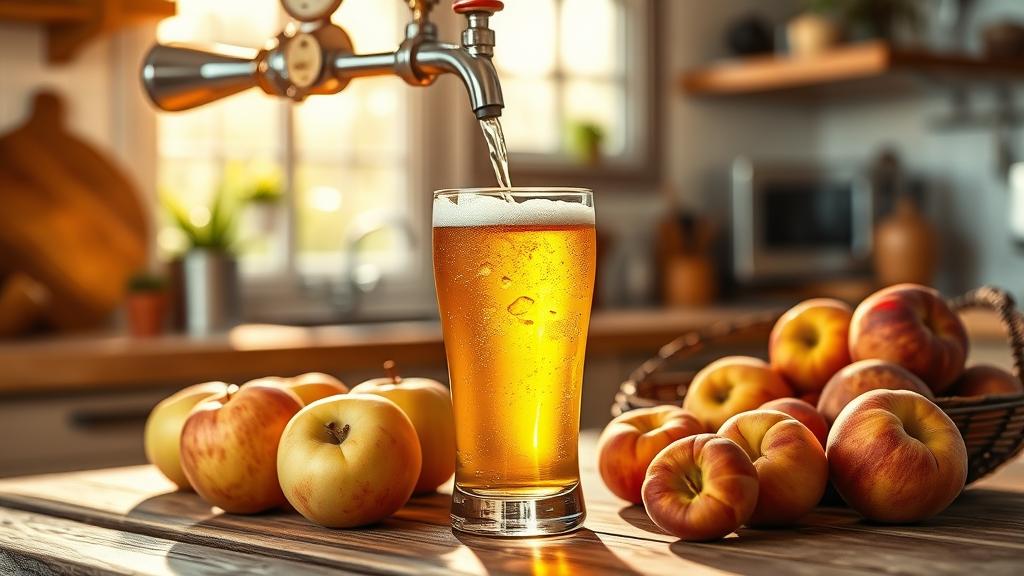
Here’s where it gets interesting. A true radler isn’t just beer mixed with juice poured over ice. That’s a shanty, and while there’s nothing wrong with that, a proper radler is brewed with fruit intent from the start.
The key is understanding fermentation chemistry. When you add apple or stone fruit juice to your wort, you’re not just adding flavour—you’re introducing sugars that will ferment, altering the final ABV (alcohol by volume) and creating complex flavour interactions. A well-balanced apple radler sits around 2.5–3.5% ABV (or 4–5 gallons per 23-litre batch for the old-school measurements), making it genuinely sessionable.
The citric acid in apples and the natural tannins in stone fruits also provide what beer chemists call “refreshment compounds.” They brighten the beer, prevent it from cloying, and give your palate that crisp finish. This is why BJCP guidelines are starting to recognise fruit beers as their own category—they require different brewing discipline than traditional ales or lagers.
One of my early batches failed spectacularly because I added all my apple juice at the end of the boil, when pasteurisation killed the delicate volatile compounds I needed. The second time, I added it post-fermentation, closer to packaging, and the difference was night and day. This is similar to the precision needed when timing your dry-hop additions for maximum aroma extraction. That’s the kind of detail that separates a decent radler from one that makes people ask for your recipe.
Ingredients & Equipment: What You’ll Actually Need
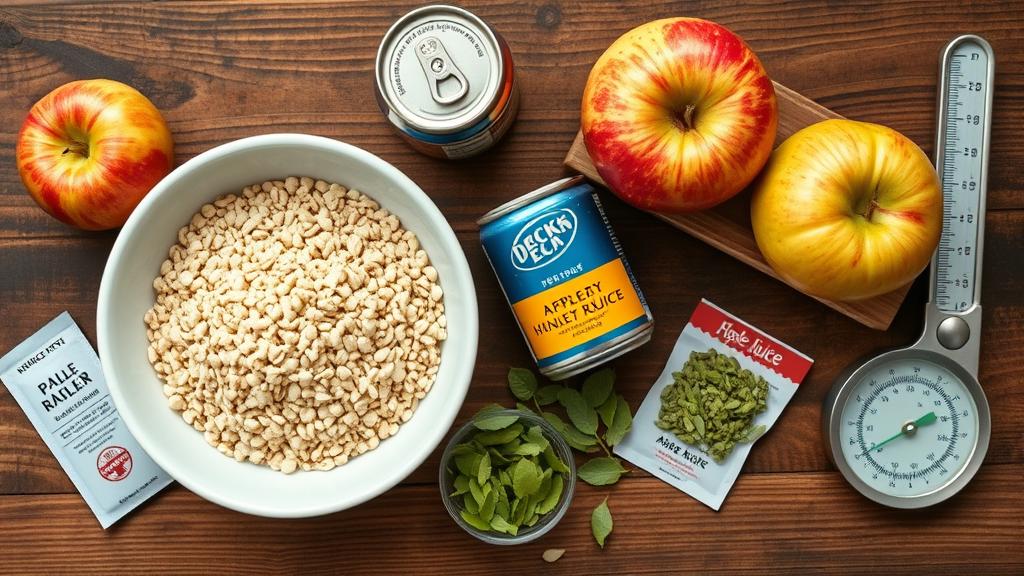
For a 23-litre (5-gallon) batch:
- Base grain: 2.5 kg pale malt (Maris Otter or Pale Ale Malt)
- Specialty grain: 250 g Munich malt (adds depth without too much colour)
- Fruit: 2–3 litres fresh or high-quality bottled apple juice (Granny Smith or a blend works best) OR 1.5–2 litres stone fruit juice concentrate (apricot, peach, or a blend)
- Hops: 20 g Galaxy or Citra at 60 min (citrus notes complement fruit beautifully). 15 g at flame-out for aroma.
- Yeast: SafAle US-05 or Kveik (fast, clean, lets fruit shine)
- Water: 30 litres (adjusted for your local profile—check The Malt Miller’s water chemistry tool)
Equipment: Your standard setup (kettle, mash tun, fermenter, siphon, bottling cane). If you’re doing a keg vs bottle carbonation setup, make sure your keg is clean—radlers are unforgiving of old hop residue.
Shopping tip: Buy your apples or stone fruits from a local market or farm shop if possible. The juice quality matters more than you’d think. UK-grown apples (Coxes, Bramleys for a tart blend) are ideal. Concentrate works fine if you’re in a pinch, but fresh always wins.
Brew Day: Step-by-Step
1. Mash (30 mins at 67°C / 152°F)
Mix your grains (pale + Munich) at a 2.5:1 water-to-grain ratio. Hold at 67°C. This is a touch lower than a traditional pale ale mash—you want a slightly dry finish to balance the fruit sweetness. Stir gently every 10 minutes.
2. Sparge & Boil (60 mins)
Run off to 30 litres. Bring to a rolling boil. Add 20 g Galaxy hops at the 60-minute mark. This is your bittering charge—it’ll give you roughly 25 IBU (International Bitterness Units), which is perfect for a radler (you want subtle bitterness, not assertive). At 15 minutes remaining, add your 15 g Galaxy for aroma.
3. Cool & Add Fruit (CRITICAL STEP)
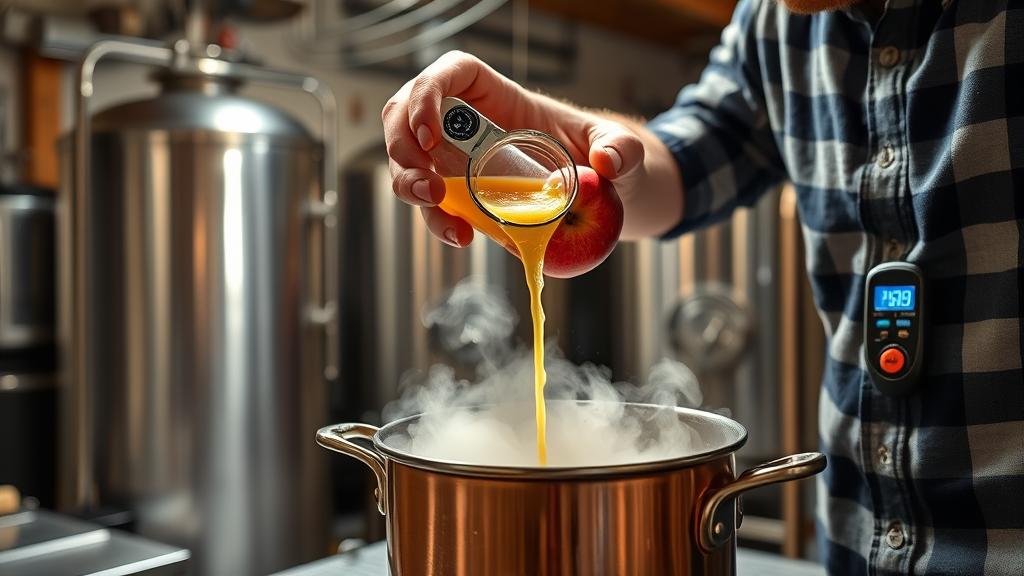
Cool to 25°C (77°F) as quickly as you can. Here’s where most people mess up: don’t add fruit during the boil or immediately after. Instead, add 1.5 litres of your fruit juice post-fermentation, when the beer is 90% complete. For now, reserve it separately in a sanitised container.
4. Pitch & Ferment (7–10 days)
Add your yeast to the cooled wort (OG ~1.040). Let it work. With US-05, you’ll see vigorous activity within 8 hours. Kveik ferments even faster—48 hours at room temperature and you’re mostly done.
5. Add Fruit (Day 4–5)
When gravity drops to 1.010 or below, add your reserved fruit juice. This timing is crucial—early enough that residual yeast will gently ferment the fruit sugars, late enough that volatile aromatics survive. You’re aiming for a secondary fermentation that lasts 3–5 days.
Fermentation & Conditioning: Patience Pays
This is where I learned the biggest lesson. After fruit addition, your beer will smell slightly funky for 24–36 hours. Don’t panic. That’s normal yeast-and-fruit chemistry happening. By day 3, it’ll smell like an orchard should.
Take gravity readings daily. When you hit 1.004–1.006, you’re ready to package. A radler should be carbonated to 2.5–3 volumes of CO₂ (roughly 1.5 ml per litre in keg terms). Slightly lower than a standard pale ale—you want the fruit to breathe, not fight with carbonation.
Conditioning: If you’re bottle-conditioning, give it 2 weeks at room temperature (18–20°C / 64–68°F), then move to the fridge. Kegged? Chill immediately. Radlers are best fresh—drink within 4 weeks. The fruit aromatics fade after that.
One trick I use: I keep a tasting sample in a sealed bottle at room temperature. Every few days, I’ll crack it and taste for carbonation and flavour evolution. It’s an old monk habit—observing rather than just waiting—and it teaches you what your beer is doing.
Tasting Notes & My Honest Take

My Granny Smith apple radler (Batch #7, if you’re keeping score) scored honest points with everyone who tried it. Golden colour, 2.8% ABV, crisp as a breeze. Nose is clean lager malt with gentle apple sweetness—nothing overpowering. First sip is dry, finishes with a subtle stone fruit echo from the Munich malt. It tastes like summer in a glass. Not boozy, not cloying, just honest beer.
The peach-apricot variant (Batch #9) was spicier, more complex. The tannins in stone fruits add a dryness that extends the finish. I preferred it slightly chilled, around 8°C—the cold brings out the fruit definition without dulling the malt character.
My wife’s take? “Finally, a beer I actually want to drink without it feeling like a compromise.” That’s the win. Radlers aren’t second-class beer. They’re beer with intention. In fact, mastering comparative tasting techniques is how you dial in what you like best—side-by-side flights reveal what works and what doesn’t.
Variations & Next-Level Experiments
Once you nail the base recipe, the fun part begins:
- Spiced Radlers: Add 2–3 g fresh ginger or a split vanilla bean during secondary fermentation. Ginger radlers are phenomenal.
- Dry-Hop Fruit Blends: Try dry-hopping with Mosaic or El Dorado hops (both have peachy character) alongside your fruit addition. Synergy happens.
- Mixed-Stone Fruit: Blend apricot, peach, and nectarine juices in equal parts. The complexity is genuinely stunning.
- Heritage Apple Blend: Use Bramleys (sharp) + Coxes (sweet) in a 60/40 split. The tart backbone prevents cloying.
- Low-ABV Radler: Cut back on base grain to 2 kg, rely more on fruit for flavour. You can hit 1.5–2% ABV without it feeling thin.
The principle I follow (monastic simplicity, applied): each experiment should teach you one thing. Don’t change five variables at once. Pick one variable, brew it three times, and build from what you learn.

Common Mistakes & Pro Tips
Mistake #1: Pasteurised juice only. Some commercial juice has been heat-treated to death. Your fruit won’t shine. Seek out raw, cold-pressed juice when you can. If it’s pasteurised, that’s fine—it’s safer—but taste the difference yourself.
Mistake #2: Too much fruit, too early. I’ve seen brewers dump litres of juice at the start. You end up with sugar-bomb cider, not radler. 1.5–2 litres per 23 litres of beer is the sweet spot.
Mistake #3: Ignoring water chemistry. A radler with mineral-heavy Burton water will taste completely different from one made with soft London water. Adjust your water profile or at least understand your starting point.
Mistake #4: Bottling too early. Radlers need proper conditioning time. Bottle before fermentation is complete, and you risk bottle bombs (especially with fruit’s residual sugars). Wait for gravity to stabilise.
Pro tip: Taste your fruit juice before brewing. If it’s too sweet, dilute it with water (1:1 ratio). If it’s too tart, blend it with a touch of apple concentrate for balance. You’re aiming for a juice that’s delicious on its own—that juice will be exceptional in your beer.
Why Radlers Matter in 2026
Here’s the thing that clicked for me: radlers aren’t a trend because they’re trendy. They’re a trend because they solve a genuine problem. In a world where craft beer has become increasingly complex, intense, and polarising, a radler is a beer that anyone can enjoy. It’s democratic. It’s inclusive without being dumbed-down.
The monastery I grew up around made simple ales—not because they lacked the skill for complexity, but because simplicity is harder to perfect. That wisdom applies here. A radler forces you to master the fundamentals: clean fermentation through proper technique, precise timing, ingredient quality. There’s nowhere to hide.
Brew a radler. Serve it to people who think they don’t like beer. Watch their faces when they realise they’re drinking something genuinely delicious. That’s the 2026 brewing revolution, and it’s yours to lead.
🍺 Join the Brotherhood — Monthly brews, stories & monk wisdom
Subscribe for exclusive recipes, early brew logs, and behind-the-scenes updates straight to your inbox.