Smoked Beer Mastery: Reviving the Ancient Art of Rauchbier at Home
For most of the last century, we forgot how to brew smoked beer properly. The style nearly vanished from homebrewers’ radar entirely, buried under a tidal wave of hoppy IPAs and fruity adjuncts. But something shifted in 2026. After exhausting endless variations on hops and pastry stouts, craft brewers are rediscovering what medieval brewers knew all along: smoke transforms beer in ways nothing else can.
I’m calling it a resurrection, and honestly, it couldn’t come at a better time. The smoked beer trend is climbing fast—maltsters are finally committing to quality smoked malts, offering varieties smoked over oak, beech, and apple wood. It’s personal and technical, both meditative and explosive. And if you’ve been brewing for a few years, it’s a natural next step.
This isn’t gimmick brewing. It’s craft in the truest sense: respecting tradition, honouring the ingredient, and taking real risks in your kettle.
Why Smoked Beer Matters Right Now
Smoked beer has two lives. The first was medieval—when smoke was how you preserved and dried grain, and every beer carried those flavours naturally. Then came industrial maltsters, and we engineered smoke out of beer entirely. Clean became the benchmark. For decades, smoked beer was a fringe curiosity: a specialty style brewing geeks sought out in Bamberg, Germany, or nowhere at all.
But here’s what’s changed: modern brewers are choosing smoke intentionally, not as accident but as craft. We’ve got better malts, better technique, and we’re no longer chasing novelty for novelty’s sake. Smoked beer sits at the intersection of heritage and innovation—exactly where the best brewing is happening in 2026.
The style also pairs beautifully with the current food-forward movement. Where fruit beers pair with desserts, smoked beers belong with your winter roasts, smoked cheeses, and charred vegetables. They’re sophisticated without being pretentious, and they age remarkably well.
Sourcing Smoked Malts: The Game Changes Everything
Here’s the honest truth: historically, smoked beer was often terrible. Brewers would overdo the smoke, creating something harsh and acrid rather than balanced and sublime. The problem wasn’t technique—it was access. Quality smoked malt was difficult to source, and inconsistency meant you’d get a batch that was either subtle or punishing, with nothing in between.
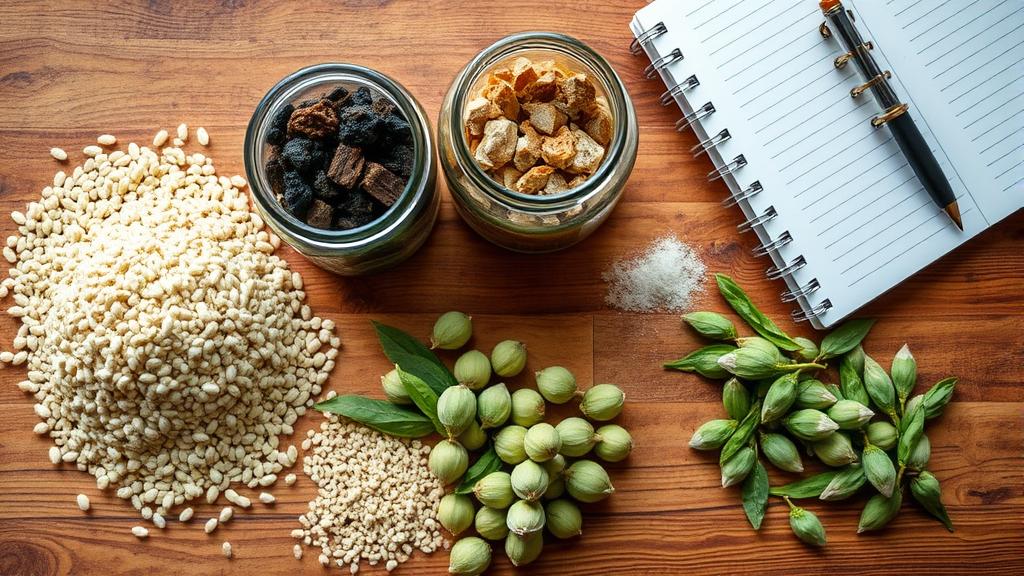
That’s shifted. Maltsters like The Malt Miller and Geterbrewed now offer a range of smoked malts with different woods, moisture levels, and smoke intensities. Beech is the classic (and traditional for Bamberg rauchbier), oak brings deeper char, and apple wood creates more delicate, fruity smoke notes.
When sourcing for your first smoked beer, start with beech-smoked pale malt at 10–15% of your grain bill. It’ll give you recognisable smoke character without overwhelming the base beer. You can always push to 20–25% on your second attempt if you want something bolder.
Pro tip: store smoked malt in an airtight container, away from stronger-smelling grains and hops. The smoke will migrate, and you don’t want your pale ale picking up rauchbier character by osmosis.
Designing Your First Smoked Brew Day
The actual brewing technique isn’t exotic. Smoked beer works with any yeast, any base style. I recommend starting with a clean lager as your base—the smoked character shines without yeast-driven esters competing for attention. That said, a smoked amber ale or porter works brilliantly too.
The recipe outline (for a 20-litre / 5.3-gallon batch):
- 3.0 kg (6.6 lbs) Pale Ale Malt
- 0.5 kg (1.1 lbs) Beech-Smoked Malt (about 14%)
- 0.25 kg (0.55 lbs) Munich Malt
- 0.2 kg (0.44 lbs) Crystal Malt (20L)
- 15g Hallertau Hops (60 mins)
- 10g Hallertau Hops (15 mins)
- SafAle US-05 yeast or equivalent lager strain
- Water: aim for soft water; Bamberg water is soft and mineral-sparse
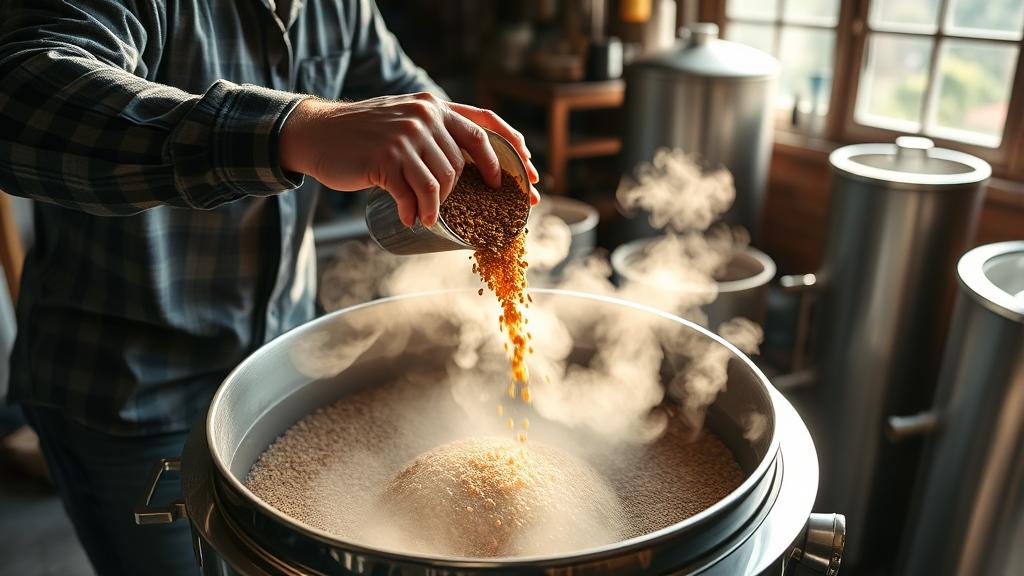
Mash at 65°C (149°F) for 60 minutes. Sparge gently—you’re not chasing huge volumes, and a calm sparge extracts better flavour complexity. Your smoked malt will shine through a simple, restrained hopping schedule. Think German noble hops, not Cascade or Centennial.
This isn’t the place for late-boil adjuncts or experimental yeast blends. Smoked beer is a purist’s beer. Let the malt speak.
Fermentation and the Long Game
Where smoked beer diverges from other styles is patience. If you’re using a lager strain, cold condition for at least 4 weeks at 2–5°C (35–41°F). The smoke character will integrate and mellow. Sharp, acrid smoke in day 5 becomes balanced complexity by week 8.
I’ve found that smoked beers age beautifully in the bottle. A good smoked lager will improve over 6–12 months, developing deeper malt complexity and mellowing harsh edges. Compared to spontaneous fermentation styles, smoked beers are more about patience than innovation—they’re winter project beers, the kind you brew in November and contemplate opening by next autumn.
Target gravity: 1.050–1.065 (depending on whether you want a drinkable smoked lager or something with more body). Alcohol by volume should land around 5–6.5%—high enough for depth, low enough that smoke doesn’t become oppressive.

Tasting Notes and Common Mistakes
A well-executed smoked beer delivers smoke without becoming an ashtray. You’re after balanced sweetness with smoke’s sharp edge—think roasted almonds, oak char, and subtle meaty notes. The malt flavour should sit front and centre, with smoke as accent rather than protagonist.
If your smoked beer tastes harsh and acrid, you’ve either used too much smoked malt or didn’t cold condition long enough. Don’t repeat the mistake—adjust down to 10% next time, or extend conditioning by 2–3 weeks. Smoked beer is unforgiving of shortcuts, but it rewards patience generously.
Wood-aged smoked beers deserve special mention. A smoked porter conditioned in bourbon or whisky barrel picks up incredible depth—the wood smoke layers beautifully with the malt smoke, creating something genuinely complex and memorable.
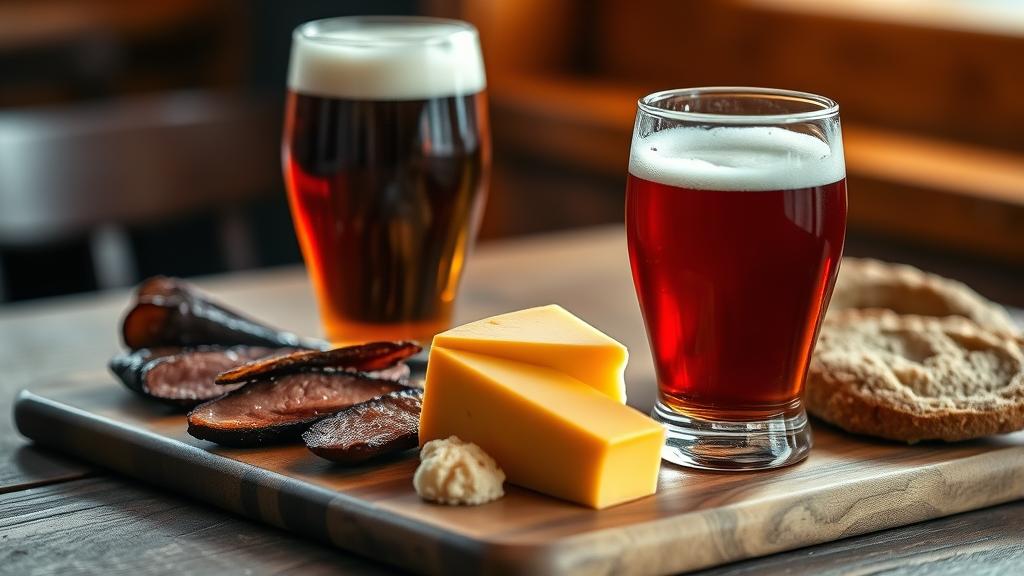
Food pairing is straightforward: smoked meat, smoked cheese, dark rye bread, anything charred. A smoked lager cuts through richness without being dry. It’s the beer equivalent of a well-aged Islay whisky—not for everyone, but transcendent for those who get it.
Variations and Next Moves
Smoked Porter: Use smoked malt as 15–20% of a robust porter base. The roasted malt and smoke dance together beautifully. Try cold conditioning for 8–10 weeks.
Smoked Ale with Spice: A small smoked amber ale with caraway seed (historically used in smoked beers) creates something closer to medieval brewing. Subdued, but authentic.
The Rauchbier Experiment: Once you’re confident, brew a 20% smoked malt lager and let it age for a full year. This is the serious stuff—the beer becomes layered, complex, and genuinely philosophical.
There’s also crossover potential: a smoked sour (using hybrid fermentation techniques) would be extraordinary but demands real technical chops.
Final Thoughts: Smoke as Craft
Smoked beer isn’t trendy in the Instagram sense. It won’t get you retweets. It’s trending because brewers are getting serious about heritage, about balance, about respecting tradition while pushing boundaries. That’s the ethos of 2026 craft brewing, and smoked beer is its truest expression.
When you crack open your first bottle of home-smoked beer and the aroma hits—that perfect balance of roasted malt and controlled smoke—you’ll understand why medieval brewers kept smoking grain for centuries. There’s something primal about it. Something right.
Start small. Use quality malt. Be patient. That’s the entire formula, and it works.
🍺 Join the Brotherhood — Monthly brews, stories & monk wisdom
Subscribe for exclusive recipes, early brew logs, and behind-the-scenes updates straight to your inbox.