The modern tea renaissance is here—and it’s entering the fermentation vessel. After years of chasing hoppy explosions and high ABVs, I’ve been captivated by something gentler, warmer, and deeply contemplative: chai ale. It’s not new, but 2026 is the year this hybrid truly sings. Part functional brewing, part culinary exploration, chai ale bridges the gap between the bustling craft beer world and the growing appetite for tea-based beverages that actually taste good.
This isn’t your grandmother’s spiced ale, nor is it chai tea with alcohol awkwardly added. Chai ale is a deliberate craft—one where cardamom, star anise, cloves, and black pepper marry with carefully chosen malt and yeast to create something that feels simultaneously adventurous and comforting. And the best part? It’s remarkably achievable at home.
Why Chai Ale Matters in 2026
The trend data is clear. Non-alcoholic tea beverages are booming—bubble tea, cold brew, exotic tea experiences—but what’s equally compelling is the “functional brewing” movement. Consumers want beer that *does* something: gut-friendly probiotics, adaptogenic support, genuine wellness angles. Chai ale sits perfectly in this space. Cardamom aids digestion. Star anise has anti-inflammatory properties. Black pepper enhances absorption. You’re not just brewing beer; you’re brewing intention.
There’s also a nostalgia-meets-innovation angle. Chai is ancient—used in Ayurvedic medicine for centuries—but packaging it as a craft beverage feels decidedly 2026. Like when homebrewers rediscovered grisette and farmhouse styles, chai ale feels like reclaiming something historically grounded and making it contemporary.
And honestly? It’s humbling. There’s a monastic quality to chai ale brewing. You slow down. You toast your spices by hand. You smell the cardamom and suddenly understand why this matters. That resonates with me deeply.
Ingredients & Sourcing
The backbone of chai ale is straightforward but deliberate. You’ll need:
- Malt: I recommend 60% pale ale malt, 20% Munich malt (for body), 10% crystal/caramel malt (20-30 EBC for subtle sweetness), 10% wheat malt (optional, for mouthfeel)
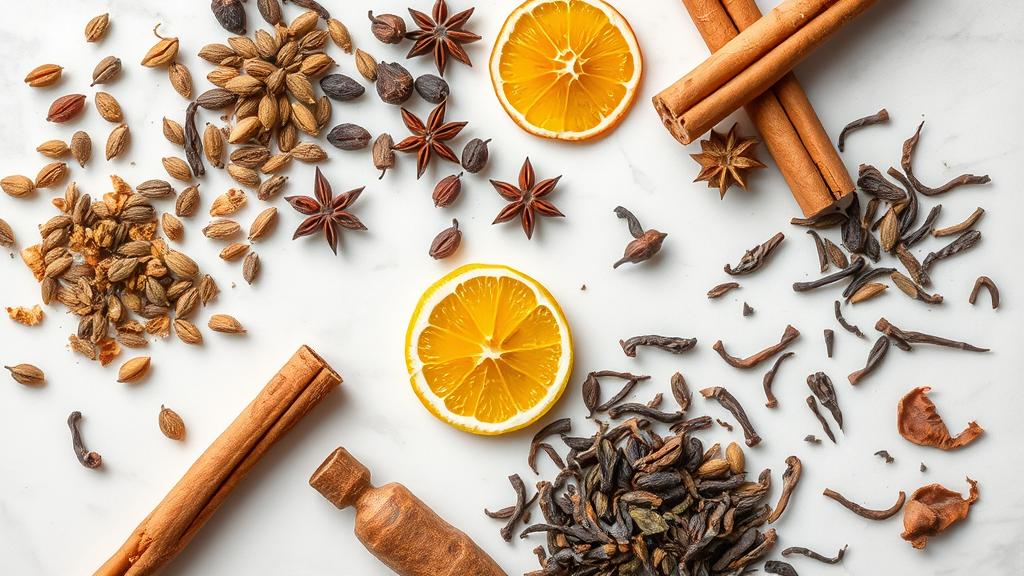
- Spices: Cardamom pods (6–8 per 20L / 5 gal), star anise (2–3 whole), cloves (4–6), black peppercorns (1 tsp), cinnamon stick (1), fresh ginger (15g / 0.5 oz), and black tea (10g / 0.35 oz)
- Hops: Minimal bittering (just 10 IBU to balance malt sweetness). Use something neutral like East Kent Goldings or Hallertau—chai is the star, not the hops
- Yeast: A clean ale yeast—English Ale (S-04) or Safale US-05. You want clarity, not phenolic distraction
On sourcing: buy your spices from a specialist spice merchant or quality grocer, not the supermarket’s dusty shelf. Fresh cardamom makes a staggering difference. Black tea matters too—a strong Assam or Ceylon works best. I source mine from a local London tea merchant; the quality uplift is night and day.
For malt and hops, I trust The Malt Miller or Get Er Brewed for UK delivery. Both stock specialist grains and—crucially—can mill your malt fresh.
The Brew Day: Step-by-Step
Chai ale brewing is a 5–6 hour engagement that rewards patience. Here’s how I approach it:
- Toast Your Spices (30 minutes before brewday): Dry-roast your cardamom pods, star anise, and cloves in a low oven (150°C / 300°F) for 10–15 minutes. You’re looking for fragrance to deepen, not char. This is meditation. Breathe it in. The oils will intensify dramatically. Crack the cardamom pods gently to expose the seeds.
- Mash (90 minutes at 66–67°C / 150–152°F): Standard infusion mash. Your water chemistry doesn’t need to be fancy here—a balanced profile works fine. (If you’re serious about water, understanding your local water profile elevates every brew.)
- Sparge & Boil (15 min bittering hop addition): 60-minute boil. Add your bittering hops at flame-out—just 10 IBU. This isn’t an IPA.
- Infuse the Spices (During whirlpool): Add your toasted cardamom, star anise, cloves, cracked black pepper, and cinnamon stick to the hot kettle as you whirlpool. The residual heat extracts gently without over-steeping.
- Cold-Steep the Tea (Post-cooling): Once cooled to 20°C (68°F), strain into your fermenter, removing spices. Now add your black tea leaves to cold wort and let sit for exactly 15 minutes. Longer and you risk astringency. This is precision work.
- Pitch & Ferment: Pitch your yeast, aerate well. I prefer open fermentation (or at least with a breathable cloth) for the first 48 hours—chai ale benefits from oxygen initially. Ferment at 19–20°C (66–68°F) for 10–14 days until gravity stabilizes.
Fermentation & Conditioning
This is where patience separates good chai ale from exceptional chai ale. Don’t rush.
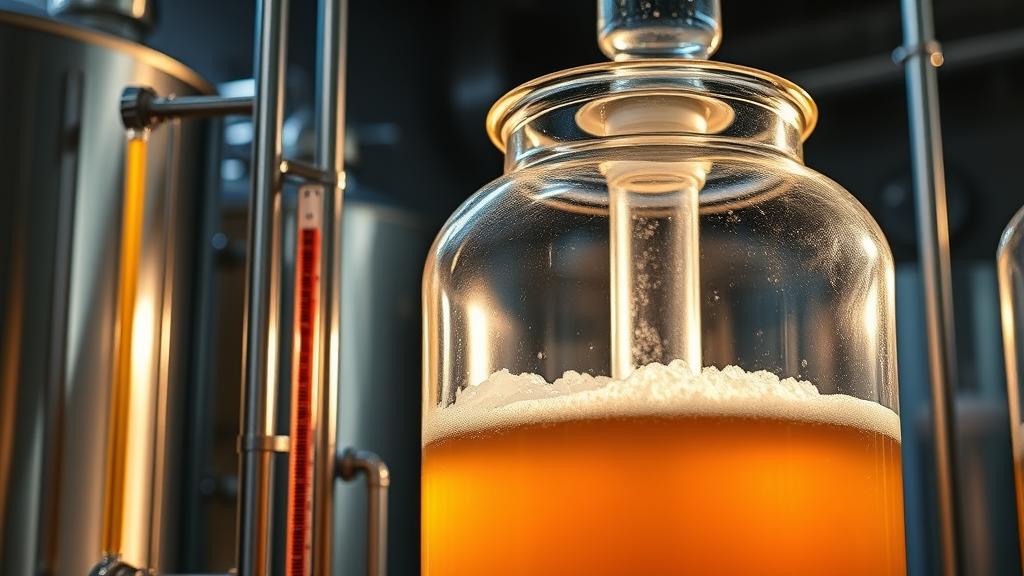
Your fermentation will be vigorous for the first 3–4 days, then gentle for another week. The yeast is working through the malt sugars while the spices settle into the background, integrating with the beer. By day 7, you should see clear definition between the liquid and sediment below.
Target final gravity: 1.008–1.012 (depending on mash temperature and grain bill; I typically hit 1.010). This leaves a touch of residual sweetness—crucial for balancing the spice bite.
Conditioning is essential. Once gravity’s stable, cold-condition for 2–3 weeks at 4°C (39°F). This does two things: it drops protein haze (chai ale should be brilliantly clear) and it allows the spice flavours to mature and marry fully with the beer. The cardamom, initially sharp, becomes silky. The clove mellows. The pepper recedes to a gentle warmth.
Bottle conditioning works beautifully for chai ale. I use 18–22g of priming sugar per 20L (4.5–5.5g per 5 gal) for 2.2–2.5 volumes of CO₂. It keeps the beer slightly soft, which complements the spice profile.
Tasting Notes & My Honest Experience
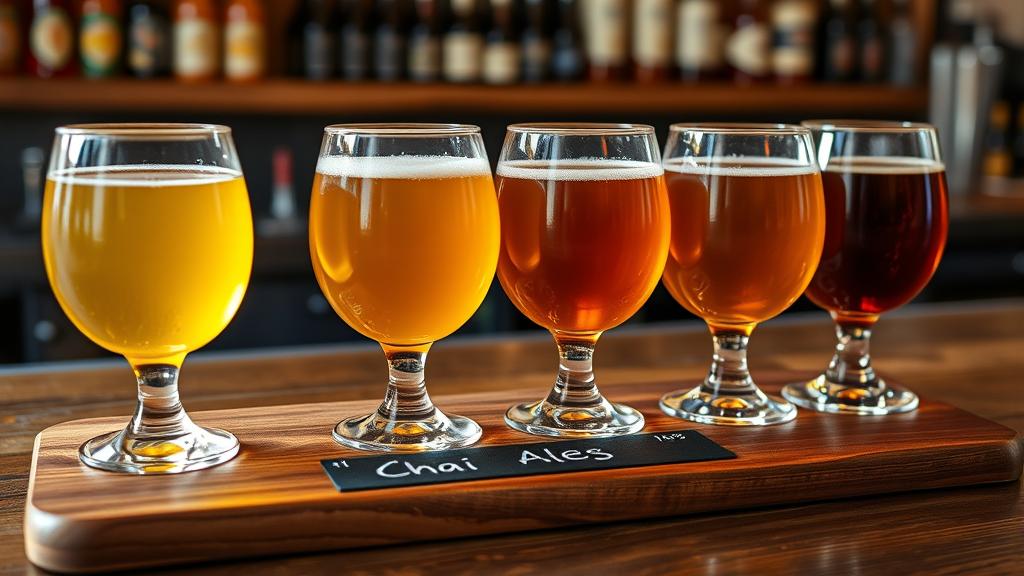
Here’s where I have to be honest: chai ale isn’t for everyone. It’s polarising. Some people taste it and think, “Why would I put tea in my beer?” Fair point. It’s not a gateway beer. It’s a contemplation.
But for those who *get* it, it’s remarkable. My latest batch hits these notes:
- Aroma: Warm cardamom dominates. There’s subtle ginger-spice, a whisper of clove, and underneath, the tea’s malty earthiness. No hop aroma—it’s all spice and warmth.
- Flavour: The palate opens with pale malt sweetness (bread, biscuit), followed immediately by cardamom and black pepper. There’s a slight tannic bite from the tea—not astringent, just present—balanced by the residual sweetness. Finish is warming, almost digestif-like. You want another sip. Then another.
- Mouthfeel: Medium body. The wheat malt adds silk. Carbonation is gentle (2.3 volumes), which lets the spices breathe.
- ABV: 5.2%. It’s approachable, not heavy. You can have two, maybe three, and feel present, not drunk.
The texture reminds me of sitting in a quiet room with a cup of proper chai. There’s no performance. Just warmth and contemplation.
Pro Tips & Common Mistakes
Learn from my experiments:
- Don’t over-spice. It’s tempting to add “just a bit more cardamom.” Resist. Start conservative (6 pods per 20L) and adjust next time. Over-spiced chai ale tastes like cough syrup.
- Toast your spices. This isn’t optional. Raw cardamom tastes harsh. Toasted cardamom tastes alive.
- Cold-steep your tea, don’t boil it. Boiling tea in the hot wort extracts tannins aggressively. Cold-steeping (15 minutes post-cooling) is gentler, cleaner.
- Use proper black tea. Not herbal “chai blend.” You want Assam or Ceylon—real tea with body and structure.
- Condition longer than you think necessary. 3 weeks at 4°C isn’t excessive; it’s required. Rushed chai ale tastes one-dimensional.
- Serve it slightly warm. Not room temperature (that’s flat). But 10–12°C (50–54°F) opens the spice profile way more than ice-cold. This is a sipper, not a refresher.
Variations & Explorations
Once you’ve nailed the classic, play:
- Chai Saison: Use a saison yeast (Belgian), drop the Munich malt, and add Belgian pils. The yeast’s phenolic-spicy character echoes the chai spices beautifully. It’s almost accidental genius.
- Honey Chai: Add 500g (1 lb) of raw honey in the secondary (after 7 days fermentation). It dries the beer and adds floral complexity. The cardamom and honey together are stunning.
- Smoked Chai: Use 10% rauchmalz (smoked malt) instead of crystal. The smoke + spice + tea creates something almost mezcal-like. Niche, but brilliant.
- Iced Chai Cream Ale: Drop ABV to 4.5%, add 50g oats for body, and infuse with real vanilla in secondary. It’s dessert-adjacent and dangerously drinkable.
The Monk’s Path
There’s a lesson here, buried in the cardamom and cinnamon.
Modern brewing is often about maximisation: more hops, more alcohol, more innovation, bigger, faster, louder. But chai ale asks something different. It asks: *What if you slowed down?* What if the goal wasn’t to impress at a competition but to create something that brought you genuine peace?
The Benedictine brewing tradition understood this. Monks brewed because they needed sustenance, yes. But also because the work itself was sacred. Measuring spices by hand. Waiting for fermentation. Sipping slowly. There was no rush because the point wasn’t the destination—it was the practice.
Chai ale feels monastic in that way. You’re not chasing trends (though this one is trending). You’re not optimising for Instagram. You’re making something ancient and something new simultaneously. And that matters.
Next Steps
Brew your first batch this week. Toast your cardamom. Cold-steep your tea. Document everything—not for a blog, but for yourself. Notice what works, what doesn’t. Adjust. Brew again. This is how you become fluent in your own beer.
And if you want to explore this deeper, investigate BJCP style guidelines for spiced beer—there’s technical language there that validates what you’re doing. Join HomeBrewTalk or your local CAMRA club. Find your brewing community. Chai ale brewing is more meaningful shared than solo.
This is the 2026 brewing moment we’re in. Not everything needs to be bigger or bolder. Sometimes the real innovation is remembering what made brewing beautiful in the first place: intention, patience, and the quiet joy of sipping something you created with your own hands.
🍺 Join the Brotherhood — Monthly brews, stories & monk wisdom
Subscribe for exclusive recipes, early brew logs, and behind-the-scenes updates straight to your inbox.