Fruity lagers are having their moment. Walk into any supermarket in July 2026, and you’ll see dedicated fruit beer bays that didn’t exist two years ago. Tesco alone has opened over 300 dedicated fruit beer sections—a 20% jump in year-on-year sales. It’s not just retail hype. This trend speaks to something deeper: homebrewers and consumers want brightness, refreshment, and flavour without the heaviness of traditional ales.
I’ve been brewing for twelve years now, and I can honestly say this is one of the most forgiving and rewarding styles to experiment with at home. A good fruity lager is a summer masterpiece—crisp, clean lager body married with vibrant fruit character that feels more like a premium cider or spritz than a beer. The monk’s path teaches patience, and lager brewing demands exactly that. But this guide will show you it’s worth every day of cold conditioning.
Why Fruity Lagers Are 2026’s Best Brewing Trend
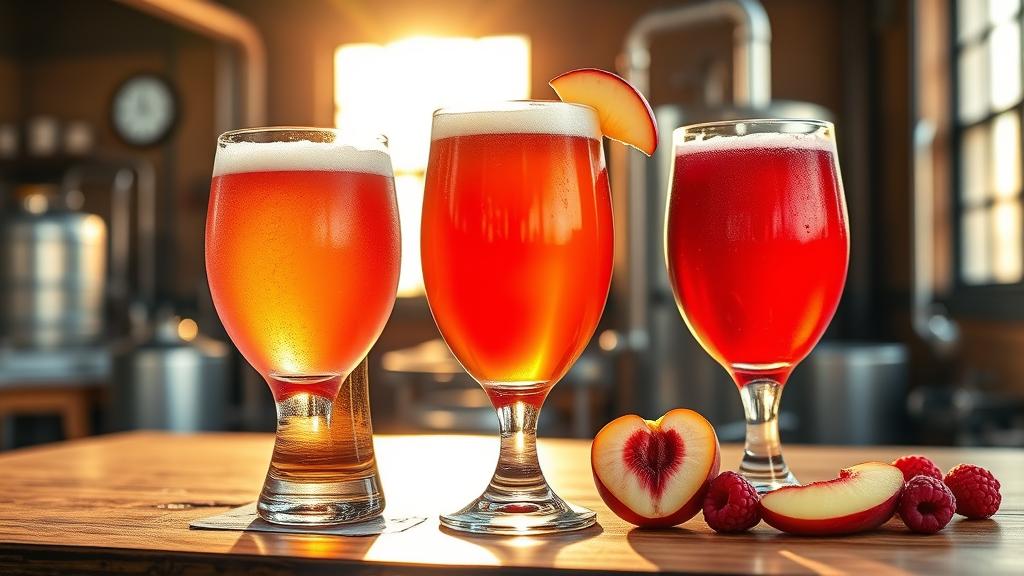
The numbers don’t lie. Fruity lagers bridge a gap that’s been growing for years: people who want flavour complexity but don’t want the alcohol punch of traditional ales. They’re perfect for garden parties, picnics, and those long British summer afternoons. Unlike fruit beers brewed as ales (which finish faster but often taste thin), lager yeast—cold, methodical, thorough—creates a stable base that lets the fruit shine without overshadowing the beer itself.
From a homebrewing perspective, this style is approachable. You don’t need exotic equipment or heroic fermentation management. A simple low-ABV brewing approach keeps things clean and efficient, and the fruit addition—whether fresh, pureed, or dried—becomes the hero of the story.
Ingredients & Equipment You’ll Need
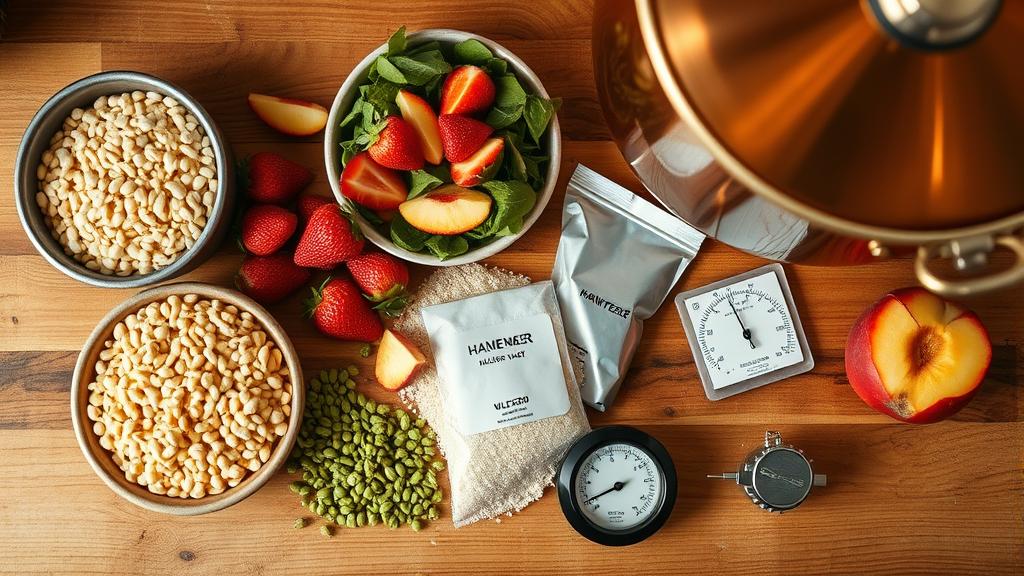
Grain Bill (for a 20-litre / 5.3 US gallon batch, 4.5% ABV)
- 3.5 kg (7.7 lbs) Pale Malt (the backbone)
- 500 g (1.1 lbs) Munich Malt (adds roundness and body)
- 200 g (0.44 lbs) Wheat Malt (creamy mouthfeel, helps suspend fruit)
Hops
- 20 g (0.7 oz) Hallertau at 60 min (subtle, soft bittering)
- 10 g (0.35 oz) Hallertau at 15 min (gentle aroma)
Fruit (Choose One or a Blend)
- Strawberry: 1.5 kg (3.3 lbs) fresh or 800 g (1.75 lbs) purée
- Peach: 1.5 kg (3.3 lbs) fresh or 800 g (1.75 lbs) purée
- Raspberry: 1.2 kg (2.6 lbs) fresh or 600 g (1.3 lbs) purée
- Watermelon: 2 kg (4.4 lbs) fresh (higher water content)
Other Essentials
- Yeast: WLP833 (German Lager), WLP820 (Weihenstephan Lager), or SafLager W-34/70
- Water treatment: Calcium sulphate (gypsum), 1 teaspoon to match local water profile
- Fermentation vessel: Glass carboy or plastic FV with airlock, ideally 25-litre (6.6 US gallon)
- Temperature control: Essential—aim for 10–12°C (50–54°F) for primary fermentation
A word on fruit: fresh is brilliant, but pasteurised purée is more forgiving if you’re new to this. It eliminates infection risk and you get consistent flavour. Source local fruit when possible—British strawberries in June or July are the gold standard.
Step-by-Step Brew Day
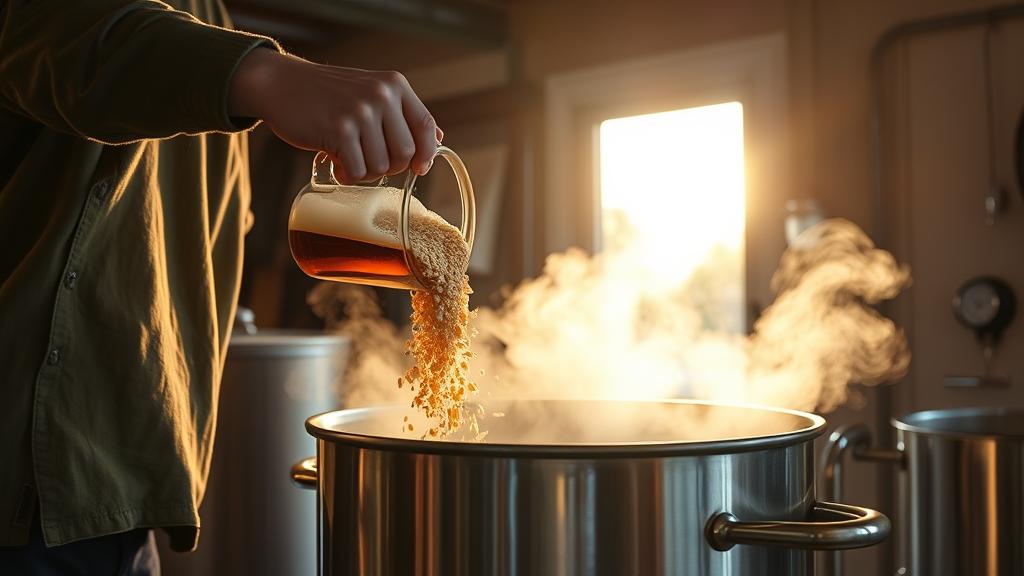
1. Water Preparation (30 min before mash)
Heat 15 litres (4 US gallons) of water to 67°C (152°F). Add your gypsum to match the sulphate profile—typically 150–200 ppm for lager brewing. This subtle mineral boost helps yeast performance and brightens the hop character.
2. Mash (60 min at 65°C / 149°F)
Add your crushed grain slowly, stirring to avoid clumping. Maintain 65°C throughout. At this temperature, enzymes convert starch to fermentable sugars. This is the monk’s meditation—watch the grain drink the water, trust the process.
3. Mash Out & Sparge (30 min at 76°C / 169°F)
Raise to 76°C and hold for 5 minutes. Begin lautering (running the wort through the grain bed slowly). Sparge with 76°C water until you’ve collected approximately 23 litres (6 US gallons) of wort.
4. The Boil (90 min total)
- 0 min: Bring to a rolling boil. Add Hallertau bittering hops (20 g).
- 60 min: Add aroma hops (10 g).
- 85 min: Begin rapid cooling (ice bath or immersion chiller). This “knockout” is critical—get below 30°C (86°F) as fast as possible to lock in clean lager flavours.
- 90 min: Transfer to carboy, aerate vigorously for 30 seconds (lager yeast loves oxygen at this stage), pitch your yeast.
Pro tip: Don’t add fruit yet. Wait until after primary fermentation. This prevents yeast stress and allows them to establish themselves in the cool environment.
Fermentation & Cold Conditioning
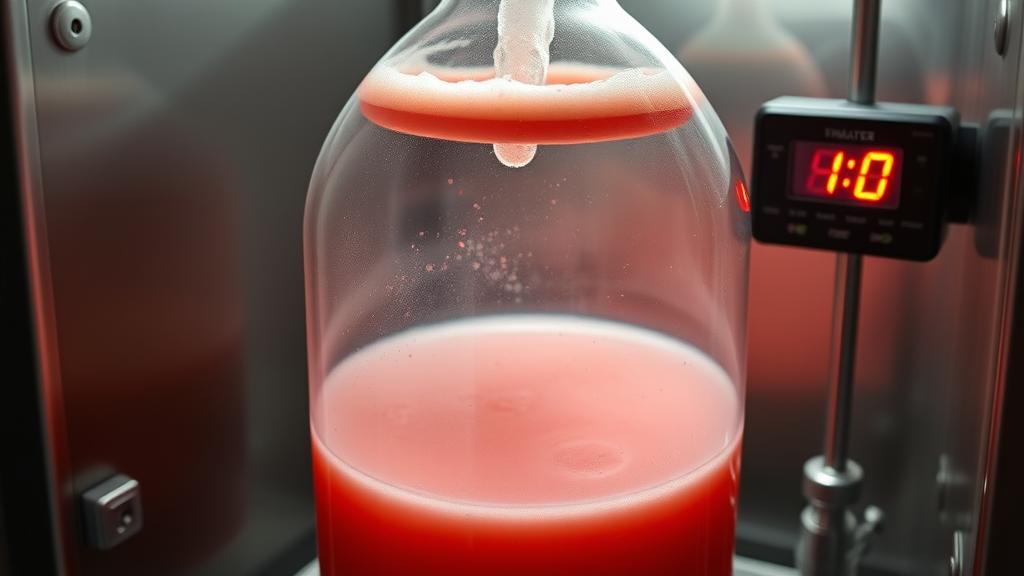
Primary Fermentation (14–21 days at 10–12°C / 50–54°F)
This is where patience separates good fruity lagers from mediocre ones. Cold fermentation produces clean, crisp lager character—minimal esters, minimal phenols. Your yeast will be slow. You might see no airlock activity for three days. That’s normal. That’s lager yeast.
After 14 days, take a gravity reading. You’re aiming for approximately 0.5°–1.0° above final gravity—evidence that fermentation is nearing completion but not quite finished. This is crucial: residual fermentability ensures the fruit sugars ferment cleanly later.
Fruit Addition (Day 14–18 of fermentation)
This is the secret moment. When fermentation has slowed dramatically:
- If using purée: Stir gently into the carboy. Add slowly to avoid foaming.
- If using fresh fruit: Slice or crush it, place in a sanitised mesh bag, and submerge in the carboy.
Don’t rack the beer off the yeast yet. Let the fruit ferment on the yeast cake. This is where hybrid fermentation techniques can inspire you, even if you’re staying traditional lager. The yeast will briefly restart, pulling the fruit into the beer and creating a beautiful integration.
Lager Phase (28–42 days at 2–4°C / 36–39°F)
Once fermentation has finished (gravity stable for 3 days), drop the temperature to 2–4°C. Leave for 4–6 weeks. This “conditioning” phase is where magic happens: unwanted flavours precipitate out, the beer polishes itself into clarity, and the fruit melds seamlessly with the base beer. You cannot rush this.
A thermometer on your carboy is invaluable here. Patience, again. The monks knew: slow progress is solid progress.
Tasting Notes & My Honest Review
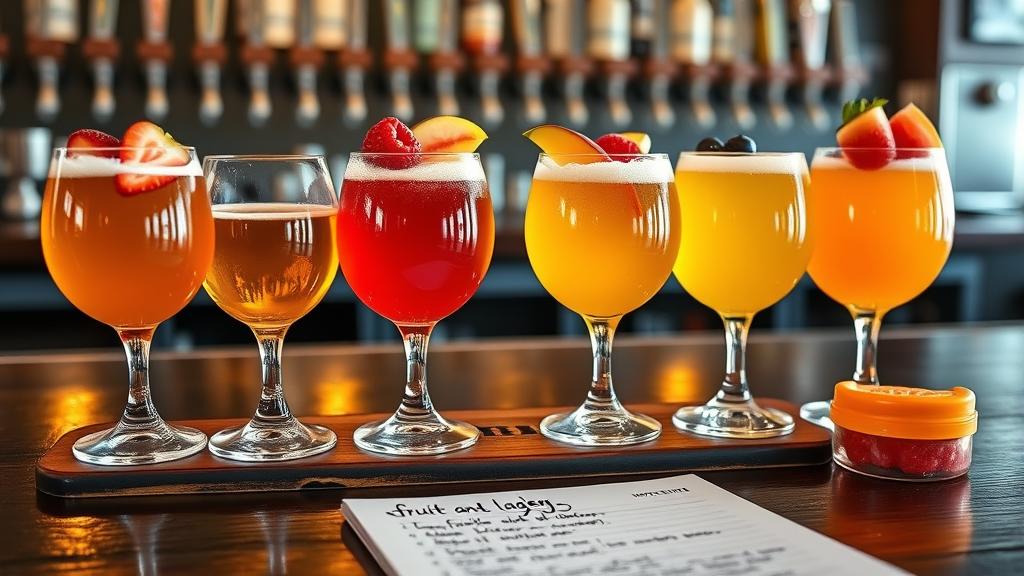
I brewed a batch of strawberry lager last June and it became my summer go-to. Here’s what I found:
Appearance: Pale golden to light pink (depending on fruit amount). Crystal clear if you’ve given it the lager time. Slight chill haze is acceptable and actually traditional in some German styles.
Aroma: Clean malt underneath, bright strawberry forward. No off-flavours if fermentation was cool enough. A hint of subtle hop perfume.
Flavour: Crisp, clean lager backbone. Strawberry isn’t candyish—it’s fresh, slightly tart. Low bitterness (IBU around 15–20). Dry finish despite the fruit. The beer feels light despite 4.5% ABV.
Mouthfeel: Soft, smooth, refreshing. Not thin. The wheat and Munich malt give body; the CO₂ carbonate slightly higher than traditional lagers (2.6–2.8 volumes) to amplify the bright, summery character.
Honest assessment: This style is drinkable from week two of bottle conditioning, but it honestly improves until week eight. The fruit integrates better, sharpness softens, and the beer becomes genuinely elegant.
Pro Tips & Common Mistakes
- Avoid oxidation: Lagers are sensitive to oxygen post-fermentation. When racking from primary to secondary (if you choose to rack), minimise splashing. Better yet, skip the secondary and age in the primary—it’s simpler.
- Temperature stability is non-negotiable: A 5°C swing mid-fermentation creates esters and off-flavours. Invest in a fridge or fermentation chamber. It’s the single best upgrade a lager brewer can make.
- Don’t overdo the fruit: More fruit ≠ more flavour. Too much can create a fruit cordial effect. Stick to ratios: 1.2–1.5 kg per 20 litres is the sweet spot.
- Watch for infection: Fresh fruit is a contamination risk. Sanitise everything it touches. If you see mould, blue-green tint, or vinegar aroma, that batch is done—compost it and move on.
- Bottling clarity: If your beer is cloudy at bottling, cold condition for another week. Lager yeast will eventually drop clear if given time.
Variations & Next-Level Experiments
Once you’ve nailed the strawberry or peach, here’s where it gets fun:
- Blended fruits: Strawberry + rhubarb is phenomenal. Peach + apricot feels premium.
- Low-ABV approach: Drop to 3.5% ABV by reducing grain. The beer feels lighter, more crushable. Perfect for low-ABV brewing strategies.
- Honey addition: Add 200–300 g of honey at flame-out. It ferments completely dry and adds subtle complexity.
- Lactose experiment: 100–200 g of lactose (unfermentable sugar) at flame-out adds body and slight sweetness—mimics a dessert lager style.
I recently tried a hybrid approach: fermenting half at 12°C (traditional lager) and half at 18°C (ale temperature) then blending. It’s somewhere between ale brightness and lager crispness. Unexpected, but brilliant.
Final Thoughts: The Patience Pays Off
Fruity lagers demand patience. You’ll spend 10–12 weeks from brew day to final glass. The monk’s lesson applies perfectly: what’s worth having is worth waiting for. But unlike some obsessive hobbies, this one delivers something tangible—a beer that’s clean, refreshing, and genuinely better than anything at the supermarket.
Tesco’s 300 fruit beer bays aren’t a fad. They’re evidence that drinkers want this. You, as a homebrewer, have an opportunity to outdo the commercial versions. Your strawberry lager will be fresher, more interesting, more you than anything mass-produced.
Start with strawberry or peach. Keep detailed notes. Expect the first batch to be decent and the second to be better. By batch three, you’ll have something your friends ask about by name.
That’s the real victory: people remembering your beer.
🍺 Join the Brotherhood — Monthly brews, stories & monk wisdom
Subscribe for exclusive recipes, early brew logs, and behind-the-scenes updates straight to your inbox.