It’s mid-summer 2026, and something fascinating is happening in homebrewing—people aren’t just chasing hops and ABV anymore. They’re asking: what if my beer could actually do something good for me? Welcome to functional beer brewing, the trend that’s reshaping how we think about craft beer at home.
Adaptogens, botanicals, electrolytes, pre-biotics, and nootropics have invaded the beverage industry, and beer is catching up fast. Commercial breweries are experimenting with everything from adaptogenic mushrooms to oat fibre. But here’s the thing—homebrewers have always been ahead of the curve. You don’t need a brewery license to explore this. You just need ingredients, curiosity, and a willingness to push beyond the standard recipe book.
I’ve spent the last month brewing functional beers, experimenting with different botanical additions and fermentation techniques. The results? Some brilliant discoveries, a few learning moments (read: expensive mistakes), and a new direction for my brewing practice. Let me walk you through it.
What is Functional Beer—and Why It Matters Now

Functional beer isn’t a new concept—monks have been brewing with herbs and botanicals for over a thousand years. What’s new is the intention behind it. Today, functional beer is deliberately formulated to deliver specific health or wellness benefits: improved digestion, better sleep, sustained energy, or simply reduced anxiety.
It sounds modern, but it’s actually a return to brewing’s roots. Before hops became standardised in the 16th century, brewers used hundreds of plants—wormwood, mugwort, chamomile, ginger, yarrow—both for flavour and for their medicinal properties. Herbal brewing traditions are still alive in British beer culture, and functional beer simply gives them a 21st-century wellness framework.
The trend is backed by data. In June 2026, the Morning Advertiser reported that functional beer is now a category breweries are actively targeting—adding fibre, electrolytes, vitamins, and low-calorie positioning to reach health-conscious drinkers. For homebrewers, this opens up endless possibilities.
Core Ingredients for Functional Beer Brewing
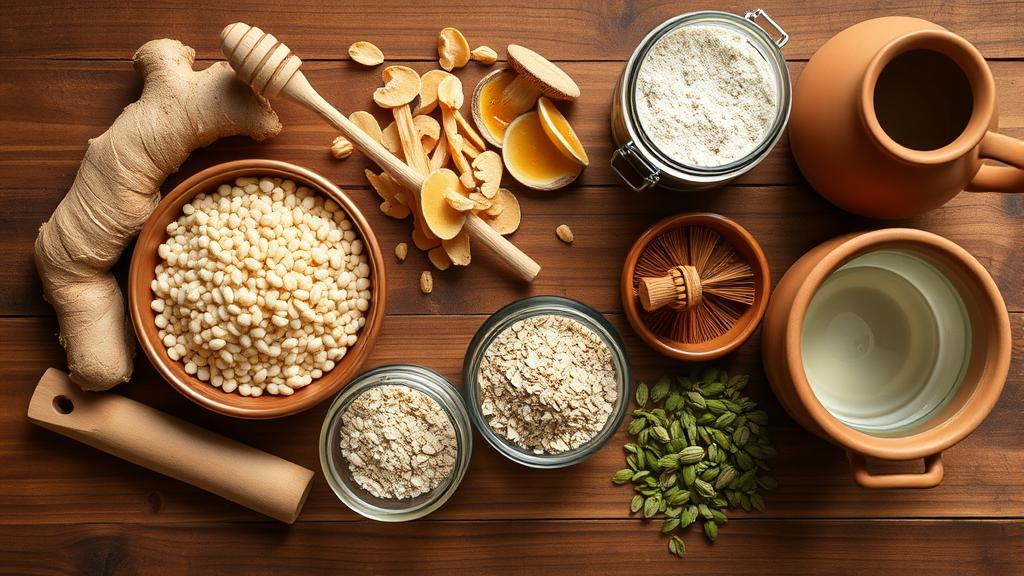
The beauty of functional brewing is that you’re not abandoning traditional ingredients—you’re expanding your toolkit. Here’s what I’ve been working with:
Adaptogenic Botanicals
Ashwagandha, reishi mushroom, and rhodiola are adaptogens—plants that help your body manage stress. They’re subtle in beer, but they work. I’ve used reishi (which tastes slightly earthy) in a low-ABV pale ale, and it added a calming quality without dominating the flavour profile. You’ll find powdered forms from suppliers like The Herb Shop, though check they’re food-grade and organic.
Fibre Sources
Oat flour and beta-glucans from barley are natural fibre sources that actually survive fermentation better than you’d think. They won’t dramatically change your gravity, but they add body and mouthfeel. GetErbrewed stocks speciality malts including oat malt, which is easier to work with than raw oats in the mash.
Herbal Additions
Chamomile, elderflower, ginger, hibiscus, and lemon balm are the workhorses of functional brewing. They’re food-safe, widely available, and they play beautifully with beer. I’ve found that 10-20g of dried herbs in the final 15 minutes of the boil gives clean flavour without bitterness. More than that, and you risk herbal tea territory.
Electrolytes & Minerals
Sodium, potassium, and magnesium are tricky in beer—they’re not typically desirable at scale. But for a sports-inspired functional session ale, adding a pinch of mineral salts (food-grade Himalayan salt, potassium chloride) in the final stages can mimic a sports drink vibe. Keep it minimal. I’m talking 1-2g per 20L (5 US gallons).
Honey & Complex Sugars
Raw honey and maple syrup ferment differently than sugar, adding depth and sometimes subtle wellness properties (honey has antimicrobial qualities, maple has antioxidants). Use them at 5-10% of your gravity to maintain balance.
Brew Day: Formulating Your First Functional Beer
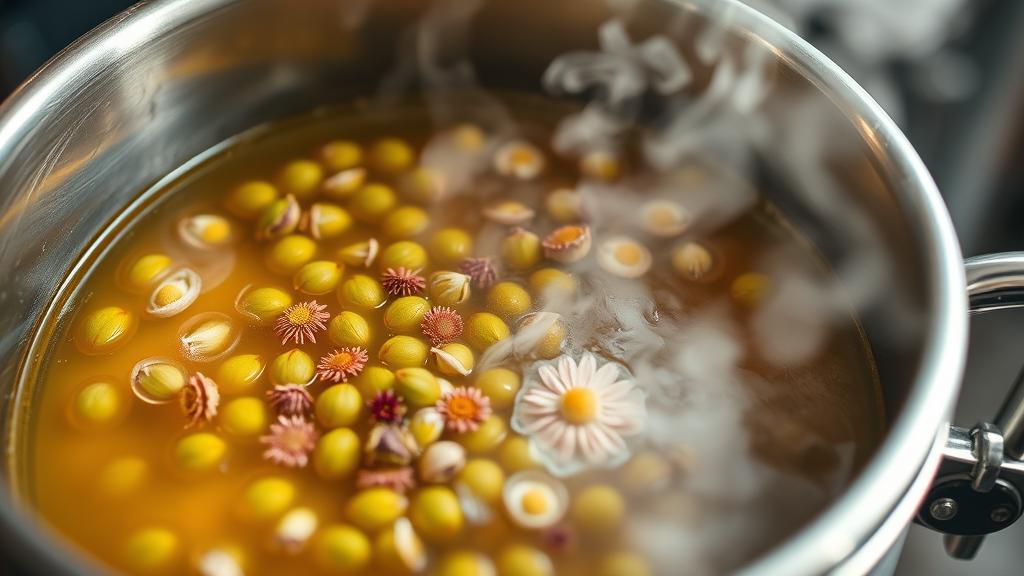
Let me walk you through my recipe for a Functional Chamomile-Ginger Pale Ale (18L / 4.75 US gallons, ~4.2% ABV, 30 IBUs):
Recipe: Wellness Pale Ale
- Base Grain: 3.2kg (7lbs) Pale Ale Malt
- Speciality Malts: 300g (10.5oz) Oat Malt, 200g (7oz) Munich Malt
- Hops: 18g (0.6oz) Cascade @ 60 min, 12g (0.4oz) Cascade @ 10 min
- Botanicals (in the boil): 15g (0.5oz) dried chamomile @ 15 min, 12g (0.4oz) fresh ginger slices @ 10 min
- Adaptogen: 3g reishi mushroom powder @ 5 min (added post-boil, cooled)
- Yeast: SafAle US-05 or similar clean ale yeast
- Water Treatment: Balanced profile, no special additions needed
Key brewing notes:
- Mash: Standard 65°C (149°F) for 60 minutes. The oat malt adds smoothness; don’t rush the rest.
- Botanical timing: Late-boil additions (last 15 minutes) preserve delicate herbal flavours. Hops go in earlier for bitterness structure.
- Adaptogen addition: Reishi is heat-sensitive. Cool your wort to below 70°C (158°F) before stirring it in, or use it as a dry addition during the final 5 minutes.
- Hydration: Because of the oat malt and botanical load, mash efficiency can drop slightly (aim for 68% instead of 72%). Plan accordingly.
Fermentation & Conditioning: Where Functionality Develops
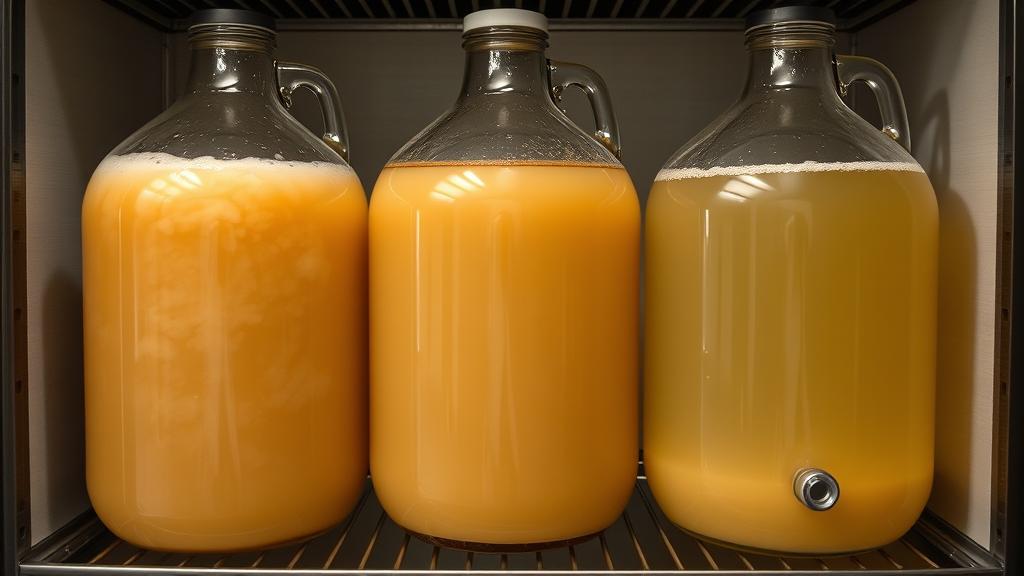
Fermentation is where functionality gets interesting. Your botanicals and adaptogens are now part of the chemical environment—they’ll interact with yeast and the developing flavour profile in ways you can’t predict entirely. That’s the adventure.
- Fermentation temperature: 19-21°C (66-70°F) for ale yeasts. Temperature stability is crucial with botanical beers—fluctuations can emphasise off-flavours.
- Primary fermentation: 7-10 days. Monitor gravity closely. With complex botanical additions, fermentation can stall if the yeast gets overwhelmed. Pitch generously (2x normal pitch).
- Secondary conditioning: 10-14 days cold conditioning at 4°C (39°F) will help herbs and botanicals settle and integrate. Don’t skip this—it makes a huge difference to clarity and smoothness.
A useful comparison: hybrid fermentation techniques can also be applied to functional brewing—longer conditioning at slightly cooler temperatures creates cleaner results.
Tasting Notes & My Honest Review
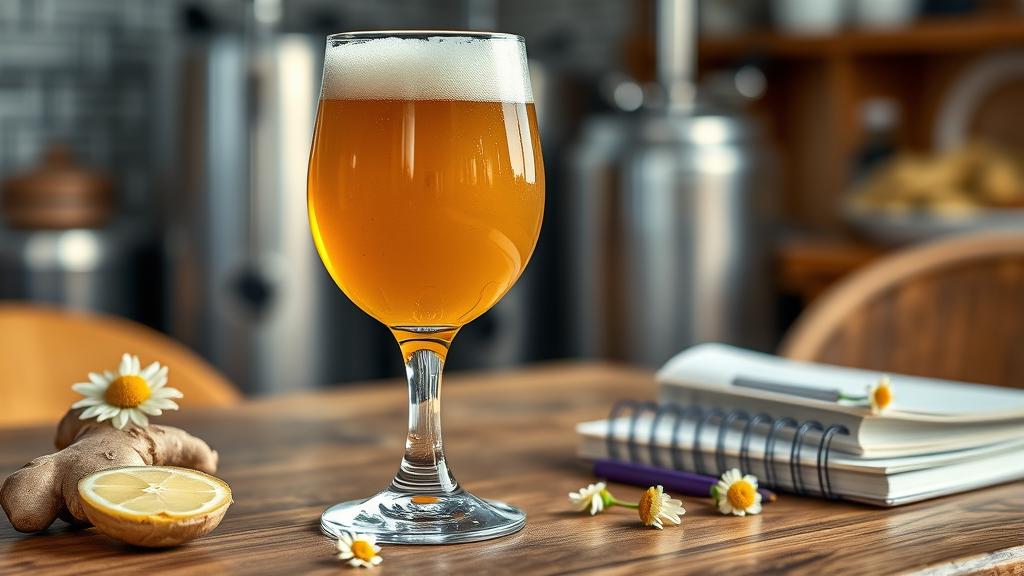
After two weeks of conditioning, my Chamomile-Ginger Pale Ale was ready. Here’s what I got:
Appearance: Crystal-clear golden amber. The oat malt created a silky head retention—properly monk-like, actually. A good sign.
Nose: Clean pale ale maltiness, with bright chamomile and ginger peeping through without overwhelming. The reishi adds a subtle earthy undertone—not unpleasant, but noticeable if you’re looking for it.
Taste: Smooth, clean bitter finish from the Cascade hops. The ginger arrives in the mid-palate and carries through—it’s not just a flavour addition, it genuinely adds to the beer’s character. The chamomile softens the bitterness beautifully.
Mouthfeel: Full body (thanks to the oat malt), with a lingering warmth from the ginger. The adaptogens? I can’t claim to feel them working in the traditional sense, but the beer has a calming quality—maybe that’s placebo, maybe it’s the chamomile’s properties, maybe it’s just really good beer. Either way, it works.
The verdict: This is genuinely drinkable, not a gimmick. It stands up as a proper beer and as a functional beverage. That’s the holy grail.
Pro Tips & Common Mistakes
- More botanicals ≠ better results. I made this mistake on my second batch with hibiscus—25g instead of 15g turned the beer into a floral tea. Restraint is key. Start light, taste, iterate.
- Sourcing matters. Cheap dried herbs often smell musty. Spend the extra quid for organic, food-grade botanicals from specialist suppliers like The Herb Shop or your local health food shop. Your beer will taste noticeably better.
- Document everything. With variable ingredients like fresh ginger or different herb batches, consistency is hard. Write down weights, boil times, brands. Next batch, you’ll want to replicate what worked.
- Don’t skip cold conditioning. Functional beers with botanical additions need longer settling time than your standard IPA. Rushing it will leave you with a hazy, musty-tasting result.
- Temperature control during fermentation is non-negotiable. Botanicals can generate off-flavours if fermentation goes too warm or fluctuates wildly. Invest in a heat belt or fermentation chamber if you’re serious about this.
Variations & Next-Level Experiments
Once you’ve nailed the basics, the possibilities expand. I’m experimenting with:
- Turmeric Golden Ale: Low-ABV (3.5%), with turmeric, black pepper, honey, and ginger. Anti-inflammatory botanicals meet smooth malt base.
- Probiotic Sour: Wild fermentation techniques combined with kombucha cultures to add live probiotics post-bottling. Complex, but the functionality is real.
- Electrolyte Session Ale: 3.8% ABV with subtle mineral additions (1g potassium chloride, 0.5g Himalayan salt per 20L), designed as a sports recovery beer. Sounds gimmicky, but it actually works post-workout.
- Sleep-Aid Porter: High-quality dark malts with passionflower, valerian, and a touch of honey. Low-ABV (4%), designed to be sipped in the evening. Early results suggest it actually delivers on the relaxation angle.
Conclusion: Functional Beer Isn’t a Trend—It’s a Return
Functional beer brewing connects us back to where brewing started: as a craft that served multiple purposes—nourishment, medicine, community, celebration. Modern homebrewing stripped some of that down to purity (hops, malt, yeast, water). That’s brilliant. But there’s room to rebuild.
You don’t need special equipment. You don’t need to abandon traditional techniques. You just need quality botanicals, respect for the ingredients, and the willingness to experiment. Start with one batch, dial in what you like, and iterate from there.
The 2026 brewing landscape is shifting. Wellness is here to stay. And if you’re a homebrewer, you’ve got the perfect platform to explore it—your own kitchen, your own recipes, zero liability if it doesn’t work out. That’s the advantage of home brewing.
Give it a go. Brew something that makes you feel good, not just tastes good. That’s what this is about.
🍺 Join the Brotherhood — Monthly brews, stories & monk wisdom
Subscribe for exclusive recipes, early brew logs, and behind-the-scenes updates straight to your inbox.