Kvass Mastery: Brewing Eastern Europe’s Ancient Refreshment at Home
I first encountered kvass at a farmers’ market in Prague, of all places — a monk friend from a nearby brewery was selling his own dark, earthy version in recycled lemonade bottles. “It’s not really beer,” he said, watching me examine it suspiciously. “But it’s everything beer should be in summer: honest, alive, and humble.” That conversation stuck with me for three years before I finally decided to brew it at home. What I discovered was a fermented drink that strips away all the pomp of modern craft brewing and returns to something genuinely ancient — Eastern Europe’s original peasant staple, the liquid bread that sustained millions for centuries.
Why Kvass Matters in 2026: The Return to Radical Simplicity
Craft brewing in 2026 is drowning in complexity: hop varietals, water chemistry profiles, temperature-controlled fermentation vessels, and endless recipe permutations. But there’s a counter-movement happening quietly — home brewers rediscovering fermented traditions that don’t require PhD-level chemistry. Kvass is leading that charge. It’s a spontaneous fermentation that thrives on ambient yeasts and bacteria, which aligns perfectly with the farmhouse brewing revival gaining momentum across the UK and Europe.
What makes kvass revolutionary for home brewers is its accessibility. Unlike traditional beer, which demands precision, kvass rewards imprecision. It’s a drink for beginners, minimalists, and anyone exhausted by gear inflation. And it’s genuinely trending: younger drinkers, particularly in urban environments, are gravitating toward low-alcohol, naturally fermented beverages — exactly what kvass offers.
Ingredients & Equipment: The Bare Essentials
One of kvass’s greatest gifts is its material simplicity. You don’t need a fancy fermentation bucket or temperature controller. Here’s what I use, and what you’ll need:
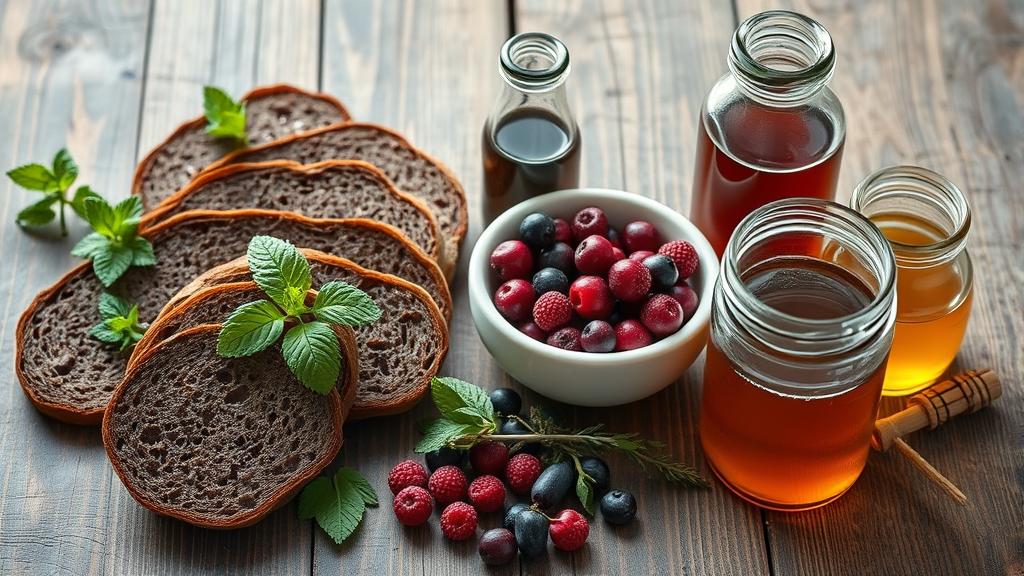
- Dark rye bread — 500-700g (1.1-1.5 lbs) of traditional, unsweetened, darkly roasted rye. This is non-negotiable. Use bakery rye or sourced from Eastern European shops. Avoid pre-sliced supermarket loaves with additives.
- Water — 3-4 litres (0.8-1 US gallons). Tap water is fine; if heavily chlorinated, let it sit overnight to off-gas.
- Honey or sugar — 30-50g (1-2 oz). Optional but recommended for secondary fermentation carbonation.
- Fresh herbs — Mint, lovage, or parsley. About 10-15g (0.4-0.5 oz) fresh sprigs.
- Optional flavourings — Dried ginger, juniper berries, or wild berries if you’re experimenting.
- Equipment — A large glass jar (4 litres / 1 gallon capacity), cheesecloth, bottles with swing caps or flip-tops.
That’s it. No airlock. No hydrometer. No thermometer. The beauty of kvass is that it assumes your kitchen and the natural world around you are sufficient partners in fermentation.
Step-by-Step Brew Day: The Ancient Method
The process sounds almost too simple to be fermentation:
- Toast your rye bread — Slice the loaf into 1-2cm (0.4-0.8 inch) cubes. Spread on a baking tray and roast at 180°C (350°F) for 12-15 minutes until deep brown and fragrant, but not burnt. This roasting concentrates the rye’s earthy, sweet notes and activates the natural yeasts on the crust.
- Boil water — Heat 3.5 litres (0.9 US gallons) of water to 100°C (212°F), then let it cool to room temperature. This sterilises without killing the bread’s natural flora entirely.
- Combine — Pour cooled water into your glass jar. Add the toasted rye bread cubes. Stir gently and cover with cheesecloth (not airtight; you want gas exchange).
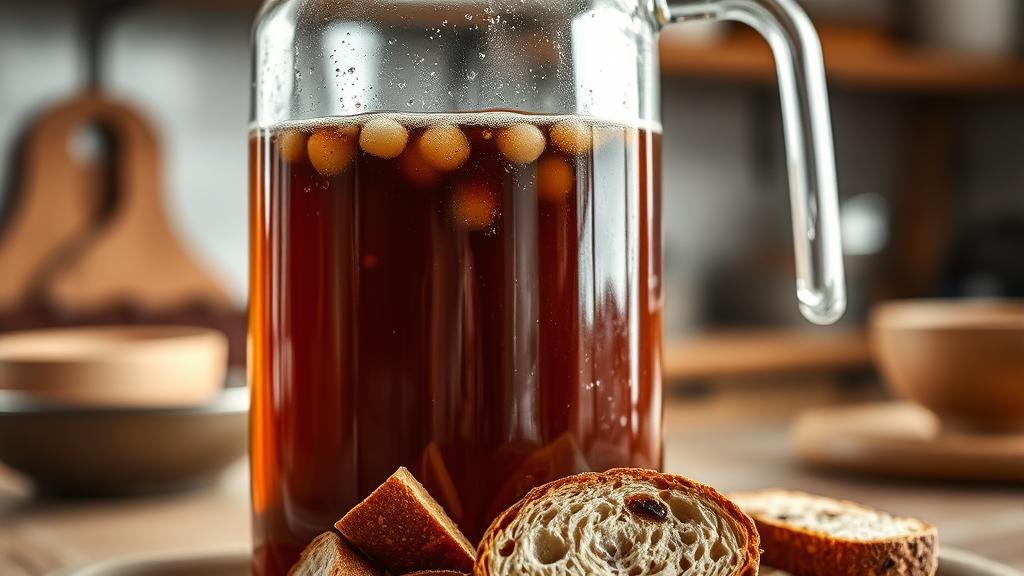
- Wait — Let this sit at room temperature, 18-22°C (64-72°F), for 24-48 hours. You’ll notice cloudiness, a subtle sourdough-like smell, and small bubbles forming. This is the lactic acid bacteria and wild yeasts waking up.
- Strain — After 48 hours, pour through cheesecloth into a clean jar, pressing the bread gently. You should have clear-to-amber liquid. Discard the bread solids (or compost them).
- Add herbs and flavour — Add your fresh mint or other herbs to the strained liquid. You can also add 30-50g of honey dissolved in a little warm water if you want secondary carbonation and a touch of sweetness.
- Bottle for secondary fermentation — Pour into flip-top or swing-cap bottles. Leave at room temperature for another 24-48 hours. The bottle pressure will build gently — don’t seal too tight or you’ll have an explosion situation. “Open-cap” fermentation is fine; kvass doesn’t demand extreme carbonation.
- Chill and serve — Refrigerate once you’ve achieved the carbonation level you like. Serve cold, ideally within 2-3 weeks of the first fermentation.
Fermentation & Conditioning: When to Let Nature Work
The genius of kvass is that it forgives timing mistakes. Unlike beer, where off-flavours can compound, kvass’s natural acidity acts as a preservative. The lactic acid bacteria produce a gentle sourness that prevents spoilage.
Temperature is your only real variable. At 18-22°C (64-72°F), fermentation moves steadily. Colder temperatures (10-15°C / 50-59°F) will slow it, giving more time for flavour development but risking contamination if you wait too long. Warmer temperatures (24-28°C / 75-82°F) accelerate everything — your kvass could be ready in 36 hours, but watch for acetobacter (vinegar-producing bacteria) if you stray above 25°C (77°F).
The liquid should smell pleasantly sour, slightly yeasty, and earthy. If it smells like nail polish remover or rotten eggs, something went wrong — likely temperature spike or a mould infection. This is rare with kvass, but start over if your gut says no.
Many traditional brewers in Eastern Europe also use a starter culture — a previous batch’s liquid or a dried kvass culture from suppliers like The Homebrew Forum’s kvass community — to speed consistency. For your first batch, tap into the wild yeasts. For future batches, keep 250ml (8 fl oz) of your finished kvass as a starter culture for the next round; it’ll halve your fermentation time.
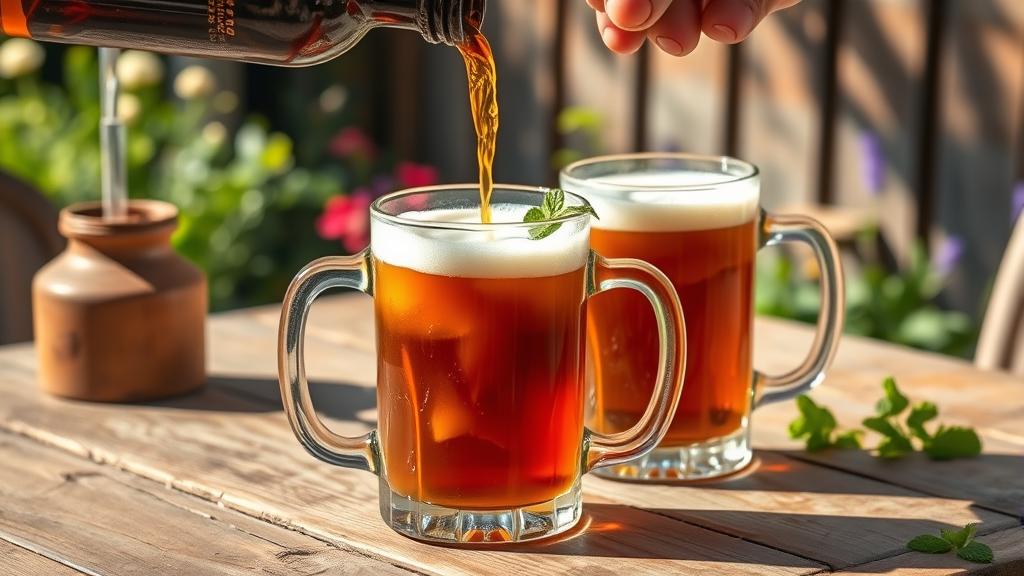
Tasting Notes & My Honest Review
My first batch was frankly underwhelming. I’d expected something beer-like — hoppy, crisp, defined. What I got was murky, sour, and vaguely medicinal. I almost threw it out.
Then I served it cold on a 28°C (82°F) day to a friend, and she drank three glasses straight. “It’s like rye sourdough became liquid,” she said. That reframing changed everything.
Kvass isn’t a beer replacement; it’s a soft drink alternative that happens to contain 0.5-1.5% ABV. The flavour is earthy, slightly sweet, with undertones of rye toast and a soft lactic acid tang. It’s moreish — people drink it in gulps, not sips. The mouthfeel is light and thirst-quenching, which explains why Eastern European farmers drank it through hot summers instead of water.
The alcohol content is so low that younger drinkers and pregnant family members can enjoy it. It’s also naturally probiotic, thanks to the lactic acid bacteria — though the health claims are probably overstated. But the digestive ease is real: I’ve never experienced bloating or heaviness from kvass the way I sometimes do with beer.
Carbonation varies batch to batch. Mine settle around 1.5-2 volumes of CO2 (soft, like a British shandy), but some brewers push for 2.5+ volumes for a sharper fizz. Experiment.
Pro Tips & Common Mistakes
After six batches, here’s what works and what doesn’t. These lessons come from studying both hybrid fermentation approaches and traditional methods:
- Don’t skip the bread roasting — Untoasted bread produces a bland, yeasty result. The roasting step is where half the flavour comes from, similar to how proper precision fermentation demands attention to detail.
- Use proper rye bread, not rye-blend — Supermarket “rye” often contains 30% wheat. Track down a bakery or Eastern European shop that stocks 100% rye. The investment (£3-5 per loaf) pays dividends.
- Cover with cheesecloth, not plastic wrap — Kvass needs gas exchange. A sealed container will trap CO2 and create pressure even in primary fermentation. You want loose coverage that lets air in.
- Save your starter culture — Once you nail a batch, preserve 200-300ml (7-10 fl oz) in the fridge. It’ll keep for months and dramatically reduce guesswork on batch two.
- Taste daily during fermentation — Kvass is forgiving, but your palate isn’t. By day two, you’ll know if it’s tracking toward sour or turning acetified. Catch problems early.
- Bottle in glass, not plastic — The slight acidity can leach compounds from soft plastics over weeks. Glass swing-caps are worth the upfront cost.
One mistake I made: assuming faster fermentation was better. My second batch fermented at 26°C (79°F) in 36 hours and tasted vinegary within a week. Temperature control matters more than I expected. Aim for 20-21°C (68-70°F) as your sweet spot.
Variations & Next-Level Experiments
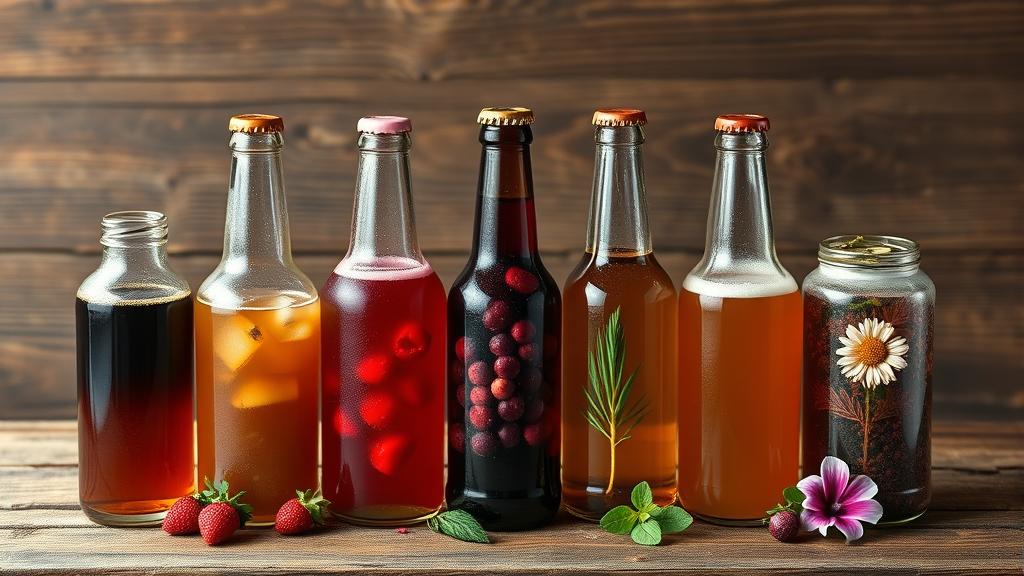
Once you’ve nailed the basic recipe, kvass becomes a playground. Here are variations I’ve tested:
- Ginger-Spiced Kvass — Add 15g (0.5 oz) of dried ginger root during the secondary herb stage. Adds warmth and slight heat. Brilliant served warm in winter.
- Berry Kvass — Steep 50g (1.8 oz) of dried juniper, cranberry, or lingonberry during fermentation. These berries are traditional in Slavic brewing and add tartness without overwhelming the base.
- Herbal Edition — Experiment with fresh lovage, sorrel, or wild thyme. Lovage is particularly traditional and adds a celery-like complexity.
- Low-Ferment Variant — If you want even less alcohol (closer to 0.2% ABV), reduce fermentation time to 36 hours total and refrigerate immediately. This is what’s sold commercially in Eastern Europe.
- Floral Experiment — I tried elder flowers and rose petals. The rose was too perfumy, but elder flowers work brilliantly, adding delicate sweetness.
For sourcing ingredients beyond standard supermarkets, The Homebrew Forum community has excellent UK-based suppliers recommendations. Some brewers also use Craft Beer & Brewing’s fermentation guides to understand the microbiology underneath the folk traditions.
Kvass in the Bigger Picture: Why This Matters
Kvass represents something important: proof that good fermentation doesn’t require industrialisation. It strips away the gatekeeping of modern homebrewing — the expensive equipment, the acquired knowledge, the sense that you need certifications to make something worthwhile.
There’s a monastic principle here, one my Prague friend understood: sometimes the best beverage is the simplest one, made with what’s at hand, and shared without pretence. Kvass is that drink. It’s humble, resilient, and utterly democratic.
In 2026, when we’re drowning in craft complexity and commodity culture, kvass feels genuinely radical. Not because it’s trendy (though it is), but because it refuses complexity on principle.
I’d encourage every home brewer to try it once — not to abandon beer, but to remember that fermentation predates all of us, and that sometimes the wisdom lies in stepping back rather than levelling up.
Have you brewed kvass? Share your variations and disasters in the comments below. I’m always keen to hear how others interpret this ancient drink.
🍺 Join the Brotherhood — Monthly brews, stories & monk wisdom
Subscribe for exclusive recipes, early brew logs, and behind-the-scenes updates straight to your inbox.