Mushroom Beer Mastery: Brewing Umami-Rich Craft Ales at Home
If someone had told me five years ago that mushroom beer would become one of 2026’s hottest homebrewing trends, I’d have laughed. But here we are. Mushroom beer isn’t a novelty—it’s a sophisticated convergence of craft brewing, functional food trends, and culinary innovation. Breweries from Montana to Manchester are experimenting with medicinal fungi, umami-rich mushrooms, and earthy fungi infusions. And the results? Genuinely brilliant.
The trend is rooted in something deeper than hype. Mushrooms bring umami—that mystical fifth taste—to beer in a way that creates richness, mouthfeel, and complexity that’s otherwise difficult to achieve. Shiitake, maitake, lion’s mane, and reishi aren’t just functional ingredients; they’re tools for crafting beers with depth, character, and a distinctly modern sensibility. As someone who’s always exploring how to blend fruit and specialty ingredients with beer, mushroom brewing feels like the natural next frontier.
Understanding Mushroom Beer: Why Umami Matters
Before we dive into brewing, let’s understand what makes mushroom beer different. Umami—the savory, mouth-filling sensation—comes from glutamic acid and nucleotides (primarily inosinate and guanylate). Mushrooms are one of nature’s richest sources of umami compounds. When you add mushrooms to beer during brewing, the heat and fermentation process extract these compounds, transforming them into flavour components that linger on the palate.
Unlike adding mushrooms to food (where you get earthy, sometimes woody notes), beer fermentation breaks down mushroom tissue differently. The alcohol acts as a solvent, pulling umami and subtle flavour compounds while often reducing harsh earthiness. The result is a beer that feels richer, fuller, more savoury—without tasting like you’re drinking a bowl of soup.
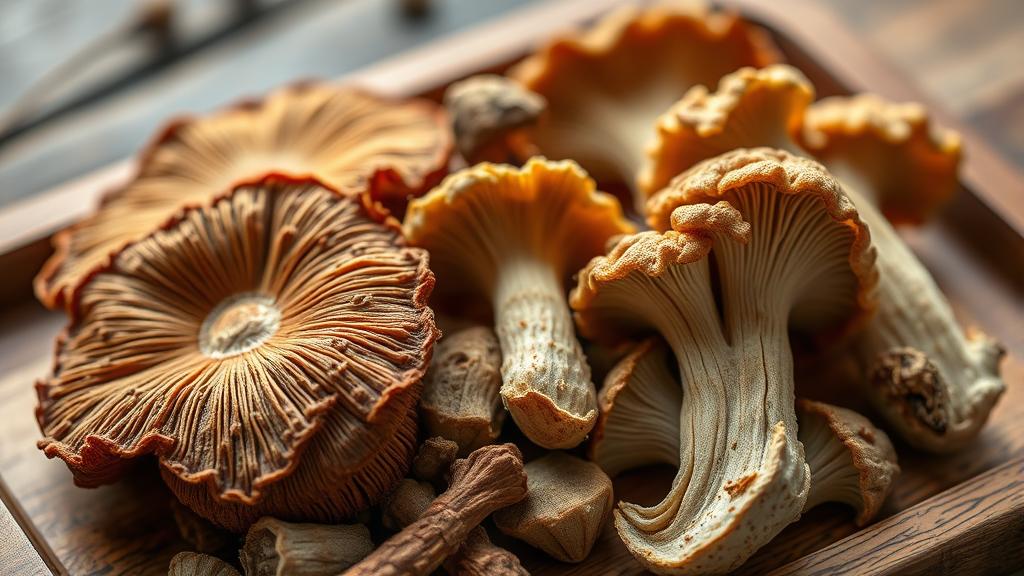
Different mushroom varieties contribute different flavour profiles. Shiitake brings deep umami and slight woodiness. Maitake adds subtle sweetness and body. Lion’s mane (hericium) contributes delicate fruity and slightly floral notes. Reishi, the medicinal favourite, adds earthy depth and functional benefits (immune support, stress reduction). Oyster mushrooms? They’re the workhorse—affordable, accessible, and they deliver reliable umami without overwhelming subtlety.
Choosing Mushrooms for Your Brew
Not all mushrooms work equally well in beer. Some are better fresh, others as dried tinctures. Here’s what I’ve learned through experimentation.
Fresh vs. Dried vs. Tinctures
Fresh Mushrooms: Best for quick, bright contributions. They add immediate umami and earthy character but lose potency during fermentation as alcohol and heat break them down. Use 200-400g per 19-litre batch, sliced thin. Add to the boil at 15 minutes, or post-fermentation as a secondary ingredient.
Dried Mushrooms: More concentrated flavour, better for umami intensity. Soak dried mushrooms in hot water 30 minutes before adding to rehydrate. Use roughly 50-100g per 19 litres. They hold their character better than fresh through fermentation. Add to the last 20 minutes of the boil.
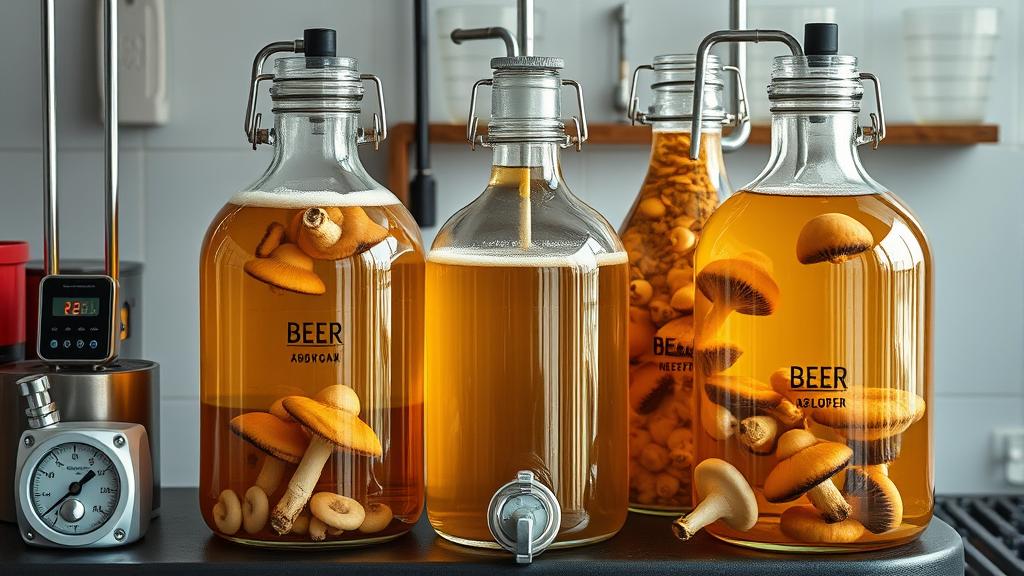
Mushroom Tinctures (Advanced): Make a separate tincture by soaking dried mushroom pieces in vodka or grain alcohol for 2-4 weeks. Strain and add post-fermentation. This approach gives you precise control over dosage and flavour intensity—critical because a little umami is lovely; too much becomes a “umami bomb” that overshadows hop character. Start with 5-10ml per batch and adjust.
Best Mushroom Varieties for Beer
- Shiitake (most recommended): Rich umami, woody undertones, brings body. Pairs beautifully with darker styles (stouts, porters) and English ales.
- Maitake: Earthy sweetness, supports mouthfeel. Works in amber ales, brown ales, and hybrid styles.
- Lion’s Mane: Subtle fruity notes, slightly floral. Excellent for blonde ales, pilsners, and wheat beers.
- Oyster: Gentle umami, affordable. Works across all styles; won’t overpower delicate beers.
- Reishi: Earthy, medicinal, bitter undertones. Use sparingly (20-30g per batch) because reishi is intense. Works in darker, more robust styles.
- Candy Cap: Unique maple/caramel notes (no umami). Add during secondary fermentation for subtle sweetness; pairs well with brown ales.

Recipe: Shiitake Stout Mastery
Let me walk you through my favourite mushroom beer recipe. This one builds on classic stout fundamentals with umami enhancement.
Ingredients (19 litres / 5 US gallons)
- 4.0 kg (8.8 lbs) English pale malt
- 600 g (1.3 lbs) roasted barley
- 400 g (0.9 lbs) crystal malt (120L)
- 200 g (0.44 lbs) chocolate malt
- 200 g (0.44 lbs) dried shiitake mushrooms, rehydrated and sliced
- 30 g East Kent Goldings hops (60 min bittering)
- 15 g East Kent Goldings (5 min finishing)
- Wyeast 1084 Irish Ale yeast
- Water adjusted to soft water profile with slight sulphate (100 ppm)
Brew Day Steps
- Mash: Strike at 68°C (154°F), mash at 66°C (151°F) for 75 minutes. This promotes fermentable sugars and prevents excessive sweetness.
- Lautering: Sparge at 76°C (168°F), collect 24 litres wort targeting 1.065 OG (original gravity).
- Boil (90 minutes):
– 60 min remaining: Add bittering hops (East Kent Goldings, 30g, targeting ~35 IBU)
– 20 min remaining: Add pre-rehydrated shiitake mushrooms (200g sliced). This timing allows umami extraction without boiling off volatile compounds.
– 5 min remaining: Add finishing hops (East Kent Goldings, 15g) for subtle floral notes. - Chill: Cool wort to 20°C (68°F) using immersion chiller. Aerate thoroughly—oxygen is critical for yeast health and clean fermentation.
- Pitch: Use Wyeast 1084 Irish Ale yeast at 1.5 million cells per mL per degree Plato (roughly 200-250 billion cells total). This yeast is forgiving, ferments clean, and supports umami integration.
Fermentation & Integration
Fermentation is where mushroom beer gets interesting. Maintain temperature at 18-20°C (64-68°F) for 10-14 days. Don’t let it swing—temperature fluctuations stress yeast and can introduce off-flavours.
Monitor gravity daily after day 5. Irish Ale yeast typically drops from 1.065 to 1.015-1.018 (around 6.5% ABV). Once it stabilises, you can cold condition at 4°C (39°F) for 1-2 weeks before packaging. This cold period allows yeast and proteins to settle, clearing the beer and integrating mushroom character fully.
One critical insight: don’t rush to package. Mushroom beer improves dramatically with 4-6 weeks of bottle/keg conditioning. The umami compounds continue integrating, harsh edges soften, and flavours develop complexity. This connects directly to what I’ve learned about ageing and maturation—time is a brewer’s best tool.
Tasting Notes & Honest Assessment
I brewed this shiitake stout in April 2026. At 2 weeks, it was rough—harsh roast, medicinal edges, the mushroom character was too forward. At 6 weeks? Transformed. The shiitake had melded into the beer, creating a savoury undertone that made the roasted barley sing without dominating. The finish was clean, the mouthfeel silky, and the umami lingered pleasantly without being overwhelming.
Compared to my standard stout (same recipe, no mushrooms), the mushroom version was richer, fuller, more complex. It felt like a restaurant-quality beer—the kind of thing you’d serve at a dinner party and watch people’s faces change as they try to identify what makes it special.
The truth: mushroom beer won’t appeal to everyone. Hop-heads might find it too subtle. Adjunct-lovers might want more. But for brewers pursuing sustainable, ingredient-forward brewing, mushroom beer represents a frontier. It’s food-pairing worthy. It’s sophisticated. And it’s genuinely delicious when executed well.
Common Mistakes & How to Avoid Them
- Using too much mushroom: Start with 150-200g per batch. You can always add more; you can’t remove umami once it’s in. I’ve over-mushroomed batches, and they became undrinkable.
- Adding mushrooms too late: If you add mushrooms in the last 2 minutes of boil, you get minimal extraction. 20 minutes gives clean extraction; 15-20 is the sweet spot.
- Using fresh mushrooms without drying: Fresh mushrooms can introduce moisture and instability. Always dry or rehydrate them first to reduce contamination risk.
- Not accounting for mushroom bitterness: Some mushrooms (especially reishi) add subtle bitterness. Reduce your bittering hop additions by 5-10 IBU if using assertive fungi.
- Expecting immediate results: Patience. Mushroom beer needs 4-6 weeks minimum. Rushing to taste at 2 weeks will disappoint you.
Variations & Next-Level Experiments
Once you’ve mastered the shiitake stout, experiment:
- Maitake Brown Ale: 100g maitake (rehydrated) adds subtle sweetness and body to a traditional brown ale. Gorgeous complexity.
- Lion’s Mane Blonde Ale: 75g fresh lion’s mane sliced fine, added at 10 minutes. The floral notes pair beautifully with Hallertau hops.
- Reishi Barley Wine: For advanced brewers only. Just 25g reishi in a high-gravity barley wine (8%+ ABV) adds depth without bitterness. Age 6 months minimum.
- Oyster Oyster Ale: A cheeky experiment—brew an English ale and add oyster mushrooms (the ingredient, not the flavor). You’ll get clean umami with zero pretension.
- Mushroom Blend Tincture: Create a tincture with 3-4 mushroom varieties, then add precisely to finished beer. This gives maximum control and allows customisation.
Why Mushroom Beer Matters in 2026
This trend isn’t about gimmickry. It’s about brewers recognising that beer is food, and food trends shape beer trends. Umami is having a moment in fine dining. Functional fungi (reishi, lion’s mane, cordyceps) are mainstream wellness ingredients. And home brewers? We’re finally equipped with the knowledge, access to ingredient suppliers, and community support to experiment safely.
Mushroom beer represents the intersection of craft brewing, culinary sophistication, and functional food—three major trends converging into something genuinely exciting. It’s why precision fermentation and ingredient mastery matter more than ever. Every variable you control—mushroom type, quantity, timing, fermentation temperature—shapes the final result.
Start with shiitake. Learn how umami integrates. Then branch into maitake, lion’s mane, and the functional varieties. You’ll discover a whole new dimension of homebrewing craft.
Brew this. Taste this. And watch people try to guess what makes your mushroom beer taste so impossibly good. That moment—when someone’s face changes as umami hits their palate—that’s why mushroom beer matters.
🍺 Join the Brotherhood — Monthly brews, stories & monk wisdom
Subscribe for exclusive recipes, early brew logs, and behind-the-scenes updates straight to your inbox.