Why Piwo Grodziskie is Making a 2026 Comeback
There’s something profound about rediscovering old things. In my journey from novice homebrewer to someone who takes this craft seriously, I’ve learned that the oldest beers often teach us the most valuable lessons. Piwo Grodziskie—that ancient Polish smoked wheat beer—is exactly that lesson: a beer style nearly extinct 50 years ago, now returning to homebrewers’ schedules across the UK and beyond.
Piwo Grodziskie, also known as Grätzer or “Polish Champagne,” is a low-alcohol (3–4% ABV), highly carbonated wheat ale with a distinctive oak-smoked character. For centuries, it was the everyday beer of Grodzisk, a town in Poland. Then industrial brewing happened, convenience won, and the style nearly disappeared. But in 2026, something shifted. Homebrewers are hunting for authenticity. We’re tired of copying IPAs and imperial stouts. We want to brew with purpose—to understand history through flavour. Grodziskie fits that hunger perfectly.
Let me share what I’ve learned about brewing this remarkable beer at home.
Understanding the Grodzisk Style: History & Characteristics
Piwo Grodziskie is BJCP classified as a historical beer style (Style 27), and for good reason. It’s unlike most beers you’ll encounter. Here’s what makes it unique:
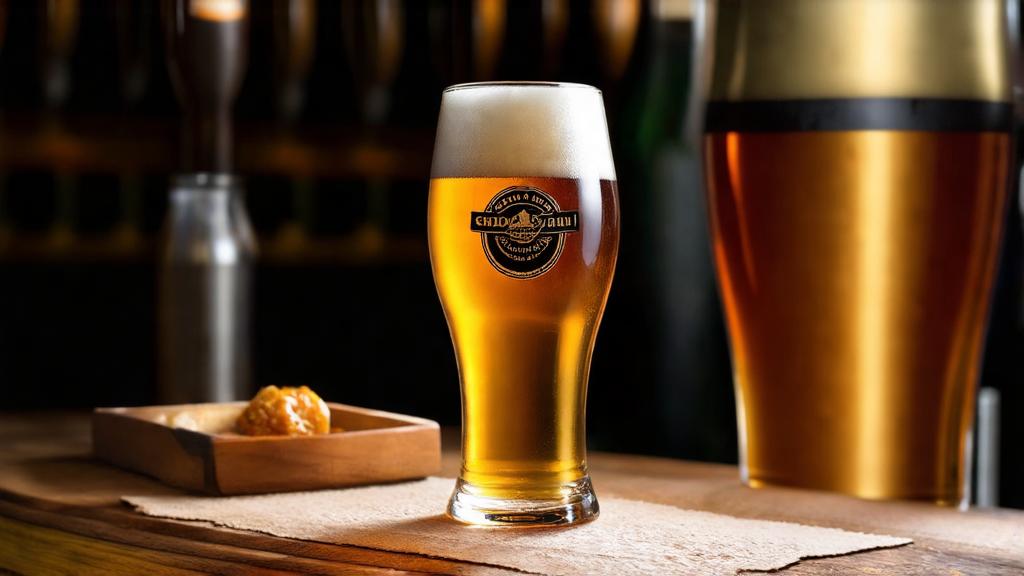
- Colour: Pale golden, almost translucent. Think pale lager clarity with wheat beer elegance.
- Aroma: Distinctly smoky—like a gentle campfire or smouldering oak wood, never harsh or overpowering.
- Flavour: Dry, crisp, with a soft mouthfeel. The smoke sits lightly on the palate, followed by a subtle hop bitterness (around 20–35 IBU).
- Carbonation: High—this is a fizzy, refreshing beer, almost cider-like in its effervescence.
- ABV: 3.0–3.5% typically. It’s a sessionable, contemplative beer.
According to BJCP guidelines, Piwo Grodziskie is brewed entirely (or nearly entirely) from oak-smoked wheat malt. Unlike Rauchbier (the Bavarian smoked beer), which uses beechwood-smoked malt and is often darker and richer, Grodziskie embraces restraint. The smoke complements; it doesn’t dominate. It’s the difference between a whisper and a shout, and that’s why I’ve fallen in love with this style.
Ingredients & Equipment: What You’ll Need
For a 20-litre (5.3 US gallon) batch, here’s my proven recipe:
Fermentables (Grain Bill)
- 2.0 kg (4.4 lbs) oak-smoked wheat malt (Weyermann Smoked Wheat or similar)
- 500 g (1.1 lbs) pale malt (Maris Otter preferred for a clean, crisp base)
Hops
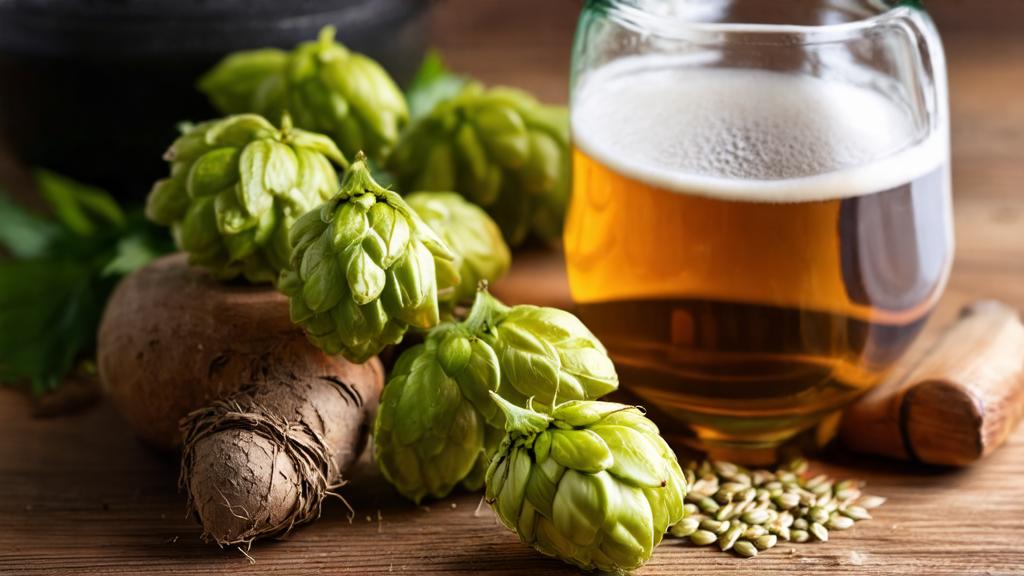
- 10 g Hallertau Mittelfrüh @ 60 min (bittering, ~12 IBU)
- 5 g Hallertau Mittelfrüh @ 15 min (flavour)
- 5 g Saaz @ 5 min (finishing—subtle, noble character)
Yeast
- Wyeast 3056 Bavarian Weizen or Safale WB-06 (both handle low OG beautifully)
- Pitch rate: ~2 billion cells for a clean, dry fermentation
Water Treatment
- Gypsum: 2 g (enhances hop character)
- Chalk or calcium carbonate: 1 g (optional, adjust for your local water)
- Target: neutral to slightly hard water (not acidic, which spoils delicate wheat beers)
Equipment
Standard 20L homebrewing kit suffices, but consider:
- A good thermometer: Precision in mashing (see below) matters.
- Blow-off tubing or airlock: These beers ferment vigorously. Plan for overflow.
- Bottling wand or counter-pressure filler: High carbonation demands respect. Proper packaging prevents gushing.
One note: Smoked malt grains are delicate. Order fresh. Aged smoked malt loses its character, and you’ll brew something flat and disappointing. Check with The Malt Miller or Geterbrewed for current stock.
Mashing & Brewing: The Art of Precision
Piwo Grodziskie demands a careful touch. Unlike many wheat beers (looking at you, Hefeweizen), you’re not chasing banana and clove esters. You want clean, dry, crisp—almost austerere. Here’s my method:
Mash Steps
- Protein Rest: 35°C (95°F) for 15 minutes. This softens the wheat malt’s proteins.
- Main Mash: Raise to 65°C (149°F) and hold for 60 minutes. This is crucial—a lower temp (64–65°C) yields a drier beer; higher temps create more body and residual sweetness. For Grodziskie, stay in the lower range.
- Mash-Out: 75°C (167°F) for 10 minutes, then lauf (run off) slowly. Smoked malt husks are brittle; a fast sparge can compact the bed and cause stuck mashes.
Boil
- Duration: 75 minutes (the extra 15 minutes helps drive off volatile compounds and creates a cleaner finish).
- Bittering addition: Hallertau at 60 min. Use a quality bittering variety; Brewer’s Friend suggests 12–20 IBU for authentic style.
- Late additions: No more than 15 min from end. Overly aggressive hopping muddies the smoke.
- Chill ruthlessly: Get to 20°C (68°F) as fast as possible. Smoked beers are susceptible to oxidation during long chill times.
Original Gravity (OG) should land around 1.034–1.040. Final Gravity (FG) typically hits 1.005–1.010, yielding 3.0–3.5% ABV.
Fermentation & Conditioning: The Patient Brewer Wins
This is where many homebrewers stumble. After the boil’s theatre, fermentation feels dull. Resist that feeling.
- Pitch temperature: 18–20°C (64–68°F). Weizen yeasts love this range and produce minimal esters.
- Fermentation: Let it ride at 18°C for the first 5–7 days (the main metabolism phase). You’ll see vigorous activity by day 2.
- Rest phase: After primary fermentation (day 7–10, when bubbling slows), allow a 3–5 day “diacetyl rest” at 20°C. This lets the yeast clean up its own by-products—crucial for a crisp, clean final beer.
- Total fermentation: 10–14 days in primary. Patience. Don’t rush.
Transfer to secondary (optional but recommended for clarity): 14 days at 12°C will drop cold break and yeast sediment, leaving brilliant clarity—essential for a beer this pale.
Carbonation & Packaging: Don’t Skimp Here
Piwo Grodziskie is meant to fizz. We’re talking 2.8–3.2 volumes of CO₂ (roughly 5.5–6.5 g/L). That’s higher than standard ales, closer to lagers.
- Bottle conditioning: Priming sugar: 3.5–4.0 g/L (roughly 8–9 grams per litre, or 55–65 grams for a 20L batch). Bottle in brown glass to protect the delicate smoke character from light.
- Bottle conditioning time: 3 weeks minimum at 18°C. Check a test bottle after 2 weeks. It should be firm (a little “pop” when opening).
- Kegging: If you have a kegerator, force-carbonate to 2.7–3.0 bar (40–44 psi) and serve at 8–12°C. This beer shines icy cold.
Pro tip: Over-carbonation leads to gushing. Under-carbonation makes it taste flat and lifeless. Get this right, and you’ve unlocked a beer that sparkles on the tongue like few others.

Tasting Notes & My Honest Review
I first brewed Piwo Grodziskie last autumn, and I’ll admit: I was nervous. A beer this delicate, this understated, could easily fall flat. But it didn’t. When I cracked open that first bottle, there was immediate character—a clean, almost campfire smoke (like distant woodsmoke on a still evening), followed by crisp, dry grain notes and a whisper of noble hop bitterness. The carbonation was magnificent: tiny, persistent bubbles that kept tickling the palate long after the swallow.
Honestly, it reminded me of why I fell in love with rediscovering old styles. In a world of adjunct lagers and hyped New England IPAs, there’s something monk-like about a 3% smoked wheat beer. It demands contemplation. It pairs beautifully with simple foods—cheese, crusty bread, smoked fish. It’s social without being showy. It’s honest.
The finish is dry—clean to the point of astringency, which is correct. Some might find it too austere, too “wheat beer-ish” in dryness. But that’s the point. In Poland, this was workers’ beer, meant for drinking all afternoon at tapas-style pubs. Modern palates, trained on sweetness, sometimes need a moment to adjust.
My verdict: **★★★★★** (5/5). Not because it’s trendy, but because it’s genuine. It tastes like history. It tastes like intentional brewing.
Common Mistakes & How to Avoid Them
After my first successful brew and two subsequent experiments, I’ve catalogued the pitfalls:
- Using stale smoked malt: If the malt is older than 6 months, that smoke character fades to ash. Order fresh, use within 12 weeks of purchase.
- Mashing too high: If you push above 67°C (153°F), the beer becomes sweet and cloying—the opposite of what you want. Stick to 64–66°C.
- Over-hopping: The noble hops are delicate supporting actors, not stars. Don’t exceed 35 IBU. Stay restrained.
- Fermenting too warm: Weizen yeasts at 25°C+ produce banana and clove. For Grodziskie, you want clean, neutral fermentation. 18–20°C is ideal.
- Skipping carbonation: A flat Grodziskie is sad. Commit to proper carbonation levels. 2.8–3.2 volumes minimum.
- Exposing to light: Smoked malt beers are sensitive to skunking. Brown bottles only. Store in the dark.
Respect the style, and it rewards you abundantly.
Variations & Next-Level Experiments
Once you’ve nailed a traditional Grodziskie, the fun begins. Here are avenues I’m exploring:
- Fruit expression: A small dose of cherry (50g dried cherries in secondary) complements the smoke beautifully—it’s been done in traditional Polish breweries.
- Barrel-aging: A few months in used oak (not new—new oak drowns the beer) adds complexity without overpowering.
- Blending: Blend a traditional Grodziskie with an unsmoked wheat beer (50/50) for a milder introduction.
- Ingredient variation: Some brewers use a 70/30 (smoked/pale) split instead of 80/20. It’s subtler, less challenging to modern palates.
The beauty of revived historical styles is that we have creative freedom. The Poles didn’t write these recipes down; history did. We’re reconstructing, innovating, and honouring all at once.
Why Piwo Grodziskie Matters in 2026
I close with philosophy, as monks do. Piwo Grodziskie is more than a beer. It’s a statement. In an era of industrialised brewing and flavour-bomb marketing, this style whispers: “There’s beauty in simplicity. There’s depth in restraint. History is worth reviving.”
Homebrewing should be this kind of rebellion—quietly brewing what brings us joy and meaning, not what Instagram demands. Piwo Grodziskie fits that perfectly.
Brew it. Taste it. Share it. Discover why this nearly-extinct Polish beer is returning to our taps and kettles. The monk’s wisdom applies: slow brewing builds character.
🍺 Join the Brotherhood — Monthly brews, stories & monk wisdom
Subscribe for exclusive recipes, early brew logs, and behind-the-scenes updates straight to your inbox.