Why Smoked Beer (Rauchbier) is the Hottest Brewing Trend of 2026
For years, smoked beer lived in the shadows—a curious relic of German brewing history, something you tried once on holiday and either fell in love with or swore you’d never drink again. But 2026 has changed the narrative entirely. Rauchbier, the Franconian beer style born from centuries of beechwood smoke and tradition, is escaping cult status and becoming genuinely mainstream. American breweries are embracing it. Online communities are buzzing about it. And home brewers, perhaps sensing something authentic breaking through the noise, are finally giving this bold style the respect it deserves.
I’m one of them. After reading yet another industry forecast calling smoked beer “the next big thing,” I decided to brew my first rauchbier. What I discovered wasn’t just a trendy style—it was a lesson in beer, history, and the monastery-like patience brewing demands. This is what I learned, and why I think you should be brewing smoked beer too.

What is Rauchbier, and Why is It Trending Now?
Rauchbier means “smoked beer” in German, and it comes directly from Bamberg, a medieval town in Franconia where brewers have dried their malt over beechwood fires for centuries. This isn’t a modern gimmick—it’s how beer was made before you could kiln-dry grain in industrial ovens. The malt, called Bamberg smoked malt, carries an unmistakable campfire character: bold, meaty, sometimes bacon-like, often described as rustic or primal.
The BJCP (Beer Judge Certification Programme) classifies rauchbier as a top-fermented lager-adjacent style, typically in the 4.8–6.0% ABV range, with a deep copper-brown colour and that signature smoke character balancing against malty sweetness. It’s not for everyone—the smoke can feel polarising if you’re expecting a typical pilsner.
But why trending now? Three reasons. First, the craft beer industry is moving away from hop-forward IPAs toward “food-friendly” styles, and rauchbier pairs brilliantly with charcuterie, grilled meats, and smoked foods. Second, the nostalgia for authentic, historical beer styles is growing—people are tired of fruit-flavoured gimmicks and want something real. Third, and this matters to home brewers like us, smoked malt is now readily available online in the UK through suppliers like The Malt Miller and Geterbrewed, making it accessible for the first time to British home brewers.
Ingredients and Equipment You’ll Need
Here’s what you’ll need for a 19-litre (5-gallon) smoked beer. I’ve listed both metric and imperial so you can scale accordingly.
- 2.5 kg (5.5 lb) Bamberg smoked malt – This is non-negotiable. It’s the soul of the beer. Don’t substitute with “liquid smoke” or cheap knock-offs. The real stuff has a depth that fakes never achieve.
- 1.5 kg (3.3 lb) Munich malt – Adds malty sweetness and body to balance the smoke.
- 500g (1.1 lb) caramel malt (40–60L) – A touch of caramel complexity.
- 30g (1 oz) cascade hops at 60 minutes – Subtle bitterness, no aroma hops needed.
- Lager yeast – WLP830 (German Lager) or Wyeast 2308 (Munich Lager) both work beautifully.
- Water – Use your standard brewing water profile; nothing special needed here.
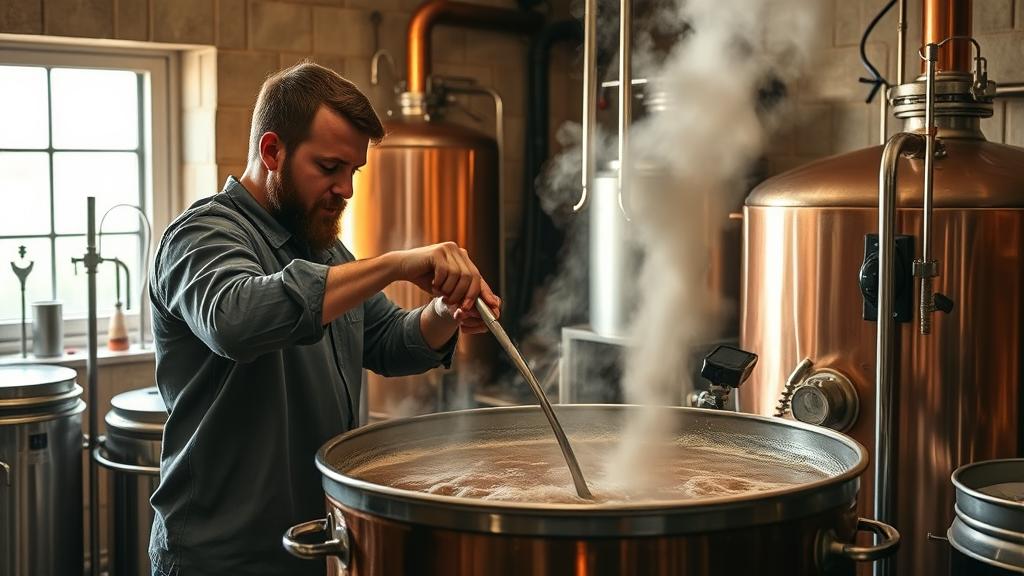
Equipment-wise, you’ll want your standard 30-litre (8-gallon) kettle, mash tun, and fermenter. One tip: because smoked malt can be sticky, ensure your grain mill is set for a medium-coarse crush. I learned this the hard way with a stuck mash that delayed brew day by two hours—a monastery lesson in patience, albeit an unwilling one.
Step-by-Step Brewing Process
- Mash In (65°C / 149°F) – Mix your crushed grains with water at 65°C. Smoked malt doesn’t need anything fancy; aim for a normal single infusion mash. Let it rest for 90 minutes, stirring occasionally to avoid compaction.
- Mash Out (76°C / 169°F) – Raise to mash-out temperature and rest 10 minutes to stabilise the grain bed before sparging.
- Sparge and Boil – Run off the wort and sparge with water at 76°C. Your target is approximately 25 litres (6.6 gallons) at the start of the boil. Aim for a 60-minute boil.
- Hop Schedule – Add cascade hops at 60 minutes for IBU (30–40 IBU). No whirlpool additions; keep it simple.
- Cool to 18°C (64°F) – Use your chiller or ice bath. Lager fermentation demands precision here.
- Pitch Yeast and Ferment – Pitch your lager yeast at 18°C. Maintain 18–20°C for the first week (this is called diacetyl rest), then gradually drop to 12°C for the remainder of fermentation (3–4 weeks total). Don’t rush; lagers need time.
Fermentation and Conditioning: Where Patience Becomes Wisdom
Lager fermentation demands precision and patience.
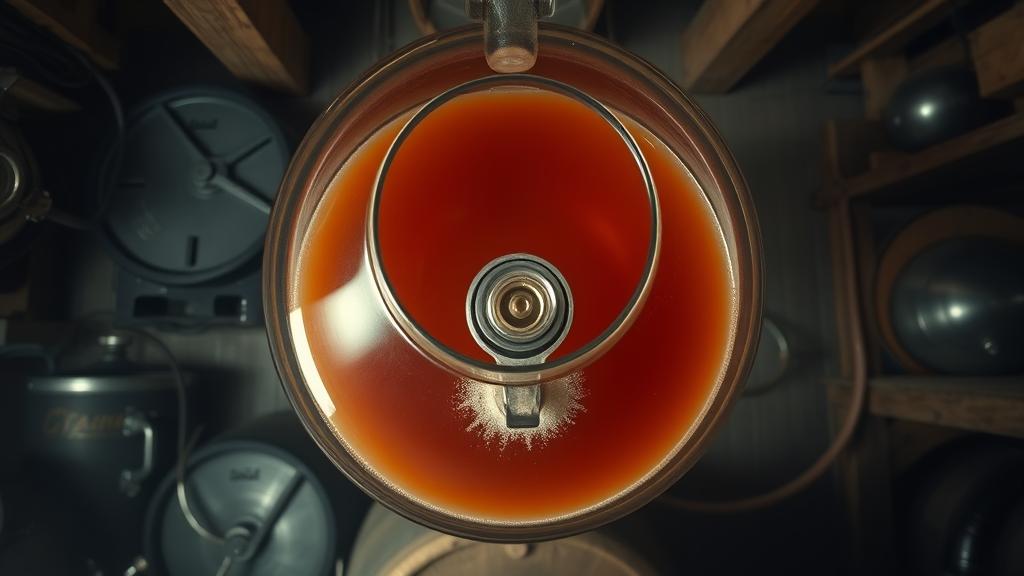
This is where rauchbier teaches you something about brewing philosophy. Lager fermentation is slow. It’s deliberate. It mirrors the monastic tradition that underpins Bennett’s Brew—there’s no shortcut to excellence.
Once primary fermentation slows (gravity drops to within 10 points of final gravity), raise the temperature back to 20°C for three to five days. This diacetyl rest prevents buttery off-flavours that sometimes plague lager fermentations. After that, cold-condition (“lager”) at 4°C (39°F) for a minimum of four weeks. I know, that sounds like forever. But it’s non-negotiable. The smoke character integrates, the yeast settles, and the beer becomes genuinely drinkable rather than harsh.
Package to bottles or kegs with standard priming rates if bottle-conditioning. If you keg, carbonate to 2.5 volumes of CO₂ (lower than ales) to let the smoke breathe without over-carbonation masking subtlety.
Tasting Notes and Honest Review

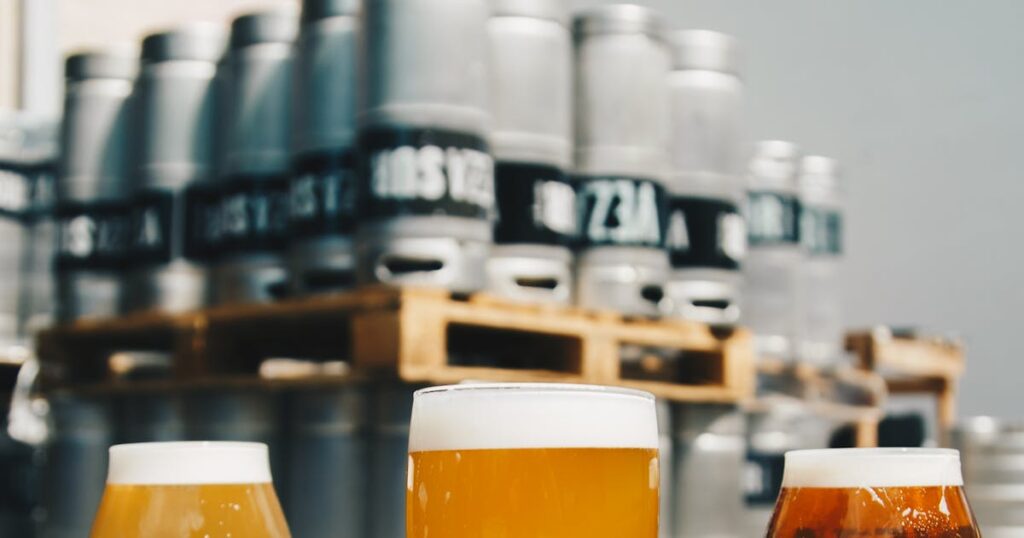
My first rauchbier poured a deep copper-brown with a creamy off-white head. The aroma hit immediately: beechwood smoke, malty sweetness, a faint hint of bacon. On the first sip, I understood the polarisation. The smoke is bold—not subtle. It’s unapologetic.
But then something remarkable happened. The smoke, initially sharp, integrated with the malt sweetness. Caramel notes emerged. There was a warming, almost savoury character that made me reach for another sip. Paired with smoked salmon and rye bread, it was transcendent. Paired with a chocolate dessert, it was jarring—a reminder that rauchbier has specific food partners.
Final gravity settled at 1.012 (ABV 5.2%), bitterness around 38 IBU. Colour: SRM 19–20 (a proper amber-brown). The beer aged beautifully; at two months, the sharp edges had softened, and it tasted more sophisticated, more integrated. This is lager wisdom: time creates complexity.
Pro Tips and Common Mistakes to Avoid
Drawing from centuries of brewing tradition, here are essential tips:
- Don’t over-smoke. Resist the urge to use more than 30–40% smoked malt. Above that, it becomes one-dimensional and harsh. Balance is everything.
- Temperature control is critical. Unlike ales, lagers demand a steady hand. If you ferment too warm, you’ll get sulphur and phenols. Too cold, and fermentation stalls entirely.
- Use fresh yeast. Old lager yeast cultures can produce off-flavours. If you’re using a liquid yeast pack that’s been on the shelf for months, either make a starter or use fresh.
- Don’t skip the cold conditioning. I know you want to drink your beer, but four weeks at 4°C isn’t negotiable. This is where the magic happens.
- Pair thoughtfully. Rauchbier isn’t an aperitif. It’s a meal beer. Smoked meats, rye, hearty stews, aged cheeses. Serve it at 10–12°C to let the complexity shine.
Variations and Next-Level Experiments
Once you’ve brewed a traditional rauchbier and understood its character, variations become interesting:
- Smoked Porter – Blend smoked malt (20%) with darker malts. Creates a roasty, campfire complexity.
- Smoked Wheat (Rauchweizen) – Use smoked malt (30%) with wheat. Adds an unexpected twist to the hefeweizen style.
- Wood-Aged Rauchbier – If you’re adventurous, secondary aging in oak or beechwood barrels intensifies the smoke and adds vanilla complexity.
The key: always respect the smoked malt. It’s a feature, not an accident. Work with it, not against it.
Why Smoked Beer Matters in 2026
Rauchbier’s revival isn’t just a trend—it’s a statement. In a landscape of fruit sours and adjunct-heavy IPAs, smoked beer says: authenticity matters. Tradition matters. The intersection of history, craft, and patience matters.
For home brewers, it’s a reminder that we don’t need to chase every trend. Sometimes the most rewarding beers are the ones that have existed for centuries, waiting for us to slow down and appreciate them. That’s the lesson of Bennett’s Brew, and rauchbier embodies it perfectly.
Brew one. It might surprise you. It might become your benchmark beer—the one you return to again and again, refining your technique, deepening your respect for lager fermentation. And if nothing else, you’ll have a beer that pairs beautifully with a quiet evening, good food, and the kind of conversation that reminds you why beer matters beyond the glass.
🍺 Join the Brotherhood — Monthly brews, stories & monk wisdom
Subscribe for exclusive recipes, early brew logs, and behind-the-scenes updates straight to your inbox.