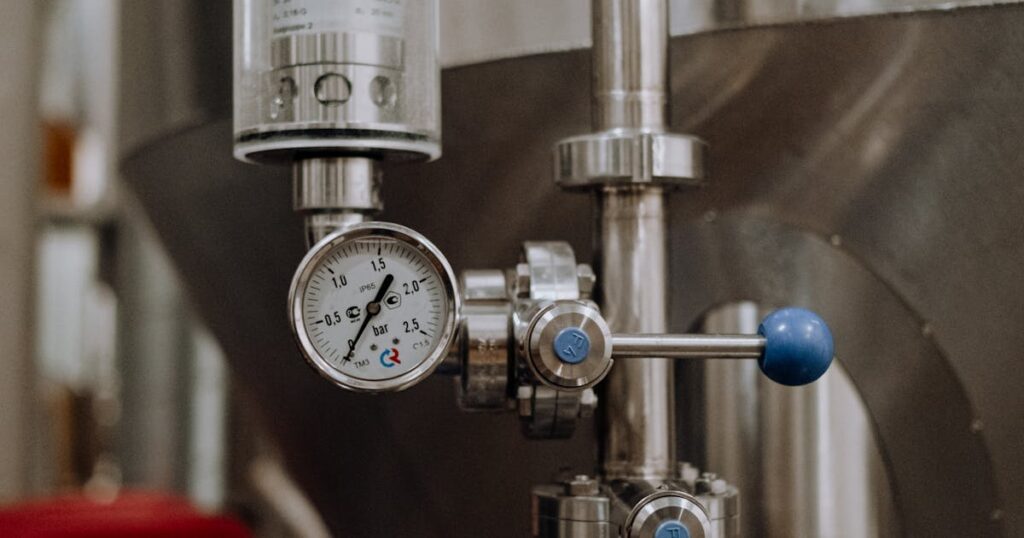
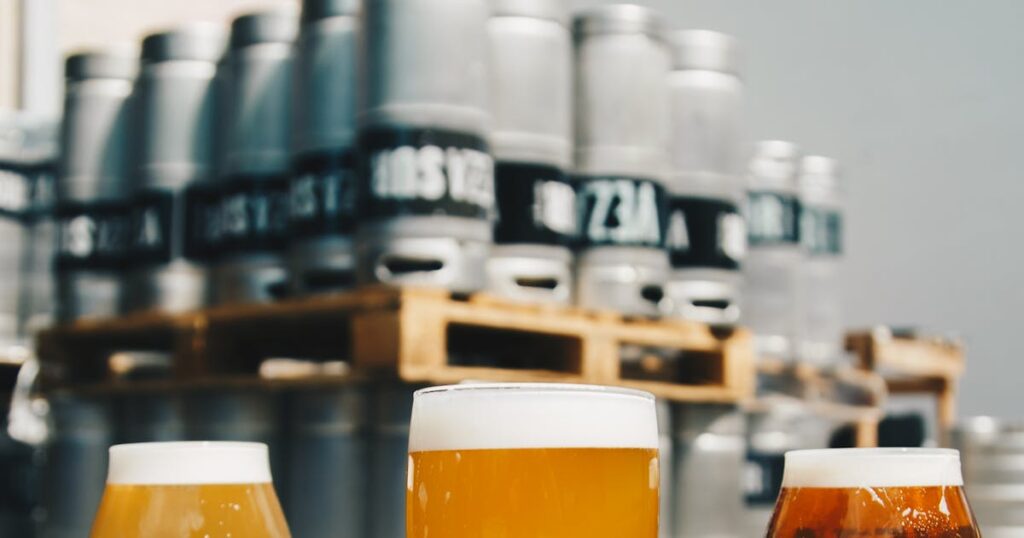
For years, smoked beer lingered in the shadows—a curiosity, a “challenging” style that separated true enthusiasts from casual drinkers. But 2026 is different. Rauchbier, the traditional German smoked ale from Bamberg, is escaping its cult status and becoming a mainstream obsession. And honestly? It’s brilliant.
I’ve been brewing for a decade, and I’ve only recently understood why smoked beer matters. It’s not about shock value. It’s about balance, craft, and the honest alchemy of taking raw ingredients—beechwood smoke, pilsner malt, time—and creating something genuinely complex. After my third batch, I’m convinced rauchbier is the next frontier for serious UK homebrewers.
Why Rauchbier is Trending in 2026

Smoked beer isn’t new—it’s ancient, actually. German brewers in Bamberg have been kilning their malt over beechwood fires for centuries. The style nearly died in the 20th century, kept alive only by a handful of stubborn breweries like Aecht Schlenkerla. But craft beer’s recent obsession with “difficult” flavours—sours, wild ferments, heavily adjuncted stouts—has suddenly made rauchbier relevant.
According to major industry trackers, smoked beer is now experiencing genuine renaissance status. It’s no longer a novelty; it’s a legitimately emerging category in 2026 that brewers worldwide are experimenting with. For homebrewers, this is the perfect moment to learn the style properly.
The Basics: What Makes Rauchbier Work
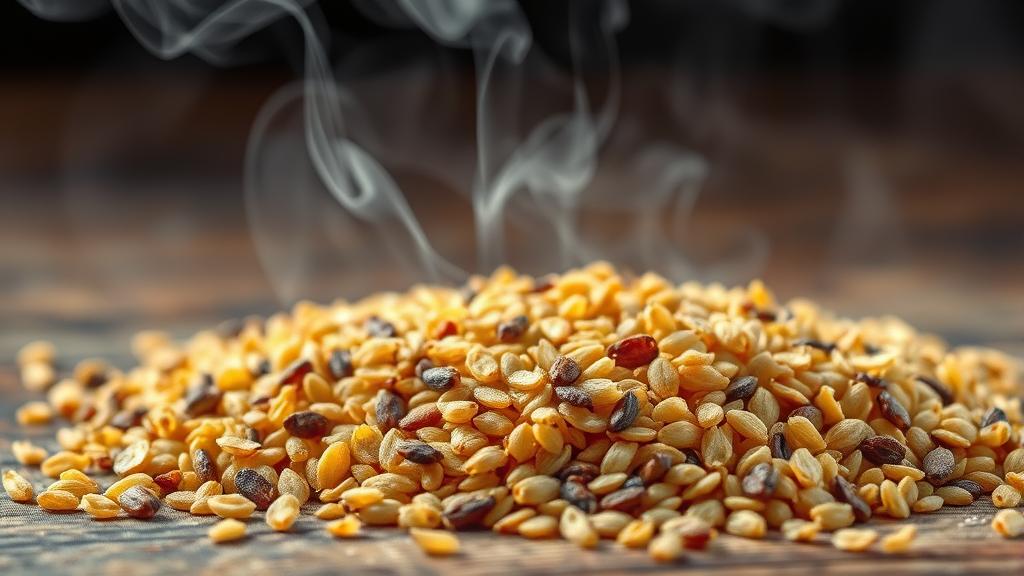
Here’s the critical bit: don’t try to smoke your own malt at home. I know homebrewers who’ve experimented with kiln-drying malt over wood fires. Most of them produced “ashiness”—an off-flavour that’s difficult to recover from. The Germans perfected this technique over centuries. Instead, source commercially smoked malt.
The best option? Weyermann Smoked Malt (Beechwood) from German maltsters. You can find it at specialist suppliers like The Malt Miller or Get Er Brewed. It’s clean, reliable, and tastes like authentic Bamberg beechwood smoke—not like a campfire accident.
A traditional rauchbier malt bill is 50-100% smoked malt. But balance is everything. My experience: start at 60-70% smoked malt, then add complementary bases:
- Pilsner Malt (20-30%)—crisp, clean base that lets smoke shine
- Munich Malt (5-10%)—adds body and subtle malt sweetness
- Carapils or Wheat Malt (2-5%)—for head retention and smoothness
Ingredients & Equipment Setup

For a 20-litre (5.3 US gallon) batch of classic Bamberg-style rauchbier:
Grain Bill:
- 2.5 kg (5.5 lbs) Weyermann Smoked Malt
- 1.2 kg (2.6 lbs) Pilsner Malt
- 0.3 kg (0.66 lbs) Munich Malt
- 0.1 kg (0.22 lbs) Carapils
Hops:
- 20g Hallertau (4.5% AA) at 60 min—traditional German noble hop, subtle bitterness
- 10g Hallertau at 15 min—flavour addition
- No late additions or dry hopping—the smoke needs breathing room
Yeast:
- Safale US-05 or WLP001 California Ale (if brewing warm, ~18°C / 64°F)
- Or Wyeast 2308 Munich Lager (if you have lager capacity, 10-12°C / 50-54°F) — this produces the classic clean profile
Mash Water:
- Single infusion, 65-66°C (149-151°F) for 60 minutes
- Mash-out at 75°C (167°F)
Brew Day: Step by Step
1. Mash In — Heat your strike water to achieve 65°C (149°F) in the mash tun. Add crushed grain slowly, stirring gently. Rest for 60 minutes. Temperature stability is critical here—smoked malt’s delicate flavours are easily masked by variable temps.
2. Mash Out — Raise to 75°C (167°F) over 10 minutes. Rest 10 minutes. This clarifies the wort without tannin extraction.
3. Sparge — Collect runnings until gravity drops to 1.008-1.010. Total liquid should reach 25 litres (6.6 US gallons) pre-boil.
4. Boil — 60-minute boil. Add Hallertau at 60 min. The short bittering hop load (around 25 IBUs) respects the smoke character rather than competing with it. Most rauchbiers sit at 25-30 IBUs—higher bitterness masks the nuance.
5. Cool & Pitch — Cool to 18°C (64°F) if using ale yeast, or 10°C (50°F) if using lager yeast. Pitch at proper rates (2 million cells per ml per degree Plato). Aeration is important.
Fermentation & Conditioning
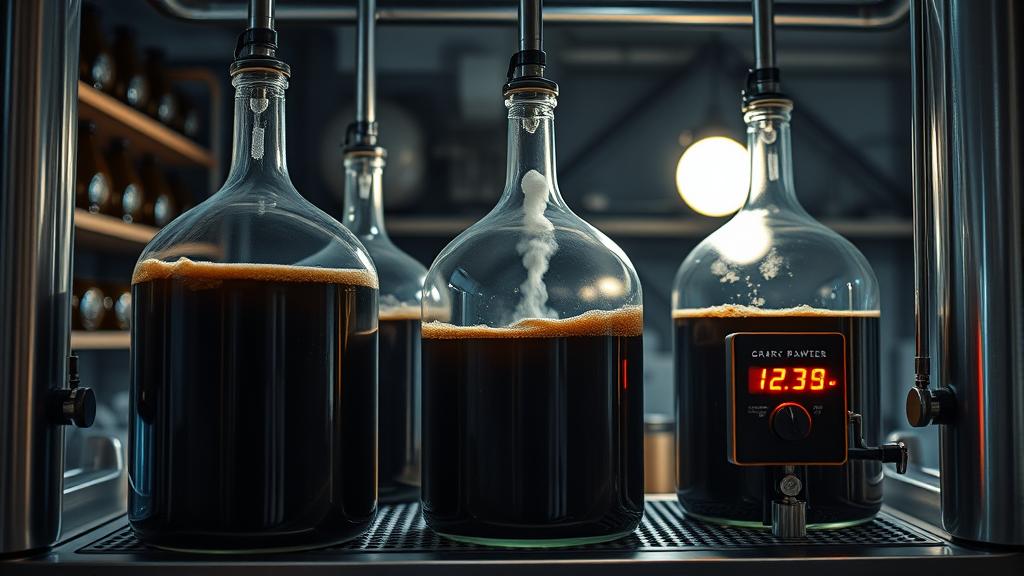
Here’s where rauchbier becomes a lesson in patience. The magic happens in cold conditioning.
Ale Method (18°C / 64°F):
- Ferment for 7-10 days until gravity reaches final gravity (typically 1.010-1.012)
- After primary fermentation, rack to a secondary and cold condition at 4°C (39°F) for 4-6 weeks minimum
- This is non-negotiable. The cold maturation softens sharp smoke edges and integrates flavours
Lager Method (10-12°C / 50-54°F):
- Fermentation takes 2-3 weeks (longer, but cleaner fermentation)
- Diacetyl rest at 15°C (59°F) for 48 hours
- Lager-condition at 2-4°C (36-39°F) for 6-8 weeks — this is the classic Bamberg approach
Why the extended cold conditioning? The smoke character in fresh rauchbier can be quite aggressive—almost acrid. As it ages in cool conditions, the smoke becomes sweeter, more integrated, and genuinely pleasant. The Bamberg breweries lager for 6-8 weeks for good reason.
Tasting Notes & My Honest Review
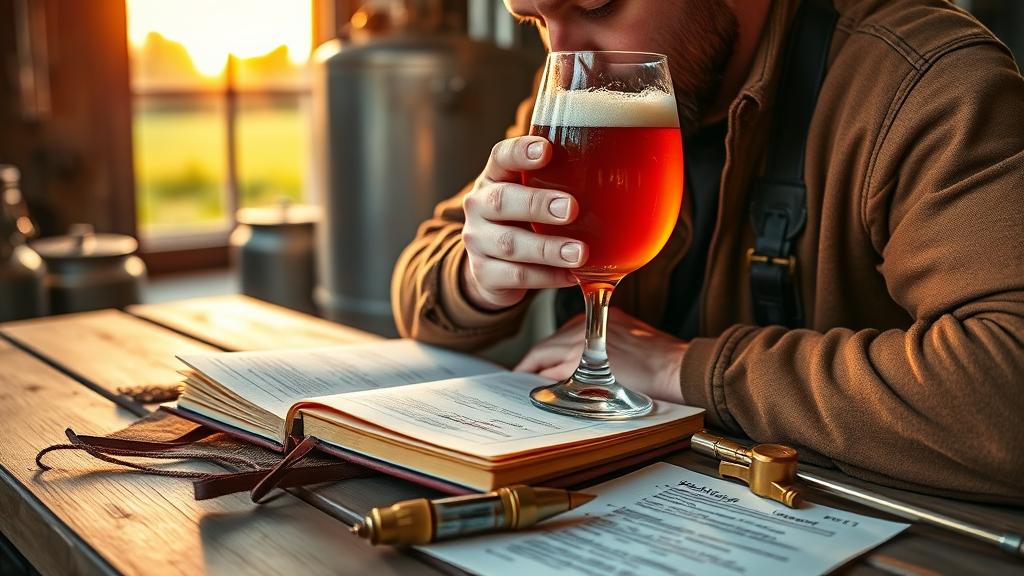
After my third rauchbier batch, I’ve developed a real appreciation for what makes this style work. Here’s my honest breakdown:
Appearance: Deep copper to dark brown. Clarity should be brilliant—this isn’t a hazy style. Creamy tan head, persistent.
Aroma: This is where rauchbier divides camps. Fresh, you get obvious beechwood smoke—think barbecue, campfire, smoked meats. It can be polarising. But after 4-6 weeks of cold conditioning, the smoke becomes more refined. You get smoke, yes, but also malty sweetness underneath. Notes of dark bread, caramel, occasionally a touch of bacon fat (not unpleasant).
Flavour: The smoke hits first, then unfolds into malt sweetness—dark bread, subtle caramel, sometimes a hint of walnut. The finish is dry, slightly peppery. Bitterness is restrained (around 25 IBUs), which lets complexity shine.
Mouthfeel: Full-bodied, smooth, slightly creamy. The beer drinks bigger than its 5.5-6% ABV would suggest.
My Verdict: Rauchbier rewards patience and precision. It’s not a “fun experiment” style—it’s a serious beer that demands respect. But when it clicks, it’s genuinely exceptional. It’s a beer you sip slowly, not guzzle. Perfect for contemplation. Pairs brilliantly with smoked meats, cheese, hearty German fare.
Pro Tips & Common Mistakes
❌ Mistake: Using too much smoked malt. I’ve seen brewers go 100% smoked malt. The result? Overwhelmingly ashy, one-dimensional. Aim for 60-70% maximum.
❌ Mistake: Skipping cold conditioning. Fermenting warm and packaging immediately will give you an acrid, unpleasant beer. The cold conditioning is when the magic happens. Budget for it.
❌ Mistake: Adding aggressive hops. Don’t dry hop. Don’t add floral or citrus hops. This isn’t an IPA. Stick with noble hops (Hallertau, Tettnang, Saaz) at low levels. Let the smoke breathe.
✅ Tip: Use a thermometer.** Seriously. Mash temperature stability directly affects smoke perception. A digital controller is worth every penny.
✅ Tip: Try hybrid bases.** A 70% smoked malt + 30% pilsner lager is brilliant. So is 60% smoked + 20% Munich + 20% pilsner. Experiment once you nail the classic version.
✅ Tip: Keep detailed notes.** Track mash temperature, fermentation temps, gravity readings, tasting impressions at different ages. Rauchbier improves significantly over 2-3 months. You’ll learn more from comparison than from any article.
Variations & Next-Level Experiments
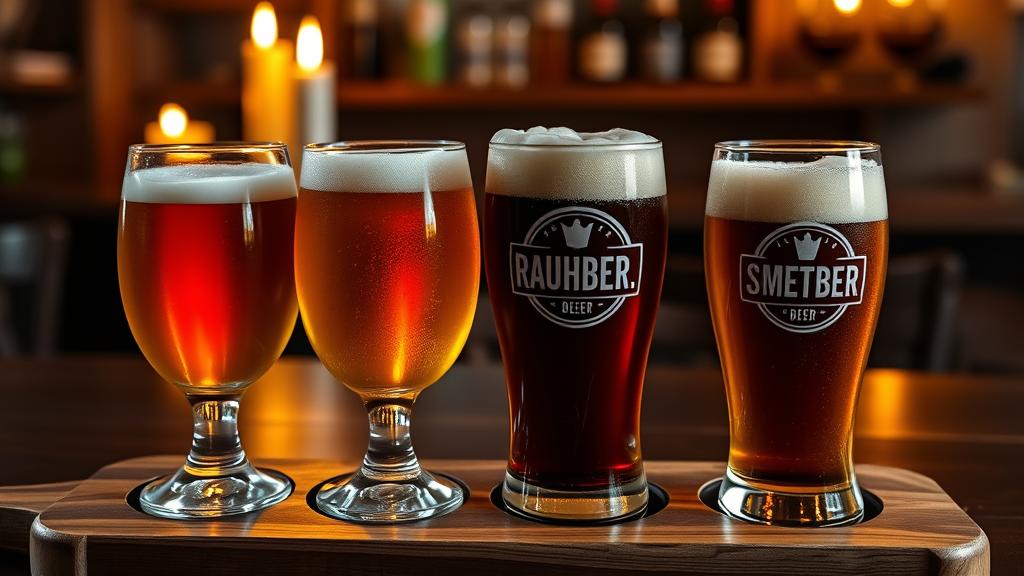
Once you’ve nailed a classic Bamberg-style rauchbier, the world opens up. Here’s what I’m planning for my next runs:
Smoked Porter: 40% smoked malt + 30% Munich + 15% chocolate malt + 15% black malt. Creates a smoky, roasted complexity. Absolutely delicious.
Smoked Wheat Ale (Rauchweizen): 50% smoked malt + 30% wheat + 20% pilsner. Unusual, but brilliant. Wheaty sweetness with subtle smoke. More approachable for newcomers.
Smoked Imperial Lager: Increase the grain bill to 6 kg total, aim for OG 1.070-1.075, ferment cool for 8-10 weeks. A proper, powerful version. Complex, warming, perfect for winter sipping.
Hybrid Approach: Try blending your rauchbier with a clean pilsner (40% smoked, 60% clean lager). Creates balance, softens the smoke, appeals to a broader palate.
Where to Source Materials in the UK
Smoked malt isn’t available at every homebrew shop, so plan ahead. I trust:
- The Malt Miller — consistent Weyermann smoked malt, reliable service
- Get Er Brewed — good selection, fast shipping
- BrewUK — if you’re sourcing other ingredients, they stock quality smoked malt
- Local homebrew clubs often have connections to specialist suppliers — worth asking
For understanding the BJCP style guide, the official BJCP standards are invaluable. Rauchbier falls under German Smoked Beer (style 6C)—study the profile. And if you want to dive deeper into fermentation science, HomeBrewTalk’s rauchbier forums are gold.
Conclusion: Why Rauchbier Matters for Your Journey
Rauchbier is trending in 2026 because it represents something the broader craft beer world is rediscovering: intention, balance, and respect for tradition. It’s not flashy. It’s not a gimmick. It’s honest beer-making.
For me, learning rauchbier has been humbling. I realised that after years of chasing extreme styles—fruit beers, adjunct stouts, high-ABV monsters—the real satisfaction comes from mastering something classical and doing it well. A perfectly balanced rauchbier, cold-conditioned for 6 weeks, tastes like decades of German expertise.
If you’re serious about homebrewing in 2026, rauchbier deserves a place on your brew schedule. Start with the classic Bamberg approach. Respect the smoked malt. Give it time for cold conditioning. Take notes. Then explore variations.
The trend is here. The ingredients are accessible. The knowledge is within reach. Now is the time to brew your first rauchbier.
Have you brewed rauchbier? What was your experience? Drop a comment—I’d love to hear what worked (and what didn’t) for your batch.
🍺 Join the Brotherhood — Monthly brews, stories & monk wisdom
Subscribe for exclusive recipes, early brew logs, and behind-the-scenes updates straight to your inbox.