West Coast IPA Mastery: Brewing Bright, Bitter Beer at Home in 2026
After a decade of hazy IPAs dominating the craft beer landscape, something unexpected is happening. West Coast IPA—the clean, resolutely bitter style that defined American craft brewing in the 1990s—is making a genuine comeback. And for homebrewers, that’s brilliant news.
I’ve been brewing for long enough to remember when IPAs meant one thing: bright gold clarity, resinous pine, grapefruit bite, and an uncompromising finish that left your palate bone-dry. I stopped brewing them around 2016, convinced the market had moved on entirely. Then last month, I tasted a friend’s homebrew West Coast IPA, and something clicked. It wasn’t nostalgia. It was craft in its purest form—stripped back, honest, showcasing the hop character without gimmicks. The trend toward clarity and balanced bitterness is real, and precision fermentation techniques now give homebrewers the tools to nail it with confidence.
This guide will walk you through brewing a West Coast IPA that stands up to the best commercial examples, plus the philosophy behind why this style matters again in 2026.
Why West Coast IPA is Having a Renaissance in 2026
Trends are cyclical, but they’re not random. The pendulum swing away from haziness and toward clarity reflects a genuine shift in what drinkers want. After years of “the cloudier the better,” consumers are rediscovering the appeal of a beer you can see through—one where every hoppy compound is clean and intentional.
West Coast IPAs demand precision. There’s nowhere to hide. A muddy grain base, poor water chemistry, or a stale hop bill becomes obvious the moment you taste it. That’s exactly why homebrewers are drawn back to the style: it’s a master class in fundamental technique.
According to recent craft beer trend analysis, bright, sharply bitter IPAs with classic American hop profiles (Cascade, Centennial, Columbus) are reappearing on tap lists everywhere—from London craft bars to small regional breweries. If you want a beer that fits the 2026 moment and genuinely challenges your brewing skills, this is it.
Ingredients & Equipment: Building Your Recipe
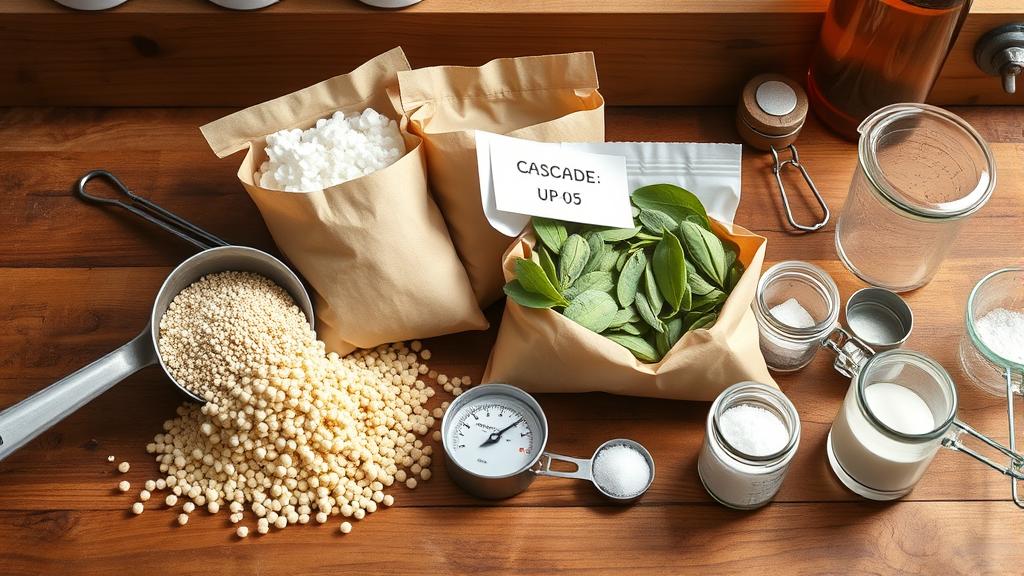
West Coast IPA is ingredient-driven. Get these right, and everything else follows.
Grain Bill (for a 20L batch, OG 1.065)
- Pale Malt (90%): 2-Row or Maris Otter. Maris Otter is traditional—clean, slightly biscuity, with excellent body. 2-Row is the American standard, slightly drier. Either works; just keep it pure. You’re not hiding behind crystal malt or other specialty grains here.
- Crystal 10L (10%): Just enough residual sweetness to balance the bitterness. Any more and you shift the style toward a hybrid. Use The Malt Miller for UK-quality bases; they stock both Maris Otter and premium 2-Row.
Hops (aim for 60+ IBU with 30% finishing bitterness)
- Bittering (60 min): 30g Columbus or Magnum. Clean, noble bitterness without grassy character.
- Flavour (15 min): 25g Centennial. Floral, citrus note.
- Aroma (5 min + whirlpool): 50g Cascade + 50g Centennial. This is where West Coast character lives. The balance of pine, grapefruit, and subtle herbal spice.
- Dry hop (7 days): 50g Cascade + 25g Centennial. Post-fermentation. This captures volatile oils at peak aroma without boiling them away.
Pro tip: Buy whole-leaf hops if possible. They integrate better into the boil and impart a finer bitter profile than pellets. GetErBrewed stocks excellent whole-leaf stock in the UK.
Yeast & Water Chemistry
- Yeast: US-05 (SafAle) or White Labs WLP001 California Ale. Neutral, clean fermentation. Pitch at 20°C (68°F) and ferment at 18–20°C (64–68°F) for maximum ester control.
- Water: West Coast IPAs were originally brewed in Burton-on-Trent, then perfected in San Francisco and the Pacific Northwest. You want moderately hard water with elevated sulphate. If your tap water is soft, add 1–2g gypsum (calcium sulphate) per 20L to enhance hop bite and dry the finish.
- Mash water pH: Target 5.4–5.6. Use a digital pH metre or an alkalinity/residual alkalinity calculation. This is non-negotiable for West Coast clarity.
Brew Day: Step by Step
This is a standard single-infusion mash. No shortcuts, because West Coast brewing *is* the shortcut—everything important happens in the kettle and the glass.
Mashing (90 minutes)
- Heat 48L of strike water to 68°C (154°F). Adjust for your brewing equipment’s thermal losses.
- Grain-in. Target mash temperature: 65°C (149°F). This is slightly lower than American homebrewers typically use, but it suits the drier finish West Coast IPA demands.
- Hold 90 minutes. Stir occasionally. Check your grain bed is settling evenly—channelling ruins efficiency and clarity.
Lautering (45 minutes)
- Begin running off gently at a steady rate. No fast lautering; this is slow and methodical.
- Once you’ve collected 25L (to account for later shrinkage), begin the sparge. Use the same water temperature as your mash (65°C). Gentle sparging prevents grain dust and tannin extraction.
- Aim for 25L post-boil gravity at about 1.045. You’ll concentrate this during the boil.
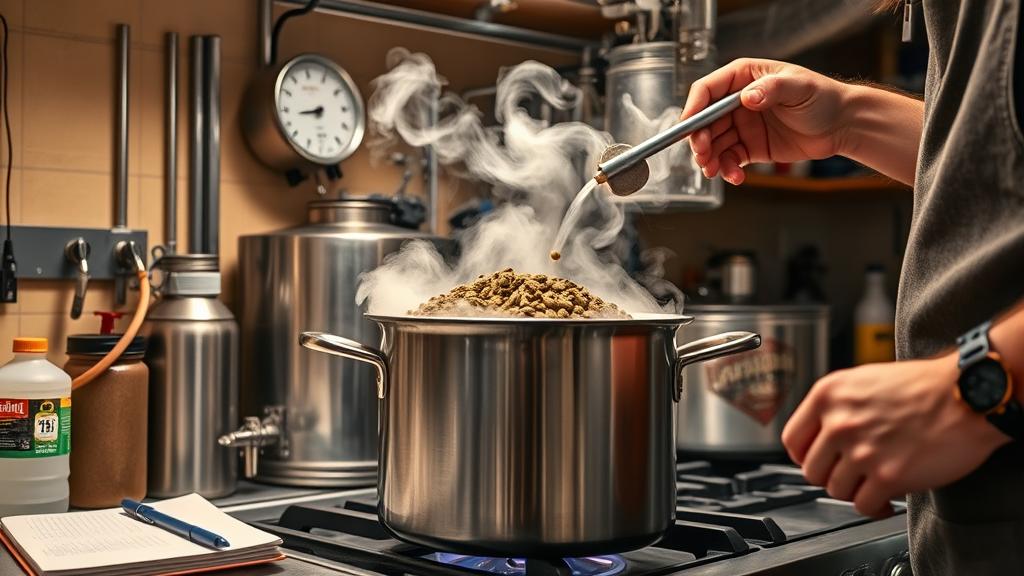
Boiling (60 minutes)
- Bring to a rolling boil. Skim off the hot break foam—this improves clarity significantly.
- 0 min remaining: Add 30g Columbus. This is your bittering charge. Let it integrate for the full 60 minutes.
- 15 min remaining: Add 25g Centennial.
- 5 min remaining: Add 50g Cascade + 50g Centennial. These are your aroma hops. Some brewers also add Irish moss or whirlfloc here to drop out particulates.
- End of boil: Kill the heat. Let the wort settle for 10 minutes (the whirlpool phase), then chill to 20°C as quickly as possible. Cold water immersion or a plate chiller works. BrewUK stocks affordable plate chillers.
Fermentation & Cold-Conditioning
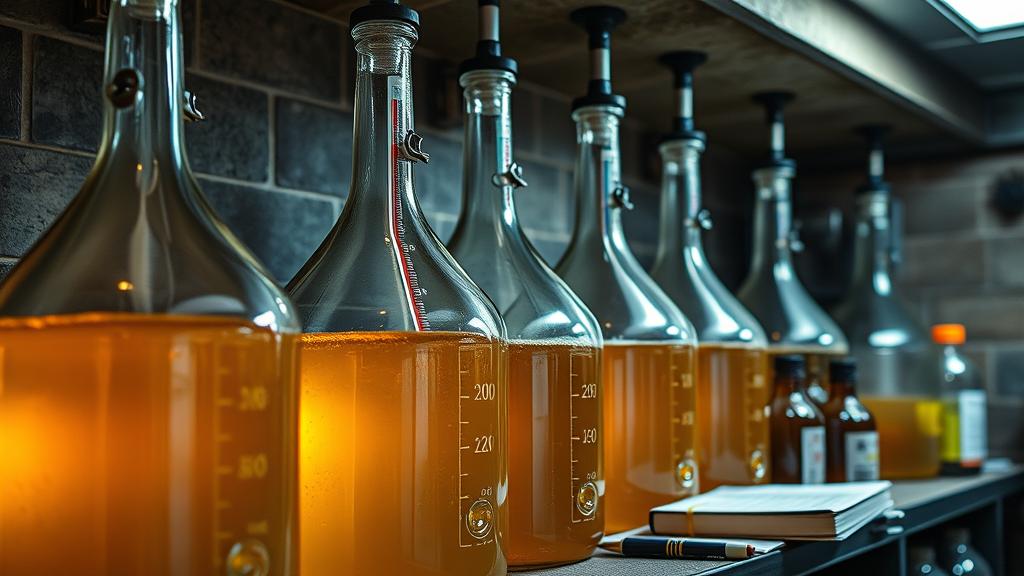
Here’s where many homebrewers stumble. West Coast IPA demands clean fermentation and extended contact time between beer and yeast—but without picking up unwanted sulphur notes or autolysis off-flavours.
- Pitch: Aerate the cold wort well (10 minutes of vigorous shaking or pure oxygen at 1L per minute for 60 seconds). Pitch your yeast at a healthy rate—about 200 billion cells for a 20L batch (roughly 2 packages of US-05 or a starter of liquid yeast).
- Fermentation: Hold at 18–19°C (64–66°F) for 10–14 days. Use a temperature controller if possible; US-05 at higher temperatures produces estery, fruity notes that muddy West Coast character. You want a clean, dry ferment.
- Gravity check: After 7 days, measure gravity. West Coast IPA will finish dry: expect final gravity of 1.008–1.010. When you see gravity stable for two consecutive days, you’re done. Don’t wait longer hoping for dryness—overpitching or extended contact time can lead to sulphidic off-flavours (struck matches).
- Cold conditioning: Drop temperature to 2–4°C (35–39°F) for 7–10 days. This precipitates proteins and hops oils, sharpening clarity. It’s called “lagering,” but you’re not changing yeast character—just settling the beer.
This is where hybrid fermentation precision really pays off. By holding fermentation temperature low (within ale yeast’s range but toward the cool end), you’re engineering a cleaner result without switching strains or buying lager yeast.
Dry Hopping & Packaging
Dry hopping is where West Coast IPA becomes special. The goal: maximum aromatic impact, minimum oxidation risk.
- When to dry-hop: Once gravity has stabilized and temperature is at 4°C, add your dry-hop charge (50g Cascade + 25g Centennial). Keep yeast in suspension—don’t rack to a secondary vessel first. The yeast bed actually protects your hops from oxidation.
- Duration: 5–7 days. Any longer and you risk grassy, vegetative character. West Coast IPA’s aroma should be vibrant, not tired.
- Packaging: Siphon gently into bottles or a keg. Minimise oxygen exposure. If bottling, cold bottle-fill directly from the tap to reduce aeration. If kegging, purge with CO₂ and push carbonation at 2.0 volumes of CO₂ (low pressure, slow). West Coast IPA is crisp and lightly carbonated—never blown up.
Force-carbonation in a keg is the smarter route for homebrewers serious about West Coast character. Bottle carbonation introduces priming sugar (slight sweetness) and additional yeast activity, which can muddy the dry finish.
Tasting Notes & What to Expect
After 3–4 weeks of conditioning in a keg (or 6 weeks in bottles), it’s time to taste. A well-executed West Coast IPA should deliver:
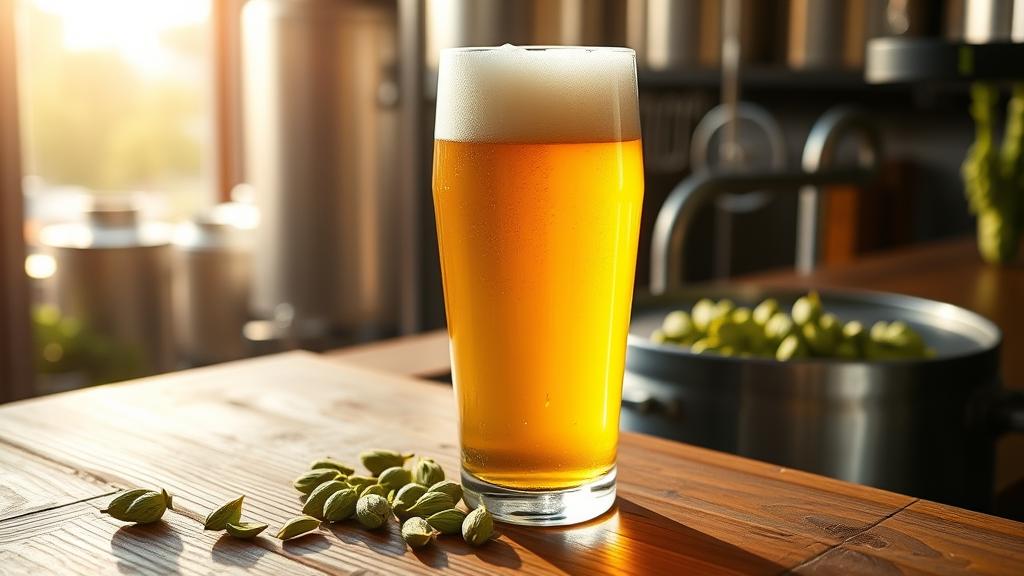
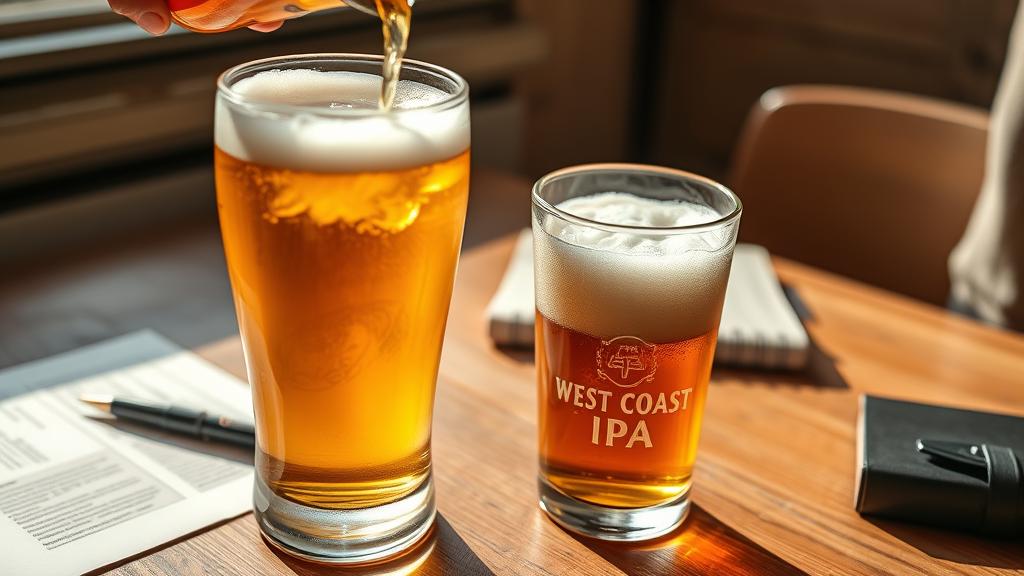
- Appearance: Crystal-clear gold to pale amber. No haze. If you see cloudiness, you’ve either picked up infection, failed to cold-condition, or your water chemistry needs work.
- Aroma: Pronounced Cascade and Centennial character—citrus (grapefruit, orange zest), pine, subtle herbal spice. No fruity esters. No sulphur.
- Taste: Medium body, solid malt sweetness (from the Maris Otter or 2-Row), then a sharp, lingering bitterness that dries the palate completely. The finish should be clean—like licking a grapefruit rind. No roasty notes, no chocolate. Pure hop bitterness.
- Mouthfeel: Dry. Medium carbonation. The aftertaste should linger 2–3 minutes.
- ABV: Around 6.5–7.2% (that 1.065 OG + 1.008 FG calculation). Strong enough to carry hops, not so high it burns.
I brewed this batch in early May, and I’m three weeks in. The aroma is unmistakable—bright, sharp, alive. It tastes like sunshine and precision. That’s West Coast IPA done right.
Common Mistakes & How to Avoid Them
West Coast IPA forgives nothing. Here’s what kills it:
- Over-mashing: Mashing above 66°C (151°F) or running off too slowly extracts grain tannins, muddying the finish. If your mash sits over an hour, you’ve allowed polyphenols to leach out. Dryness becomes harsh.
- Stale hops: Cascade and Centennial degrade quickly. Buy fresh hops (current-year crop, vacuum-sealed). Old hops taste grassy or cabbage-like. This is the easiest way to ruin West Coast character.
- High fermentation temperature: Above 21°C (70°F), US-05 churns out fruity esters (apple, banana). West Coast IPA should taste hop-forward, not fruity. Control temperature ruthlessly.
- Infection: West Coast IPA is dry and has a high IBU count, which offers some protection against spoilage organisms. But poor sanitation—especially during dry-hopping—can introduce unwanted bacteria. Clean with hot water, then sanitise with StarSan or bleach, then rinse thoroughly. No shortcuts.
- Oxidation: Long-term contact with oxygen turns West Coast IPA cardboard-like. Minimise headspace in bottles, use a keg for preference, and drink fresh. This beer is best within 8 weeks of packaging. After 12 weeks, the hop aroma fades noticeably.
Variations & Level-Up Experiments
Once you’ve nailed the core recipe, here are ways to push the style forward:
- Pilsner malt base (instead of 2-Row): Maris Otter or Czech pilsner malt gives a finer, crisper base. More sophisticated malt character, less grainy sweetness. You’ll need slightly higher mash temperatures to extract properly.
- Single-hop versions: Brew the same recipe but use only Cascade (or only Centennial) for the whole boil and dry-hop. This reveals each hop’s true identity and teaches you how specific varieties contribute to the style. It’s a brewing exercise in clarity.
- Water profile testing: Brew two identical batches—one with soft water, one with gypsum added. Taste the difference. West Coast brewers obsess over water; BJCP style guidelines note that Burton water chemistry helped codify the style. Your water matters.
- Extended dry-hop rest: Some brewers push dry-hopping to 10–14 days at cold temperature (2–4°C), reasoning that the cold slows oxidation and extends contact time without vegetal off-flavours. This is experimental; track what works for your hops and setup.
Conclusion: Why West Coast IPA Matters Now
West Coast IPA is back because it represents something homebrewers crave: honesty. No tricks, no murk, nowhere to hide. Every decision in your process shows up in the glass.
And that’s the monastic spirit of brewing, isn’t it? The Benedictines who built the foundation of beer culture understood that simplicity and precision create perfection. You don’t need exotic ingredients or complicated techniques. You need discipline, clean fermentation, excellent hops, and the courage to brew a beer that stands entirely on its own merit.
The trend toward West Coast IPA in 2026 isn’t a revival of nostalgia—it’s a return to fundamentals. And that’s a signal worth heeding if you’re serious about homebrewing.
Brew bold. Brew clear. Brew West Coast.
🍺 Join the Brotherhood — Monthly brews, stories & monk wisdom
Subscribe for exclusive recipes, early brew logs, and behind-the-scenes updates straight to your inbox.