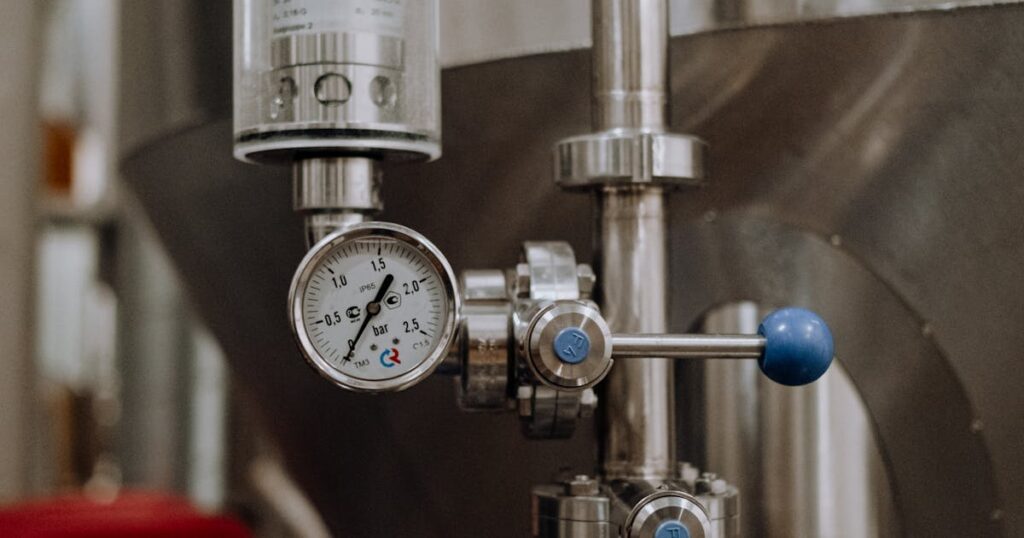
Why Fonio Matters: The 2026 Grain Revolution
For the first time in my brewing career, I held a grain that broke every assumption I had about beer-making. No milling required. No modern hybrid—just 5,000 years of West African heritage condensed into golden, nutty kernels. That grain is fonio.
By early 2026, fonio grain has gone from niche curiosity to genuine brewing trend. Carlsberg and Brooklyn Brewery are pushing all-fonio beers. The Brewgooder Fairtrade initiative is putting farming communities in West Africa centre stage. And homebrewers like us are finally asking: what can this ancient grain do for our craft?
I’ve spent the last three months experimenting with fonio, and honestly, I’m convinced this is where British homebrewing is heading. It ticks every box that matters right now—sustainability, simplicity, flavour innovation, and real impact. Here’s what I’ve learned, and how you can brew with it at home.

What Is Fonio? (And Why Brewers Should Care)
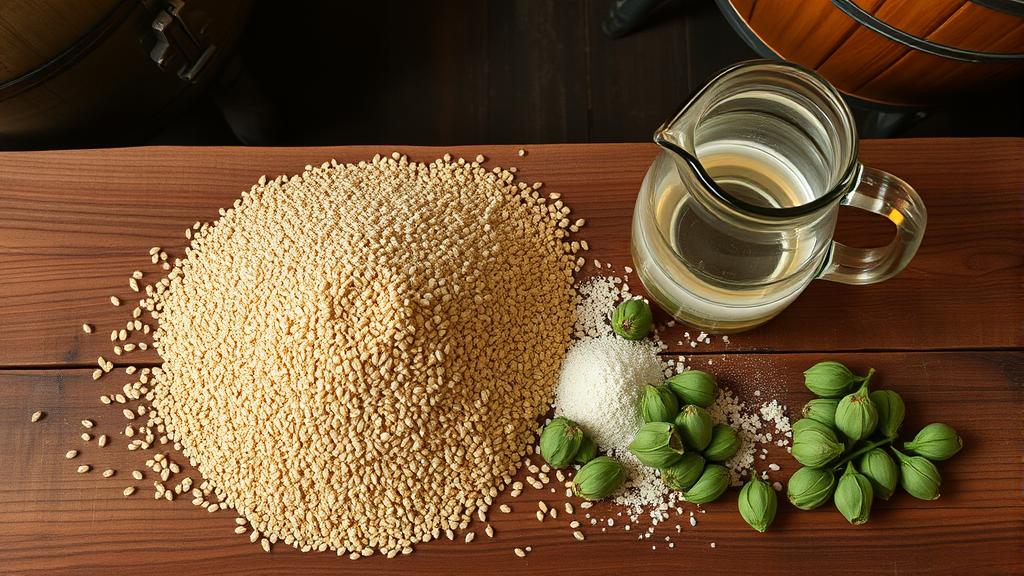
Fonio is a small African millet that’s been a staple in West Africa for millennia. It grows fast, thrives in poor soil, needs minimal water, and survives droughts that kill off barley. But here’s what makes it brilliant for homebrewing: it has a naturally complete protein profile, crisp flavour (think Sauvignon Blanc—herbal, slightly mineral), and—this is key—it doesn’t require the milling that malted barley demands.
When you open a bag of fonio, you get whole grain. No husks to worry about. No complicated milling equipment. Just grain ready to brew. In my garage, that simplification matters. Less equipment, less room for error, more time spent on what really matters—fermentation and flavour.
The flavour profile is what surprised me most. Fonio brings crispness and a subtle grassiness that pairs beautifully with modern hop varieties. It’s not neutral like pilsner malt; it’s not assertive like crystal malt. It’s clean, slightly bright, and it lets hop character shine through without competing. Some brewers I’ve talked to describe it as “Sauvignon Blanc in grain form,” and honestly, that’s not far off.
The Sustainability Story (And Why It Matters)
Here’s where fonio becomes more than just another ingredient. Conventional barley demands reliable rainfall, chemical inputs, and industrial farming infrastructure. Fonio laughs at that. It grows in marginal soil, handles drought, and doesn’t require pesticides or heavy nitrogen inputs. For West African farmers, it’s a climate-resilient crop that puts money in their pockets without destroying the land.
When Carlsberg launched their fonio lager in partnership with Brooklyn Brewery’s Vinnie Cilurzo and Garrett Oliver, they weren’t just making beer—they were backing a “Brewing for Impact” initiative that connects sustainability to genuine farmer income. Brewgooder’s Fairtrade fonio supply chain is the world’s first, which means you can actually trace your grain back to the family that grew it.
As a homebrewer, I like that story. I like knowing my choices ripple beyond the kettle. And I like that I can walk into an increasing number of UK homebrew suppliers and actually buy fonio grain now. A year ago, that would’ve been impossible. Today, it’s becoming standard.
For your brewing practice, this means you’re joining a movement that’s actively different from the industrial barley model. You’re experimenting with climate-resilient agriculture. You’re experimenting with flavours and techniques that align with sustainable homebrewing practices we’ve been exploring for years.
Ingredients & Equipment You’ll Need
Here’s the good news: brewing with fonio requires almost nothing new. Your standard all-grain setup works perfectly. You don’t need a grain mill. You don’t need specialty equipment. What you need is straightforward:
- Fonio grain – Buy from specialist suppliers like The Malt Miller or Geterbrewed. They’re carrying 250g to 1kg bags now. Expect about £3–5 per kg, comparable to quality specialty malts.
- Hops – I recommend bright, herbal varieties: Saaz, Hallertau, Cascade, or modern aromatics like Citra. Avoid heavy resins; let fonio’s natural crispness take centre stage.
- Yeast – A clean ale yeast (like US-05 or Nottingham) or a lager strain (like W-34/70). Fonio favours clarity.
- Water – Soft to medium hardness works best. If your water is very hard, consider ion exchange or RO blending (like I detail in my article on UK brewing trends for 2026).
- Standard gear – Mash tun, kettle, fermenter, hydrometer, thermometer. Nothing exotic.
The only new thing might be your mindset: fonio grain is smaller and lighter than barley. When you handle it, you’ll notice the difference immediately. That’s perfectly fine. Expect slightly different crushing characteristics—your crush should be finer than you’d normally do for barley, just to maximize surface area during mashing.
Your First Fonio Brew: Step-by-Step
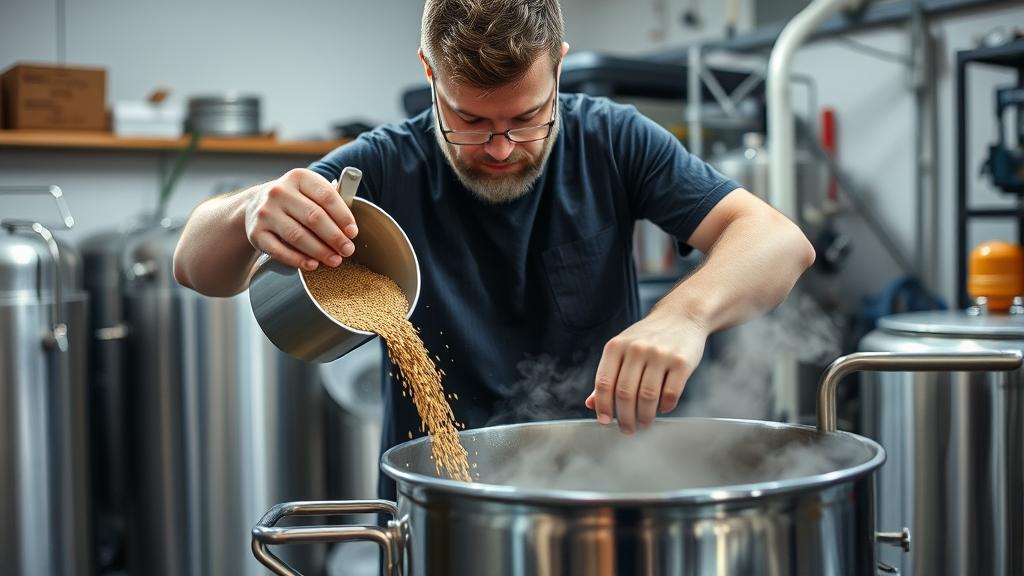
1. The Grist – Crush your fonio slightly finer than you would pale malt. Aim for a mix of 70% fonio, 30% pale malt or pale ale malt as a base (this gives you body and head retention; pure fonio can be sharp on its own). My ratio: 3.5 kg (7.7 lbs) fonio + 1.5 kg (3.3 lbs) pale malt for a 25-litre (5.5 gallon) batch.
2. Mash – Single infusion at 66–68°C (151–154°F) for 60 minutes. Fonio mashes quickly and completely; you won’t need extended rests. Stir gently at 15 and 30 minutes to maintain temperature and ensure even hydration.
3. Sparge – Fly sparge with soft water heated to 75°C (167°F). Fonio grain bed is lighter than barley, so watch for channel runoff. I run my sparge slower than I normally would—about 2 litres per minute instead of 3—just to keep even water distribution.
4. Boil – 60-minute boil standard. Add bittering hops at 60 minutes (I use 15g Saaz for ~20 IBU on my 25L batch). Add flavour/aroma hops at 10 minutes and flameout. Fonio wort is bright and clean, so your hop profile really shines—no muddiness, no grain haze to fight through.
5. Cool & Pitch – Cool to 19–20°C (66–68°F) for ale fermentation or 10–12°C (50–54°F) for lager. Pitch at normal rates. Fonio ferments cleanly and quickly; you’ll see visible activity within 8–12 hours.
6. Fermentation – 5–7 days for ales at 19–20°C, 10–14 days for lagers at 12°C. Fonio doesn’t produce the ester profile of wheat beer or rye; it stays clean and lets yeast character and hop aroma take the lead.
Fermentation, Conditioning & Tasting Notes
Here’s where the real magic happens. My first fonio pale ale came off the heat at OG 1.048 (11.9°P), pitched with US-05, and fermented at 20°C for exactly 5 days. When I checked the gravity on day 5, it read 1.008. Total attenuation: 83%, which is normal for US-05. By day 7, final gravity had settled at 1.007.
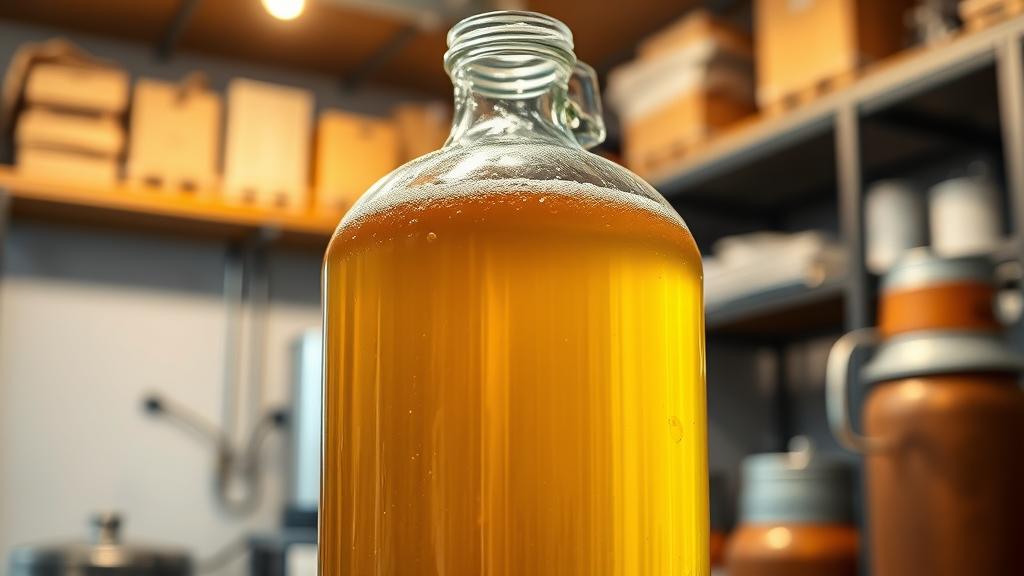
The wort clarity surprised me most. Fonio grain produces almost no turbidity. By day 3 of fermentation, the beer was already visibly clear—bright golden, almost like looking through honey. By day 7, it was crystal bright, even without cold conditioning.
I kegged at carbonation pressure of 2.0 volumes CO₂, which took 3 days to reach full carbonation. And then I tasted it.
The flavour was crisp, clean, slightly herbal—exactly what I’d hoped. The pale malt (30%) gave enough body to make it feel substantial without heaviness. The Saaz bittering sat at a modest 20 IBU, but it felt balanced, not sharp. The hop aroma (Saaz at 10 mins + flameout) brought white pepper and grass notes that harmonised beautifully with fonio’s natural character. Final ABV: 5.2%—an honest, session-worthy pale ale.
Was it different from a traditional pale ale? Yes. Better? That’s not the right question. It’s different-good—a reminder that grain selection is more than tradition, it’s a tool for flavour and values. You can read more about grain selection and fermentation in my deep-dive on precision fermentation techniques, where I explore how grain and yeast interact.
Common Mistakes & How to Avoid Them
Mistake 1: Using 100% Fonio – Resist the urge. Fonio is lean on dextrins and complex carbohydrates. A 100% fonio beer can taste thin and slightly sharp, especially if you’re using a high-attenuation yeast. Blend it 70:30 with pale malt (or use 80:20 at most if you’re confident in your process). The pale malt gives body; fonio gives character.
Mistake 2: Over-Hopping – Your instinct will be to pound fonio with hops, thinking the grain is “too delicate.” Resist that too. Fonio stands up to hops just fine, but because it’s clean and crisp, aggressive bittering can read as sharp. Let it be the supporting actor; let hops be the star.
Mistake 3: Ignoring Water Profile – Hard water dulls fonio’s brightness. If you haven’t adjusted your water before, now’s the time. A soft profile (< 150 ppm total hardness) really lets fonio shine. If you're in a hard-water area, blend with RO water or use ion exchange. It's worth the effort.
Mistake 4: Rushing the Mash – Because fonio is smaller, it’s tempting to mash for 45 minutes instead of 60. Don’t. The grain bed is finer, hydration takes longer, and rushing leads to underconversion and astringent off-flavours. Stick to 60 minutes.
Mistake 5: Skipping Temperature Control During Sparge – Fonio’s light grain bed is sensitive to temperature shocks. Keep your sparge water steady at 75°C (167°F). If you drop below 70°C, you risk pulling tannins and bitter compounds. Conversely, if you spike above 78°C, you risk damaging enzyme activity and extracting unpleasant grain husk flavours.
Variations & Next-Level Experiments
Once you’ve nailed the base fonio pale ale, there’s a world of possibility:
- Fonio Lager – Use a clean lager yeast (W-34/70 or SafLager) at 11–12°C for 10–14 days. You’ll get even more crispness than ale fermentation. This is what Carlsberg did, and it’s genuinely brilliant.
- Fonio + Wheat – Blend 50% fonio, 30% wheat, 20% pale malt for a wheat-beer-inspired ale. The fonio’s crispness cuts wheat’s banana/clove esters, creating something herbaceous and modern.
- Fonio + Fruit – Fonio pairs beautifully with stone fruit (apricot, peach) and bright citrus (orange, grapefruit). Try adding 200g fresh fruit juice at flameout, or whole fruit at day 2 of fermentation. See my guide on fruit-beer fermentation for specifics.
- Dry-Hopped Fonio Pale – My second batch added 25g Citra at flameout plus another 25g dry-hop on day 5 of fermentation. The result: tropical fruit character (mango, peach) layered over fonio’s natural grass-and-herb base. Spectacular.
- Fonio + Heritage Grains – If you’re feeling adventurous, blend fonio (50%) with spelt, einkorn, or heritage barley varieties. Farmhouse brewing traditions have always embraced grain blends; fonio is just the next chapter.
The beautiful thing about fonio is how forgiving it is. It mashes quickly, ferments cleanly, and plays well with other ingredients. You can experiment without fear.

Where to Buy Fonio Grain in the UK
Fonio is moving fast. A year ago, finding it in the UK was genuinely difficult. Today:
- The Malt Miller – Stocks fonio in 250g and 1kg bags. Price: roughly £4/kg. Quality is excellent; they have UK suppliers of Brewgooder’s Fairtrade fonio.
- Geterbrewed – Also carrying fonio, often in 500g and 1kg options. Similar pricing, fast delivery.
- Local homebrew shops – If you’re in a major city (London, Manchester, Bristol, Edinburgh), ask your local shop. Many are now stocking fonio based on demand.
- Online specialist suppliers – BrewUK and Homebrewing.org occasionally stock fonio, though inventory moves fast.
If you can’t find it locally, I’d recommend ordering from The Malt Miller or Geterbrewed. Both ship same-day, and the grain stays fresher longer when sourced directly from major stockists rather than sitting in small-shop inventory.
The Bigger Picture: Why Fonio Matters for Your Brewing
Fonio isn’t just another grain. It’s a marker of where homebrewing is heading. For decades, we’ve been locked into a barley-based system designed for industrial production and profit margins. Fonio breaks that pattern. It says: You can brew with ingredients that respect the land, honour farmers, and deliver flavour without compromise.
It’s also a reminder that mastery in homebrewing isn’t about complexity—it’s about understanding. I didn’t need a fancy setup to brew excellent fonio ale. I just needed to know how the grain behaves, why it matters, and what flavour it brings. The same applies to every grain, every hop, every yeast. Understanding the ingredient is the foundation of great beer.
If you’re ready to experiment with fonio, start with a pale ale or lager base. Brew 25 litres (or 5.5 gallons), taste it side-by-side with your traditional brew, and notice the difference. Then decide if it’s something you want in your rotation. My guess: it will be.
Fonio brewing is here. The question isn’t whether to try it—it’s when.
🍺 Join the Brotherhood — Monthly brews, stories & monk wisdom
Subscribe for exclusive recipes, early brew logs, and behind-the-scenes updates straight to your inbox.