Citrus Wheat Ale Mastery: Brew Summer’s Refreshing Best at Home
June in the UK is glorious — long days, soft light, and that particular warmth that makes you reach for something light and crisp rather than a stout. This is the season for wheat ales, and if I’m honest, there’s nothing I brew more often this time of year than a golden, hazy citrus wheat ale.
I’ve been brewing for eight years now, from my kitchen to a licensed micro-scale operation. But I still get a thrill when I open a wheat beer — that soft, billowing head; the delicate aromas of orange zest and fresh hops. There’s something almost meditative about brewing a style (unlike the complexity of barrel-aged approaches) that’s not about complexity or power, but about clarity and refresh. The monks who first brewed wheat beers centuries ago understood this: sometimes the most profound is the simplest.
In this guide, I’m sharing everything I’ve learned about crafting a stunning citrus wheat ale at home — from water chemistry and grain selection, through fermentation challenges unique to summer brewing, to the tasting notes you’re aiming for. Whether you’re a beginner or a seasoned brewer, this will guide you to a beer that tastes like summer in a glass.
Why Citrus Wheat Ales Are Summer’s Hidden Gem in 2026
Citrus wheat ales are surging right now, and there’s a good reason. The trend towards lower ABV, refreshing beers has peaked in the UK market — breweries and homebrewers alike are moving away from heavy IPAs and dark stouts in June and July. Instead, they’re reaching for pale, hazy ales with bright citrus notes.
What makes a citrus wheat ale special? It bridges two worlds: the soft, pillowy body of a traditional weissbier, and the crisp, hoppy character of a modern American wheat beer. You’re targeting a beer that’s typically 4.5–5.5% ABV, pale golden to hazy yellow, with a thick creamy head, and dominant aromas of fresh citrus (orange, lemon, grapefruit) alongside subtle herbal, spicy notes from the wheat yeast itself.
The beauty is in the simplicity. You’re working with wheat malt (which provides body and a soft, bread-like sweetness), clean or citrus-forward hops (Citra, Amarillo, Huell Melon), and fresh citrus zest added at key moments. The result is a beer that’s genuinely difficult to drink just one of — which, on a warm summer evening, is exactly the problem you want.
Let me walk you through how to brew one that rivals anything you’ll find in a craft brewery.
Ingredients & Equipment: What You’ll Need
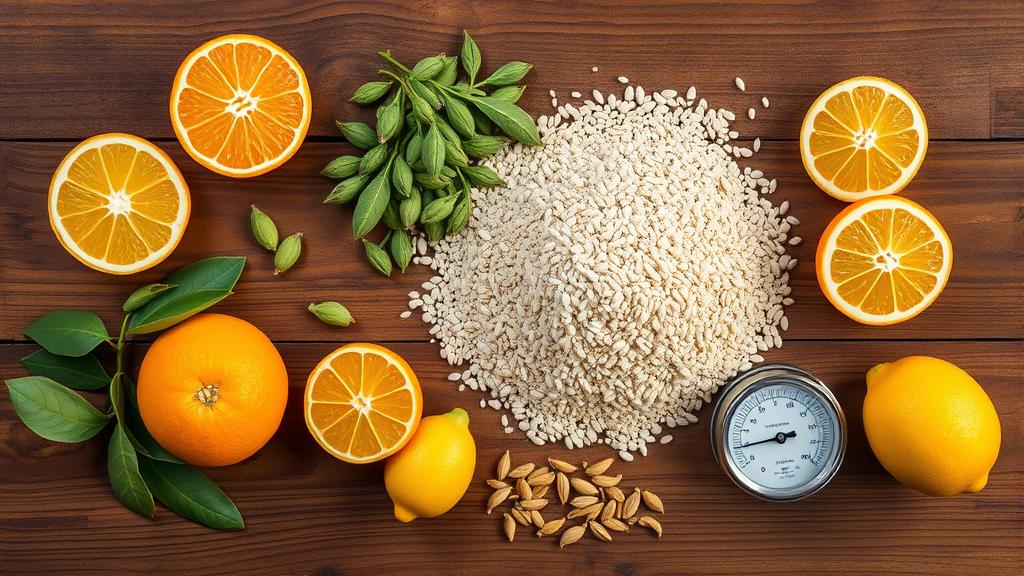
For a 20-litre (5.3-gallon) batch, here’s the grain bill:
- 2.5 kg pale ale malt
- 1.5 kg white wheat malt
- 0.3 kg carapils (for extra head and body)
This ratio gives you roughly 70% pale ale, 30% wheat — enough wheat character for that soft mouthfeel, but not so much that you lose the crisp backbone. If you want a haze (popular now, I admit), swap 0.2 kg of the pale ale malt for flaked wheat or oat malt.
Hops (assuming a 60-minute boil):
- 25 IBU bittering (I use 14g of East Kent Goldings at 60 minutes — gives you ~20 IBU, clean and subtle)
- 10g Citra at 10 minutes (aroma addition)
- 15g Amarillo at 5 minutes
- 20g Citra at flame-out (steep 20 minutes in 65°C water)
- 15g fresh Amarillo dry-hopped for 5 days in the fermenter
Other additions:
- 1 teaspoon of zest from 2–3 organic lemons (added at day 3 of fermentation)
- 1 teaspoon of zest from 2 organic oranges (added at day 3)
- 1 teaspoon coriander seeds, lightly crushed (optional, added at day 3 — adds a subtle spice that works beautifully)
- Yeast: White Labs WLP320 (American Wheat) or Safale US-05 (clean, slightly fruity). Avoid Belgian yeast if you want restraint; Belgian strains will give you too much phenolic character.
Water chemistry matters more than you might think. For a citrus wheat ale, you’re aiming for a slightly higher chloride-to-sulphate ratio (think 100–120 ppm chloride, 50–80 ppm sulphate). This enhances the soft, slightly sweet character of the wheat. If your tap water is very hard, dilute with distilled to hit these targets. Use a water chemistry calculator — sites like Brewer’s Friend are invaluable.
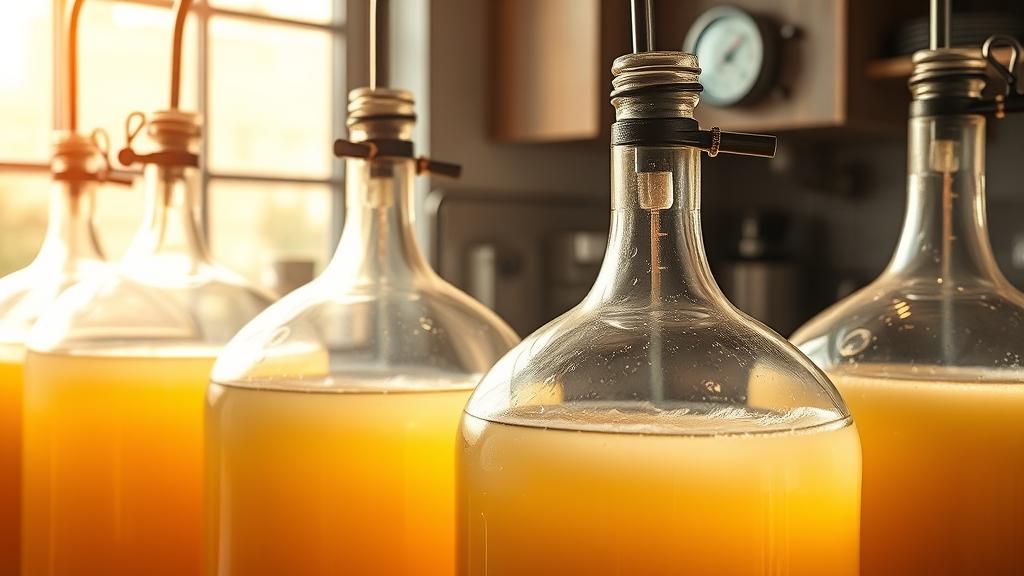
Equipment: Standard 20–25 litre brew pot, fermenter (glass carboy or plastic bucket with airlock), thermometer, hydrometer, and most importantly, temperature control. You’ll see why in the fermentation section.
The Mash & Brew Day Rundown
Wheat malt is finicky. It loves moisture and will compact in your mash tun if you’re not careful, leading to a stuck sparge (the nightmare of every brewer on their first wheat beer). Here’s how I avoid that:
Step 1: Mash in — Heat 15 litres of water to 66°C and add your crushed grain. You’re aiming for a mash temperature of 65°C (149°F). Stir well for a minute to avoid dry patches, then leave for 60 minutes. The lower temperature (vs. 68°C for a pale ale) extracts more fermentable sugars, which keeps the beer light and dry — exactly what you want in summer.
Step 2: Sparge carefully — Once the 60 minutes is up, slowly sparge with water at 76°C. This is where patience pays off. Don’t rush. Pour the sparge water slowly over the grain bed; a fast sparge with wheat malt will compact the grain and you’ll get a stuck mash. I learned this the hard way on a sweltering June afternoon. Trust me: slow and steady wins this race. Aim for a total of 25 litres of wort (accounting for boil-off).
Step 3: The boil — Bring to a rolling boil and stick to 60 minutes. Add your bittering hops at the start (14g East Kent Goldings). At 10 minutes remaining, add 10g Citra. At 5 minutes, add 15g Amarillo. At flame-out, remove from heat, add your flame-out hops (20g Citra), and let them steep for 20 minutes in the hot wort.
Step 4: Cool and pitch — Cool quickly to 20°C (68°F). I use an immersion chiller, which takes about 15 minutes. Once cool, transfer to your fermenter, aerate well (oxygen is crucial for a clean fermentation with wheat), and pitch your yeast. WLP320 or US-05 are both excellent choices.

Fermentation & Temperature Control: The Critical Summer Challenge
Here’s where summer brewing gets tricky. Wheat yeast, especially American strains, produces a fair bit of fruity ester — which is lovely in the right amounts, but in warm conditions, you’ll end up with a banana-heavy, overly fruity beer that tastes less like summer refreshment and more like a dessert.
Temperature is everything. Aim for 19–21°C (66–70°F) for the first 5 days. If you live somewhere warm and don’t have temperature control, consider brewing in the evening and placing your fermenter in a cool place (a cool cupboard, a basement, or even a swamp cooler made from a bucket of water and a wet towel).
Day 1–2: Fermentation kicks off. You’ll see vigorous activity within 12 hours. Keep the temperature steady.
Day 3: This is when you add your citrus zest and coriander. Sanitise a small piece of cheesecloth, wrap your zest inside, and drop it into the fermenter via the airlock hole (or open the top if you’re using a carboy). Don’t worry about infection — the alcohol content and active fermentation protect you. The zest will extract its oils directly into the beer over the next week.
Day 5–7: Fermentation will slow. Take a hydrometer reading. You’re aiming for a final gravity of 1.010–1.012 (which means a beer that’s roughly 4.5–5.5% ABV). Once you hit this, add your dry hops (15g Amarillo in a sanitised hop bag, dropped into the fermenter).
Day 12: Cold-crash your fermenter to 10°C (50°F) for 48 hours. This drops the yeast and any haze-causing particles to the bottom, clarifying your beer. It’s an optional step, but I find it makes a real difference with wheat ales.
Day 14: Bottle or keg. If bottling, use 2.5g of priming sugar per litre (or about 50g for a 20-litre batch) dissolved in a little boiled water. If kegging, carbonate to 2.2 volumes of CO₂.
Conditioning & Carbonation Secrets
Bottle-conditioned wheat ales need 2–3 weeks at room temperature to develop carbonation and condition properly. Keep them somewhere cool and dark — direct sunlight degrades the beer and promotes oxidation (which tastes like cardboard and old paper).
After 3 weeks, move them to the fridge 24 hours before serving. The cold “crashes” any remaining yeast and clarifies the beer further.
If you’re kegging (and honestly, I recommend it for wheat ales — it’s faster), force-carbonate at 2.2 volumes for 10 days, or use a picnic-tap method with a bleed-off to carbonate faster. The result is a bright, sparkling beer ready to serve within 5 days of kegging.
Tasting Notes & My Honest Thoughts
When I first crack open a batch of citrus wheat, I’m always struck by three things:
Aroma: Fresh lemon and orange zest jump out first — bright, almost candied citrus. Under that, there’s a subtle herbal note from the Citra (a touch of grapefruit), and a faint spice from the wheat yeast. If you added coriander, you’ll catch a slight savoury spice in the background.
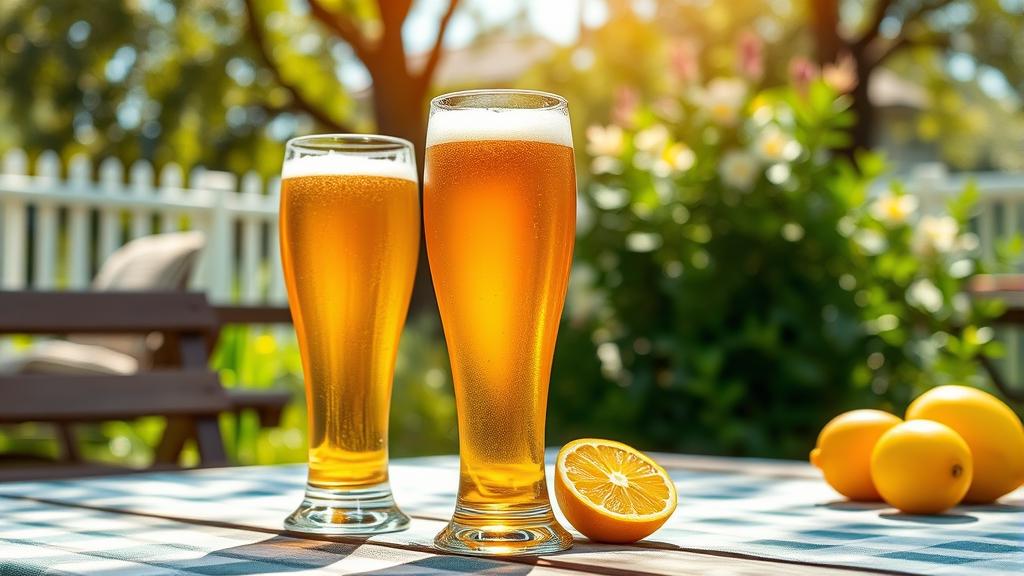
Appearance: Golden to pale yellow, with a thick creamy head that lasts. If you added flaked wheat or oats, it’ll be hazy — which is part of the appeal. The colour is bright and inviting; no dark notes whatsoever.
Mouthfeel: Soft and pillowy, thanks to the wheat. It’s full-bodied for a 5% beer — not thin or crisp in the way a simple golden ale might be. There’s a gentle sweetness from the malt, balanced by the citrus bitterness (around 25 IBU). The finish is clean and dry, with a lingering citrus note.
Taste: Bright citrus (orange, lemon, a touch of grapefruit), soft wheat bread character, subtle herbal notes. The alcohol is completely hidden — you could drink three of these without realising you’d had 15% ABV worth of beer (not recommended, obviously). There’s no banana or clove — if you’re getting heavy fruity or phenolic notes, your fermentation temperature was too warm, or your yeast strain was Belgian.
Honestly? This is the beer I reach for on summer evenings. It’s approachable, delicious, and feels like a proper accomplishment when you’ve brewed it yourself. Your friends will drink it faster than you can refill their glasses.

Pro Tips & Common Mistakes to Avoid
Mistake 1: Over-hopping. It’s tempting to add loads of hops to create a “West Coast Wheat” or heavily hopped pale wheat. Resist. The citrus character should complement the soft wheat body, not dominate it. Stick to 25–30 IBU, max.
Mistake 2: Hot fermentation in summer. Honestly, this is the biggest pitfall. If your beer tastes like banana bread instead of citrus, your yeast was too warm. Invest in a temperature controller or brew in a cooler season. It’s worth it.
Mistake 3: Ignoring water chemistry. I know it sounds geeky, but if your tap water is 200+ ppm sulphate, your citrus wheat will taste dry and harsh. Dial in your water. Use a water calculator. It takes 10 minutes and makes a massive difference.
Pro Tip 1: Fresh zest is crucial. Buy organic citrus (no pesticides), zest it immediately before adding, and don’t leave it in the fermenter for more than 7 days or it starts to taste bitter and pithy. I learned this the hard way — an over-extracted batch tasted like marmalade, not fresh lemon.
Pro Tip 2: Cold-crashing is worth it. If you’re patient enough to cold-crash for 48 hours before bottling, your citrus wheat will be remarkably clear and bright. The extra clarity makes the colour and carbonation shine.
Pro Tip 3: Pair it with food. Citrus wheat is fantastic with lighter summer fare: salads, fish, soft cheese, fresh bread. It’s not a food-washing-out beer; it’s a companion beer. Drink it alongside something light, not after a heavy meal.
Summer Variations & Next-Level Ideas
Once you’ve nailed the base recipe, here are some directions worth exploring:
Herbal twist: Instead of (or alongside) citrus zest, add 1 teaspoon of dried chamomile flowers or fresh mint at day 3. Reduces the citrus forward-ness, adds floral notes. Lovely.
Lower ABV version: Reduce the grain bill by 15% (use 2.1 kg pale ale malt, 1.3 kg wheat) and you’ll hit 3.8–4.2% ABV. Perfect for a summer day when you want to enjoy several without getting tipsy.
Sour twist: Add 5g of lacto-bacillus or another souring microorganism at day 5, let it sour for 3–7 days, then add your citrus zest. You’ll get a slightly tart citrus wheat with a unique complexity. This is genuinely modern and trendy right now.
Fruit addition: For extra complexity, add 500g of orange puree (or fresh-squeezed juice) at day 3 instead of (or alongside) zest. This adds body and a more pronounced fruit character. Just be aware it might push your final ABV up slightly, and the beer will be more orange juice, less bright citrus.
Conclusion: The Wisdom of Simplicity
I’ve brewed hundreds of beers over the past eight years — imperial stouts, wood-aged wild ales, hoppy experimental IPAs. But the beers I return to most often, the ones I’m genuinely proud of, are the simple ones. The wheat ales. There’s something almost monastic about brewing a beer that asks for nothing more than clarity, refreshment, and an honest malt-and-hop conversation.
A citrus wheat ale is summer in a glass. It’s achievable for a beginner, rewarding for an experienced brewer, and universally loved. Your first batch might not be perfect — mine certainly wasn’t (see: over-extracted zest incident, mentioned above). But by your second or third batch, you’ll have dialled it in to something genuinely special.
The summer months are short. Brew this now. Chill it down. Pour it into a proper wheat beer glass, feel that thick head, smell the fresh citrus. This is why we brew.
🍺 Join the Brotherhood — Monthly brews, stories & monk wisdom
Subscribe for exclusive recipes, early brew logs, and behind-the-scenes updates straight to your inbox.