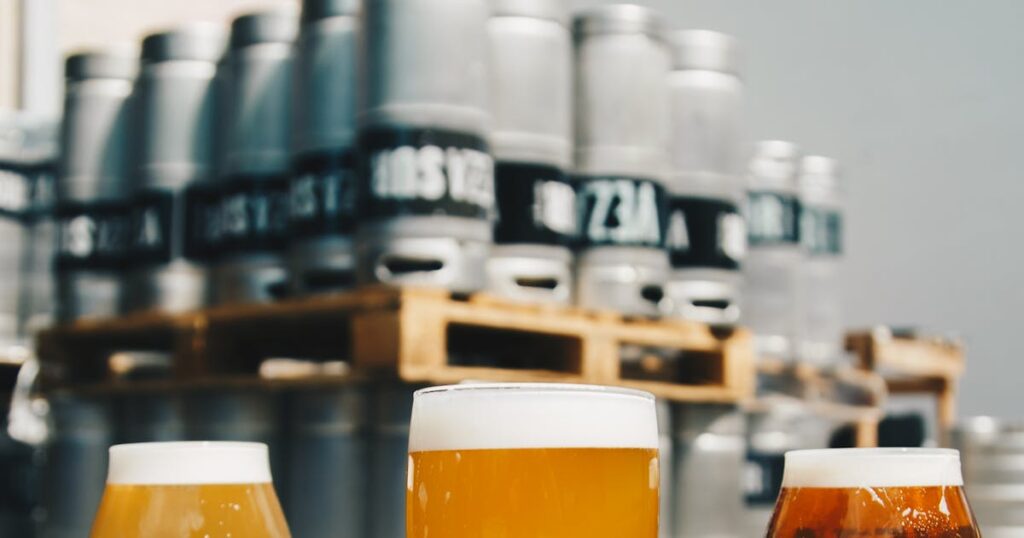
Hibiscus beer is having a moment. In fact, it’s more than a moment—it’s a proper movement. When the Indie Beer Awards 2026 started celebrating watermelon-hibiscus sours from smaller UK breweries, and when data showed a +26% surge in hibiscus mentions across craft beer conversations, I knew I had to brew one myself.
What intrigued me most wasn’t just the trend, but the why. Hibiscus brings something genuinely different to brewing: a tart, floral depth that sits somewhere between a fruit beer and a herbal ale. It’s the kind of ingredient that could easily go wrong—too perfumy, too sour, too one-dimensional—but when it’s done with intention and restraint, it’s brilliant.
This is my honest journey brewing a hibiscus pale ale at home, with every mistake, discovery, and tasting note along the way.
Why Hibiscus Beer Is Taking Off in 2026
Let’s be direct: hibiscus is a trending ingredient, and trends can be hollow. But this one has staying power. Hibiscus isn’t new to food culture—it’s been used in tea, cordials, and traditional beverages for centuries, especially in West African, Caribbean, and Asian traditions. Craft brewers are simply discovering what home cooks already knew: it’s tart, it’s floral, and it adds complexity without shouting.
In the UK specifically, this aligns perfectly with our craft beer movement’s evolution. We’ve moved past the “add fruit to a stout” phase. We’re exploring herbals and botanicals with intention, building on techniques from gruit brewing traditions, and rediscovering how global ingredients can enhance rather than dominate a beer’s character.
Hibiscus fits that perfectly. It’s sophisticated, it’s sustainable, and honestly, a brilliant pink beer photographs better than anything else you’re brewing this summer. The colour alone—that shocking, natural pink hue—makes it conversation-starting without being gimmicky.
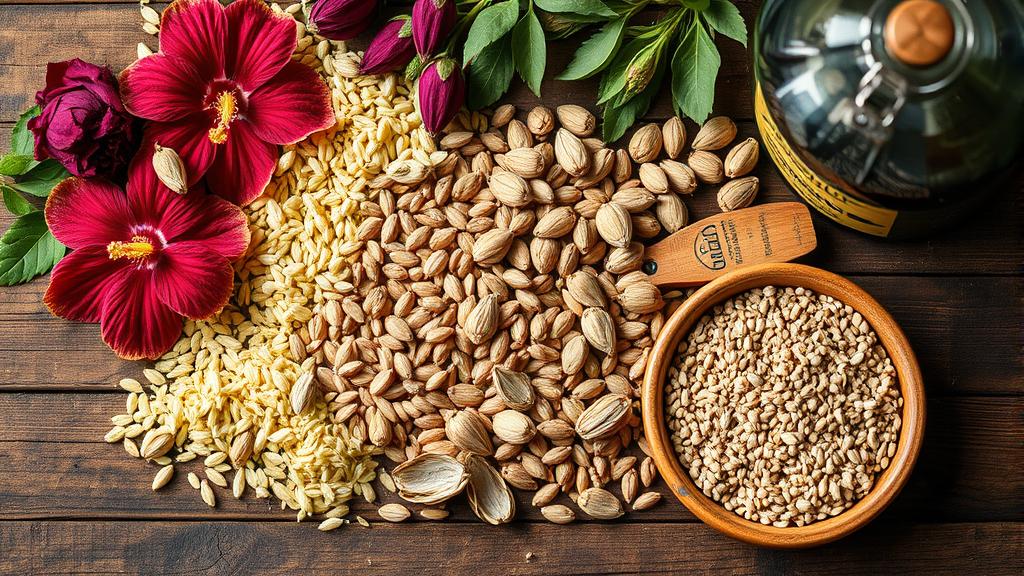
Ingredients & Equipment for Hibiscus Pale Ale
Here’s what I used for a 20-litre (5 US gallon) batch. You can scale up or down proportionally.
- Grains: 3.5 kg (7.7 lbs) Pale Malt, 250g (8.8 oz) Crystal Malt, 100g (3.5 oz) Munich Malt
- Hops: 18g (0.6 oz) Cascade (60 min), 10g (0.35 oz) Styrian Goldings (15 min), 12g (0.4 oz) Cascade (aroma, flameout)
- Hibiscus: 30g (1.05 oz) dried hibiscus flowers, added at flameout
- Yeast: Safale US-05 (2 packets, or 1 starter for consistency)
- Water: 35 litres (9.2 US gallons) total, adjusted for your local water profile
- Other: 5g (0.18 oz) Irish moss, 2.5g (0.09 oz) Calcium Chloride (if needed)
For the hibiscus itself: source dried, not fresh flowers. Fresh hibiscus contains too much moisture and unpredictable compounds. Look for food-grade dried hibiscus from suppliers like The Malt Miller, Geterbrewed, or even health food shops (they stock it for tea). Verify it’s been dried without additives or dyes—pure red hibiscus, nothing else. Cost is roughly £8–12 for 100g, which covers 3-4 batches.
Brew Day: The Method
This is a straightforward pale ale mash with the twist coming at the end. Here’s my step-by-step:
- Mash In (Step 1): Heat 12 litres (3.2 US gallons) water to 70°C (158°F), mix grains in, aim for 65°C (149°F) in the mash tun. This took me three attempts to dial in—lesson learned: measure your strike temperature precisely and account for grain absorption. I now use a cheap Bluetooth thermometer and it’s saved me countless brews.
- Mash Rest (90 minutes): Let it sit. No tricks. Just discipline. I use this time to clean equipment and prepare the kettle for the next stage.
- Lautering (Sparging): Run off slowly, collect your wort. I aim for 35 litres pre-boil. Don’t rush this—rushing lautering is how you pull tannins and end up with a harsh, astringent finish. Take 45 minutes if you need to.
- The Boil (60 minutes):
- Minute 0: Add 18g Cascade hops (bittering charge)
- Minute 45: Add 10g Styrian Goldings (flavour/aroma)
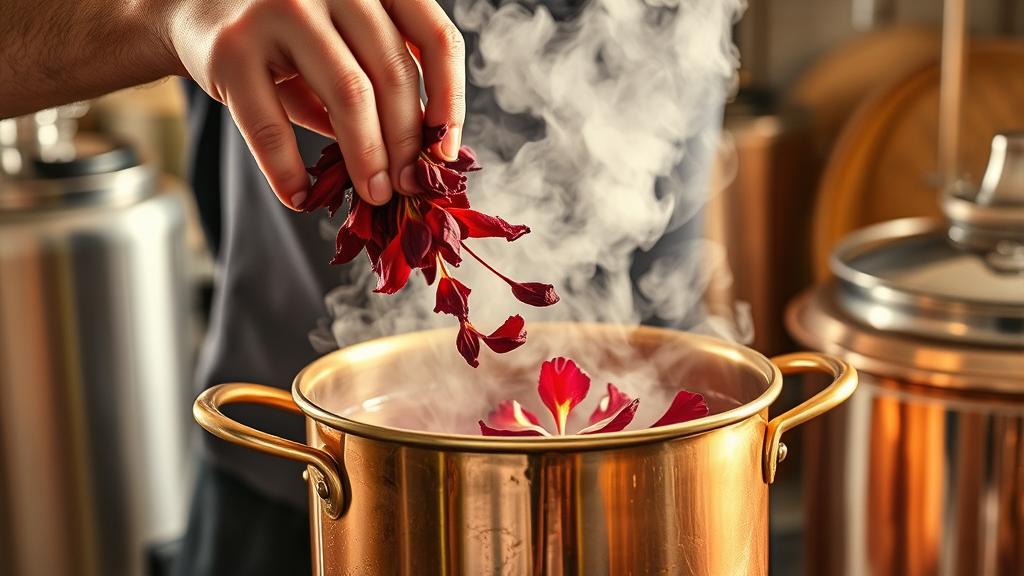
- Minute 60 (Flameout—THIS IS CRITICAL): Kill the heat, whirlpool for 1 minute, then add 12g fresh Cascade hops AND 30g dried hibiscus flowers. Do NOT boil the hibiscus. The acidity and delicate floral notes will evaporate or turn harsh if boiled.
- Steep 15 Minutes: Let the hibiscus and final hops sit in the hot wort (about 75–80°C / 167–176°F). This extracts the colour, tartness, and subtle florals without over-steeping.
- Cool & Pitch: Chill to 18–20°C (64–68°F), aerate well (oxygen helps ale yeast), and pitch. I used SafAle US-05 because it’s forgiving, it doesn’t add off-flavours, and it ferments clean, letting the hibiscus shine.
Fermentation & Conditioning: The Patient Part
This is where impatience kills hibiscus beers. I’ve read homebrew forums where people got overeager and bottled after 7 days. The result? Green, solvent-like flavours, and the hibiscus character either hadn’t developed or had oxidised away.
What I did:
- Days 1–3: Active fermentation. The yeast was visibly churning, airlock bubbling every 3 seconds. Temperature sat steady at 19°C (66°F). No stress, no intervention.
- Days 4–9: Slower fermentation. Bubbles slowed to every 10–20 seconds. The wort started clearing. I didn’t touch it. This is critical with fruit and floral beers—any agitation or temperature swings will cause oxidation that kills the delicate characteristics.
- Day 10: Cold Crash (Optional but Recommended): I dropped the temperature to 4°C (39°F) for 48 hours. This helps yeast and hop particles settle, giving you a clearer beer to bottle. It also seems to intensify the hibiscus character somehow—maybe it’s psychology, but my tasting notes are always better after cold crashing.
- Gravity Check: On day 11, I took a gravity reading: 1.008 FG (final gravity). For a target OG of 1.050, that’s 5.5% ABV. Right where I wanted it.
- Bottling (Day 12): 500 ml of wort + 100g priming sugar (corn sugar), dissolved and cooled. Mixed it in gently, bottled into sanitised bottles, capped. No splashing—oxidation is the enemy here. Sat the bottles at 18°C (64°F) for bottle conditioning.
- Carbonation (2–3 weeks): UK summer means room temperature around 18–20°C. I checked one bottle after 10 days (it was perfect), then left them for the full 3 weeks. Patience. Always worth it.
Tasting Notes & My Honest Review
Week 4, day 1. The moment of truth. I decapped a bottle, poured into a clean glass, and stepped back to assess.
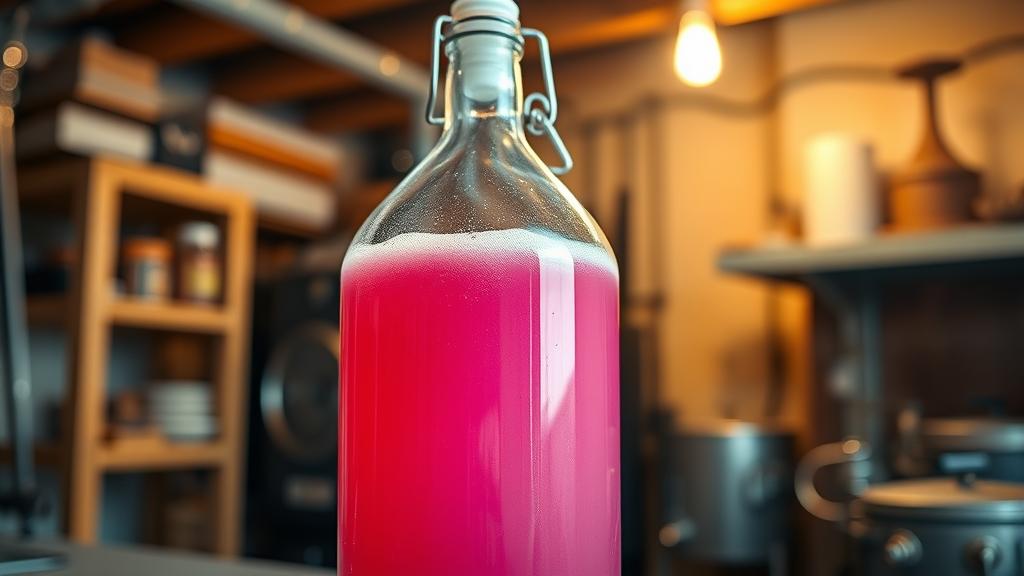
Visual: Brilliant pink, almost salmon-pink, with a fine white head that stuck around for a solid 2 minutes. Clarity was excellent—only slight haze (yeast sediment, not a fault). The colour alone made me grin. This is what I wanted.
Nose: First hit was the Cascade hops—that classic spicy, grassy note with a hint of lemon. Then came the hibiscus: floral, dry, almost like a subtle rose-hip character. No perfume, no soapiness. Just a clean tartness backing the hops. Brilliant balance.
Palate: Medium body, clean yeast character, balanced bitterness (not harsh, about 30 IBUs), and then—this is the clever bit—the hibiscus acidity comes in on the mid-palate without screaming. It’s tart but not sour. It’s floral but not perfumy. It works with the malt sweetness and the hop bitterness to create something genuinely different.
Finish: Dry, slightly astringent (from the hibiscus tannins), lingering tartness. Wants another sip. Wants food—barbecued chicken, spicy Asian dishes, sharp cheeses. This isn’t a session beer you mindlessly drink; it’s a tasting beer.
Honest moment: I did think it was slightly too dry on the finish. Next time, I’d either reduce the hibiscus to 25g or add a touch of honey or lactose at bottling to round it out. But this version is clean, interesting, and entirely drinkable. I’d serve it to friends and expect them to ask how I made it.

Pro Tips & Common Mistakes
- Don’t Boil Hibiscus: I can’t stress this enough. Boiling it turns the delicate tartness into a harsh, almost vinegary character. Flameout only. Steep, don’t boil.
- Source Food-Grade Hibiscus: Some decorative hibiscus is treated with dyes or pesticides. Confirm it’s food-safe before adding to wort.
- Use Fresh Yeast: Hibiscus beers are delicate. Old yeast can introduce oxidative or sulphur-like off-flavours. Start with fresh yeast, preferably a starter if you’re going for a bigger batch.
- Cold Crash Before Bottling: Reduces oxidation risk and gives you clearer, crisper presentation.
- Account for Tartness in Water Chemistry: If your water is very hard (high alkalinity), it’ll emphasise astringency. I adjusted mine down slightly with a touch of lactic acid (just 1g per 20L). See water chemistry tips for more detail.
- Pair with Floral, Citrusy Hops Only: Cascade, Styrian Goldings, Centennial, or even Hallertau work. Avoid heavy, piney hops like Magnum or Nugget—they compete and muddy the hibiscus character.
Variations & Next-Level Experiments
Once you’ve nailed the base recipe, there’s room to explore:
- Hibiscus + Lavender Ale: Add 5g dried lavender at flameout alongside hibiscus. Dry, floral, almost medicinal—brilliant with aged cheeses.
- Hibiscus-Orange Wheat Beer: Build a hefeweizen base, add 20g hibiscus + 10g orange peel at flameout. The banana-y wheat yeast character bridges the gap beautifully.
- Sour Hibiscus (Advanced): Pitch Lactobacillus alongside ale yeast (or after a few days of ale fermentation). The natural acidity + hibiscus tartness creates a properly complex sour. Takes 4–6 weeks but the payoff is remarkable. Kettle souring is an easier alternative if you want speed.
- Hibiscus Session IPA: Reduce the grist to 2.5 kg, bump the cascade to 25g (60-min charge), and treat the hibiscus the same way. You get a lighter, more sessionable version that still has attitude.
Why Hibiscus Matters Right Now
Here’s what I think is really happening: we’ve moved from novelty ingredients to intentional ingredients. Homebrewers—and craft breweries—aren’t adding hibiscus because it’s trendy. They’re adding it because it solves a problem. It adds tartness without souring. It adds colour without dyes. It adds character without dominating. That’s staying power.
For UK homebrewers specifically, hibiscus bridges our heritage and the future. It respects traditional brewing methodology (it’s still a pale ale underneath) while exploring global flavour traditions. It’s seasonal (summer drinking), sustainable (dried hibiscus is shelf-stable, ethical to source), and genuinely delicious when done right.
Will every homebrewer brew hibiscus beer? No. But the ones who do—the ones who treat it with respect and patience—will make something genuinely memorable. That’s the whole point, isn’t it?
🍺 Join the Brotherhood — Monthly brews, stories & monk wisdom
Subscribe for exclusive recipes, early brew logs, and behind-the-scenes updates straight to your inbox.