Why Mixed Fermentation Matters in 2026
Mixed fermentation is moving from the shadowy corners of homebrewing to centre stage, and for good reason. If you’ve been brewing the same clean, single-strain yeasts for years, 2026 is the year to challenge yourself. This technique—the symbiotic dance between yeast and bacteria working in sequence—creates layers of flavour that no single culture could achieve alone.
The beauty of mixed fermentation lies in its subtlety. Unlike aggressive souring techniques, you’re not making deliberately sour beers (though you can, if you want). Instead, you’re orchestrating microbial conversations: primary yeast establishing the baseline, then bacteria adding complexity, funk, depth. Some homebrewers compare it to jazz improvisation—one musician starts the melody, another answers with harmony.
Why now? Because wild fermentation methods have demystified unpredictable cultures, and home brewers like us are more confident experimenting with bacterial strains. Plus, the craft beer industry has already validated this: major breweries are releasing mixed-culture flagship beers at premium prices. (See CAMRA’s analysis of UK beer trends for context.) We can do the same at home, for a fraction of the cost.
Understanding the Cultures: Yeast & Bacteria Alliance
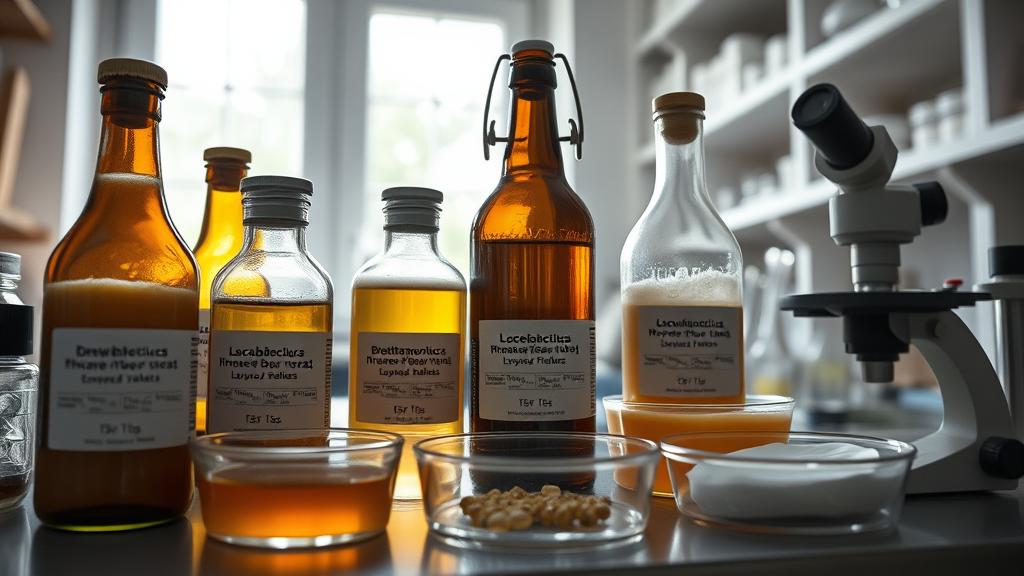
Here’s where it gets delicious. Mixed fermentation typically involves three key players:
- Saccharomyces cerevisiae (ale yeast): The lead vocalist. Converts sugars to alcohol and CO₂ quickly, establishing the beer’s base character.
- Lactobacillus: The supporting actor. Produces lactic acid over weeks, adding a subtle tartness and refreshing bite.
- Brettanomyces: The wild card. Introduces earthy, funky, sometimes floral notes—think leather, stone fruit, hay. Works slowly, over months.
The key to success is timing. You don’t pitch all three together. Instead, you pitch the Saccharomyces first, let it dominate for a week or two, then introduce the Lactobacillus and/or Brettanomyces. This sequential approach gives you control while still capturing unpredictability.
For UK home brewers, this pairs beautifully with English brewing traditions. Brown ale, amber ale, and mild ale styles all benefit from subtle bacterial complexity without losing their malt-forward character.
Building Your Mixed Fermentation Recipe
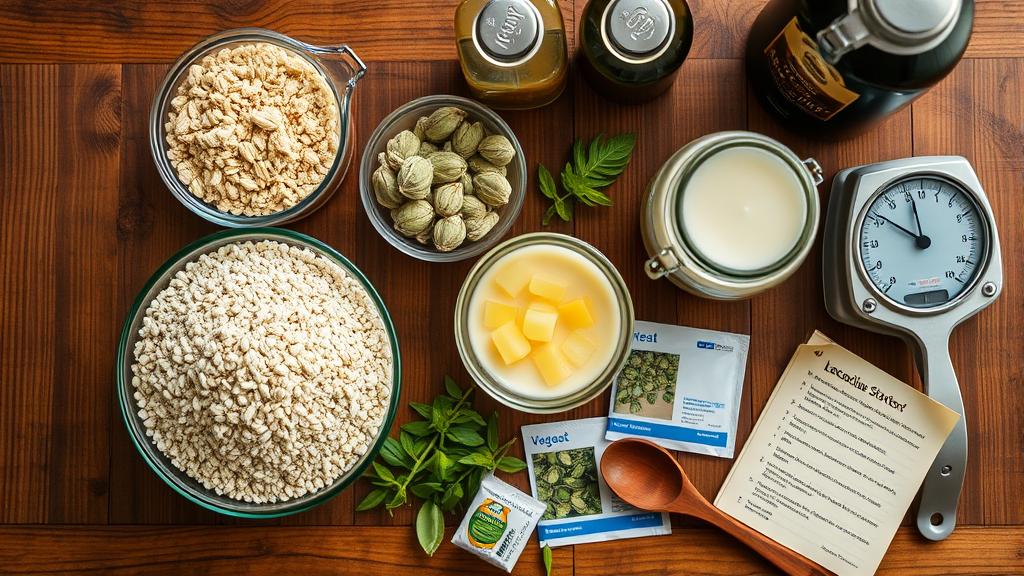
Let’s talk specifics. A basic mixed fermentation brew aims for 1.050-1.065 OG (original gravity), which gives bacteria enough substrate to work with without becoming aggressively sour.
Grain Bill (5-gallon / 23-litre batch):
- 3.5 kg (7.7 lbs) pale ale malt
- 500 g (1.1 lbs) caramalt (for body and subtle sweetness)
- 250 g (0.55 lbs) wheat malt (adds haze and mouthfeel—perfect for tropical notes from Brett)
Hops:
- 20g Goldings at 60 minutes (20 IBU—restrained bitterness lets bacteria shine)
- 10g Cascade at 5 minutes (floral lift)
Yeast & Bacteria:
- 1 pack Wyeast 1056 American Ale (or equivalent—something clean and neutral)
- 1 vial Wyeast 5335 Lactobacillus Delbrueckii (pitched day 5)
- Optional: 0.5 vial Wyeast 5112 Brettanomyces bruxellensis (pitched day 14)
Water: Aim for a profile leaning towards sulphate (Burton-on-Trent style) to enhance dryness. If you’re in soft water areas (like parts of Scotland), consider adding 1 tsp gypsum per 5 gallons to reach ~100 ppm sulphate.
The Brew Day & Fermentation Strategy
Brew day is straightforward. Mash at 65°C (149°F) for 60 minutes to create a fermentable wort. Sparge, boil as normal, and cool rapidly to 20°C (68°F).
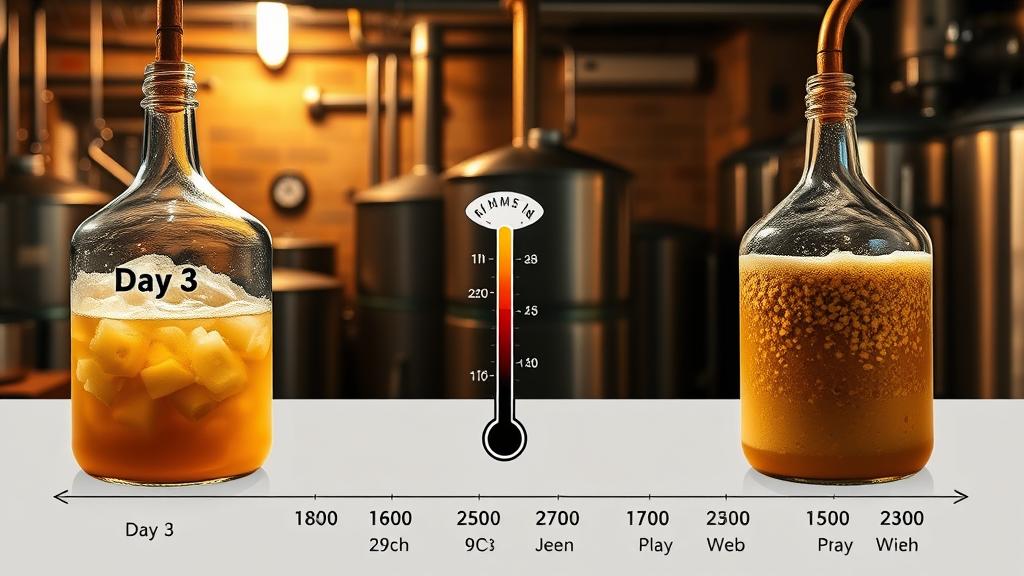
Day 1: Pitch Saccharomyces cerevisiae into your carboy. Aim for 19°C (66°F). Keep it here.
Days 2-3: Vigorous fermentation. You’ll see a thick krausen (foam head). Resist the urge to disturb it.
Day 5: Fermentation has visibly slowed. This is when you pitch your Lactobacillus. Some brewers make a starter 3-4 days prior; others pitch straight from the vial. Both work. The goal: introduce acidity while yeast is still metabolically active enough to protect the culture from contamination.
Day 14: If using Brettanomyces, pitch now. Keep temperature at 18-20°C (64-68°F). If you skip Brett, you’re still in the game—Lacto alone produces subtle, desirable results.
Weeks 2-4: Activity slows dramatically. You’ll see minimal bubbling. Don’t panic—the bacteria are working quietly, consuming byproducts from fermentation and producing organic acids. (The HomeBrewTalk forums are invaluable for troubleshooting live fermentation questions.)
Week 8+: If you used Brett, it’s now ramping up. The beer will gradually become more funky. At 8 weeks, taste a sample. At 12 weeks, make a final decision: bottle or continue aging.
This approach mirrors the pressure fermentation philosophies many advanced brewers employ, but with patience replacing pressure.
Hygiene & Cross-Contamination Fears
Here’s where honesty kicks in: mixed fermentation scares homebrewers because of contamination myths. Let me be blunt—you’re intentionally adding bacteria to your beer. Yes. That’s the point. But here’s the reassurance: Lactobacillus is a *good* bacterium. It doesn’t produce off-flavours. It produces lactic acid, which tastes clean and refreshing. And Brettanomyces, while wild, is predictable once you understand it.
To minimise risk:
- Use sanitised equipment (10ppm chlorine solution or Star San).
- Don’t let the mixed fermentation carboy sit next to your standard ale fermenter. Use separate corners of your brewery.
- Thoroughly clean any implements used in mixed fermentation before touching clean fermentations.
- Use fresh cultures from reputable suppliers (Wyeast, White Labs)—not mystery “wild” cultures from your garden.
That said, even if mild infection occurs (acetic acid from wild Acetobacter, for instance), you’ve got options: blend it, sour it further, or use it as a teaching moment. Beer blending techniques can rescue off-batches spectacularly.
Tasting, Evaluation & My Honest Notes
I brewed this exact recipe in March 2026, and here’s what happened:
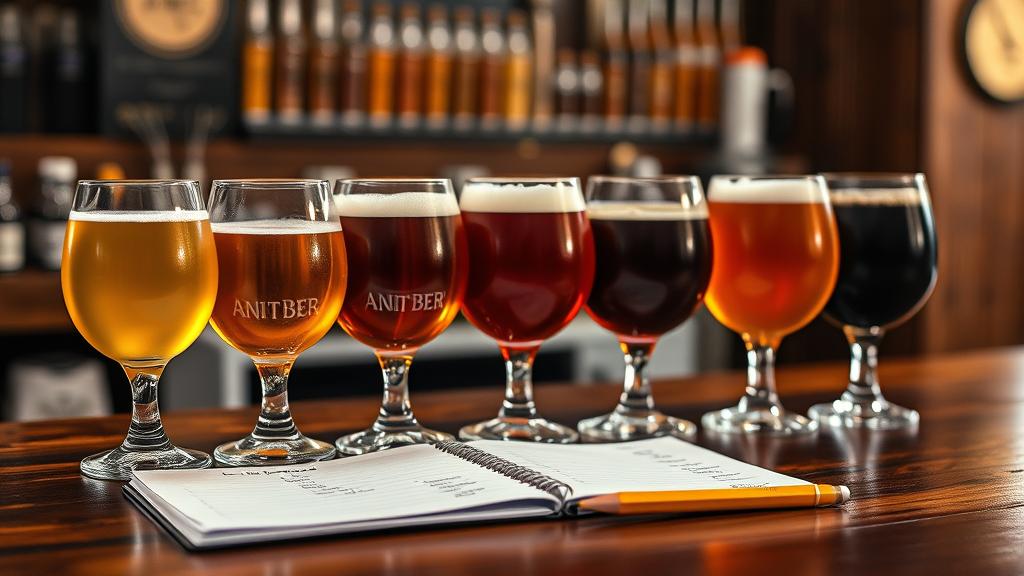
Week 4: Clean, slightly sweet. The Lacto hadn’t kicked in yet. Tasted like a standard pale ale—fine, but forgettable.
Week 8: Noticeable tartness. A pleasant sourness without aggression. The caramalt added a subtle orange-zest character when combined with the acidity. Brett was still quiet.
Week 12: This is where magic happened. The Brett had introduced a floral, almost tea-like character. Combined with the Lacto’s tartness, the beer had evolved into something genuinely complex—earthy, slightly funky, but balanced. Not a sour beer. Not a standard ale. Something *new*.
At 16 weeks, I bottled. (For reference on beer styles, check the BJCP Style Guidelines for mixed culture fermentation standards.) Natural carbonation took 3 weeks. At 20 weeks, it’s reached its potential: a 5.2% ABV beer with layers—malt sweetness, herbal hops, lactic tartness, and subtle funk. Each sip reveals something different depending on temperature (serve at 12°C / 54°F for maximum complexity).
Pro Tips & Common Pitfalls
Starter cultures: Make a 1-litre starter for Lacto and Brett. Grow them in wort (same recipe as your main beer) for 3-4 days. Pitch the entire starter, not just the liquid.
Temperature control: 18-20°C is ideal. Higher temperatures (22°C+) risk wild Acetobacter infection. Lower temperatures (15°C or below) slow bacterial activity to a crawl.
Patience: This isn’t a 4-week turnaround like your standard ales. Commit to 12+ weeks of fermentation, plus 4+ weeks of conditioning in bottle. It’s worth it.
Bottle storage: Mixed fermentation beers continue evolving in bottle. Store upright, away from light, at cellar temperature. Some improve for 1-2 years.
The mistake I made: On my second batch, I got impatient and pitched Brett on day 7 instead of day 14. The yeast was still too aggressive, and it out-competed the Brett, suppressing its character development. Lesson: stick to the schedule.
For deeper dives into advanced techniques, explore thiol-optimized brewing and biotransformation dry hopping—both enhance aromatic complexity that pairs beautifully with bacterial cultures.
Variations & Next-Level Experiments
Oak & Mixed Fermentation: After primary fermentation (week 6), transfer to a glass carboy with a handful of oak cubes (French or American, toasted medium). Let Lacto and Brett work on the oak-infused beer. Results: spiced, slightly vanilla-forward complexity.
Fruit & Bacteria: Try a 5kg base recipe with 2kg fresh raspberries or blackcurrants pitched at week 8 (after yeast cleanup). The fruit interacts with Lacto’s tartness beautifully—think Flemish red without the aggressive souring.
Multiple Strains: Go wild with two Brett strains simultaneously (Brettanomyces bruxellensis + Brettanomyces lambicus). They ferment at different rates and produce wildly different character. Unpredictable? Yes. Exciting? Absolutely.
Low-ABV Mixed Fermentation: Create a 3.5% mixed culture beer targeting the sessionable market. Brew to 1.040 OG and follow the same fermentation schedule. Result: a crushable, complex summer ale that doesn’t sacrifice depth for lower alcohol.
Conclusion: The 2026 Mixed Fermentation Movement
Mixed fermentation is not a gimmick. It’s a legitimate brewing philosophy that’s moving from craft breweries to dedicated homebrewers across the UK. If you’ve mastered standard ales and lagers, this is your next mountain to climb.
The truth is simple: yeast and bacteria make better beer together than apart. In 2026, as homebrewing becomes more sophisticated, mixed fermentation is the democratisation of techniques once reserved for PhD-level breweries. You have access to the same cultures. You have the patience (if you choose it). You have the skills.
Start with the recipe above. Embrace the 12-16 week timeline. Document your observations. And when you finally taste the result—when you experience the layers, the balance, the *conversation* between microbes—you’ll understand why this trend is sticking around.
The future of homebrewing isn’t faster or cheaper. It’s more thoughtful. More alive. More *real*.
🍺 Join the Brotherhood — Monthly brews, stories & monk wisdom
Subscribe for exclusive recipes, early brew logs, and behind-the-scenes updates straight to your inbox.