Why Belgian Witbier Deserves Your Next Batch — The 2026 Resurgence
Belgian witbier is having a moment. After decades of living in the shadow of trendy IPAs and experimental sours, this historic style is roaring back in 2026 — and for good reason. If you’ve been watching the UK beer scene, you’ll notice craft breweries and homebrewers alike are rediscovering what made witbier special: approachable, flavourful, endlessly drinkable, and deceptively easy to get right at home.
I’ve been brewing for years, but it wasn’t until I seriously tackled witbier that I understood what Pierre Celis was trying to tell us when he revived this nearly-extinct style in the 1960s. This isn’t a beer about chasing extremes. It’s about balance, subtlety, and the honest pleasure of a beer you can actually sit with for an afternoon without needing a napkin between sips.
If you’re thinking about your next brew day, or you’ve been curious about Belgian styles but weren’t sure where to start, this is your sign. Let me walk you through witbier mastery — the ingredients, the technique, and the mistakes I’ve made so you don’t have to.
The History, the Myth, the Beautiful Comeback
Here’s the thing about witbier that gets overlooked in modern brewing discourse: this style nearly died. Completely. After World War II, traditional Belgian breweries abandoned witbier for cheaper lagers. By the 1960s, it was effectively extinct — no commercial examples, no home documentation, just fading memories.
Enter Pierre Celis, a Belgian pharmacist who decided to bring it back. In 1966, he started Brouwerij Celis in Hoegaarden and began brewing witbier from old family recipes and historical records. Within a decade, witbier became a symbol of Belgian brewing heritage. Today, it’s one of the most commercially successful Belgian styles — but what’s really interesting for us as homebrewers is that the resurgence of 2026 is driven by drinkers who are tired of chasing intensity and want flavour with restraint.
That makes this the perfect time to brew it. You’re not chasing a trend; you’re participating in a genuine return to balance.
Ingredients & Equipment: The Foundation
The Grain Bill
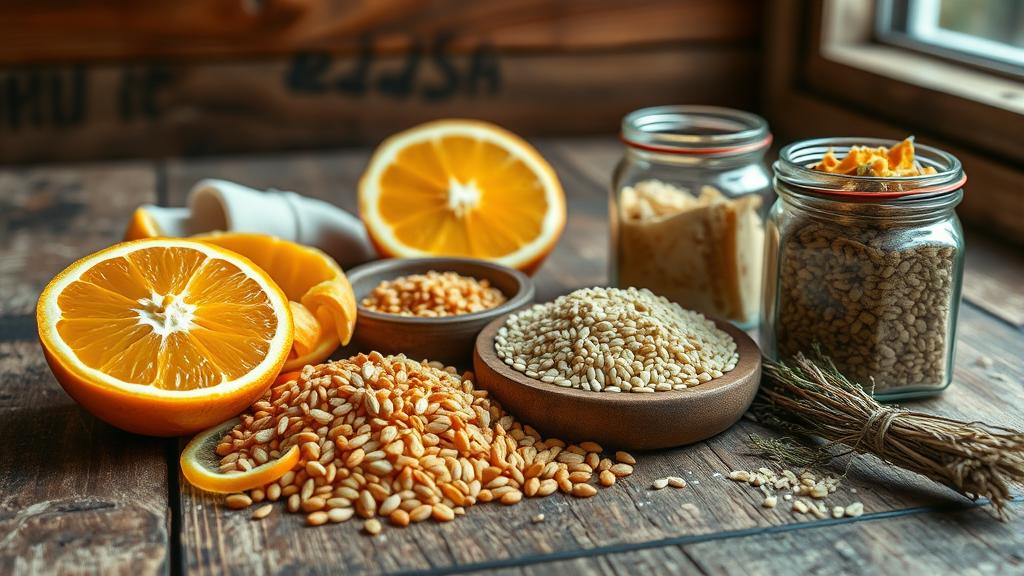
Traditional witbier uses a 50/50 split of pale ale malt and wheat malt — roughly 2.5 kg (5.5 lbs) pale and 2.5 kg (5.5 lbs) wheat for a typical 20-litre (5 US gallon) batch. Some brewers add a touch (5-10%) of oats for silkiness, but that’s optional.
The wheat is non-negotiable. It gives witbier its characteristic hazy appearance and soft, almost creamy mouthfeel. Don’t try to substitute; wheat malt is inexpensive and available from any decent homebrew supplier.
The Signature Spice & Citrus
Here’s where witbier gets its personality. You’ll need:
- Coriander: 15-20 grams of crushed coriander seed, added in the final 15 minutes of the boil. Some brewers prefer late-boil to preserve the spice; others add it to secondary. I’ve found late-boil gives the cleanest coriander profile.
- Bitter Orange Peel: 10-15 grams of Curaçao or Seville orange peel, also added late-boil (last 10 minutes). Fresh peel is lovely, but dried works brilliantly — and it’s more consistent.
- Optional extras: A small pinch of grains of paradise (literally 2-3 grams) adds a subtle spice whisper. Some brewers add chamomile or a touch of sweet orange. Restraint is the key here; this isn’t about creating a witbier bomb.
Pro tip: Source your coriander and orange peel from a serious homebrew supplier, not the supermarket spice aisle. Brewing-specific botanicals are fresher and more consistent.
Hops & Bittering
Witbier isn’t about hop character — it’s about subtlety. A bittering charge of 15-20 IBUs is ideal. I use Hallertau or Noble hops for a clean, noble bitterness. No late additions, no aroma hops. The bittering should sit in the background and let the spice and wheat shine.
Yeast
This is crucial. You need a Belgian witbier yeast that produces phenols and esters without going overboard. My go-to is Wyeast 3944 Belgian Witbier — it’s specifically selected for the style and produces that characteristic peppery, slightly fruity profile. White Labs WLP400 (Belgian Ale) is also excellent.
Temperature matters here. Ferment at 18-21°C (65-70°F) to keep phenol production controlled. Too warm and you’ll get harsh spiciness; too cool and the yeast will stall.
Brew Day: Step-by-Step
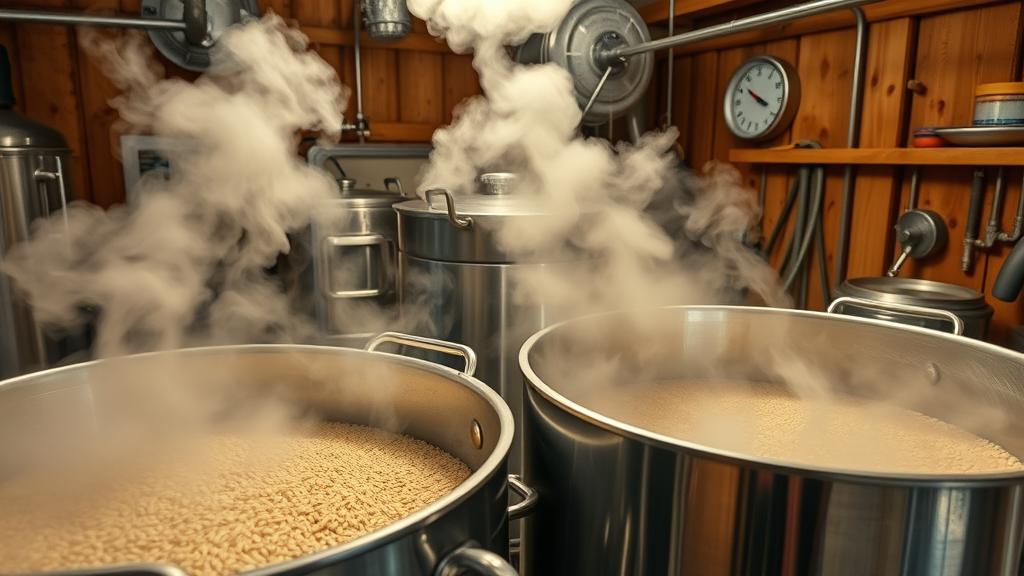
- Mash-in: Infusion mash at 65°C (149°F) for 60 minutes. Keep the temperature steady. A proper water profile makes a huge difference here — witbier loves neutral water chemistry, so adjust your strike water accordingly.
- Mash-out & Sparge: Step up to 68°C (154°F) for 10 minutes, then sparge slowly with 68°C water. You’re aiming for an OG of 1.048-1.052 for a traditional witbier (11.9-12.8°P).
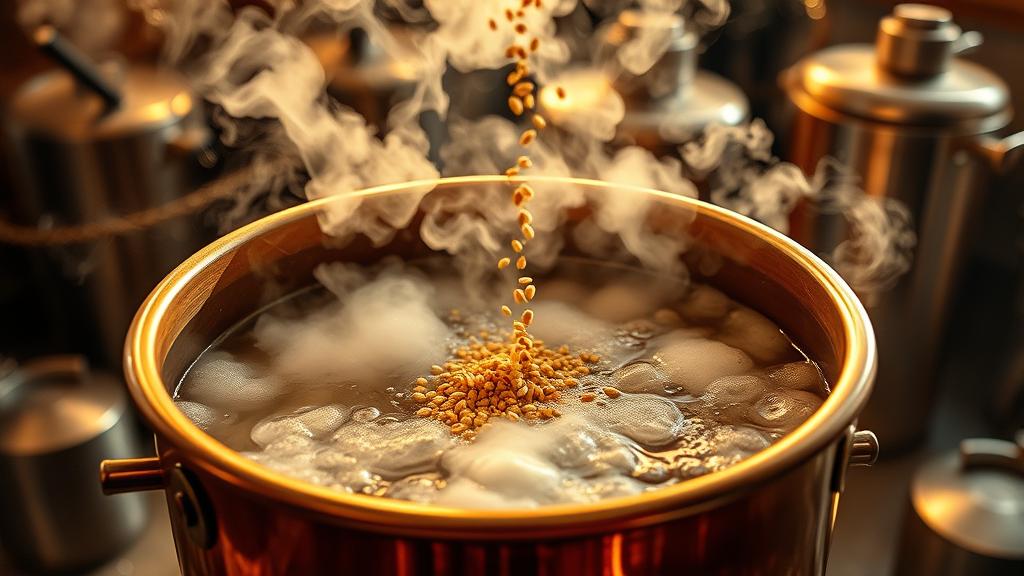
- Boil: 90 minutes. Add your bittering hops at the start. Then, with 15 minutes remaining, add your crushed coriander. With 10 minutes left, add your orange peel.
- Whirlpool & Cool: After boil, whirlpool gently for 10 minutes (this isn’t an aggressive technique). Cool to 18-20°C (64-68°F) before pitching.
- Pitch & Ferment: A good pitch rate is important here — about 100 billion cells for a 20-litre batch. Keep fermentation around 19°C (66°F). You should see activity within 12-18 hours. Primary fermentation typically takes 7-10 days, depending on temperature and yeast health.
Fermentation & Conditioning: Patience Wins
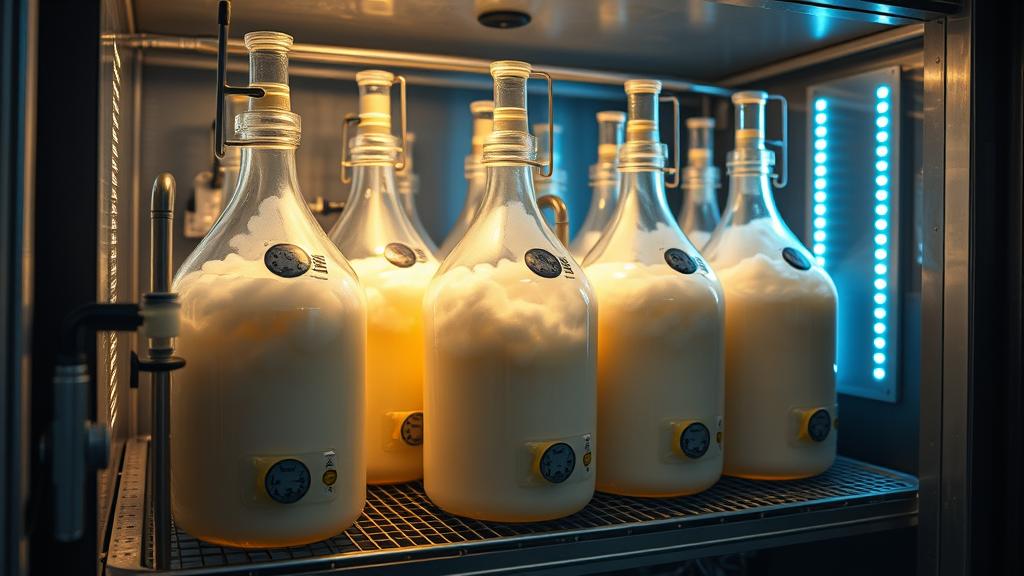
Here’s where a lot of homebrewers go wrong with witbier: they rush it. This style benefits enormously from a longer conditioning period than you might expect.
After primary fermentation is complete (when gravity stabilizes for 3 consecutive days), rack to secondary or a bottling vessel for conditioning. I recommend a full week at 18°C (64°F) — this allows the yeast to clean up any rough esters and lets the spice integration settle in. The beer will go from obviously spicy on day 7 to beautifully balanced by day 21.
If you’re using pressure fermentation, you can compress this timeline slightly, but witbier really doesn’t need the rush. Patience is its own reward here.
For bottling, witbier typically carbonates to 2.5-3.0 volumes of CO₂. Use 5-6 grams of dextrose per litre (0.65-0.75 oz per US gallon). Bottle-condition at room temperature for 2-3 weeks, then cold-condition for at least a week before serving.
Tasting Notes & My Honest Review
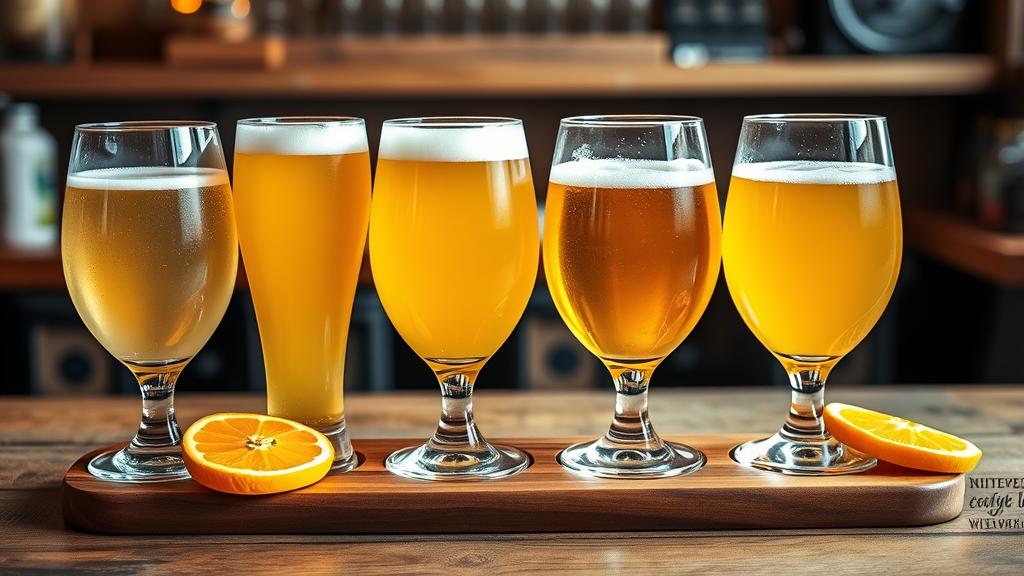
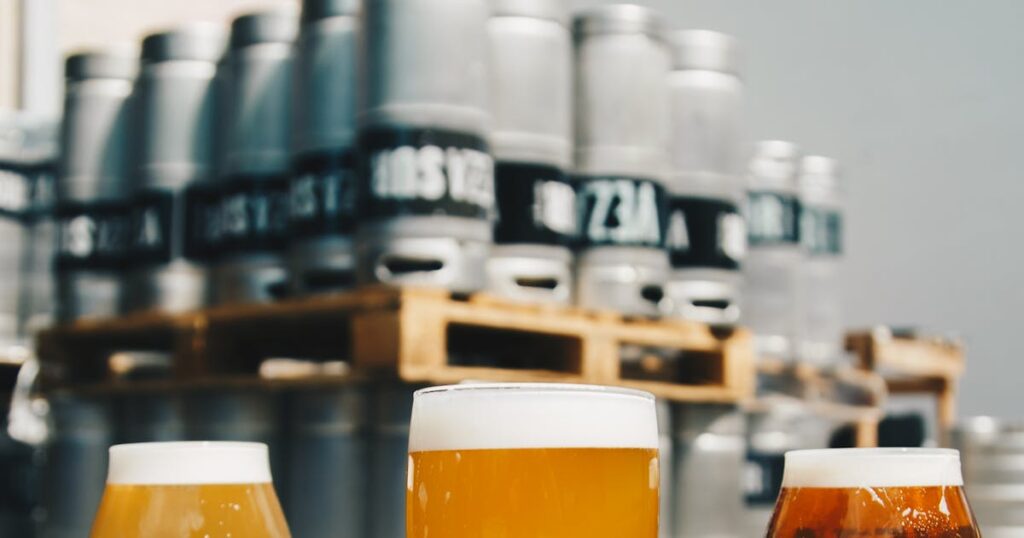
When you pour a proper witbier, you should see a dense, creamy head (thanks to the wheat) and a slightly hazy golden colour — never crystal clear. If it’s pale yellow and transparent, you’ve made something else.
On the nose, you should detect:
- Subtle orange citrus — not a blast, but a whisper of brightness
- Gentle spice — reminiscent of cracked black pepper or clove, but refined
- A soft, almost herbal note in the background
- Minimal fruity esters (this isn’t a fruity beer, despite the orange peel)
The first sip should be refreshing. Real witbiers finish dry and crisp, not sweet. The 5.0-5.5% ABV sits perfectly — enough body to feel substantial, but low enough that you can comfortably drink several without losing the thread of a conversation.
I’ve noticed that the 2026 resurgence in commercial witbiers is bringing back some of the subtlety that got lost in the 90s-2000s when breweries were adding more fruit and less restraint. That’s a trend worth following at home.
Pro Tips & Common Mistakes
The Mistakes I Made
- Over-spicing: My first attempt had 30 grams of coriander. It was like drinking cologne. Dial it back to 15-20 grams.
- Stale botanicals: Using old coriander or orange peel will give you musty, hay-like notes instead of fresh spice. Replace your supplies every 6 months, especially if stored in a warm cupboard.
- Fermentation temperature creep: If your fermentation room hits 25°C (77°F) in the summer, you’ll end up with solvent-like phenols and harsh esters. Get a temperature controller.
- Rushing the conditioning: Bottling at day 10 and drinking at day 14 tastes harsh and green. The beer genuinely improves week by week for the first month. Patience is free.
- Filtering or over-clarifying: Witbier’s haze is part of its charm. Don’t try to force clarity — just let it settle naturally. Cold conditioning will drop a lot of haze anyway.
Pro Tips for Success
- Water chemistry matters more than you’d think: Witbier loves soft water. If you’re in a hard water area, cut your water with some RO water or use targeted mineral adjustments. Aim for 50-80 ppm total hardness.
- Keep your spice additions precise: Use a digital scale, not teaspoons. 15 grams looks and feels different to 20 grams, but the difference in the finished beer is noticeable.
- Try hybrid fermentation if you’re feeling adventurous: Some modern brewers are experimenting with lager yeast in witbier to create even crisper beers. It works, but it’s a next-level move.
- Don’t skip the cold conditioning: A week at 4°C (39°F) before serving will tighten up the flavour and drop the haze. Witbier aged for 6-8 weeks actually gets better — the spice integrates and becomes more refined.
Variations & Next-Level Experiments
Once you’ve nailed the traditional witbier, the style is beautifully flexible. Here’s what works:
- Fruit additions: A touch of elderflower, hibiscus, or even strawberry purée (100-150g at bottling) creates a modern twist without losing the traditional base. Curaçao Brewery’s fruit witbiers in the UK are doing this brilliantly right now.
- Grain experiments: Try replacing 10% of your pale malt with spelt or einkorn for a nuttier complexity. It’s subtle but interesting.
- Extended conditioning: Bottle and forget for 6-12 months. Witbier evolves beautifully — the spice becomes more integrated, and you develop subtle honey and bread notes.
- Mixed fermentation: Some brewers are exploring mixed fermentation — ale yeast with a touch of lactobacillus for subtle tartness. It’s wild (literally), but it works if you know what you’re doing.
Why Now? Why Witbier?
I think witbier’s 2026 resurgence reflects a broader shift in beer culture. After two decades of “bigger is better” — hotter IPAs, more extreme sours, pastry stouts that weigh as much as a loaf of bread — drinkers are craving something different. Something honest. Something you can sip for an hour and still want another.
Witbier has always been that beer. It’s not trying to impress you with hops or barrel wood or experimental ingredients. It’s just asking: what if beer was about balance, subtlety, and the quiet pleasure of a well-made thing?
As homebrewers, that’s a philosophy worth embodying. And lucky for us, witbier sits right at the intersection of accessible and delicious — straightforward enough for your fourth or fifth batch, rewarding enough to return to every year.
Next time you see a bottle of authentic Hoegaarden or Duvel Witbier in a pub, look at what you’re holding. There’s 60 years of history in that glass — and now, thanks to the 2026 resurgence, there’s a whole new generation discovering why that matters.
Your turn. Brew this batch, be patient, and taste what happens when tradition meets modern homebrewing skill.
🍺 Join the Brotherhood — Monthly brews, stories & monk wisdom
Subscribe for exclusive recipes, early brew logs, and behind-the-scenes updates straight to your inbox.