Cream Ale Mastery: Brewing Summer’s Smoothest Light Ale at Home
There’s a peculiar honesty in cream ale. It doesn’t try to be a lager. It doesn’t puff itself up with aggressive bitterness or fruity complexity. It simply says: I want to be refreshing, approachable, and damn good on a hot July afternoon. After two decades of brewing, I’ve come to respect simplicity — and cream ale exemplifies exactly why.
Cream ale is experiencing a quiet renaissance in 2026. While hazy IPAs and barrel-aged stouts dominate Instagram, homebrewers are returning to this nineteenth-century American classic because it does one thing perfectly: it delivers clean, crisp refreshment without the lager fermentation hassle. This is the style for brewers who want the crispness of a lager but the convenience of ale yeast and room-temperature fermentation.
Why Cream Ale Matters in 2026
Summer homebrewing isn’t about complexity — it’s about session-ability. Cream ale sits at the perfect intersection: light enough to drink multiple in an afternoon (typically 4.5–5.5% ABV), but with enough character to feel like real beer, not adjunct lager. The style also has deep roots in American homebrewing history, which appeals to brewers interested in historical accuracy and farmhouse traditions.
What makes cream ale particularly appealing in summer 2026? Energy efficiency. Unlike lager fermentation, which demands temperature control in cooler ranges (50°F / 10°C), cream ale ferments at ale temperatures (62–68°F / 17–20°C). That means lower energy bills, simpler equipment, and faster turnaround — brew one in early June, drink it by July 4th.
Ingredients & Equipment
A cream ale recipe at its core is beautifully minimal. The magic lies in ingredient selection and restraint.
Malt Bill
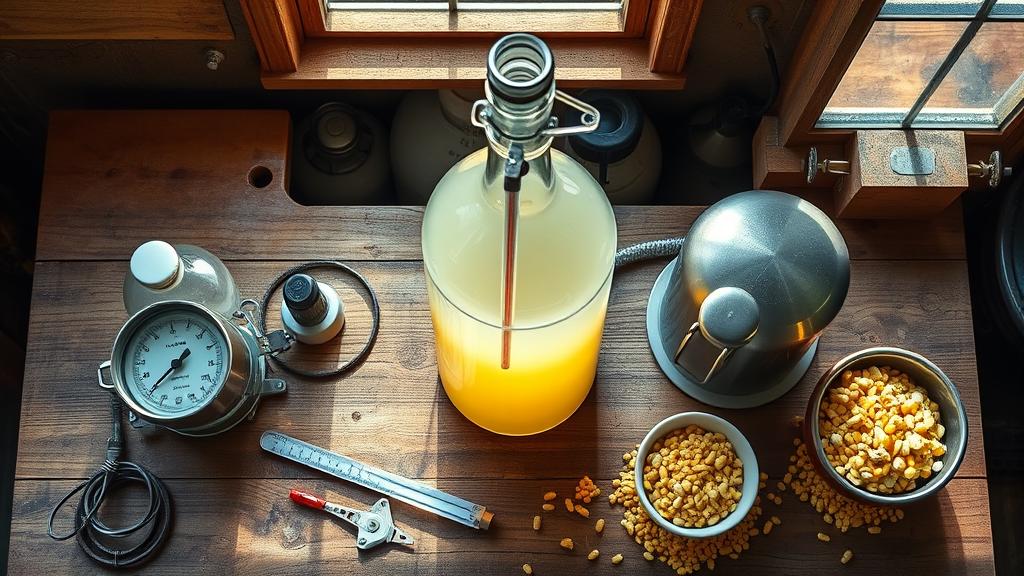
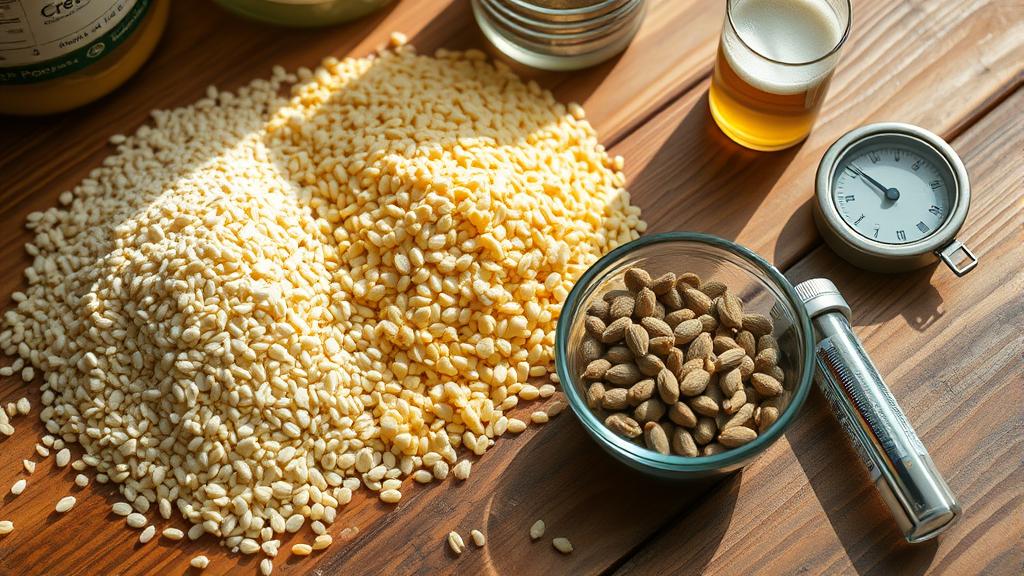
The foundation is pale base malt — typically 70–75% Pale Ale malt or 2-row — combined with corn or rice adjuncts. This is where cream ale differs from blonde ales: the corn (15–20%) adds a subtle sweetness and lightness that makes the beer feel silky. Some brewers use flaked corn; others prefer corn sugar added post-mash. For this recipe, I prefer flaked corn because it brews cleaner and adds body.
- Pale Ale Malt: 3.5 kg (7.7 lbs)
- Flaked Corn: 0.9 kg (2 lbs)
- Munich Malt: 0.45 kg (1 lb) — adds warmth and depth without muddying the profile
Hops
Cream ale hops are restrained. You’re aiming for 15–25 IBU, enough to balance the subtle malt sweetness but never domineering. Traditional choices include Saaz (for a noble, herbal touch) or Hallertau. I use a single charge of Saaz at 60 minutes for a clean bitterness, then a small 5-minute addition for aroma.
- Saaz: 28g @ 60 minutes (19 IBU)
- Saaz: 14g @ 5 minutes (flavour, minimal bitterness)
Yeast
This is the critical decision. Cream ale is fermented with ale yeast, but the goal is a clean fermentation profile — minimal esters, minimal phenols. Wyeast 2565 (Kölsch) or White Labs WLP029 (German Ale) are excellent choices. For UK homebrewers, GeterBrewed stocks these reliably. Alternatively, many explore wild fermentation techniques for unique character. Alternatively, Safale US-05 (dry yeast) works beautifully and requires no temperature monitoring.
Water & Equipment
Water chemistry matters less than you’d think for cream ale — a simple 60-minute mash at 65°C (149°F) in neutral water works well. If you’re adjusting, aim for balanced calcium and minimal chloride.
For equipment, standard all-grain setup suffices: mash tun, boil kettle, fermenter, airlock. The simplicity of cream ale is part of its appeal — no special techniques, just patience and cleanliness.
Step-by-Step Brew Day
Cream ale follows standard all-grain procedure, but a few details matter.
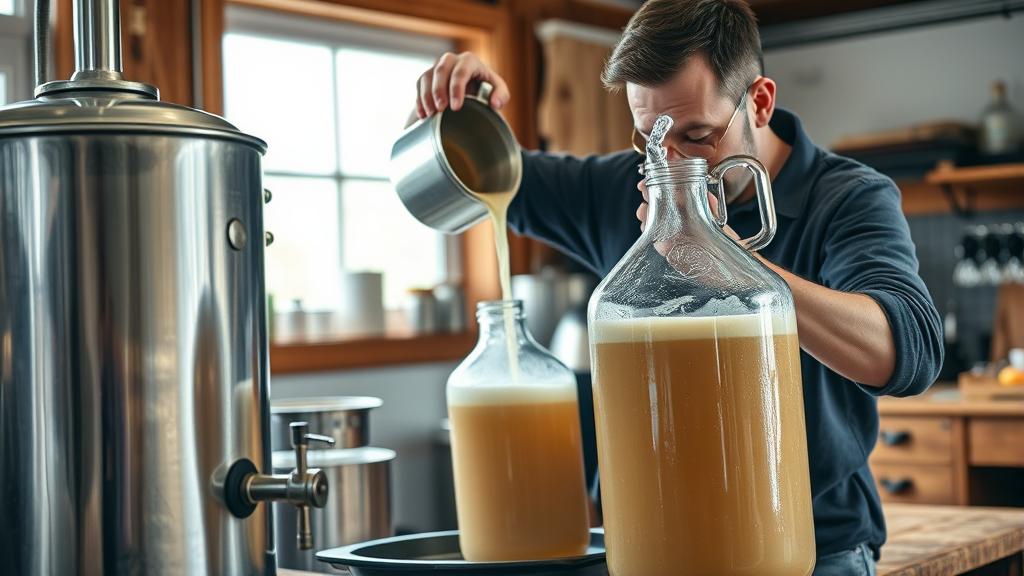
- Mash in: Heat strike water to 71°C (160°F). Mix grains and corn thoroughly — the adjunct can clump. Mash at 65°C (149°F) for 60 minutes. This longer mash time dries out the beer, reducing residual sweetness.
- Lautering: Slow and steady. Cream ale’s thin body can result in a thin, harsh sparge if you rush. Aim for clear runoff before collecting wort. Total mash + sparge: 90 minutes.
- Boil: 60 minutes total. Add Saaz bittering charge at 60 minutes, flavour charge at 5 minutes. Cool to 65°C (149°F) and pitch yeast.
- Fermentation: Maintain 17–18°C (63–64°F) for Kölsch yeast. If using US-05, ferment slightly warmer (18–20°C / 64–68°F). Fermentation takes 7–10 days to apparent completion.
Fermentation & Conditioning
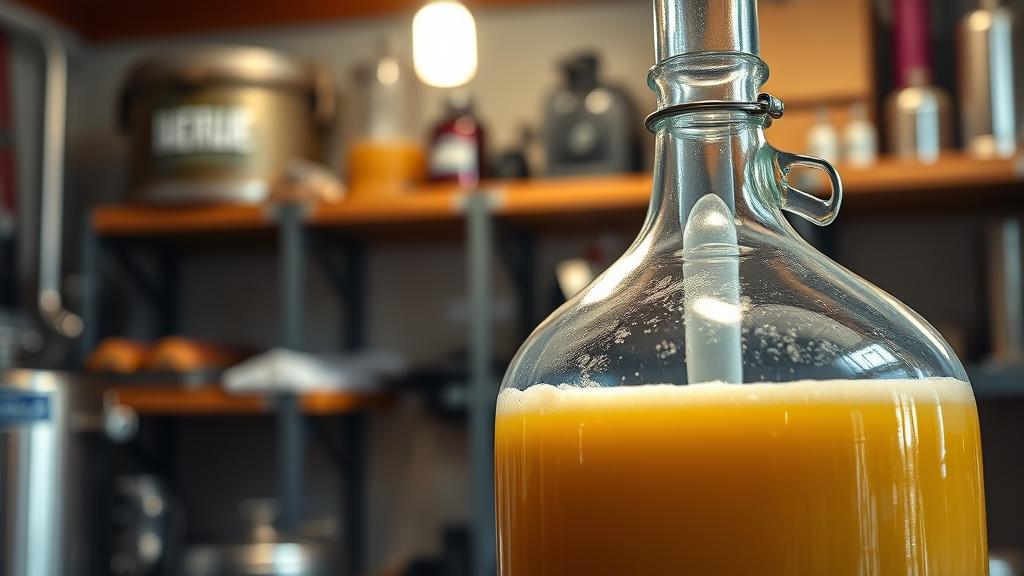
Cream ale fermentation is forgiving, especially compared to lagers. Kölsch yeast will ferment cleanly at 16–19°C (61–66°F), and US-05 performs excellently even at room temperature. For those interested in advanced techniques, hybrid fermentation approaches can yield interesting results.
Watch the airlock activity. At day 3–4, fermentation should be vigorous. By day 7, activity slows. Take a gravity reading on day 7 and again on day 9. When two consecutive readings are identical, fermentation is complete.
Conditioning matters. After racking off the yeast, let the beer sit for 2–3 weeks at 15°C (59°F). This “warm conditioning” allows residual yeast to clean up acetaldehyde (green apple notes) and integrate flavours. For a beer you want to drink now, this step is essential.
Carbonation: Cream ale should be crisp and slightly elevated. Aim for 2.6–2.8 volumes of CO2. If bottling, use 120g (4.2 oz) of priming sugar for a 20-litre batch.
Tasting Notes & Honest Review
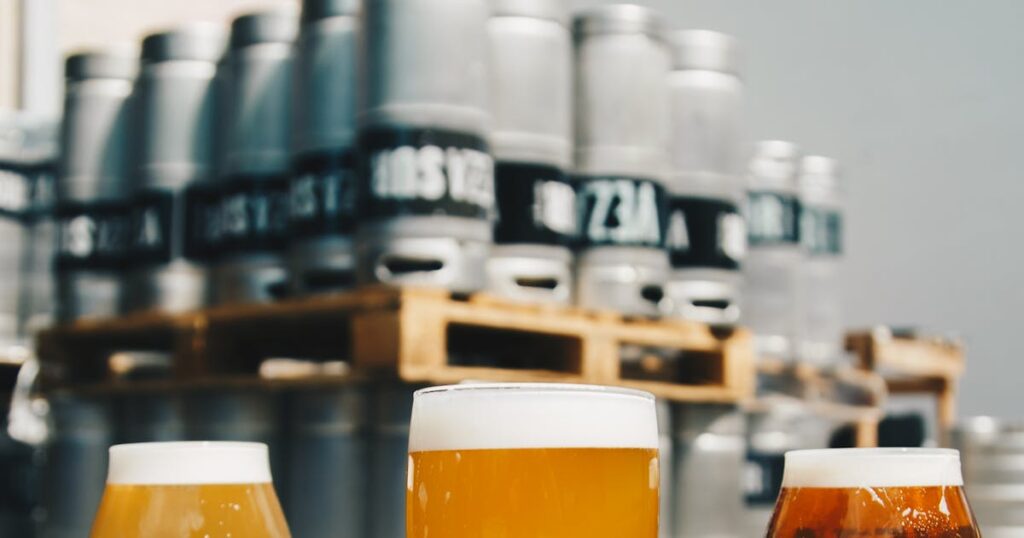
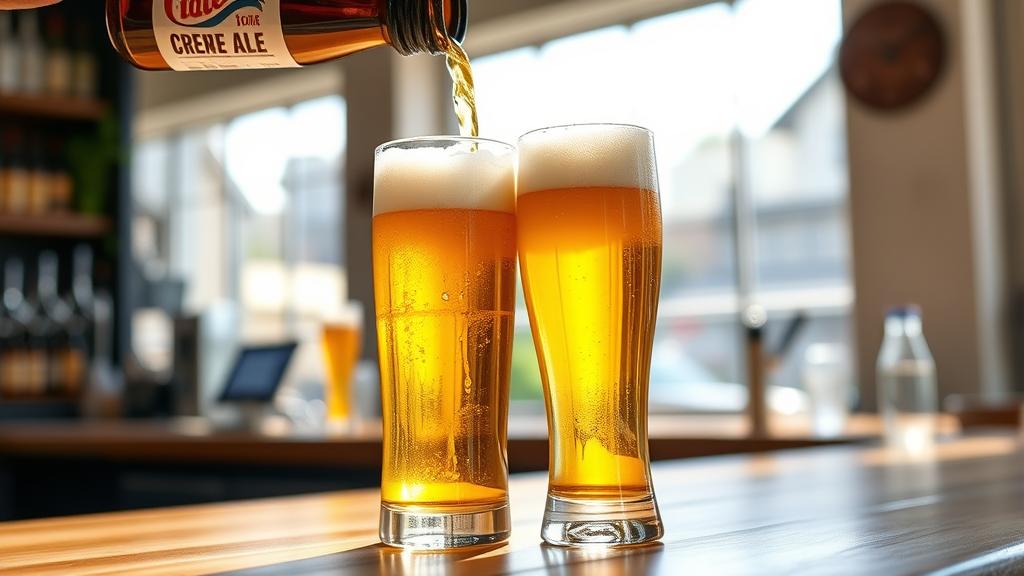
A finished cream ale should be straw to pale golden in colour, brilliantly clear (if you’ve done the conditioning right), with a fine white head that dissipates gently.
Nose: Clean and subtle. Saaz imparts a gentle herbal, slightly spicy note — nothing aggressive. You might detect a whisper of corn sweetness, but not obvious adjunct character.
Palate: The magic happens here. A proper cream ale feels silky and smooth, despite its low gravity. The flaked corn contributes a slight sweetness that’s rounded (not sharp) by the 19 IBU of bittering. The finish is clean and dry — no lingering ester fruitiness, no phenolic spice. ABV sits undetected at 5.2%.
Mouthfeel: Slightly full for the gravity, owing to the corn adjunct. Carbonation enhances crispness without being sharp.
Honest assessment: This isn’t a beer that wows you. It won’t challenge your palate or spark lengthy conversation. But on a 30°C (86°F) July afternoon, with condensation rolling down a chilled glass, after an hour in the garden? It’s perfect. And that simplicity is precisely what makes it brilliant.
Pro Tips & Common Mistakes
Mistake 1: Over-spicing the hop bill. Cream ale isn’t meant to be hoppy. Resist the urge to add late-boil additions or dry hops—cream ale is meant to showcase the clean fermentation profile enabled by thoughtful ingredient selection. Your palate will thank you when you’re drinking three in succession.
Mistake 2: Rushing carbonation. Some homebrewers bottle early to get fresh beer sooner. Don’t. Two weeks of conditioning makes a measurable difference in smoothness.
Mistake 3: Neglecting cleanliness. A cream ale’s simplicity means any off-flavour stands out. Wild yeast or bacterial infection becomes immediately obvious. Sanitise obsessively.
Pro tip: Temperature ramps. Some brewers raise fermentation temperature by 2°C (3.6°F) in the final 2–3 days to speed yeast cleanup. Ferment at 17°C (62°F) for days 1–6, then raise to 19°C (66°F) for days 7–8. This gives you the cleanliness of true lager fermentation without the time commitment.
Pro tip: Blend for complexity. A few brewers split their cream ale base and age half in oak or with a small dry-hop charge (Hallertau only). The two versions, blended at serving, create surprising depth. Experiment with small batches.
Variations & Next-Level Experiments
Once you’ve nailed the base recipe, cream ale is a blank canvas, much like the flexibility offered by mastering low-ABV brewing techniques. Consider:
- Honey adjunct: Replace 100g of corn with wildflower honey to add complexity without phenols. Ferment as normal — honey will dry the beer slightly.
- Specialty malt tweak: Swap Munich malt for Vienna malt for a slightly more elegant profile, or add 100g of Wheat malt for improved head retention.
- Yeast experiment: Try The Hop Shed‘s recommendations for British ale yeast (WLP007 Ale Yeast Blend). You’ll get a marginally fruitier profile — still clean, but with character.
- Extended lagering: Some homebrewers cold-condition (lager) cream ale at 12°C (54°F) for 3–4 weeks post-fermentation. This approach requires temperature control but yields exceptional smoothness.
Conclusion: Brewing for Purpose
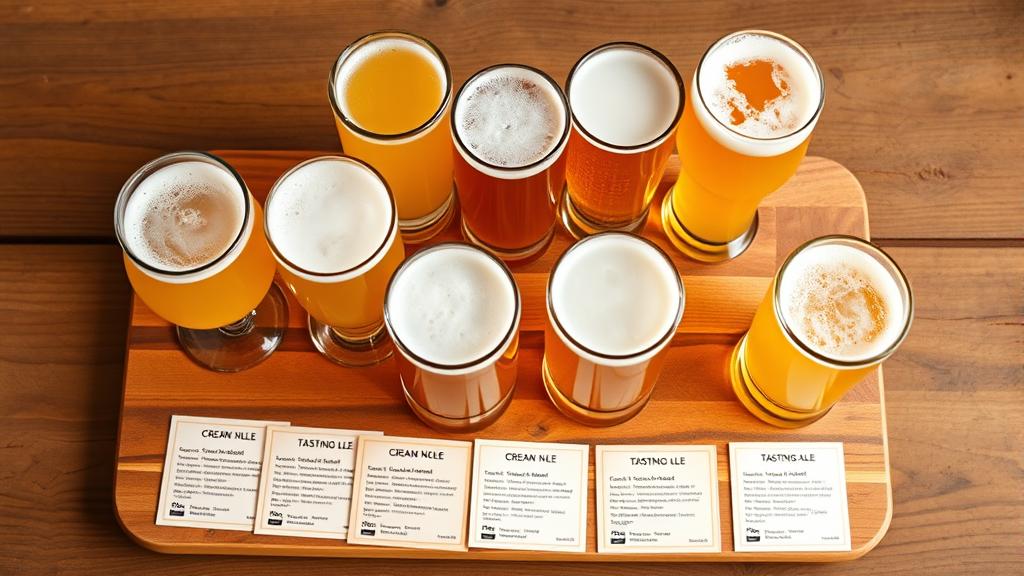
Cream ale teaches a lesson that’s increasingly relevant in 2026: not every beer needs to be complex or Instagram-worthy. Some beers exist to be enjoyed in context — with friends, in summer, without pretence. That’s exactly what cream ale is, and that’s exactly why it deserves a place in your rotation.
The Benedictine monks who influenced my early brewing philosophy understood this. They didn’t brew to impress; they brewed to sustain, to celebrate, and to build community. Cream ale carries that ethos forward into modern homebrewing.
Brew one this summer. Serve it cold. Enjoy it with people you care about. Let its simplicity remind you why you started brewing in the first place.
🍺 Join the Brotherhood — Monthly brews, stories & monk wisdom
Subscribe for exclusive recipes, early brew logs, and behind-the-scenes updates straight to your inbox.