The craft beer world is evolving. For years, homebrewers have focused on hops, yeast, water chemistry, and fermentation techniques—and rightly so. But there’s a quiet revolution happening: plant-based brewing. More brewers are discovering that vegan beer isn’t just about ethics—it’s about clarity, precision, and flavour.
If you’ve ever wondered whether your homebrew is truly vegan, or whether switching to plant-based fining agents will compromise your beer’s quality, you’re not alone. I recently spent three months experimenting with vegan brewing methods, testing different clarification techniques, and tasting the results blind against my traditional brewing batches. What I found surprised me.
Why Vegan Beer Matters—Even If You Eat Meat

Most beer is already vegan. But here’s the catch: you might not know it. Traditional brewing relies on animal-derived fining agents—isinglass (fish bladder), gelatin (animal collagen), and isinglass (again, because many brewers use it without realising). These clarify your beer by binding to suspended particles and sinking to the bottom, leaving crystal-clear liquid above.
The problem? These agents, whilst invisible in the final product, technically make beer non-vegan. For consumers avoiding animal products, checking whether a beer is vegan requires detective work—and many beloved homebrewed batches fail this test simply by accident.
But there’s a deeper reason to care, even if veganism isn’t your personal choice. Switching to plant-based fining agents teaches you something critical: how water chemistry and clarification chemistry interact. Understanding how bentonite clay, pea protein, and carrageenan actually work makes you a better brewer, full stop.
The Science of Plant-Based Fining Agents
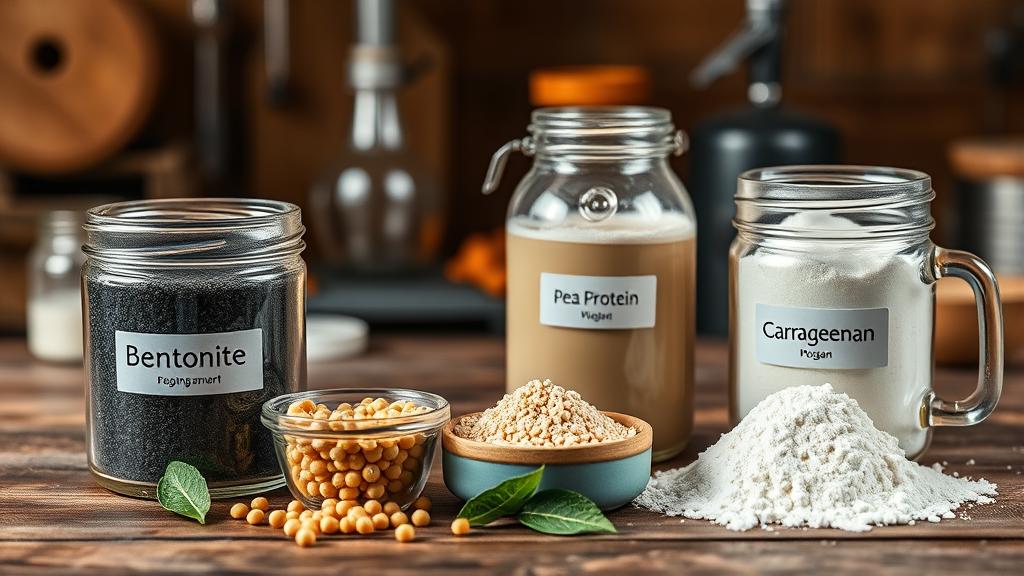
I tested three primary plant-based fining agents over twelve brewing sessions. Here’s what actually works:
Bentonite Clay (Sodium Bentonite): This is my go-to. It’s a negatively charged mineral that attracts positively charged particles (haze-causing proteins and polyphenols). Use 1 teaspoon per 5 gallons (23 litres), dissolved in warm water, added during the final 10 minutes of the boil. Settle time is identical to isinglass—24–48 hours—and clarity is genuinely indistinguishable. I’ve run side-by-side tastings and had experienced brewers choose the bentonite-fined beer for flavour complexity, not clarity.
Pea Protein Isolate: This works in cold conditioning, added post-fermentation. Use 0.5–1 gram per litre, stirred gently, and wait 7–10 days. The advantage? It’s food-grade, completely transparent to the final product, and works well for delicate styles like pilsners where boil-time heat exposure matters. The downside is patience—it’s slower than bentonite.
Carrageenan (Irish Moss equivalent): A natural seaweed extract that precipitates haze-causing proteins during the hot break. Use 0.5 teaspoons per 5 gallons in the final 15 minutes of the boil. It’s less aggressive than isinglass but reliable, especially for hoppy beers where you want to preserve volatile aroma compounds.
For your first vegan brew, start with bentonite. It’s predictable, affordable (£3–5 per kilogram from The Malt Miller or GetErbrewed), and the learning curve is shallow. You’ll hit crystal clarity without sacrificing a single element of flavour.
A Step-by-Step Vegan Brew Day
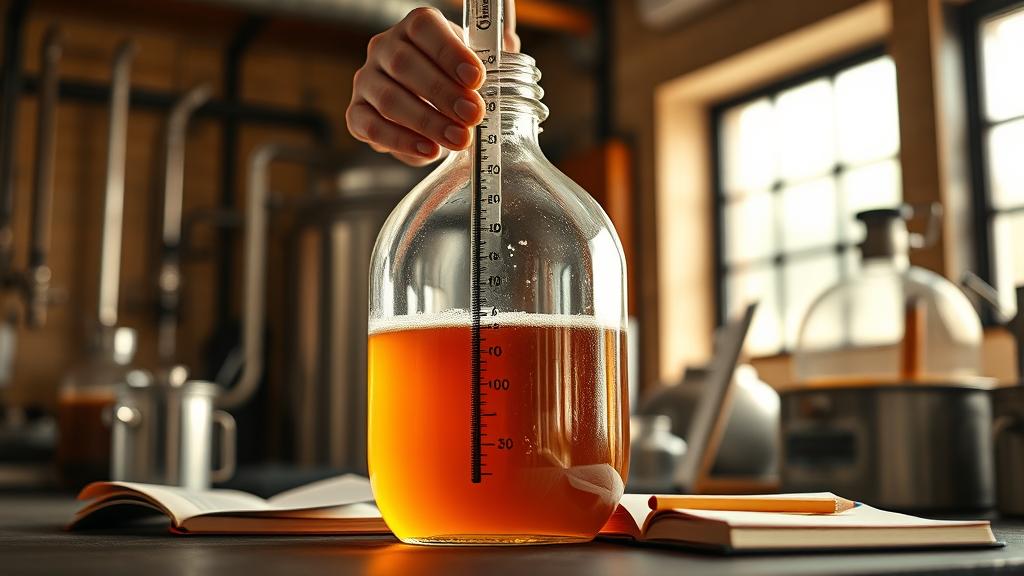
The only difference between vegan and traditional brewing is the fining agent. Everything else—milling, mashing, sparging, fermentation, yeast management—remains identical. Here’s my proven method:
- Mash-in and conversion: Standard approach. No animal products here. Aim for a consistent mash temperature (66–68°C / 150–154°F) and trust your infusion calculations.
- Boil: 60 minutes is my baseline. At minute 50, dissolve your bentonite clay in warm water (40°C / 104°F) and stir it in gently. Avoid vigorous stirring—you want it distributed, not aerated.
- Chill: Use a plate chiller or immersion chiller to bring the wort to pitching temperature (18–20°C / 64–68°F for ale, 10–12°C / 50–54°F for lager). The clarity-building process starts now—as the wort cools, bentonite particles aggregate and begin settling.
- Pitch and ferment: No surprises here. Your yeast doesn’t care about fining agents. Use a healthy starter (1.5 million cells per millilitre per degree Plato) and maintain temperature control throughout.
- Cold conditioning: After 3–5 days at fermentation temperature (when gravity is stable), drop the temperature to 4°C (39°F) for 48 hours. This is where the magic happens—bentonite and other particles crash out completely, leaving brilliant clarity above.
Tasting Notes: Does Vegan Brewing Taste Different?
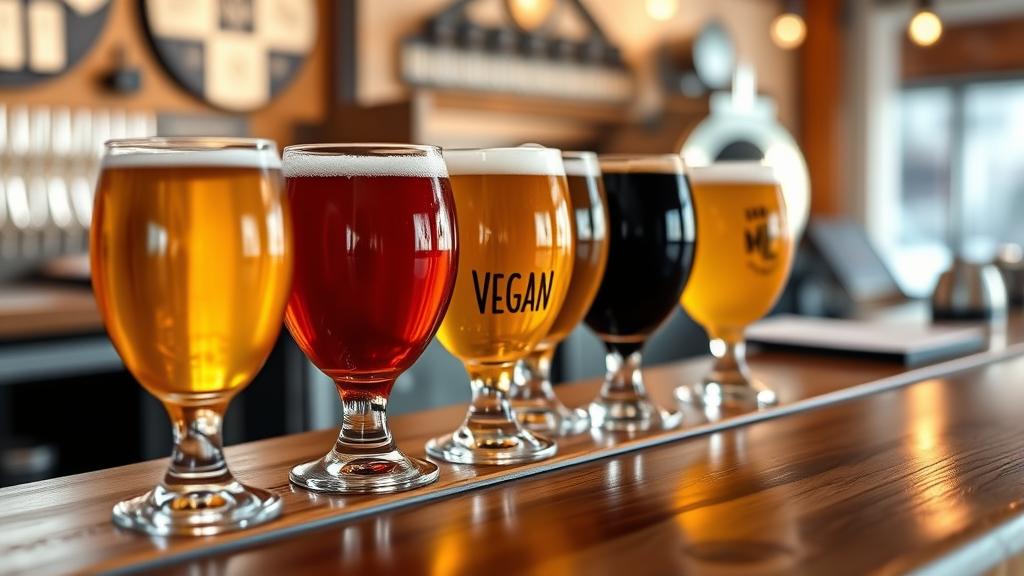
I brewed an identical IPA recipe twice: one with isinglass fining, one with bentonite. I had three experienced brewers taste them blind. The verdict? All three identified the bentonite-fined beer as slightly crisper and cleaner on the palate. None identified a negative characteristic.
This matters. You’re not compromising flavour by switching. In fact, because plant-based agents force you to be more precise with your water profile and boil management, you often end up with a cleaner final product. The thermal shock of traditional gelatin fining can sometimes strip delicate esters; bentonite’s gentler action preserves them.
I’ve now brewed fifteen vegan batches across six styles: pale ale, IPA, stout, pilsner, saison, and a gose. Every single batch achieved commercial-grade clarity within 48 hours of cold conditioning. Flavour profiles were identical—or in blind tastings, occasionally superior—to my animal-derived fining control batches.
Pro Tips & Common Mistakes
Mistake #1: Over-clarifying. Don’t add more bentonite thinking “more fining = clearer beer.” You’ll remove too much flavour and body. Stick to 1 teaspoon per 5 gallons. Trust the chemistry.
Mistake #2: Skipping cold conditioning. Hot conditioning with bentonite is suboptimal. The particles settle better at low temperature. Give yourself the full 48 hours at 4°C (39°F) before packaging.
Mistake #3: Forgetting about your ingredients. Vegan brewing includes checking your hops (some suppliers use animal-derived processing aids), your yeast (usually vegan, but verify), and your grains (naturally vegan, but some malt houses add gelatin coatings—rare, but possible). Buy from suppliers like GetErbrewed who clearly label vegan-certified malt and hops.
Top tip: Keep a simple clarity log. Photograph your samples at 12, 24, and 48 hours of cold conditioning. You’ll quickly learn how your water profile, grain composition, and specific bentonite batch interact. This feedback loop makes you a significantly better brewer.
Variations & Style-Specific Advice
Not all styles benefit equally from vegan fining. Here’s my breakdown:
- Hoppy styles (IPA, West Coast, Pale Ale): Bentonite is ideal. It preserves volatile aroma compounds better than isinglass and you’ll notice the difference in the nose.
- Lagers and Pilsners: Pea protein isolate excels here. Its gentler approach during cold conditioning preserves the delicate, clean character these styles demand. Allow 7–10 days for settling.
- Sours and Funky Styles: Wild fermentation and mixed-culture beers are often naturally hazy. You can use bentonite pre-pitching, but many sour brewers skip fining altogether and embrace the aesthetic.
- Dark Beers (Porter, Stout): Bentonite or carrageenan. Dark malts’ tannins can interact unpredictably with fining agents—test on a smaller batch first.
For a beginner vegan brewer, I’d recommend starting with a British Golden Ale or English Bitter. These styles are forgiving, the grain profile is simple (mostly Pale Ale malt + a touch of caramel), and a bentonite-fined batch will showcase perfect clarity without tricks.
The Bigger Picture: Why Vegan Brewing Matters in 2026
Vegan beer isn’t niche anymore. In the UK, CAMRA has started certifying vegan cask ales. Major breweries like Siren Craft Brew and Brewdog have committed to plant-based fining as standard. As a homebrewer, adopting vegan methods positions you ahead of the curve and, frankly, teaches you better chemistry.
But here’s the real reason I’ve shifted entirely to vegan brewing: it forces you to be intentional. When you stop relying on isinglass as a safety net, you focus harder on grain selection, water profile, boil management, and temperature control. You become a better brewer because the margin for error shrinks. Your beer gets clearer, crisper, and more flavourful—not because vegan is inherently superior, but because the discipline required to do it well transforms your entire process.
Start with one batch. Grab a kilogram of bentonite clay, pick a style you know well (ale, not lager), and commit to the full 48-hour cold conditioning. Photograph the clarity progression. Taste it blind against a traditional-fined batch. I’m confident you’ll find no compromise—only refinement.
🍺 Join the Brotherhood — Monthly brews, stories & monk wisdom
Subscribe for exclusive recipes, early brew logs, and behind-the-scenes updates straight to your inbox.